Books by Adrien Delmas
Fossil Libraries: Philology and Archaeology in the Mirror
Philological Encounters, 2024
Since the end of the nineteenth century, more and more collections of manuscripts have been unear... more Since the end of the nineteenth century, more and more collections of manuscripts have been unearthed in archaeological contexts, from Cairo and Dunhuang to Qumran. Situated at the intersection of archaeological and philological practices, these fossil libraries do not yield a simplistic narrative of ancient manuscripts miraculously reappearing and text corpora accidentally—or heroically—being discovered. On the contrary, they require two incompatible epistemologies to come together, over time, in a meeting between the materiality of the written word and the semantics of the material object.
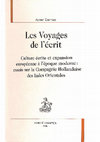
Plus à son aise, jusqu’à présent, dans le cadre national que dans le roulis marin de l’histoire g... more Plus à son aise, jusqu’à présent, dans le cadre national que dans le roulis marin de l’histoire globale, l’histoire du livre a négligé l’un des acteurs fondamentaux de la généralisation, à l’époque moderne, du recours à l’écrit. Les organisations commerciales et coloniales par lesquelles s’opéra le désenclavement planétaire à partir du XVIe siècle, que ce soient l’Estado da Índia portugais, la Carrera de Indias espagnole ou les Compagnies anglaise, hollandaise ou française des Indes, ont pourtant joué un rôle majeur dans la circulation de l’écrit à l’échelle du monde. Faut-il faire du pont des navires et de la cabine du capitaine l’un des lieux, à l’instar de l’État, l’Église et l’Université, où se sont établies nos relations modernes à la culture écrite ? Pour mettre au jour cette histoire commune entre l’histoire de la culture écrite et celle l’expansion européenne, ce livre propose une série d’explorations autour des pratiques scripturaires de la Verenigde Oostindische Compagnie (VOC), la Compagnie Hollandaise des Indes Orientales fondée en 1602.
Recent developments in the cultural history of written culture have omitted the specificity of pr... more Recent developments in the cultural history of written culture have omitted the specificity of practices relative to writing that were anchored in colonial contexts. The circulation of manuscripts and books between different continents played a key role in the process of the first globalization from the 16th century onwards. While the European colonial organization mobilised several forms of writing and tried to control the circulation and reception of this material, the very function and meaning of written culture was recreated by the introduction and appropriation of written culture into societies without alphabetical forms of writing. This book explores the extent to which the control over the materiality of writing has shaped the numerous and complex processes of cultural exchange during the early modern period.
South African Archaeological Association, 2019
Wits University Press, 2020
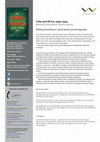
Cuba was a key participant in the struggle for the independence of African countries during the C... more Cuba was a key participant in the struggle for the independence of African countries during the Cold War and the definitive ousting of colonialism from the continent. Beyond the military interventions that played a decisive role in shaping African political history, there were many-sided engagements between the island and the continent.
Cuba and Africa, 1959-1994 is the story of tens of thousands of individuals who crossed the Atlantic as doctors, scientists, soldiers, students and artists. Each chapter presents a case study – from Algeria to Angola, from Equatorial Guinea to South Africa – and shows how much of the encounter between Cuba and Africa took place in non militaristic fields: humanitarian and medical, scientific and educational, cultural and artistic.
The historical experience and the legacies documented in this book speak to the major ideologies that shaped the colonial and postcolonial world, including internationalism, developmentalism and South–South cooperation.
Approaching African–Cuban relations from a multiplicity of angles, this collection will appeal to an equally wide range of readers, from scholars in black Atlantic studies to cultural theorists and general readers with an interest in contemporary African history.
Articles and Book Chapters by Adrien Delmas
Pauthier, Céline, et al., éditeurs. Les diplomaties euro-africaines au tournant des indépendances. Direction des Archives, Éditions du Comité des travaux historiques et scientifiques, 2025, 2025
En janvier 1961, Mohammed V accueillait Ferhat Abbas, Gamal Abdel Nasser, Ahmed Sékou Touré, Modi... more En janvier 1961, Mohammed V accueillait Ferhat Abbas, Gamal Abdel Nasser, Ahmed Sékou Touré, Modibo Keita et Kwame Nkrumah pour créer le Groupe de Casablanca. Ils y affirmèrent, dans la « charte africaine », leur « détermination de faire triompher la liberté dans toute l’Afrique et de réaliser son unité » et leur « de liquider le colonialisme et le néo-colonialisme sous toutes ses formes ». Ce positionnement ne manqua pas de surprendre les chancelleries européennes encore aux prises avec les décolonisations. Pourtant, le Maroc était devenu, au tournant des indépendances, un passage obligé du panafricanisme, comme le montre l’intensité des circulations de militant·es politiques africain·es. Retracer ces circulations pour mieux relire la relation du Maroc au panafricanisme et aux mouvements de décolonisation est le premier objectif de ce chapitre. Il s’agira également de réfléchir, à partir du Maroc, aux circuits qui ont fait basculer de la clandestinité à la diplomatie officielle les circulations entre États africains récemment indépendants.
Pauthier, Céline, Guia Migani, Michel Catala, et Alain Messaoudi, éd. Les diplomaties euro-africaines au tournant des indépendances. La Courneuve: Direction des Archives, Éditions du Comité des travaux historiques et scientifiques, 2025., 2025
A la question « qu’est-ce qu’une archive ? » l’historien n’a jamais prétendu avoir de réponse déf... more A la question « qu’est-ce qu’une archive ? » l’historien n’a jamais prétendu avoir de réponse définitive, ni même être le seul à pouvoir en proposer. Il est par contre traversé par une autre conviction qui en fait le seul, ou plus exactement le dernier, à la pratiquer. Cet essai voudrait égratigner cette croyance en reconstituant les enjeux politiques qui se sont noués autour du rapatriement des archives du protectorat français au Maroc en 1956. Dans une perspective d’histoire de l’écrit qui insiste sur la dimension matérielle des objets où il s’inscrit, cette histoire d’archives massivement déplacées se concentre sur le comment de ce rapatriement – comment furent rassemblés à Rabat des milliers de documents en quelques mois ? Comment furent-ils envoyés de l’autre côté de la Méditerranée ? Qu’en faire une fois rapatriés ? etc. – pour en saisir les enjeux politiques immédiats et finalement adresser quelques questions théoriques sur la nature des archives coloniales, pour ne pas dire la nature coloniale des archives.
Hespéris-Tamuda LVII, 2, 2022, p. 537-551, 2022
Cet essai est d’abord un témoignage relatif à deux restitutions récentes de collections archéolog... more Cet essai est d’abord un témoignage relatif à deux restitutions récentes de collections archéologiques de la France au Maroc. De retour à Rabat, elles permettent d’éprouver et de commencer à dessiner, en creux, l’absence des collections nécessaires aux recherches archéologiques et historiques sur le Maroc et le Maghreb plus généralement. L’enjeu de cet essai bien là: il propose de substituer à la seule accumulation de témoignages sur l’inaccessibilité des collections scientifiques maghrébines, inaccessibilité dont nous faisons l’expérience quotidienne dans nos pratiques d’historien ou d’archéologue au Maroc, un projet d’histoire en bonne et due forme, capable de faire des collections et de leur conditions matérielles et sociales d’accès, au fil du temps, un objet de recherche. Les restitutions récentes rapportées ici sont mises bout à bout avec d’autres trajectoires historiques de collections, pour les inscrire dans une histoire plus longue de la fragmentation et de la dispersion matérielle des collections scientifiques au cours du XXème siècle marocain. En ouvrant quelques pistes de recherche sur des collections particulières avant et après l’indépendance de 1956 (manuscrits, imprimés et archives), cet essai voudrait montrer que la continuité des institutions scientifiques (bibliothèques, universités, archives, services archéologiques etc.( n’a pas abouti, bien au contraire, à la continuité, l’intégrité et l’accessibilité de leurs collections. Une histoire minutieuse des collections maghrébines tout au long du XXème siècle permettrait de mieux comprendre la situation dont nous héritons, mais aussi d’imaginer une politique de coopération scientifique beaucoup plus ambitieuse que celle que nous connaissons, au-delà du seul horizon des restitutions, réalisées ou à venir.
L’Atelier du Centre de recherches historiques, 20, 2019
Cet essai porte sur la simultanéité comme figure discursive de l’histoire globale. Sa question es... more Cet essai porte sur la simultanéité comme figure discursive de l’histoire globale. Sa question est simple : pourquoi l’histoire globale se contente-t-elle parfois de constater des simultanéités pour démontrer des connexions ? Après quelques exemples tirés de l’historiographie récente (Sanjay Subrahmanyam, Serge Gruzinski, Romain Bertrand), nous voudrions illustrer le fait que le problème de la simultanéité dans ses rapports à l’histoire à grande échelle ne date pas d’hier. Sans prétendre à quelconque exhaustivité, nous nous arrêterons sur quelques cas (Polybe, Eusèbe de Césarée, João de Barros, Joseph Scaliger) qui démontrent combien la simultanéité constitue l’un des soucis les plus anciens de cette volonté d’embrasser l’ensemble du monde connu à un moment donné, et d’en proposer une histoire. Pour finir, nous reviendrons à la question de l’écriture de l’histoire de nos jours pour me demander si la question de la simultanéité ne nous impose pas de basculer d’une science des conditions de possibilité (Michel Foucault) à une science des conditions de disponibilité.
This essay focuses on simultaneity as a discursive figure of global history. The question is rather simple: why does global history sometimes use simultaneities to demonstrate connections? Taking some examples from recent historiography (Sanjay Subrahmanyam, Serge Gruzinski, Romain Bertrand), we would like to show that the question of simultaneity in its relation to large-scale history is nothing new. Without pretending to be exhaustive, we will dwell on a few cases (Polybius, Eusebius of Caesarea, João de Barros, Joseph Scaliger) that demonstrate how simultaneity is one of the oldest concerns of the desire to embrace the whole known world at a given moment, and to propose a narrative of it. Finally, we will return to the question of present day historiography to ask whether simultaneity requires us to switch from a science of the conditions of possibility (Michel Foucault) to a science of the conditions of availability.
South African Archaeological Society Goodwin Series 12: 85–94, 2019
The lack of studies on George McCall Theal is all the more regrettable in that we still largely m... more The lack of studies on George McCall Theal is all the more regrettable in that we still largely make use of the categories he created, as well as the historical periods he delineated in the late 19th century, in a first attempt at a South African national history. This paper analyses the place created by Theal for a very particular period, African mediaeval history. This period was depicted as an intermediate stage between static prehistory and the beginnings of history marked, according to him, by the arrival of Europeans-starting with the Portuguese. The idea of an African mediaeval history was suggested to Theal not only by Karl Mauch's rediscovery of Great Zimbabwe in 1871, but also, and above all, by his reading of innumerable Portuguese sources on the region from the late 15th century onwards. He eventually published these sources in Records of SouthEastern Africa, nine volumes printed between 1896 and 1905. Although the southern African mediaeval period was not Theal's greatest success, occupying a chapter here and there in his monumental history of South Africa-itself extending over 11 volumes and revised several times-it allows us to understand his way of working, and in particular, how he made the disciplines converse. In following Theal's amendments to his mediaeval history over more than a decade, this paper unpacks the complementary and hierarchical relationships between the different African documentary regimes at the turn of the 20th century. It identifies a growing empowerment in archaeology, particularly in comparison with philology and archival work. The mobilisation and displacement of the concept of ruins, in crystallising the tensions between the material and textual registers, provides the best standpoint for understanding this empowerment of archaeology.
Although the history of philology is merely an addition to the rediscovery of textual traditions ... more Although the history of philology is merely an addition to the rediscovery of textual traditions which have been neglected for too long by academic philology, it is nonetheless an important one for its ability alone to provide an explanation of the existing asymmetric situation. When the world opened up after the 16th century following transoceanic navigations, European encounters with written traditions in America, Africa and Asia led to a variety of attitudes—from denial to fascination, from destruction to collection. These " philological encounters " , both material and conceptual, largely contributed to shape the views of the European Renaissance and the Enlightenment regarding language and writing. To understand the semiological and epistemological consequences of these views, this paper focuses on a single text produced at the time of the Spanish conquest of Mexico, the Codex Mendoza, and on the different interpretations to which the latter was subjected in Europe after crossing the Atlantic. The history of the Codex Mendoza would have us believe that it was during the 18th century, and not before, that writing became exclusively synonymous with alphabet, resulting in the marginalisation of non-alphabetic written systems—and this mainly for historiographical reasons.
Based on the study of the encounter between the Portuguese and the Swahili in the sixteenth centu... more Based on the study of the encounter between the Portuguese and the Swahili in the sixteenth century, and on the analysis of the Kilwa Chronicle that resulted from it, this chapter questions the notion of 'textual contact'. Rediscovering the way in which a text presenting the five hundred years genealogy of the kings of Kilwa could have been printed in Portuguese in João de Barros's Decades in Lisbon, in 1552, is not a simple matter. While the why of the chronicle, for which there are several political reasons arising from Kilwa's occupation in 1505, is obvious, the how of the chronicle is much less so. Through a systematic study of the two written versions of the text at our disposal, the Crónica and the Kitāb, we will show that the existence of an original manuscript which, as is generally presumed, would have been found by the Portuguese on their arrival and would have travelled up to the mouth of the Tagus, raises strong doubts. These doubts could be answered more convincingly through an alternative hypothesis, according to which the chronicle was 'co-written' in the sixteenth century, as a result of the encounter. In addition to the study of the conditions under which the Kilwa Chronicle was circulated in the sixteenth century, this article would like to illustrate the fact that it is impossible to express a view on the circulation of genres – and in this case of historiographic genres transiting between the Muslim world and Europe on the eve of its maritime expansion – independently of the circulation of texts embodying these genres.
Les compagnies commerciales et coloniales de l’époque moderne n’ont qu’à de rares exceptions rete... more Les compagnies commerciales et coloniales de l’époque moderne n’ont qu’à de rares exceptions retenu l’attention de l’histoire du livre. Intermédiaires de la circulation d’écrits entre les continents,
elles constituent pourtant des objets d’études incontournables pour que l’histoire du livre sorte du seul cadre national et pose la question du rôle de la culture écrite dans le désenclavement du monde à partir du XVIe siècle. Pour comprendre l’attitude de la Compagnie Hollandaise des
Indes Orientales (VOC) face à l’imprimé, cet article revient sur le cas bien connu de l’Itinerario de Jan Huygen van Linschoten (1595-1596), un livre qui, s’il a incarné quelques années la complémentarité entre le monde du livre et le projet ultramarin, a très vite scellé leur antagonisme. Suite aux
plaintes des directeurs de la Compagnie inquiets de sa large diffusion, il motiva en effet l’émission d’un privilège de librairie en 1619 qui entérinait le divorce entre le livre et la mer pour toute la durée du Siècle d’Or.
Writing History In The Age Of Discovery, According To La Popelinière, 16th–17th Centuries
The Dutch Trading Companies as Knowledge Networks, 2010

Anna Konieczna, Rob Skinner (eds.), A Global History of Anti-Apartheid 'Forward to Freedom' in South Africa, Palgrave Mcmillan, 2019
To what extent was Cuba responsible for the fall of apartheid? This essay will neither try to det... more To what extent was Cuba responsible for the fall of apartheid? This essay will neither try to determine the complex chain of events that brought about the fall of apartheid in the early 1990s, nor to rehearse the role of Cuban military engagement in Angola from 1975 in this narrative.
Instead, it presents two connected questions: in what name did Cuba
become engaged in Angola, and how does this help us understand the
global context of anti-apartheid? To tackle these questions, one could
almost ignore the outcome of the conflict itself and focus directly on the
principal motivations for Cuba to send up to 50,000 soldiers to fight in
southern Africa from 1975 to 1991. As idealistic as it may seem, it was
first and foremost in the name of non-racialism that the Cuban regime
sent its army to intervene irreversibly in the history of southern Africa.
As such, this chapter is not a political, diplomatic or military history of
the Cuban intervention in Africa. Besides the need to complete such a
narrative adding the South African views, it is rather a contribution to
the cultural history of the concept of apartheid. Based on discursive analysis of the references made to the segregationist regime from the other side of the Atlantic, this contribution aims at rescaling the international dimension of a concept still far too national in tone. As a matter of fact, it was in the name of apartheid, or rather against its name, that Cuba became engaged on the soil of southern Africa—military engaged, unlike the majority of anti-apartheid movements around the world. As such, a slightly different history of non-racialism emerges from the war in Angola, a history no longer opposing two antagonistic models (mestizaje vs. apartheid) but instead, through a number of reciprocal cultural references, delineating a common history.
Cuba & Africa, 1959-1994. Writing an Alternative Atlantic History , 2020
The South African student movements of 2015 and 2016 have critically
recalled the question: how t... more The South African student movements of 2015 and 2016 have critically
recalled the question: how to dismantle the thinking inherited from
apartheid? More than twenty years after the fall of the racist regime,
this question still haunt South African humanities. While the term
“post-apartheid” might have addressed this urgency and even
crystallized an intellectual ambition, its multiple and sometimes
contradictory meanings have made it hard to establish a paradigm.
The authors of this special section have sought to interrogate the
use and abuse of the concept in the literature of their respective
disciplines, keeping in mind that, whatever its polysemy, the term
has become a reference point for the humanities worldwide, as
untranslatable as it is inescapable.
Books in the Catholic World during the Early Modern Period, 2013
Nuevo mundo mundos nuevos, 2012
Borders in Globalization Review Volume 2, Issue 1 (Fall/Winter 2020): 12-20, 2020
Facing emerging zoonose SARS-CoV-2, states decided unilaterally to close borders to individuals a... more Facing emerging zoonose SARS-CoV-2, states decided unilaterally to close borders to individuals and revealed deep processes at work ‘bordering of the world’. Smart borders promoted by international organizations have allowed the filtering of indispensables (merchandise, data, capital and key workers) from dispensables (human beings) and, above all, the redefinition of the balance of biopolitical power between state and society. The observation of the unprecedented phenomenon of the activation and generalization of the global border machinery captures a common global dynamic. After a round-the-world tour of border closures between 21 January and 7 July 2020, we concentrate on a few emblematic cases: the Schengen zone, the USA–Canada and USA–Mexico borders, Brazil–Uruguay, Malaysia–Singapore and Morocco–Spain. We interrogate the justification and the strategies of border closure in a context of the global spread of an emerging epidemic, going beyond the simple medical argument. Choices appear to be dependent on ideological orientations henceforth dominant on the function and role of borders. We will discuss the acceleration of the bordering of the world, the forms of its outcome and its difficult reversibility.



Uploads
Books by Adrien Delmas
Cuba and Africa, 1959-1994 is the story of tens of thousands of individuals who crossed the Atlantic as doctors, scientists, soldiers, students and artists. Each chapter presents a case study – from Algeria to Angola, from Equatorial Guinea to South Africa – and shows how much of the encounter between Cuba and Africa took place in non militaristic fields: humanitarian and medical, scientific and educational, cultural and artistic.
The historical experience and the legacies documented in this book speak to the major ideologies that shaped the colonial and postcolonial world, including internationalism, developmentalism and South–South cooperation.
Approaching African–Cuban relations from a multiplicity of angles, this collection will appeal to an equally wide range of readers, from scholars in black Atlantic studies to cultural theorists and general readers with an interest in contemporary African history.
Articles and Book Chapters by Adrien Delmas
This essay focuses on simultaneity as a discursive figure of global history. The question is rather simple: why does global history sometimes use simultaneities to demonstrate connections? Taking some examples from recent historiography (Sanjay Subrahmanyam, Serge Gruzinski, Romain Bertrand), we would like to show that the question of simultaneity in its relation to large-scale history is nothing new. Without pretending to be exhaustive, we will dwell on a few cases (Polybius, Eusebius of Caesarea, João de Barros, Joseph Scaliger) that demonstrate how simultaneity is one of the oldest concerns of the desire to embrace the whole known world at a given moment, and to propose a narrative of it. Finally, we will return to the question of present day historiography to ask whether simultaneity requires us to switch from a science of the conditions of possibility (Michel Foucault) to a science of the conditions of availability.
elles constituent pourtant des objets d’études incontournables pour que l’histoire du livre sorte du seul cadre national et pose la question du rôle de la culture écrite dans le désenclavement du monde à partir du XVIe siècle. Pour comprendre l’attitude de la Compagnie Hollandaise des
Indes Orientales (VOC) face à l’imprimé, cet article revient sur le cas bien connu de l’Itinerario de Jan Huygen van Linschoten (1595-1596), un livre qui, s’il a incarné quelques années la complémentarité entre le monde du livre et le projet ultramarin, a très vite scellé leur antagonisme. Suite aux
plaintes des directeurs de la Compagnie inquiets de sa large diffusion, il motiva en effet l’émission d’un privilège de librairie en 1619 qui entérinait le divorce entre le livre et la mer pour toute la durée du Siècle d’Or.
Instead, it presents two connected questions: in what name did Cuba
become engaged in Angola, and how does this help us understand the
global context of anti-apartheid? To tackle these questions, one could
almost ignore the outcome of the conflict itself and focus directly on the
principal motivations for Cuba to send up to 50,000 soldiers to fight in
southern Africa from 1975 to 1991. As idealistic as it may seem, it was
first and foremost in the name of non-racialism that the Cuban regime
sent its army to intervene irreversibly in the history of southern Africa.
As such, this chapter is not a political, diplomatic or military history of
the Cuban intervention in Africa. Besides the need to complete such a
narrative adding the South African views, it is rather a contribution to
the cultural history of the concept of apartheid. Based on discursive analysis of the references made to the segregationist regime from the other side of the Atlantic, this contribution aims at rescaling the international dimension of a concept still far too national in tone. As a matter of fact, it was in the name of apartheid, or rather against its name, that Cuba became engaged on the soil of southern Africa—military engaged, unlike the majority of anti-apartheid movements around the world. As such, a slightly different history of non-racialism emerges from the war in Angola, a history no longer opposing two antagonistic models (mestizaje vs. apartheid) but instead, through a number of reciprocal cultural references, delineating a common history.
recalled the question: how to dismantle the thinking inherited from
apartheid? More than twenty years after the fall of the racist regime,
this question still haunt South African humanities. While the term
“post-apartheid” might have addressed this urgency and even
crystallized an intellectual ambition, its multiple and sometimes
contradictory meanings have made it hard to establish a paradigm.
The authors of this special section have sought to interrogate the
use and abuse of the concept in the literature of their respective
disciplines, keeping in mind that, whatever its polysemy, the term
has become a reference point for the humanities worldwide, as
untranslatable as it is inescapable.