Books by Alessandro Arbo
Carlo Michelstaedter, Edizioni LEG, 2022
Nuova edizione della biografia "Carlo Michelstaedter" pubblicata da Edizioni Studio Tesi, Pordeno... more Nuova edizione della biografia "Carlo Michelstaedter" pubblicata da Edizioni Studio Tesi, Pordenone, 1996
Art and Law (Brill), 2021
What do we mean when we talk about the identity of a musical work and what does such an identity ... more What do we mean when we talk about the identity of a musical work and what does such an identity involve? What in fact are the properties that make it something worth protecting and preserving? These issues are not only of legal relevance; they are central to a philosophical discipline that has seen considerable advances over the last few decades: musical ontology. Taking into account its main theoretical models, this essay argues that an understanding of the ontological status of musical works should acknowledge the irreducible ambivalence of music as an “art of the trace” and as a “performative art.” It advocates a theory of the musical work as a “social object” and, more specifically, as a sound artefact that functions aesthetically and which is based on a trace informed by a normative value. Such a normativity is further explored in relation to three primary ways of conceiving and fixing the trace: orality, notation and phonography.
In una nuova edizione, rivista e aggiornata, riappare Il suono instabile, di Alessandro Arbo.
I s... more In una nuova edizione, rivista e aggiornata, riappare Il suono instabile, di Alessandro Arbo.
I saggi raccolti in questo volume discutono alcuni principali temi della filosofia della musica nel Novecento: dalla presenza del mito di Beethoven nella cultura centroeuropea, all’interpretazione delle rapide metamorfosi dei materiali sonori posteriori alla crisi del sistema tonale, al comune proposito di identificare nella musica un’esperienza della temporalità più originaria o autentica rispetto a quella imposta dai ritmi dell’era tecnologica. L’esame critico coinvolge i criteri di interpretazione dell’opera musicale fondati su paradigmi teorici quali la dialettica, la fenomenologia, l’ermeneutica, la teoria della ricezione.
I saggi raccolti in questo volume discutono alcuni principali temi della filosofia della musica nel Novecento: dalla presenza del mito di Beethoven nella cultura centroeuropea, all’interpretazione delle rapide metamorfosi dei materiali sonori posteriori alla crisi del sistema tonale, al comune proposito di identificare nella musica un’esperienza della temporalità più originaria o autentica rispetto a quella imposta dai ritmi dell’era tecnologica. L’esame critico coinvolge i criteri di interpretazione dell’opera musicale fondati su paradigmi teorici quali la dialettica, la fenomenologia, l’ermeneutica, la teoria della ricezione.
Ce livre se veut une lecture d’ensemble des réflexions que Wittgenstein a consacrées à la musique... more Ce livre se veut une lecture d’ensemble des réflexions que Wittgenstein a consacrées à la musique, et, à travers elles, une tentative d’éclairer les perspectives et les cadres conceptuels de l’esthétique musicale. Il s’attache notamment à explorer les fonctions de l’« entendre comme » : un outil conceptuel susceptible de nous aider à analyser nos manières de comprendre cet art et à mieux définir ses propriétés expressives et son pouvoir émotionnel. Plus généralement, l’approfondissement de ces thématiques a pour objectif la définition d’une stratégie pour re-penser l’expérience musicale à partir de l’acte performatif et de l’expérience auditive.
L’écoute connaît depuis quelques années un important regain d’intérêt dans les savoirs musicologi... more L’écoute connaît depuis quelques années un important regain d’intérêt dans les savoirs musicologiques, plus traditionnellement concentrés sur l’analyse de la partition et la mise en contexte des œuvres et des compositeurs. Il a fait cependant depuis longtemps l’objet de l’attention des philosophes et des écrivains. Mais que signifie décrire ou expliquer la musique en tant qu’objet d’une audition ? Comment un discours s’organise-t-il autour d’un objet apparemment aussi fuyant ?
Ce volume propose quelques éléments de réponse en passant par une enquête archéologique. Il étudie quelques thématiques anciennes et modernes qui ont contribué à structurer nos manières de concevoir l’objet musical dans l’expérience : la perception du rythme, l’opposition entre facteurs mélodiques et harmoniques, les difficultés engendrées par les notions référentielles d’imitation, d’expression et de représentation, les ambiguïtés du concept de temporalité, l’ouverture du phénomène musical à l’univers des sons-bruits, le rapport entre qualités perceptives et sentiment de plaisir, le rôle joué par le langage dans la construction d’analogies avec l’espace et la couleur. Un parcours qui se présente, dans son ensemble, comme une vaste exploration des stratégies d’inscription du son dans les grilles de l’oreille musicale.
Ce volume propose quelques éléments de réponse en passant par une enquête archéologique. Il étudie quelques thématiques anciennes et modernes qui ont contribué à structurer nos manières de concevoir l’objet musical dans l’expérience : la perception du rythme, l’opposition entre facteurs mélodiques et harmoniques, les difficultés engendrées par les notions référentielles d’imitation, d’expression et de représentation, les ambiguïtés du concept de temporalité, l’ouverture du phénomène musical à l’univers des sons-bruits, le rapport entre qualités perceptives et sentiment de plaisir, le rôle joué par le langage dans la construction d’analogies avec l’espace et la couleur. Un parcours qui se présente, dans son ensemble, comme une vaste exploration des stratégies d’inscription du son dans les grilles de l’oreille musicale.
L’origine della nozione di espressione musicale nel pensiero illuminista è ricostruita mettendo i... more L’origine della nozione di espressione musicale nel pensiero illuminista è ricostruita mettendo in evidenza il suo legame con una problematica che riguarda l’organizzazione psicologica del dato sensibile : la fissazione di una traccia sonora che influenza lo sviluppo del pensiero e della memoria. Questo tema è ricostruito attraverso un esame delle opere di Condillac, di Rousseau e di Diderot, prese in considerazione a partire da alcune premesse visibili nel pensiero di Descartes e di Leibniz, e negli esthéticiens (Crousaz, André, Batteux). L’analisi della questione dell’origine comune della musica e del linguaggio fa ugualmente risaltare le funzioni della nozione di traccia, capace di rendere ragione del modo in cui la percezione del suono si collega ai livelli più profondi dell’esperienza.
I saggi raccolti in questo volume discutono alcuni temi della filosofia della musica nel Novecent... more I saggi raccolti in questo volume discutono alcuni temi della filosofia della musica nel Novecento : dalla presenza del mito di Beethoven nella cultura centroeuropea, all’interpretazione delle rapide metamorfosi dei materiali sonori posteriori alla crisi del sistema tonale, al proposito di individuare nella musica una peculiare esperienza della temporalità. L’esame critico coinvolge i criteri d’interpretazione dell’opera musicale fondati su paradigmi quali la fenomenologia, l’ermeneutica, il pensiero dialettico, la teoria della ricezione.
Over her first five hundred years of history, Gorizia was an autonomous county with strong tenden... more Over her first five hundred years of history, Gorizia was an autonomous county with strong tendencies towards expansionism. Since the late Middle Ages, inhabited by Germans, Italians and Slovenes, religious chant and secular songs had become widespread, while dancers, trumpeters and pipers entertained at weddings in the church squares and at dances held by the nobility. After Leonardo's death (1500) and the establishment of Hapsburg rule in the county (1509), there are records of organists in the service of the Cathedral's music chapel: G. Hophajer (or Hofhaimer, probably the brother of the more renowned Paulus), G. Oberpurger, G. Mainerio, N. Vicentino, G. B. Galeno, G. Cerva, P. Ragno and the cornett players F. and G. Sagabria. In the meantime, noble families organized gatherings of Lutheran music imported from Carniola, modern day Slovenia.
Among the musicians and organists active in the seventeenth century, worth mentioning are G. Marini, A. Piccelli (who dedicated a composition to Emperor Ferdinand III in 1637), the Silesian organist and organ-builder E. Casparini, the organist M. Melissa, composer of psalms in the concertato style, G. B. Scalettaris (ca. 1651), C. Scalettaris and, towards the end of the century, F. Palese. Plays with music accompaniment were also organized in the Jesuit College and the Sant'Orsola Monastery. Instrumental music, on the other hand, was cultivated in the home of F. de Stubenberg, a nobleman from Graz, appointed Captain of Gorizia in 1685. At carnival time in 1696, the first libretto for a drama called L'Odio placato was published, containing a sung prologue and final dance.
In the first half of the eighteenth century, A. Patriani and F. S. Rainer served at the Cathedral Chapel. Organs built by P. Nacchini and G. Callido were installed in the churches of Sant'Ignazio and Sant'Ilario. All this musical activity was given a new impulse when the first archbishopric C. M. d'Attems was founded in 1752. The principal musicians of the second half of the century were the Gorizians N. De Zorzi, F. De Zorzi and the Neapolitan P. Vinci. The late 1700s saw the rise of the violinist I. Gobbi (a pupil of G. Tartini) and the composer G. Fabani, both engaged at the Bandeu Theatre.
It was in this theatre that Gorizia's musical life flourished during the 1700s. Built by the nobleman G. Bandeu in 1740, the theatre staged performances of opera seria, based mainly on librettos by Metastasio and music written by composers belonging to the Neapolitan and Venetian schools. The dramma giocoso appeared in 1764 definitively supplanting opera seria. Music and poetry were also supported and continued to flourish in the noble academies, in particular the «Arcadia Sonziaca» founded in 1780 by G. Colletti, and among whose members was the poet L. da Ponte, Mozart's future librettist. The Singspiel, a genre belonging to the musical fashion characteristic of central Europe, made its first appearance at the theatre at the end of the century.
During the French occupation and the Hapsburg Restoration, instrumental music became more widespread as a result of the work of Bohemian musicians such as F. J. B. Dusík (Cormundj) and W. Wrattni, both composing instrumental music dedicated to the local nobility. The Bohemian musicians were important for introducing the Viennese Classical style, form and genres, as represented in the output of these kleinmeister preserved in the local archives.
The growth of instrumental music was further hastened with the establishment of the first music school in 1824. Meanwhile, at the theatre, the farsa and opera semi-seria gave way to Rossini and his operas. The following decade included opera performances by Bellini, Donizetti and Verdi. This was also the period when guitarist and composer Antonio Gracco tried to reorganize the music school, but it was the Bohemian P. Frinta who finally managed to start a school project under the aegis of the Municipality.
In the mid-nineteenth century, music permeated every aspect of social life because of the initiatives taken by the artistic and cultural societies, including entertainment often aimed at concealing irredentist activity. In Slovenian circles choral music was revitalized in the citalnice or reading associations and singing societies (such as the Slavec, founded by A. Hribar and J. Kociancic in 1875). The town itself was musically alive with two brass bands, numerous choirs, chamber ensembles and orchestras; the Cathedral Chapel remaining constantly active. At the music school, P. A. Tirindelli taught violin while the Neapolitan impresario G. Mugnone was the conductor of the orchestra. From the 1880s onwards and for over 25 years the composer C. Cartocci directed the music school, the Cathedral Chapel, and was also bandmaster.
Local composers tended to concentrate on sacred music, which became the topic of lively discussions among music lovers, particularly at Slovenian gatherings. Alongside this was the salon music that showed a growing interest in popular traditions towards the end of the century. S. Persoglia collected and published the first collection of Friulani songs, later to be arranged in 3- or 4-part choral style by the composer and musician of the Cathedral Chapel A. C. Seghizzi during the Great War. In the local branch of the Trieste Conservatory the violinist A. Lucarini was didactically important as a member of the teaching staff, thus giving chamber instrumental music a new impetus. At the beginning of this century, the most important Slovenian musical institution was the Pevsko in glasbeno drustvo, founded in 1901 by H. Tuma, who was to be succeeded the following year by J. Michl, a Czech bassoon player, who had studied composition with A. Dvorak. The latter gave the school a solid standard in musical training, with 129 enrolments of different nationalities in the 1909-10 academic year alone. These were also the years when the figure of Beethoven became an important reference for a generation of young intellectuals who had attended the local Staatsgymnasium and were influenced by the philosopher C. Michelstaedter.
Musical training made a slow comeback after the Great War because of serious financial problems. In the 1920s, the violinist R. Lipizer founded and conducted the orchestral ensemble of the association «Amici della musica», while the composer M. Kogoj took part in the performances of Marinetti's futurist theatre, given at the Verdi Theatre. His works reflect the influence of Viennese Expressionism as do the works of J. Jakoncic (a pupil of Strauss and Schönberg) most of which were destroyed in 1926 when the Fascists set fire to the archives of the Trgovski dom. In 1930 Lipizer was appointed director of the music school which had been reorganized and updated with the curricula of the Conservatories of the Kingdom of Italy. During Fascism, Slovenian choral associations became clandestine and composers such as V. Vodopivec and E. Komel wrote, in the main part, sacred and popular music. In 1936, Fascists killed the organist L. Bratuz.
The post-war period witnessed a stifling contrast of ideologies, forcing many musicians to look elsewhere for better work conditions. Successful, however, was the orchestra conducted by Lipizer and the Polyphonic Vocal Ensemble directed by Cecilia Seghizzi, for which most of her compositions were written. The Cathedral Chapel was directed by the composer and organist V. Toniutti, while the organist M. Filej occupied the post at Sant'Ignazio, his successor being the composer S. Jericijo. In the 1960s, the music school was once again restructured and the «C. A. Seghizzi» International Choral Singing Competition made its debut. The first edition of the international violin competition called the «Lipizer Prize» took place in the 80s. Both events are now accompanied by conferences of pedagogic and didactic interest.
Among the musicians and organists active in the seventeenth century, worth mentioning are G. Marini, A. Piccelli (who dedicated a composition to Emperor Ferdinand III in 1637), the Silesian organist and organ-builder E. Casparini, the organist M. Melissa, composer of psalms in the concertato style, G. B. Scalettaris (ca. 1651), C. Scalettaris and, towards the end of the century, F. Palese. Plays with music accompaniment were also organized in the Jesuit College and the Sant'Orsola Monastery. Instrumental music, on the other hand, was cultivated in the home of F. de Stubenberg, a nobleman from Graz, appointed Captain of Gorizia in 1685. At carnival time in 1696, the first libretto for a drama called L'Odio placato was published, containing a sung prologue and final dance.
In the first half of the eighteenth century, A. Patriani and F. S. Rainer served at the Cathedral Chapel. Organs built by P. Nacchini and G. Callido were installed in the churches of Sant'Ignazio and Sant'Ilario. All this musical activity was given a new impulse when the first archbishopric C. M. d'Attems was founded in 1752. The principal musicians of the second half of the century were the Gorizians N. De Zorzi, F. De Zorzi and the Neapolitan P. Vinci. The late 1700s saw the rise of the violinist I. Gobbi (a pupil of G. Tartini) and the composer G. Fabani, both engaged at the Bandeu Theatre.
It was in this theatre that Gorizia's musical life flourished during the 1700s. Built by the nobleman G. Bandeu in 1740, the theatre staged performances of opera seria, based mainly on librettos by Metastasio and music written by composers belonging to the Neapolitan and Venetian schools. The dramma giocoso appeared in 1764 definitively supplanting opera seria. Music and poetry were also supported and continued to flourish in the noble academies, in particular the «Arcadia Sonziaca» founded in 1780 by G. Colletti, and among whose members was the poet L. da Ponte, Mozart's future librettist. The Singspiel, a genre belonging to the musical fashion characteristic of central Europe, made its first appearance at the theatre at the end of the century.
During the French occupation and the Hapsburg Restoration, instrumental music became more widespread as a result of the work of Bohemian musicians such as F. J. B. Dusík (Cormundj) and W. Wrattni, both composing instrumental music dedicated to the local nobility. The Bohemian musicians were important for introducing the Viennese Classical style, form and genres, as represented in the output of these kleinmeister preserved in the local archives.
The growth of instrumental music was further hastened with the establishment of the first music school in 1824. Meanwhile, at the theatre, the farsa and opera semi-seria gave way to Rossini and his operas. The following decade included opera performances by Bellini, Donizetti and Verdi. This was also the period when guitarist and composer Antonio Gracco tried to reorganize the music school, but it was the Bohemian P. Frinta who finally managed to start a school project under the aegis of the Municipality.
In the mid-nineteenth century, music permeated every aspect of social life because of the initiatives taken by the artistic and cultural societies, including entertainment often aimed at concealing irredentist activity. In Slovenian circles choral music was revitalized in the citalnice or reading associations and singing societies (such as the Slavec, founded by A. Hribar and J. Kociancic in 1875). The town itself was musically alive with two brass bands, numerous choirs, chamber ensembles and orchestras; the Cathedral Chapel remaining constantly active. At the music school, P. A. Tirindelli taught violin while the Neapolitan impresario G. Mugnone was the conductor of the orchestra. From the 1880s onwards and for over 25 years the composer C. Cartocci directed the music school, the Cathedral Chapel, and was also bandmaster.
Local composers tended to concentrate on sacred music, which became the topic of lively discussions among music lovers, particularly at Slovenian gatherings. Alongside this was the salon music that showed a growing interest in popular traditions towards the end of the century. S. Persoglia collected and published the first collection of Friulani songs, later to be arranged in 3- or 4-part choral style by the composer and musician of the Cathedral Chapel A. C. Seghizzi during the Great War. In the local branch of the Trieste Conservatory the violinist A. Lucarini was didactically important as a member of the teaching staff, thus giving chamber instrumental music a new impetus. At the beginning of this century, the most important Slovenian musical institution was the Pevsko in glasbeno drustvo, founded in 1901 by H. Tuma, who was to be succeeded the following year by J. Michl, a Czech bassoon player, who had studied composition with A. Dvorak. The latter gave the school a solid standard in musical training, with 129 enrolments of different nationalities in the 1909-10 academic year alone. These were also the years when the figure of Beethoven became an important reference for a generation of young intellectuals who had attended the local Staatsgymnasium and were influenced by the philosopher C. Michelstaedter.
Musical training made a slow comeback after the Great War because of serious financial problems. In the 1920s, the violinist R. Lipizer founded and conducted the orchestral ensemble of the association «Amici della musica», while the composer M. Kogoj took part in the performances of Marinetti's futurist theatre, given at the Verdi Theatre. His works reflect the influence of Viennese Expressionism as do the works of J. Jakoncic (a pupil of Strauss and Schönberg) most of which were destroyed in 1926 when the Fascists set fire to the archives of the Trgovski dom. In 1930 Lipizer was appointed director of the music school which had been reorganized and updated with the curricula of the Conservatories of the Kingdom of Italy. During Fascism, Slovenian choral associations became clandestine and composers such as V. Vodopivec and E. Komel wrote, in the main part, sacred and popular music. In 1936, Fascists killed the organist L. Bratuz.
The post-war period witnessed a stifling contrast of ideologies, forcing many musicians to look elsewhere for better work conditions. Successful, however, was the orchestra conducted by Lipizer and the Polyphonic Vocal Ensemble directed by Cecilia Seghizzi, for which most of her compositions were written. The Cathedral Chapel was directed by the composer and organist V. Toniutti, while the organist M. Filej occupied the post at Sant'Ignazio, his successor being the composer S. Jericijo. In the 1960s, the music school was once again restructured and the «C. A. Seghizzi» International Choral Singing Competition made its debut. The first edition of the international violin competition called the «Lipizer Prize» took place in the 80s. Both events are now accompanied by conferences of pedagogic and didactic interest.
Con il supporto dei principali studi critici e alla luce della ricca documentazione (lettere, app... more Con il supporto dei principali studi critici e alla luce della ricca documentazione (lettere, appunti, opera grafica e pittorica), alla quale si aggiungono nuovi materiali inediti, questa biografia ripercorre il dramma umano del filosofo della persuasione, ricostruendo l’ambiente familiare, le amicizie, i luoghi della formazione, il progressivo maturare di un’opera che, nella sua posizione isolata e originale, si pone all’altezza delle grandi correnti filosofiche europee del Novecento.
Augusto Cesare Seghizzi è uno dei più noti e apprezzati compositori ed elaboratori del canto popo... more Augusto Cesare Seghizzi è uno dei più noti e apprezzati compositori ed elaboratori del canto popolare friulano. Alla luce di una ricca documentazione, sopportata da un’analisi della produzione musicale inedita, nel volume vengono ripercorse le tappe della vicenda umana e dell'affermazione artistica del musicista; sono evidenziati i suoi legami con la cultura goriziana a cavallo dei due secoli; viene ricordata, infine, l'amicizia con il germanista Ervino Pocar e con il poeta Biagio Marin, di cui Seghizzi ha musicato alcune liriche.
La philosophie de la musique d’Adorno est surtout connue pour avoir considéré les figures de Schö... more La philosophie de la musique d’Adorno est surtout connue pour avoir considéré les figures de Schönberg et Strawinsky dans une opposition dialectique destinée à illustrer la situation contemporaine. Ce livre cherche à réviser cette image en soulignant l’importance d’une “constellation” qui comprend les noms de Bach, Beethoven, Schubert, Mahler, Ravel, Debussy, Bartók. Adorno a esquissé une philosophie de l’histoire de la musique dans laquelle l’œuvre de Beethoven se révèle un exemple fondamental. C’est à partir du principe constructif de la « forme-sonate » et de la « variation en devenir » que se définit la conception et la crise d’un modèle de temporalité musicale dans lequel Adorno voyait l’expression la plus emblématique de la « monade sociale ». Le résultat principal de son modèle d’interprétation se situe dans la détermination des différents alternatives à une décadence irréversible : de la forme « narrative » de Mahler à l’hypothèse du silence de la musique nouvelle. C'est à travers ce cheminement qu’Adorno a identifié l’annonce d’une pensée utopique, disposée au dialogue avec l’autre, en y retrouvant certaines notions de sa « dialectique négative ».
Edited Books by Alessandro Arbo
Aesthetica (PUR), 2026
Ce volume réinterroge à nouveaux frais les formes et les fonctions de la notion goodmanienne d’ «... more Ce volume réinterroge à nouveaux frais les formes et les fonctions de la notion goodmanienne d’ « activation esthétique » en tenant compte, d’un côté, des évolutions plus récentes de la pensée esthétique et en essayant, de l’autre, d’en éprouver la fonctionnalité via son application à plusieurs formes d’expression artistique contemporaines (arts plastiques, cinéma, musique, architecture, mode) ainsi qu’aux problématiques concernant la conservation et la restauration du patrimoine.
Textes d'Alexis Anne-Braun, Alessandro Arbo, Julia Beauquel, Luciana Colombo, Florent Coste, Sandrine Darsel, Alexandre Declos, Hervé Gaff, Lisa Giombini, Chloé Paola Houillon, Pierre Leveau, Fabrice Louis, Roger Pouivet, Maud Pouradier, Guillaume Schuppert, Benjamin Simmenauer
Textes d'Alexis Anne-Braun, Alessandro Arbo, Julia Beauquel, Luciana Colombo, Florent Coste, Sandrine Darsel, Alexandre Declos, Hervé Gaff, Lisa Giombini, Chloé Paola Houillon, Pierre Leveau, Fabrice Louis, Roger Pouivet, Maud Pouradier, Guillaume Schuppert, Benjamin Simmenauer
Prima di diventare il grande romanziere di Il rosso e il nero e della Certosa di Parma, il trentu... more Prima di diventare il grande romanziere di Il rosso e il nero e della Certosa di Parma, il trentunenne Stendhal diede alle stampe le biografie di tre dei più grandi artisti del secolo appena trascorso. Pubblicate con il lungo titolo di "Lettere scritte da Vienna in Austria sul celebre compositore J. Haydn, seguite da una Vita di Mozart e da Considerazioni su Metastasio e lo stato attuale della musica in Francia e in Italia" (1814), queste tre biografie godettero di sicura fortuna sia in Francia che altrove.
NeoClassica le ripubblica in una traduzione rivista e aggiornata, preceduta dall'introduzione di Alessandro Arbo e da un ricco apparato bio-bibliografico.
NeoClassica le ripubblica in una traduzione rivista e aggiornata, preceduta dall'introduzione di Alessandro Arbo e da un ricco apparato bio-bibliografico.
Comment l’enregistrement a-t-il modifié les manières d’être de la musique ? Quelles incidences a-... more Comment l’enregistrement a-t-il modifié les manières d’être de la musique ? Quelles incidences a-t-il eu sur nos façons d’interpréter et d’écouter les œuvres ou les improvisations? Comment est-il devenu un outil dans la construction d’un répertoire, d’une tradition voire d’un genre musical ? Quel est son rôle dans la recherche musicologique ? Voilà les questions, tant philosophiques que musicologiques, que cet ouvrage se propose d’aborder, en prenant en compte aussi bien la musique savante que les musiques populaires.
Textes d’Alessandro Arbo, Clément Cannone, Roberto Calabretto, Luca Cossettini, Paola Delfino, Jacques Favier, Akiba Fuminori, Stéphane Gasparini, Benjamin Lassauzet, Pierre-Emmanuel Lephay, Jonathan Nubel, Angelo Orcalli, Samaa Sulaiman Marion-Gallois, Julie Walker, Rodolphe Weyl.
Textes d’Alessandro Arbo, Clément Cannone, Roberto Calabretto, Luca Cossettini, Paola Delfino, Jacques Favier, Akiba Fuminori, Stéphane Gasparini, Benjamin Lassauzet, Pierre-Emmanuel Lephay, Jonathan Nubel, Angelo Orcalli, Samaa Sulaiman Marion-Gallois, Julie Walker, Rodolphe Weyl.
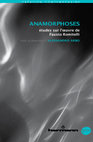
L’émergence des qualités esthétiques de la musique de Fausto Romitelli — une musique qui se plaît... more L’émergence des qualités esthétiques de la musique de Fausto Romitelli — une musique qui se plaît au paroxysme et à l’exploration des seuils perceptifs, qui ambitionne de tordre l’espace « en mille anamorphoses » — dépend dans une large mesure du formidable répertoire de gestes instrumentaux et de références symboliques qu’elle met en œuvre. Pour comprendre ses créations, pour expliquer l’impact émotionnel qu’elles peuvent avoir sur l’auditeur, il convient alors de se concentrer sur leur fonctionnement effectif, en prenant en compte la finesse d’une écriture qui a su intégrer de surprenants matériaux hétéroclites, ainsi que des modes de jeu particuliers, bouleversant nos habitudes d’écoute. C’est ce qu’ont cherché à faire les auteurs des textes réunis dans ce volume, qui entend jeter une lumière nouvelle sur la manière dont ce compositeur de talent a greffé sur les techniques spectrales de puissantes stratégies de saturation, déformation et dégradation de la matière sonore, au sein d’une création musicale qui semble définitivement brouiller les limites entre culture « savante » et « populaire ».
Textes d’Alessandro Arbo, Simone Beneventi, Jacopo Conti, Florent Jedrzejewski, Martin Kaltenecker, Pierluca Lanzilotta, Stefano Lombardi Vallauri, Eric Maestri, Luigi Manfrin, Pierre Michel, Vincenzo Santarcangelo, Isabella Vasilotta, Giovanni Verrando, Massimiliano Viel.
Textes d’Alessandro Arbo, Simone Beneventi, Jacopo Conti, Florent Jedrzejewski, Martin Kaltenecker, Pierluca Lanzilotta, Stefano Lombardi Vallauri, Eric Maestri, Luigi Manfrin, Pierre Michel, Vincenzo Santarcangelo, Isabella Vasilotta, Giovanni Verrando, Massimiliano Viel.

Collection "GREAM Esthetique", Oct 2014
Qu’est-ce qu’une œuvre musicale ? Existe-t-elle réellement ou n’est-elle qu’un concept utilisé po... more Qu’est-ce qu’une œuvre musicale ? Existe-t-elle réellement ou n’est-elle qu’un concept utilisé pour désigner une certaine manière de faire la musique à un moment donné de l’histoire ? S’agit-il d’une entité abstraite ou particulière ? Dans quelle mesure pouvons-nous l’identifier à une performance et/ou à un enregistrement ? En quoi se distingue-t-elle d’une improvisation ? Et en quoi celle-ci consiste-t-elle exactement ?
Ce livre a pour objectif d’offrir au lecteur un aperçu du vaste chantier de réflexion ouvert par ces questions. Il vise notamment à comprendre dans quelle mesure la recherche ontologique qui s’est développée dans les dernières trois décennies a contribué à approfondir notre connaissance des modes d’existence des musiques d’hier et d’aujourd’hui. Le volume s’articule en quatre volets thématiques (1. Musique et ontologie, 2. Ontologies des œuvres musicales, 3. Œuvres et enregistrements, 4. L’ontologie et improvisation). Il rassemble des contributions originales (d’Alessandro Arbo, Alessandro Bertinetto, Frédéric Bisson, Clément Canonne, Sandrine Darsel, Jacques Favier, Roger Pouivet, Marcello Ruta), ainsi que des textes d’auteurs de référence du débat anglo-saxon contemporain (Lee B. Brown, Stephen Davies, Peter Kivy, Jerrold Levinson), présentés ici pour la première fois en français.
Ce livre a pour objectif d’offrir au lecteur un aperçu du vaste chantier de réflexion ouvert par ces questions. Il vise notamment à comprendre dans quelle mesure la recherche ontologique qui s’est développée dans les dernières trois décennies a contribué à approfondir notre connaissance des modes d’existence des musiques d’hier et d’aujourd’hui. Le volume s’articule en quatre volets thématiques (1. Musique et ontologie, 2. Ontologies des œuvres musicales, 3. Œuvres et enregistrements, 4. L’ontologie et improvisation). Il rassemble des contributions originales (d’Alessandro Arbo, Alessandro Bertinetto, Frédéric Bisson, Clément Canonne, Sandrine Darsel, Jacques Favier, Roger Pouivet, Marcello Ruta), ainsi que des textes d’auteurs de référence du débat anglo-saxon contemporain (Lee B. Brown, Stephen Davies, Peter Kivy, Jerrold Levinson), présentés ici pour la première fois en français.
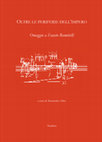
La tendenza a incrociare tradizioni “alte” e “basse” e soprattutto l’uso a volte ostentato della ... more La tendenza a incrociare tradizioni “alte” e “basse” e soprattutto l’uso a volte ostentato della techno hanno portato un critico francese a riconoscere in Fausto Romitelli il «prototipo della sottocultura della musica colta contemporanea». Questa definizione gli piaceva, anche se, come ammetteva schernendosi con un po’ d’imbarazzo, ha il difetto di non rendere ragione del meticoloso lavoro di scrittura che rimane al centro del suo lavoro. In realtà il proposito di sporcare il “bel suono” si può ricondurre a una volontà antiretorica e insieme al bisogno di toccare uno dei punti nevralgici dell’attuale civiltà dei consumi. «Oggi — osservava Romitelli in una intervista — il mondo sembra essere una metafora della vanità e della piccolezza di ciascuno: i problemi esistenziali individuali sono amplificati da quelli di un’epoca che non offre alcun punto di riferimento, ma soltanto un’estrema disumanizzazione e denaturalizzazione». Ma che cosa può fare un compositore che si trova a vivere in questo magma, e che avverte del resto la sensazione di trovarsi «all’estrema periferia dell’impero culturale»? Romitelli ci ha suggerito due risposte: guardarsi attorno e guardare avanti. Superando le frontiere fra musica colta e popolare, la sua opera ha perseguito l’utopia di un suono visionario, tellurico, denso di riferimenti, capace di parlare al corpo dell’ascoltatore e di accendere la sua immaginazione.
Avvicinarsi al modo in cui Fausto Romitelli ha percorso questa via è stato il principale obiettivo che ha animato una tavola rotonda organizzata nel novembre 2013 a Gorizia dall’associazione monfalconese «More music» : questo volume ne raccoglie le comunicazioni, integrandole con altri contributi, una bibliografia, una discografia e un catalogo che recensisce le sue composizioni edite e inedite.
Testi di Tullio Angelini, Alessandro Arbo, Enrico Girardi, Pierluca Lanzilotta, Kenka Lekovich, Stefano Lombardi Vallauri, Paolo Pachini, Fausto Romitelli, Marco Maria Tosolini, Isabella Vasilotta, Silvia Vizzardelli.
Avvicinarsi al modo in cui Fausto Romitelli ha percorso questa via è stato il principale obiettivo che ha animato una tavola rotonda organizzata nel novembre 2013 a Gorizia dall’associazione monfalconese «More music» : questo volume ne raccoglie le comunicazioni, integrandole con altri contributi, una bibliografia, una discografia e un catalogo che recensisce le sue composizioni edite e inedite.
Testi di Tullio Angelini, Alessandro Arbo, Enrico Girardi, Pierluca Lanzilotta, Kenka Lekovich, Stefano Lombardi Vallauri, Paolo Pachini, Fausto Romitelli, Marco Maria Tosolini, Isabella Vasilotta, Silvia Vizzardelli.
"Arethusa" - Solfanelli. Series Editor: Giuseppe Grasso, May 2014
Nel presente saggio, dedicato al fenomeno dell’improvvisazione, confluiscono alcuni motivi chiave... more Nel presente saggio, dedicato al fenomeno dell’improvvisazione, confluiscono alcuni motivi chiave della filosofia di Vladimir Jankélévitch, dal presque rien allo stato di verve al tema della morte. Il testo si concentra sugli esempi di Liszt, di Chopin e della musica francese e russa dei primi decenni del Novecento. L’edizione, proposta in traduzione italiana, è accompagnata da due scritti di Arrigo Cappelletti e di Silvia Peronaci.
Wittgenstein has written a great number of remarks relevant to aesthetical issues: he has questio... more Wittgenstein has written a great number of remarks relevant to aesthetical issues: he has questioned the relation between aesthetics and psychology as well as the status of our norms of judgement; he has drawn philosophers attention to such topics as aspect-seeing and aspect-dawning, and has brought insights into the nature of our aesthetic reactions. The examination of this wide range of topics is far from being completed, and the purpose of this book is to contribute to such completion. It gathers both papers discussing some of Wittgensteins most provocative and intriguing statements on aesthetics, and papers bringing out their implications for art critic and art history, as well as their significance to epistemology and to the study of human mind.