Papers by Alice S Legé
norme per gli autori I contributi critici-proposti dagli autori o frutto d'invito-sono sottoposti... more norme per gli autori I contributi critici-proposti dagli autori o frutto d'invito-sono sottoposti al vaglio del Comitato scientifico, della Redazione e del Comitato dei revisori anonimi della rivista. Elementi necessari all'accettazione sono l'originalità dell'elaborato e l'esclusività della destinazione per la stampa alla rivista "Saggi e Memorie di storia dell'arte".
Book review: Boris Czerny (éd.), Salomon Reinach, Correspondance 1888-1932. Un polygraphe sous le... more Book review: Boris Czerny (éd.), Salomon Reinach, Correspondance 1888-1932. Un polygraphe sous le signe d’Amalthée, Paris, Honoré Champion, 2020, 561 p., ill. – ISBN 978-2-7453-5405-1.
per l'opera Panca Fiore Galleria Umberto Di Marino per le opere di Eugenio Tibaldi Giardino arbus... more per l'opera Panca Fiore Galleria Umberto Di Marino per le opere di Eugenio Tibaldi Giardino arbustivo 1,2,3 e per le opere di Luca Francesconi Disegno Popolare 1 e 4 e Senza titolo Galleria Artiaco per l'opera di Maria Teresa Alvez Unrejected Wild Flora Mimmo Jodice per l'opera Eden Alice Padovani per le opere Apparato radicale #1, Solid Inclusioni organiche in cubi di gesso e Cocoons Sasha Vinci per le opere In Natura e Il gioco della deriva Si ringraziano, inoltre: Grandi Giardini Italiani-ERHG Rete Europea del Giardini Storici Tutto lo staff del Museo e di Opera Laboratori che ha collaborato al progetto ALES S.p.A. Eurogiardinaggio Nicola Maisto srl Gruppo S.i.a.s.s. srl Associazione nazionale Carabinieri-Nucleo Reggia Ganosis Consorzio Tutti gli operai, i restauratori e gli artigiani che a vario titolo hanno collaborato I privati prestatori che hanno preferito restare anonimi Vittorio Livi, per l'immagine di Villa Miralfiore I colleghi e gli amici che hanno, in modi diversi, collaborato:

Alice S. Legé, « Book review. James McAuley, The House of Fragile Things: Jewish art collectors and the fall of France », The Journal of the History of Collections, vol. 34, July 2022, p. 370-372.
https://academic.oup.com/jhc/article-abstract/34/2/370/6574511
Through an intimate and journalis... more https://academic.oup.com/jhc/article-abstract/34/2/370/6574511
Through an intimate and journalistic narrative engaging with multiple biographies, James McAuley’s book combines aspects of the disciplines of material history and Jewish studies. Using the lens of art collecting as a means of social and economic inquiry, the volume brings to the attention of an English-speaking general public the Jewish contribution to the defining qualities of French national identity. Nine chapters analyse the value of art, architecture and patronage within the lives of a Jewish elite, as portrayed by Cyril Grange in Une élite parisienne (2016) and explored by several researchers of the Society for the History of Collecting, The Jewish Country House project in Oxford, and several contributors to the present journal. Four families and four properties constitute the core of a coherent story that accompanies the reader through the achievements, ambiguities and crimes that mark a significant chapter of European history. A number of maps and family trees pinpoint the book’s main characters: the Camondos, the Reinachs, the Cahen d’Anvers family and the Rothschilds emerge as members of an interrelated generation of connoisseurs, who left their collections to the French state as ‘a means of shaping its cultural legacy’. Champs-sur-Marne castle, the Château de Ferrières, Villa Kérylos, Villa Île-de-France and several urban residences condensed the aspirations and the experiences of a community deeply affected by nineteenth-century antisemitic discourse and the racial laws of the early 1940s [...]
Book review: Reframing Japonisme: Women and the Asian Art Market in Nineteenth- Century France, 1... more Book review: Reframing Japonisme: Women and the Asian Art Market in Nineteenth- Century France, 1853–1914. By Elizabeth Emery. 280 pp. incl. 13 col. + 61 b. & w. ills. (Bloomsbury Visual Arts, London, 2020), £90. ISBN 978–1–5013–4463–3.
Alice S. Legé, « A nineteenth-century entrepreneur, owner and collector. Meyer Joseph Cahen d’Anvers and the permeable boundaries of nationality », The Journal of the History of Collections, 2022, fhac008, 11 p.
Members of the Parisian financial elite, Meyer Joseph Cahen d’Anvers (1804-1881) and his descenda... more Members of the Parisian financial elite, Meyer Joseph Cahen d’Anvers (1804-1881) and his descendants belonged to an Ashkenazy community rooted between Germany and Belgium. In the late nineteenth century, as targets of the anti-Semitic press, the Cahen d’Anvers family experienced the consequences of the Dreyfus affair and the horrors of the racial laws. In an earlier generation, the family adopted what could be defined as a ‘top-down model of integration’. This essay focuses on its mechanisms and development, in relation to the construction of the family’s national and cultural identity. After tracing the patriarch’s origins, the text analyses the properties and collections of Cahen d’Anvers and explores their influence upon the subsequent development of the family’s place in society. As a showcase for their public identity, the Château de Nainville (Essonne) and the Petit Hôtel de Villars (Paris) distilled in their architecture, furnishings and collections Meyer Joseph’s civil rights and ambitions.
https://academic.oup.com/jhc/advance-article-abstract/doi/10.1093/jhc/fhac008/6567440?redirectedFrom=fulltext
PhD Thesis, 2022
Cette thèse parle d’Hommes, d’art et de société. Elle traite de l’histoire d’un banquier Juif ash... more Cette thèse parle d’Hommes, d’art et de société. Elle traite de l’histoire d’un banquier Juif ashkénaze né à Bonn en 1804 et de ses descendants. À travers l’étude de douze demeures et de leurs collections, elle raconte l’histoire d’une dynastie d’entrepreneurs qui, de l’ancien Ghetto de Bonn – 821 rue des Juifs – rejoignit le sommet de la haute société européenne. Portraiturés par Léon Bonnat, Carolus-Duran et Renoir, Meyer Joseph Cahen d’Anvers et ses enfants Édouard, Emma, Louis, Raphaël et Albert vécurent les conséquences de l’Affaire Dreyfus, s’efforçant d’exprimer la plénitude de leurs droits civils à travers la sociabilité et le mécénat. Dans leurs salons, en ville et à la campagne, les lecteurs croiseront les pas de Guy de Maupassant, Paul Bourget, Marcel Proust et César Franck, ou encore de Gabriele D’Annunzio et Matilde Serao. Au château de Champs-sur-Marne, à Torre Alfina et dans les autres demeures de la famille les architectes Destailleur et Giuseppe Partini, ou encore les paysagistes Henri et Achille Duchêne, surent plier la « grammaire » du Moyen Âge, de la Renaissance et du XVIIIe siècle au goût et aux ambitions de leurs commanditaires.
https://www.lgdj.fr/les-cahen-d-anvers-en-france-et-en-italie-9782370323743.html
The extensive availability of objects on the antiquarian market in XIX Century Europe encouraged ... more The extensive availability of objects on the antiquarian market in XIX Century Europe encouraged the wide interest for the Renaissance medals. Through an important research on the auction catalogues – based mainly on the Re´pertoire of Frits Lugt and on the Arquie´s archive funds in the De´partement des Objets d’art of the Louvre Museum, it is possible to follow the evolution of taste for these numismatic objects, from 1800 to 1860, and from London to the United States, via
the Parisian auction houses.
To crown the project of its sumptuous and eclectic residence between Umbria and Lazio, formerly t... more To crown the project of its sumptuous and eclectic residence between Umbria and Lazio, formerly the property of the noble Guelph family of the Monaldeschi della Cervara, restored by Giuseppe Partini (1842-1895), the Marquis and banker Édouard Cahen d'Anvers (1832-1894) requested the presence in Torre Alfina of two of the most famous landscape artists of the Belle Époque. Under the watchful eye of his sons Rodolfo and Hugo, the French Henri (1841-1902) and Achille Duchêne (1866-1947) created two of their rarest works still existing in the Italian territory.
This paper will analyze in detail the gardens of the castle of Torre Alfina, also taking consideration of the ones of the villa Allerona, known as one of the first Japanese-inspired mixed gardens designed in Italy. In a unified dialogue between green and architecture, the work of the Duchêne reflects the taste, style and cosmopolitan attitude of its clients, according to a neo-feudal logic that was widespread on a European scale.
[English below]
Dopo un articolo introduttivo pubblicato nel CXVII volume della ‘‘Rivista Italian... more [English below]
Dopo un articolo introduttivo pubblicato nel CXVII volume della ‘‘Rivista Italiana
di Numismatica’’, presentiamo qui la trascrizione integrale del manoscritto Copia
d’un libro d’un Spagnolo di molti belli secreti ch’era in zifra dell’Arte del gettar
medaglie et bellissimi sofisti. Al Mag. Sig.re Dottor Antiopa, conservato presso
la biblioteca dell’Institut National d’Histoire de l’Art di Parigi sotto la segnatura
ms. 0740. Appartenuto al collezionista Gustave Dreyfus, il testo rientra nell’abbondante letteratura rinascimentale ‘‘dei segreti’’ ponendosi come un prontuario
estremamente dettagliato, in grado di accompagnare tanto un artista quanto un
dilettante nella contraffazione di monete antiche secondo un gusto tipicamente cinquecentesco. Sulle orme di Vannoccio Biringuccio e di Don Alessio Piemontese,
l’autore propone una cinquantina di ricette legate alla metallurgia e all’alchimia,
che vanno dalla composizione delle leghe all’alterazione delle superfici, passando
per la preparazione delle argille per gli stampi in cui verra`gettato il metallo fuso.
[English]
After a first article, published in vol. CXVII of the ‘‘Rivista Italiana di Numismatica’’, we present a complete transcription of the manuscript Copia d’un libro d’un Spagnolo di molti belli secreti ch’era in zifra dell’Arte del gettar medaglie et bellissimi sofisti. Al Mag. Sig.re Dottor Antiopa, kept in the Institut National d’Histoire de l’Art library in Paris, under the shelfmark Ms. 0740.
The volume – which belonged to the collector Gustave Dreyfus – is part of the ‘‘books of secrets’’ literature and it provides an extremely detailed manual that could assist an artist or a dilettante in the forgery of ancient coins, following Renaissance taste. The author offers some fifty recipes related to metallurgy and alchemy. Similarly to the publications of Vannoccio Biringuccio and Don Alessio Piemontese, the manuscript discusses various technical aspects, from the composition of alloys to surface alteration, including the preparation of different sorts of
clay for the production of casting molds.
La vraie nouveauté, c'est ce qui ne vieillit pas, malgré le temps. » (M. Barbery) 4 5 RÉSUMÉ À tr... more La vraie nouveauté, c'est ce qui ne vieillit pas, malgré le temps. » (M. Barbery) 4 5 RÉSUMÉ À travers l'analyse d'un corpus de quatre-vingt médailles conservées au Musée du Louvre, dont le type a été conçu entre le XV e et le XVI e siècle, nous abordons plusieurs problématiques qui affectent l'histoire de la médaille moderne. Comme l'étude de la monnaie, celle de la médaille est amenée à confronter le concept d'authenticité d'une manière radicalement différente des autres objets d'art. Du XVI e siècle à nos jours, un très grand nombre de prises d'empreintes et de surmoulages ont été réalisés selon des raisons très disparates. En partant d'une étude de sa fortune littéraire et marchande et d'un parallèle avec la numismatique pure, nous suivons les traces des faussaires et des imitateurs les plus importants de l'époque moderne. Enfin, nous nous immiscerons dans l'atelier d'un célèbre fondeur du XIX e siècle, le parisien Liard, soupçonné d'avoir mis sur le marché de fausses médailles de la Renaissance. C'est à son époque que naît une véritable mode de la médaille italienne et le corpus du Louvre nous permet d'esquisser une histoire du collectionnisme moderne à travers l'analyse de sa provenance. Pierre Révoil, Alexandre-Charles Sauvageot, le baron Davillier et Gustave Dreyfus nous introduisent au sein d'un milieu d'amateurs étincelant, où nous croisons des personnages tels que Bernard Berenson, Alfred Armand ou Wilhelm von Bode. S'ensuit un catalogue de ces quatre-vingt médailles, attribuées à Leone Leoni, Jacopo da Trezzo, Pastorino, Caradosso, Candida ainsi qu'à d'autres artistes, nombreux, qui, avec leur nature hétéroclite, constituent le maillon de la chaîne qui relie les exemplaires de Pisanello aux productions de l'époque baroque.
[French and English below]
Nel 1885 Gustave Dreyfus sta attraversando l’Italia. Sir Charles Robi... more [French and English below]
Nel 1885 Gustave Dreyfus sta attraversando l’Italia. Sir Charles Robinson, conservatore del South Kensington Museum di Londra, lo incontra a Bologna. Qui, l’inglese cede al grande collezionista parigino un manoscritto di una cinquantina di pagine firmato “Spagnolo” e dedicato a un enigmatico notabile italiano, il “Mag. Sig.re Dottor Antiopa”. Dreyfus è conosciuto in tutta europa per la sua immensa collezione di medaglie e placchette rinascimentali, e questo antico trattato di medaglistica non può che attirare la sua attenzione. Il titolo del volumetto svetta in cima alla prima pagina, in una bella grafia corsiva: Copia d’un libro d’un Spagnolo di molti belli secreti ch’era in zifra dell’Arte del gettar medaglie et bellissimi sofisti. Al Mag. Sig.re Dottor Antiopa. Il testo contiene una dissertazione tecnica sui metodi di lavorazione del metallo per la produzione di medaglie e, nel suo insieme, costituisce un prontuario estremamente dettagliato, in grado di accompagnare tanto un artista, quanto un falsario dilettante.
Alcune osservazioni, tra cui un interessante riferimento al metallurgo senese Vannoccio Biringuccio e un attento studio del supporto cartaceo, ci hanno permesso di datare il manoscritto – di cui proponiamo una trascrizione parziale – tra il 1513 e il 1539.
Français
En 1885, Gustave Dreyfus est en train de traverser l’Italie. Sir Charles Robinson, conservateur du South Kensington Museum de Londres, le rencontre à Bologne. Ici, l’Anglais cède au grand collectionneur parisien un manuscrit d’une cinquantaine de pages, signé « Spagnolo » et dédié à un énigmatique notable italien, le « Mag. Sig.re Dottor Antiopa ». Dreyfus est célèbre dans toute l’Europe pour sa collection de médailles et plaquettes de la Renaissance italienne et cet ancien traité de science des médailles ne peut qu’attirer son intérêt. Le titre du volume jaillit en haut de la première page, marqué à l’encre avec une graphie fine et élégante : Copia d’un libro d’un Spagnolo di molti belli secreti ch’era in zifra dell’Arte del gettar medaglie et bellissimi sofisti. Al Mag. Sig.re Dottor Antiopa. Le texte contient une dissertation technique sur les méthodes de travail des métaux pour la production de médailles et, dans son ensemble, il constitue un véritable manuel capable d’accompagner tant un artiste qu’un faussaire amateur.
Plusieurs observations, dont une intéressante référence au métallurgiste siennois Vannoccio Biringuccio et une étude soignée du support papier, nous ont permis de dater le manuscrit – duquel nous proposons une transcription partielle – entre 1513 et 1539.
English
In 1885 Gustave Dreyfus is travelling across Italy. Sir Charles Robinson – curator of the South Kensington Museum in London – meets him in Bologna. Here, the Englishman sells to the Parisian collector a manuscript of around fifty pages. It is signed "Spanolo" and dedicated to an enigmatic Italian notable, the "Mag. Sig.re Dottor Antiopa". Dreyfus is well-known in all Europe for his immense collection of Renaissance medals and plaquettes, and this ancient treatise of medals’ studies rapidly catches his attention. The volume’s title stands out on the top of the first page, in a beautiful cursive handwriting: Copia d’un libro d’un Spagnolo di molti belli secreti ch’era in zifra dell’Arte del gettar medaglie et bellissimi sofisti. Al Mag. Sig.re Dottor Antiopa. The text contains a technical dissertation on metal’s workmanship methods for the production of medals and, in its whole, it provides an extremely detailed manual able to attend as well an artist as an amateur counterfeiter. An interesting reference to the Sienese smith Vannoccio Biringuccio and a careful paper’s study, led us to date the manuscript – of which we propose a partial transcription – between 1513 and 1539.
Durant le siècle de la grande floraison de l’histoire de l’art comme discipline d’étude scientifi... more Durant le siècle de la grande floraison de l’histoire de l’art comme discipline d’étude scientifique, l’historien de l’art d’origine alsacienne Eugène Müntz joue un rôle incontournable. Amant passionné de l’Italie et réputé connaisseur de la Renaissance, Müntz arrive à créer autour de soi un réseau international d’historiens qu’on pourrait comparer à une deuxième République des Lettres. Ses fonds de correspondance, conservés en trente-sept volumes à la Bibliothèque Nationale Française, constituent une source exceptionnelle pour l’étude de l’historiographie du XIXème siècle. À travers des recherches croisées, à Paris, ainsi qu’aux archives de l’École Normale Supérieure de Pise et à la bibliothèque Marciana de Venise, nous proposons au lecteur une transcription complète des échanges épistolaires de Müntz avec deux des pères de l’histoire de l’art italien: Adolfo Venturi
et Giovanni Battista Cavalcaselle. Ce corpus d’environ quatre-vingt-dix lettres, est accompagné d’une biographie d’Eugène Müntz et d’une étude de la fortune critique de la traduction italienne de son ouvrage Histoire de l’art pendant la Renaissance.
Conference Presentations by Alice S Legé
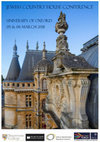
The architectural projects of Torre Alfina’s castle and Villa della Selva stem from the will of M... more The architectural projects of Torre Alfina’s castle and Villa della Selva stem from the will of Marquis Édouard Cahen d’Anvers. Nevertheless, the most meaningful decorative interventions were supervised by his children. Torre Alfina’s galleries, filled with the coat of arms of the Cahen d’Anvers family, reflect the character of Rodolfo. Similarly, the elegant and measured Villa della Selva denotes Hugo’s discretion, as a refined gentleman impassioned with trips and chinoiserie. Obviously, both of them have the same roots: they are the heirs of a powerful Jewish family with ancient memories and traditions that have been cultivated in a cosmopolite milieu. Nevertheless, both of them break the traditional patterns. Hugo, just like his father, will contract an interracial marriage. Rodolfo preferred to use "Torre Alfina" instead of his family name. Their relationship with the French branch of the Cahen d’Anvers was almost nonexistent. What intentions can be revealed from these attitudes? Is it a personal and intimate choice, or a voluntary estrangement with an aim at local integration? Is Torre Alfina’s castle a feudal act of owning a fief just like the ancient Italian nobility did? In this context, the castle of Champs-sur-Marne, that belonged to Édouard’s brother – Louis Cahen d’Anvers – will be our touchstone. What can be gained by comparing this French property with the Italian ones? The cultural and historical differences that divided France and Italy will allow us to better understand Cahen d’Anvers aesthetical choices, analyzing their intrinsic value together with their weight on the assimilation and integration process of the Jewish elites in Europe.
Podcast:
http://torch.ox.ac.uk/alice-leg%C3%A9-6-%E2%80%98torre-alfina-cahen-d%E2%80%99anvers-manor-italy%E2%80%99
Communication présentée au 16e Colloque International du Département des Sciences Historiques de ... more Communication présentée au 16e Colloque International du Département des Sciences Historiques de l’Université Laval, Québec, Canada, le 18 février 2016.
Books by Alice S Legé
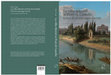
Nel 1524 il banchiere fiorentino Bindo Altoviti acquista per sé e per i suoi «heredi una vigna p... more Nel 1524 il banchiere fiorentino Bindo Altoviti acquista per sé e per i suoi «heredi una vigna posta drieto a Castel Santo Agnolo», presso un’ansa del Tevere che si affaccia strategicamente verso il porto di Ripetta. Circondato da vigneti, canneti e orti, il casino nobile e il suo giardino si incardinano in una struttura composita, nobilitata da una loggia affrescata da Giorgio Vasari nel 1553. Mai completamente indagata dalla critica, villa Altoviti fu gravemente danneggiata da un incendio durante l’assedio del 1849 alla neoproclamata Repubblica Romana. Il ritrovamento di due inventari, integralmente trascritti in appendice, permette al volume di ripercorrere la storia della proprietà, fino alla sua definitiva scomparsa, quale vittima dell’urbanizzazione selvaggia che seguì l’Unità d’Italia. Elemento focale nel paesaggio rurale del Tevere, villa Altoviti rivaleggiava con la più nota proprietà di Agostino Chigi, l’attuale villa Farnesina.
Alla fortuna iconografica della riva del Tevere ai Prati di Castello, luogo di promenades e oggetto di interesse vedutistico, è dedicato il saggio di Alessandro Cremona, storico dell’arte e dei giardini, che, attraverso la ricognizione del cospicuo materiale figurativo prodotto tra Sei e Ottocento, ne evidenzia le singolarità ricostruendo le vicende della limitrofa villa di Montesecco, aneddoticamente identificata come la casa di Claude Lorrain.



Uploads
Papers by Alice S Legé
Through an intimate and journalistic narrative engaging with multiple biographies, James McAuley’s book combines aspects of the disciplines of material history and Jewish studies. Using the lens of art collecting as a means of social and economic inquiry, the volume brings to the attention of an English-speaking general public the Jewish contribution to the defining qualities of French national identity. Nine chapters analyse the value of art, architecture and patronage within the lives of a Jewish elite, as portrayed by Cyril Grange in Une élite parisienne (2016) and explored by several researchers of the Society for the History of Collecting, The Jewish Country House project in Oxford, and several contributors to the present journal. Four families and four properties constitute the core of a coherent story that accompanies the reader through the achievements, ambiguities and crimes that mark a significant chapter of European history. A number of maps and family trees pinpoint the book’s main characters: the Camondos, the Reinachs, the Cahen d’Anvers family and the Rothschilds emerge as members of an interrelated generation of connoisseurs, who left their collections to the French state as ‘a means of shaping its cultural legacy’. Champs-sur-Marne castle, the Château de Ferrières, Villa Kérylos, Villa Île-de-France and several urban residences condensed the aspirations and the experiences of a community deeply affected by nineteenth-century antisemitic discourse and the racial laws of the early 1940s [...]
https://academic.oup.com/jhc/advance-article-abstract/doi/10.1093/jhc/fhac008/6567440?redirectedFrom=fulltext
https://www.lgdj.fr/les-cahen-d-anvers-en-france-et-en-italie-9782370323743.html
the Parisian auction houses.
This paper will analyze in detail the gardens of the castle of Torre Alfina, also taking consideration of the ones of the villa Allerona, known as one of the first Japanese-inspired mixed gardens designed in Italy. In a unified dialogue between green and architecture, the work of the Duchêne reflects the taste, style and cosmopolitan attitude of its clients, according to a neo-feudal logic that was widespread on a European scale.
Dopo un articolo introduttivo pubblicato nel CXVII volume della ‘‘Rivista Italiana
di Numismatica’’, presentiamo qui la trascrizione integrale del manoscritto Copia
d’un libro d’un Spagnolo di molti belli secreti ch’era in zifra dell’Arte del gettar
medaglie et bellissimi sofisti. Al Mag. Sig.re Dottor Antiopa, conservato presso
la biblioteca dell’Institut National d’Histoire de l’Art di Parigi sotto la segnatura
ms. 0740. Appartenuto al collezionista Gustave Dreyfus, il testo rientra nell’abbondante letteratura rinascimentale ‘‘dei segreti’’ ponendosi come un prontuario
estremamente dettagliato, in grado di accompagnare tanto un artista quanto un
dilettante nella contraffazione di monete antiche secondo un gusto tipicamente cinquecentesco. Sulle orme di Vannoccio Biringuccio e di Don Alessio Piemontese,
l’autore propone una cinquantina di ricette legate alla metallurgia e all’alchimia,
che vanno dalla composizione delle leghe all’alterazione delle superfici, passando
per la preparazione delle argille per gli stampi in cui verra`gettato il metallo fuso.
[English]
After a first article, published in vol. CXVII of the ‘‘Rivista Italiana di Numismatica’’, we present a complete transcription of the manuscript Copia d’un libro d’un Spagnolo di molti belli secreti ch’era in zifra dell’Arte del gettar medaglie et bellissimi sofisti. Al Mag. Sig.re Dottor Antiopa, kept in the Institut National d’Histoire de l’Art library in Paris, under the shelfmark Ms. 0740.
The volume – which belonged to the collector Gustave Dreyfus – is part of the ‘‘books of secrets’’ literature and it provides an extremely detailed manual that could assist an artist or a dilettante in the forgery of ancient coins, following Renaissance taste. The author offers some fifty recipes related to metallurgy and alchemy. Similarly to the publications of Vannoccio Biringuccio and Don Alessio Piemontese, the manuscript discusses various technical aspects, from the composition of alloys to surface alteration, including the preparation of different sorts of
clay for the production of casting molds.
Nel 1885 Gustave Dreyfus sta attraversando l’Italia. Sir Charles Robinson, conservatore del South Kensington Museum di Londra, lo incontra a Bologna. Qui, l’inglese cede al grande collezionista parigino un manoscritto di una cinquantina di pagine firmato “Spagnolo” e dedicato a un enigmatico notabile italiano, il “Mag. Sig.re Dottor Antiopa”. Dreyfus è conosciuto in tutta europa per la sua immensa collezione di medaglie e placchette rinascimentali, e questo antico trattato di medaglistica non può che attirare la sua attenzione. Il titolo del volumetto svetta in cima alla prima pagina, in una bella grafia corsiva: Copia d’un libro d’un Spagnolo di molti belli secreti ch’era in zifra dell’Arte del gettar medaglie et bellissimi sofisti. Al Mag. Sig.re Dottor Antiopa. Il testo contiene una dissertazione tecnica sui metodi di lavorazione del metallo per la produzione di medaglie e, nel suo insieme, costituisce un prontuario estremamente dettagliato, in grado di accompagnare tanto un artista, quanto un falsario dilettante.
Alcune osservazioni, tra cui un interessante riferimento al metallurgo senese Vannoccio Biringuccio e un attento studio del supporto cartaceo, ci hanno permesso di datare il manoscritto – di cui proponiamo una trascrizione parziale – tra il 1513 e il 1539.
Français
En 1885, Gustave Dreyfus est en train de traverser l’Italie. Sir Charles Robinson, conservateur du South Kensington Museum de Londres, le rencontre à Bologne. Ici, l’Anglais cède au grand collectionneur parisien un manuscrit d’une cinquantaine de pages, signé « Spagnolo » et dédié à un énigmatique notable italien, le « Mag. Sig.re Dottor Antiopa ». Dreyfus est célèbre dans toute l’Europe pour sa collection de médailles et plaquettes de la Renaissance italienne et cet ancien traité de science des médailles ne peut qu’attirer son intérêt. Le titre du volume jaillit en haut de la première page, marqué à l’encre avec une graphie fine et élégante : Copia d’un libro d’un Spagnolo di molti belli secreti ch’era in zifra dell’Arte del gettar medaglie et bellissimi sofisti. Al Mag. Sig.re Dottor Antiopa. Le texte contient une dissertation technique sur les méthodes de travail des métaux pour la production de médailles et, dans son ensemble, il constitue un véritable manuel capable d’accompagner tant un artiste qu’un faussaire amateur.
Plusieurs observations, dont une intéressante référence au métallurgiste siennois Vannoccio Biringuccio et une étude soignée du support papier, nous ont permis de dater le manuscrit – duquel nous proposons une transcription partielle – entre 1513 et 1539.
English
In 1885 Gustave Dreyfus is travelling across Italy. Sir Charles Robinson – curator of the South Kensington Museum in London – meets him in Bologna. Here, the Englishman sells to the Parisian collector a manuscript of around fifty pages. It is signed "Spanolo" and dedicated to an enigmatic Italian notable, the "Mag. Sig.re Dottor Antiopa". Dreyfus is well-known in all Europe for his immense collection of Renaissance medals and plaquettes, and this ancient treatise of medals’ studies rapidly catches his attention. The volume’s title stands out on the top of the first page, in a beautiful cursive handwriting: Copia d’un libro d’un Spagnolo di molti belli secreti ch’era in zifra dell’Arte del gettar medaglie et bellissimi sofisti. Al Mag. Sig.re Dottor Antiopa. The text contains a technical dissertation on metal’s workmanship methods for the production of medals and, in its whole, it provides an extremely detailed manual able to attend as well an artist as an amateur counterfeiter. An interesting reference to the Sienese smith Vannoccio Biringuccio and a careful paper’s study, led us to date the manuscript – of which we propose a partial transcription – between 1513 and 1539.
et Giovanni Battista Cavalcaselle. Ce corpus d’environ quatre-vingt-dix lettres, est accompagné d’une biographie d’Eugène Müntz et d’une étude de la fortune critique de la traduction italienne de son ouvrage Histoire de l’art pendant la Renaissance.
Conference Presentations by Alice S Legé
Podcast:
http://torch.ox.ac.uk/alice-leg%C3%A9-6-%E2%80%98torre-alfina-cahen-d%E2%80%99anvers-manor-italy%E2%80%99
Books by Alice S Legé
Alla fortuna iconografica della riva del Tevere ai Prati di Castello, luogo di promenades e oggetto di interesse vedutistico, è dedicato il saggio di Alessandro Cremona, storico dell’arte e dei giardini, che, attraverso la ricognizione del cospicuo materiale figurativo prodotto tra Sei e Ottocento, ne evidenzia le singolarità ricostruendo le vicende della limitrofa villa di Montesecco, aneddoticamente identificata come la casa di Claude Lorrain.