Books & edited books by Anca Dan
Le Scamandre divin, le Méandre au cours sinueux, le Pactole charriant de l’or, le Xanthos tourbil... more Le Scamandre divin, le Méandre au cours sinueux, le Pactole charriant de l’or, le Xanthos tourbillonnant, le Caïque au beau cours, le grand Sangarios ou l’Halys, ligne de démarcation entre la Basse et la Haute Asie… L’Asie Mineure comprend de nombreux fleuves et d’importants cours d’eau. Plusieurs d’entre eux ont intéressé les auteurs anciens. Quelques-uns sont devenus ainsi célèbres et sont rentrés dans la mémoire collective, associés à l’image de cet espace géographique. Pourtant peu de travaux existent sur les fleuves et les lacs de la péninsule anatolienne dans l’Antiquité. Plus encore, il n’existe pas d’étude d’ensemble à l’échelle de l’Asie Mineure dans ce domaine. Ce présent ouvrage, divisé en deux volumes, propose une première approche. Il est le résultat de trois journées d’études qui se sont tenues à l’Université d’Artois entre 2010 et 2011. Le premier volume s’intéresse à la question du fleuve comme objet d’histoire. Il prend ainsi en considération les représentations des fleuves dans la tradition antique et cherche à explorer la diversité des études permises par le sujet. Le deuxième volume présente l’étude de plusieurs cours d’eau, du Bosphore à l’Euphrate. Ce sont là autant de cas particuliers qui nous ramènent à la fois vers le local, la diversité et le concret : le fleuve en son territoire. Cette première approche est une invitation à poursuivre la recherche dans un domaine prometteur.
In 2015, Polis—The Jerusalem Institute of Languages and Humanities held an international conferen... more In 2015, Polis—The Jerusalem Institute of Languages and Humanities held an international conference on Hellenistic Egypt's most famous center of scholarship and learning. The interdisciplinary event gathered historians, archaeologists, and linguists, as well as specialists on the Septuagint and on Greek literature to discuss related subjects from a wide array of perspectives and to answer some of the most burning questions related to the rise and fall of this iconic institution.
Created and developed by the Ptolemaic kings, the Library of Alexandria was regarded as the world's main center of scholarship from the 3rd century BC until at least the reign of Cleopatra (48–30 BC). The dream to establish a gigantic library that could assemble all known texts of the Hellenistic period, the outstanding achievements of the scholars who have worked inside its walls, and, finally, the mysteries surrounding its disappearance, have bestowed an almost mythic status on this monumental library.
Where was the Royal Library located exactly, and what kind of texts were kept there? To what extent did the Library of Alexandria become a meeting point for different languages and cultures? Should we distinguish between the Museum and the Library from an institutional point of view? Were the book collections housed in separate buildings? What caused the destruction of those collections and how much was lost? Why do some ancient authors remain silent about the Library's disappearance?
The book comprises eleven articles written by the scholars who participated in the conference, as well as transcripts of the discussions that followed their presentations, an index locorum of all ancient source texts quoted in the book, an extensive bibliography, and an introduction by editor Christophe Rico, outlining the overall contents and highlighting their interrelation.
L’ouvrage réunit trente-six articles offerts à Patrick Gautier Dalché par ses amis, ses élèves et... more L’ouvrage réunit trente-six articles offerts à Patrick Gautier Dalché par ses amis, ses élèves et ses collègues à l’occasion de son départ en retraite.
Pour rendre hommage à ses travaux, qui ont renouvelé les recherches sur l’histoire des perceptions et représentations de l’espace, les éditeurs ont souhaité rassembler des contributions qui pour l’essentiel s’inscrivent dans cette même perspective, traitant des représentations spatiales aussi bien textuelles que cartographiques, savantes ou empiriques, dans la longue période que lui-même étudie, allant de l’Antiquité tardive au XVIe siècle.
Articles/Papers by Anca Dan
Studii Clasice, 2024
In 2001, a small scarab made of dark greenish-blue ‘Egyptian’ paste was discovered during the e... more In 2001, a small scarab made of dark greenish-blue ‘Egyptian’ paste was discovered during the excavation of the ‘Episcopal Basilica’ foundations in Istros (Constanța, Romania). Its elementary shape and the inscription engraved on its base before firing – Jmn-Rʿ, one of the many trigrammata of Amun, near the solar symbol of Re – show that this scarab belongs to a series of scarabs found at Naukratis but also on the Black Sea coast at Berezan-Olbia, Panticapaion, Orgame and Mesambria. Many of these finds are later than the ‘scarab factory’ excavated by W.M.F. Petrie in the sanctuary of Naukratis and dated by him up to the early 6th century BC. This calls for a critical re-examination of the excavations in which these amulets were found, their circulation paths, and their possible meanings. The ‘Egyptian’ scarabs could be worn by several generations. However, we cannot rule out the possibility that these small scarabs were made in several workshops in Egypt and on the Eastern shores of the Inner Sea, by craftsmen who mechanically reproduced a model dating back to the 18th dynasty but who probably had a general knowledge of its prophylactic meaning.

Archäologischer Anzeiger , 2020
The Thracian harbour city of Ainos – Results of an interdisciplinary research project
This artic... more The Thracian harbour city of Ainos – Results of an interdisciplinary research project
This article summarizes the results of a project funded by the German Research Foundation (DFG) under the umbrella of the SPP 1630 from 2012 to 2018. During the field campaigns archaeological, architectural, geoarchaeological and geophysical investigations were carried out. The research focus was on the topographical and economic development of Ainos in antiquity, especially during the Roman Empire, as well as during the Byzantine period. New findings were obtained regarding the development of the town and the localisation of possible harbour sites. It became clear that the Roman Empire in Ainos is not, as long assumed, to be considered as an epoch of decline. The landscape changes, esp. the sedimentation caused by the southwestward advancing delta of the Hebros, did not lead to restrictions regarding landing sites until the early Byzantine period.

The Holocene, 2021
This paper documents the Late-Holocene environmental changes and human presence in the northern D... more This paper documents the Late-Holocene environmental changes and human presence in the northern Danube delta using a multidisciplinary approach that combines geoscientific data with archaeological findings, historical texts, and maps. It follows the formation and progression of the Chilia distributary and the reconfiguration of socioeconomic activities. Sedimentary facies identified on five new cores by changes in texture properties, magnetic susceptibility, geochemistry, and macro-and microfauna composition together with the newly obtained chronology constrain the complex evolution of the Chilia branch as filling in a long-lasting bay and then of a giant lagoon (Thiagola) which covered most of the northern delta since the Old Danube lobe inception (ca. 7500 yrs BP) till modern Chilia development. It initiated during the Greek Antiquity (ca. 2500 yrs ar BP) at the delta apex, while in Roman times (ca. 1800 yrs BP) it pursued its slow flowing into the vast Thiagola Lagoon. The most dramatic transformations occurred in the last 800 years when the river passed east of the Chilia promontory, rapidly went through the present-day Matița-Merhei basin (several decades), and created its first open-sea outlet. Solid discharge increased in two distinct periods, once in the Middle Ages (ca. 750 yrs BP) and then in the Modern Period (ca. 150 yrs BP) due to humaninduced land-use changes in the Danube watershed. The chronology of the cultural remains on the pre-deltaic Chilia promontory and the multiproxy analysis of a sediment core retrieved nearby downstream suggest the terrestrial connection of the island with the mainland in ancient times. The hitherto contended issue of the old Thiagola Lagoon and its location are redefined here, as are the original identifications of ancient and medieval toponyms and hydronyms, especially for Chilia-Licostomo, Byzantine, Genoese, Moldavian, Ottoman, and Russian trading point of great importance in the political and economic history of the Black Sea and neighboring regions.
Plan de la chronique
Anca Dan, « Qu’est-ce que l’espace des Anciens ? Œcoumène, paysages, lieux ... more Plan de la chronique
Anca Dan, « Qu’est-ce que l’espace des Anciens ? Œcoumène, paysages, lieux sacrés »
Hans-Joachim Gehrke, « Olympie, l’espace multidimensionnel d’une terre grecque sacrée »
Salvatore De Vincenzo, « Tradition et changements dans le paysage sacré de l’Étrurie romaine : enjeux chronologiques, politiques et culturels »
Chiara Blasetti Fantauzzi, « Les changements du paysage sacré dans l’Italie centrale apennine à l’époque romaine »
A. Belousov, E. Ilushechkina (Eds.), HOMO OMNIVM HORARVM. HOMO OMNIVM HORARVM. Symbolae ad anniuersarium septuagesimum professoris Alexandri Podosinov dedicatae . , 2020
Following on from the geoarchaeological reconstruction of the ancient archipelago and channels of... more Following on from the geoarchaeological reconstruction of the ancient archipelago and channels of the Kerch Straits before the progradation of the Kuban Delta, this paper offers arguments for the identification of Coracanda with the “Kuban Bosporus”, of Korokondamè with Volna 1 and the southern part of the Taman Island, and of Korokondamitis with the Bugaz, Kyzyltash and Zukur Liman. These ancient names could go back to an Old Iranian description of the straits as a “throat, gorge”. They are coherent with other Greek and non-Greek toponyms in the region and could have influenced the local anchoring of the Cimmerian myth.
Dialogues d'histoire ancienne, 2015
À la suite du numéro consacré aux transferts entre cultures distinctes, ce dossier pose le problè... more À la suite du numéro consacré aux transferts entre cultures distinctes, ce dossier pose le problème de la transmission des idées entre communautés qui se perçoivent ou
sont perçues comme identiques ou analogues. Contrairement à la plupart des études sur les transferts culturels, dans ce cas l’ analyse des identités collectives ne se focalise plus sur des emprunts « étrangers ». Elle met en avant l’ homogénéité de la culture source et de la culture cible, malgré les différences de temps et, parfois, d’ espace. Ainsi, les transferts culturels diachroniques intéressent tout d’ abord les communautés soucieuses de retrouver leurs antécédents et, avec eux, une raison d’ être, une part d’ identité : on construit donc le passé en fonction du présent et le présent en fonction du passé. L’ article de Hans-Joachim Gehrke, un aperçu en français de son livre sur l’ historiographie grecque qui vient de paraître, explique la création du passé grec, entre l’ époque archaïque et l’ époque hellénistique. Anthony Snodgrass revient sur un problème historiographique intéressant de son travail archéologique en Béotie : l’ invention du passé grec classique à l’ époque moderne et le danger qui guette quand on est prêt à transposer dans le passé un présent qui semble immuable. Comment et pourquoi traiter alors de l’ Antique et du Moderne, si le passé est toujours une construction imparfaite, dans laquelle on ne peut faire abstraction du présent ? L’ anachronisme est-il évitable ? L’ article de Stefan Ritter suggère une solution : la contextualisation des faits passés et présents, leur mise en regard critique, l’ attention portée aux similitudes autant qu’ aux différences.
Le temps et l’espace déterminent ensemble les caractéristiques des groupes qui les partagent. Leu... more Le temps et l’espace déterminent ensemble les caractéristiques des groupes qui les partagent. Leur histoire, facteur mais aussi expression identitaire, peut être réinventée – comme l’ont fait les Athéniens à propos de Marathon –, réinterprétée – comme le faisait les Scythes dans leurs légendes –, vécue au présent – par les Bataves du Haut-Empire – par et pour l’ethnos, autant qu’elle est le résultat de sa synergie.
Pour nourrir la réflexion sur l’ adéquation des concepts, méthodes et outils de l’ analyse des ré... more Pour nourrir la réflexion sur l’ adéquation des concepts, méthodes et outils de l’ analyse des réseaux aux sciences de l’ Antiquité, sur leurs avantages et désavantages, nous avons réuni dans ce dossier trois contributions à l’ étude archéologique des territoires.
L’ article de Patrice Brun offre une introduction utile à cette approche moderne de l’ Antiquité par les réseaux, mettant en évidence les principes et les acquis possibles de ces méthodes. Lorenz Baumer met en avant les valeurs heuristiques des concepts réseautiques appliqués aux systèmes et identités religieuses de l’ Attique archaïque et classique. Enfin, Joseph Coleman Carter présente dans une synthèse originale, qui précède la publication de ses livres, les résultats des recherches menées pendant plusieurs décennies sur le terrain de Métaponte ; il explique, selon sa méthodologie interdisciplinaire habituelle, des situations que l’ on pourrait analyser aujourd’ hui en termes « réseautiques ».
Dialogues d'histoire ancienne, 2018
Les membres du comité de rédaction et du comité scientifique marqués d'un astérisque (*) composen... more Les membres du comité de rédaction et du comité scientifique marqués d'un astérisque (*) composent le comité de lecture. eISSN 1955-270x ISSN 0755-7256 Dialogues d'histoire ancienne -Rédaction. 30-32 rue Mégevand. F -25030 BESANÇON-CEDEX Tél. +33 (0)3 81 66 54 61 -Courriel [email protected] http://ista.univ-fcomte.fr Les Dialogues d'Histoire Ancienne, fidèles à la ligne éditoriale fixée par la rédaction lors de leur création en 1974, sont une revue d'histoire ancienne généraliste qui s'efforce de proposer des approches méthodologiques diverses, d'inventorier des domaines nouveaux, d'offrir des vues neuves sur des espaces considérés trop longtemps comme périphériques, de proposer enfin un lieu d'expression et de débat à des spécialistes venus des horizons scientifiques les plus divers.
Dialogues d'histoire ancienne, 2019
Les concepts en sciences de l’ Antiquité : mode d’ emploi
Chronique 2019 – Fragments et fragmenta... more Les concepts en sciences de l’ Antiquité : mode d’ emploi
Chronique 2019 – Fragments et fragmentation
I- Anca Dan, Introduction
II- Dominique Briquel, Une langue connue de manière fragmentaire : l’étrusque comme « Trümmersprache »
III- Katherine Gruel, Restitution des coins monétaires : l’impact sur l’histoire de l’art et la compréhension de l’économie gauloise
IV- Stéphane Verger, Les incroyables tribulations d’un anneau de jambe auvergnat de l’âge du fer : Circulation, stockage, conservation et utilisation des lots de fragments d’objets de bronze en Méditerranée occidentale aux viie-vie siècles avant J.-C.
Dialogues d'histoire ancienne, 2020
Distribution électronique Cairn.info pour Presses universitaires de Franche-Comté. © Presses univ... more Distribution électronique Cairn.info pour Presses universitaires de Franche-Comté. © Presses universitaires de Franche-Comté. Tous droits réservés pour tous pays. La reproduction ou représentation de cet article, notamment par photocopie, n'est autorisée que dans les limites des conditions générales d'utilisation du site ou, le cas échéant, des conditions générales de la licence souscrite par votre établissement. Toute autre reproduction ou représentation, en tout ou partie, sous quelque forme et de quelque manière que ce soit, est interdite sauf accord préalable et écrit de l'éditeur, en dehors des cas prévus par la législation en vigueur en France. Il est précisé que son stockage dans une base de données est également interdit.
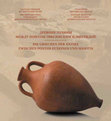
Vom 07. Juni bis 15. September 2016 ist im Staatlichen Historischen Museum Moskau die Sonderausst... more Vom 07. Juni bis 15. September 2016 ist im Staatlichen Historischen Museum Moskau die Sonderausstellung »Die Griechen der Antike zwischen Pontos Euxeinos und Maiotis« zu sehen. In ihr werden zehn Jahre internationale und interdisziplinäre Forschung zur sog. Griechischen Kolonisation auf der Taman'-Halbinsel durch das archäologische ‘Bosporos Projekts’ präsentiert, das vom Staatlichen Historischen Museum Moskau und der Eurasien-Abteilung des Deutschen Archäologischen Instituts in Berlin getragen wird. Im Begleitkatalog zur Ausstellung werden neben archäologischer Feldforschung und dem (Arbeits-) Leben aus den letzten 10 Jahren, auch Einblicke in interdisziplinäre Teilprojekte gegeben, ohne die aktuelle archäologische Projekte nicht mehr denkbar sind.
Am Anfang werden Impressionen der Ausstellungseröffnung am 07. Juni 2016 im Staatlichen Historischen Museum gezeigt (5-7). Darauf folgt ein Überblick über die Geschichte des ‘Bosporos Projekts’ auf der Taman'-Halbinsel, wobei ‘Highlights’ der Grabungstätigkeiten und der naturwissenschaftlichen Untersuchungsmethoden vorgestellt werden (8-20). Auf den allgemeinen Überblick folgen detaillierte Einblicke in die naturwissenschaftlichen Teilprojekte und der Bearbeitung ausgewählter archäologischer Funde. Die Paläogeographie hat die antike Landschaft rekonstruieren können, wie sie sich den Griechen dargestellt hatte. Völlig überraschend wurde dabei ein zweiter schiffbarer Wasserweg östlich der heutigen Straße von Kerč (dem antiken Kimmerischen Bosporus) aufgedeckt: der sog. Kuban-Bosporus (21-27). Diese Erkenntnis führte zur Zusammenarbeit mit Historikern und Philologen: archäologische und geomorphologische Erkenntnisse werden mit der historischen Geographie und Topographie abgeglichen (28-34). Im Rahmen des Projekts dienten zudem archäologische Surveys der Untersuchung des antike Siedlungssystem auf der Taman'-Halbinsel (35-39). Dann werden die zwischen 2006 und 2015 in der griechischen Siedlung Golubickaja 2 aufgedeckten Fundgattungen erläutert: die früheste griechische Importkeramik, die bis in das 1. Viertel des 6. Jh. v. Chr. zurückreicht (40-44); Terrakotten, die nach Herkunft, Datierung, Bedeutung und ihre Verwendung in der Antike dargestellt werden (45-51); Transportamphoren verschiedener Herstellungszentren, die aus einem Amphorenkomplex des 5. Jh. v. Chr. stammen (52-55); Amphorenstempel werden im Kontext des Bosporanischen Reichs nach Herkunft und Datierung vorgestellt (56-58); attische und attisierende schwarzfirnis Keramik aus dem 6. - 2. Jh. v. Chr. werden in ihrem Typenrepertoire erklärt (59-61); handgeformte Keramik wird im Bilde der Analogien aus den Nachbargebieten der indigenen Völker besprochen (62-64); Fundmünzen aus dem späten 6./Anfang 5. Jh. bis ans Ende des 2. Jh. v. Chr. erlauben einen Vergleich im Kontext des Bosporanischen Reichs (65-70); technische Geräte wie Reibsteine waren zur Herstellung des Grundnahrungsmittels Getreide notwendig (71-73); Knochenfunde geben Auskunft über die Zusammensetzung von Nutz- und Haustiere sowie des Speiseplans der Bewohner (74-76); ein ungewöhnliches Bodenobjekt neben der Siedlung gehört vermutlich zu einer Tonabbaugrube (77-79). Zuletzt werden noch zwei weitere Grabungsprojekte auf der Taman'-Halbinsel vorgestellt: Die Fortifikation der im 6. Jh. v. Chr. am Ufer des Kuban-Bosporus gegründeten griechischen Siedlung Strelka 2 (80-84) sowie das Heiligtum der Artemis Agrotera auf dem Berg 'Boris und Gleb' (85-89). Abschließend gewähren lokale chemische Gruppen sowie die Lokalisierung hellenistischer Keramik aus der sog. Kirbei-Werkstatt im kleinasiatischen Kyme einen Einblick in die laufenden archäometrischen Untersuchungen zur Herkunftsbestimmung der Keramik (90-93).
Dan, Anca; Crom, Wolfgang; Geus, Klaus; Görz, Günther; Guckelsberger, Kurt; König, Viola; Poiss, ... more Dan, Anca; Crom, Wolfgang; Geus, Klaus; Görz, Günther; Guckelsberger, Kurt; König, Viola; Poiss, Thomas; Thiering, Martin: Common Sense Geography and ancient geographical texts. In: eTOPOI 6 (2016) (Special volume: Space and Knowledge: Topoi research papers, eds Gerd Graßhoff and Michael Meyer, pp. 571–597.[ISSN 2192-2608].



Uploads
Books & edited books by Anca Dan
Created and developed by the Ptolemaic kings, the Library of Alexandria was regarded as the world's main center of scholarship from the 3rd century BC until at least the reign of Cleopatra (48–30 BC). The dream to establish a gigantic library that could assemble all known texts of the Hellenistic period, the outstanding achievements of the scholars who have worked inside its walls, and, finally, the mysteries surrounding its disappearance, have bestowed an almost mythic status on this monumental library.
Where was the Royal Library located exactly, and what kind of texts were kept there? To what extent did the Library of Alexandria become a meeting point for different languages and cultures? Should we distinguish between the Museum and the Library from an institutional point of view? Were the book collections housed in separate buildings? What caused the destruction of those collections and how much was lost? Why do some ancient authors remain silent about the Library's disappearance?
The book comprises eleven articles written by the scholars who participated in the conference, as well as transcripts of the discussions that followed their presentations, an index locorum of all ancient source texts quoted in the book, an extensive bibliography, and an introduction by editor Christophe Rico, outlining the overall contents and highlighting their interrelation.
Pour rendre hommage à ses travaux, qui ont renouvelé les recherches sur l’histoire des perceptions et représentations de l’espace, les éditeurs ont souhaité rassembler des contributions qui pour l’essentiel s’inscrivent dans cette même perspective, traitant des représentations spatiales aussi bien textuelles que cartographiques, savantes ou empiriques, dans la longue période que lui-même étudie, allant de l’Antiquité tardive au XVIe siècle.
Articles/Papers by Anca Dan
This article summarizes the results of a project funded by the German Research Foundation (DFG) under the umbrella of the SPP 1630 from 2012 to 2018. During the field campaigns archaeological, architectural, geoarchaeological and geophysical investigations were carried out. The research focus was on the topographical and economic development of Ainos in antiquity, especially during the Roman Empire, as well as during the Byzantine period. New findings were obtained regarding the development of the town and the localisation of possible harbour sites. It became clear that the Roman Empire in Ainos is not, as long assumed, to be considered as an epoch of decline. The landscape changes, esp. the sedimentation caused by the southwestward advancing delta of the Hebros, did not lead to restrictions regarding landing sites until the early Byzantine period.
Anca Dan, « Qu’est-ce que l’espace des Anciens ? Œcoumène, paysages, lieux sacrés »
Hans-Joachim Gehrke, « Olympie, l’espace multidimensionnel d’une terre grecque sacrée »
Salvatore De Vincenzo, « Tradition et changements dans le paysage sacré de l’Étrurie romaine : enjeux chronologiques, politiques et culturels »
Chiara Blasetti Fantauzzi, « Les changements du paysage sacré dans l’Italie centrale apennine à l’époque romaine »
sont perçues comme identiques ou analogues. Contrairement à la plupart des études sur les transferts culturels, dans ce cas l’ analyse des identités collectives ne se focalise plus sur des emprunts « étrangers ». Elle met en avant l’ homogénéité de la culture source et de la culture cible, malgré les différences de temps et, parfois, d’ espace. Ainsi, les transferts culturels diachroniques intéressent tout d’ abord les communautés soucieuses de retrouver leurs antécédents et, avec eux, une raison d’ être, une part d’ identité : on construit donc le passé en fonction du présent et le présent en fonction du passé. L’ article de Hans-Joachim Gehrke, un aperçu en français de son livre sur l’ historiographie grecque qui vient de paraître, explique la création du passé grec, entre l’ époque archaïque et l’ époque hellénistique. Anthony Snodgrass revient sur un problème historiographique intéressant de son travail archéologique en Béotie : l’ invention du passé grec classique à l’ époque moderne et le danger qui guette quand on est prêt à transposer dans le passé un présent qui semble immuable. Comment et pourquoi traiter alors de l’ Antique et du Moderne, si le passé est toujours une construction imparfaite, dans laquelle on ne peut faire abstraction du présent ? L’ anachronisme est-il évitable ? L’ article de Stefan Ritter suggère une solution : la contextualisation des faits passés et présents, leur mise en regard critique, l’ attention portée aux similitudes autant qu’ aux différences.
L’ article de Patrice Brun offre une introduction utile à cette approche moderne de l’ Antiquité par les réseaux, mettant en évidence les principes et les acquis possibles de ces méthodes. Lorenz Baumer met en avant les valeurs heuristiques des concepts réseautiques appliqués aux systèmes et identités religieuses de l’ Attique archaïque et classique. Enfin, Joseph Coleman Carter présente dans une synthèse originale, qui précède la publication de ses livres, les résultats des recherches menées pendant plusieurs décennies sur le terrain de Métaponte ; il explique, selon sa méthodologie interdisciplinaire habituelle, des situations que l’ on pourrait analyser aujourd’ hui en termes « réseautiques ».
Chronique 2019 – Fragments et fragmentation
I- Anca Dan, Introduction
II- Dominique Briquel, Une langue connue de manière fragmentaire : l’étrusque comme « Trümmersprache »
III- Katherine Gruel, Restitution des coins monétaires : l’impact sur l’histoire de l’art et la compréhension de l’économie gauloise
IV- Stéphane Verger, Les incroyables tribulations d’un anneau de jambe auvergnat de l’âge du fer : Circulation, stockage, conservation et utilisation des lots de fragments d’objets de bronze en Méditerranée occidentale aux viie-vie siècles avant J.-C.
Am Anfang werden Impressionen der Ausstellungseröffnung am 07. Juni 2016 im Staatlichen Historischen Museum gezeigt (5-7). Darauf folgt ein Überblick über die Geschichte des ‘Bosporos Projekts’ auf der Taman'-Halbinsel, wobei ‘Highlights’ der Grabungstätigkeiten und der naturwissenschaftlichen Untersuchungsmethoden vorgestellt werden (8-20). Auf den allgemeinen Überblick folgen detaillierte Einblicke in die naturwissenschaftlichen Teilprojekte und der Bearbeitung ausgewählter archäologischer Funde. Die Paläogeographie hat die antike Landschaft rekonstruieren können, wie sie sich den Griechen dargestellt hatte. Völlig überraschend wurde dabei ein zweiter schiffbarer Wasserweg östlich der heutigen Straße von Kerč (dem antiken Kimmerischen Bosporus) aufgedeckt: der sog. Kuban-Bosporus (21-27). Diese Erkenntnis führte zur Zusammenarbeit mit Historikern und Philologen: archäologische und geomorphologische Erkenntnisse werden mit der historischen Geographie und Topographie abgeglichen (28-34). Im Rahmen des Projekts dienten zudem archäologische Surveys der Untersuchung des antike Siedlungssystem auf der Taman'-Halbinsel (35-39). Dann werden die zwischen 2006 und 2015 in der griechischen Siedlung Golubickaja 2 aufgedeckten Fundgattungen erläutert: die früheste griechische Importkeramik, die bis in das 1. Viertel des 6. Jh. v. Chr. zurückreicht (40-44); Terrakotten, die nach Herkunft, Datierung, Bedeutung und ihre Verwendung in der Antike dargestellt werden (45-51); Transportamphoren verschiedener Herstellungszentren, die aus einem Amphorenkomplex des 5. Jh. v. Chr. stammen (52-55); Amphorenstempel werden im Kontext des Bosporanischen Reichs nach Herkunft und Datierung vorgestellt (56-58); attische und attisierende schwarzfirnis Keramik aus dem 6. - 2. Jh. v. Chr. werden in ihrem Typenrepertoire erklärt (59-61); handgeformte Keramik wird im Bilde der Analogien aus den Nachbargebieten der indigenen Völker besprochen (62-64); Fundmünzen aus dem späten 6./Anfang 5. Jh. bis ans Ende des 2. Jh. v. Chr. erlauben einen Vergleich im Kontext des Bosporanischen Reichs (65-70); technische Geräte wie Reibsteine waren zur Herstellung des Grundnahrungsmittels Getreide notwendig (71-73); Knochenfunde geben Auskunft über die Zusammensetzung von Nutz- und Haustiere sowie des Speiseplans der Bewohner (74-76); ein ungewöhnliches Bodenobjekt neben der Siedlung gehört vermutlich zu einer Tonabbaugrube (77-79). Zuletzt werden noch zwei weitere Grabungsprojekte auf der Taman'-Halbinsel vorgestellt: Die Fortifikation der im 6. Jh. v. Chr. am Ufer des Kuban-Bosporus gegründeten griechischen Siedlung Strelka 2 (80-84) sowie das Heiligtum der Artemis Agrotera auf dem Berg 'Boris und Gleb' (85-89). Abschließend gewähren lokale chemische Gruppen sowie die Lokalisierung hellenistischer Keramik aus der sog. Kirbei-Werkstatt im kleinasiatischen Kyme einen Einblick in die laufenden archäometrischen Untersuchungen zur Herkunftsbestimmung der Keramik (90-93).