Books by Andrea Annese
Il volume introduce il lettore ai testi e agli autori principali delle origini cristiane esaminan... more Il volume introduce il lettore ai testi e agli autori principali delle origini cristiane esaminando le questioni storico-letterarie e proponendo una selezione di brani significativi, con brevi introduzioni specifiche e agili note. L’approccio del manuale e quello dell’antologia si compenetrano in un’opera di sintesi aggiornata e documentata, che intende differenziarsi sia dai tradizionali manuali di storia della letteratura cristiana antica o di storia del cristianesimo, sia dalle classiche antologie. Dalle fonti presinottiche a Giustino, dai primi vangeli agli Atti apocrifi, dalle lettere paoline a gnosticismo e montanismo, si dipana un percorso attraverso una fase particolarmente viva e plurale, rispetto alla quale il costituirsi della cosiddetta “proto-ortodossia”, alla fine del II secolo, segnerà un momento di svolta.
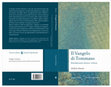
An introduction to the Gospel of Thomas including a new Italian translation from Greek and Coptic... more An introduction to the Gospel of Thomas including a new Italian translation from Greek and Coptic.
***
Il Vangelo secondo Tommaso è uno dei testi protocristiani più affascinanti ed enigmatici, nonché il più studiato tra i vangeli non canonizzati. Raccoglie infatti centoquattordici detti attribuiti a Gesù, diversi dei quali senza paralleli canonici, il che lo rende una fonte importantissima per la conoscenza delle origini cristiane. Invitando a una sfida ermeneutica, il cosiddetto "quinto vangelo" afferma che chi troverà l'interpretazione delle «parole segrete» di Gesù in esso contenute «non gusterà la morte». Questo volume ne offre un'aggiornata, completa e al contempo sintetica presentazione storico-religiosa, filologica ed esegetica, nonché una nuova traduzione condotta sui frammenti greci e sul testo copto. Il lettore italiano ha così a disposizione, in un unico libro, sia il testo sia una sua approfondita contestualizzazione e interpretazione.
***
Il Vangelo secondo Tommaso è uno dei testi protocristiani più affascinanti ed enigmatici, nonché il più studiato tra i vangeli non canonizzati. Raccoglie infatti centoquattordici detti attribuiti a Gesù, diversi dei quali senza paralleli canonici, il che lo rende una fonte importantissima per la conoscenza delle origini cristiane. Invitando a una sfida ermeneutica, il cosiddetto "quinto vangelo" afferma che chi troverà l'interpretazione delle «parole segrete» di Gesù in esso contenute «non gusterà la morte». Questo volume ne offre un'aggiornata, completa e al contempo sintetica presentazione storico-religiosa, filologica ed esegetica, nonché una nuova traduzione condotta sui frammenti greci e sul testo copto. Il lettore italiano ha così a disposizione, in un unico libro, sia il testo sia una sua approfondita contestualizzazione e interpretazione.
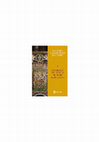
"Crediamo in un solo Signore Gesù Cristo" (Il Credo commentato dai Padri, vol. 2), 2020
Edizione italiana (riveduta e aggiornata) del volume "We Believe in One Lord Jesus Christ", colla... more Edizione italiana (riveduta e aggiornata) del volume "We Believe in One Lord Jesus Christ", collana “Ancient Christian Doctrine”, 2, InterVarsity Press, Downers Grove (IL) 2009. Questo volume, il secondo dell’opera "Credo commentato dai Padri", raccoglie testi della letteratura cristiana antica (secc. I-VIII) che possono fungere da commento alle proposizioni della prima sezione cristologica del Credo niceno-costantinopolitano, dalla definizione della natura del Figlio e del suo rapporto con il Padre, alla sua funzione cosmogonica, fino all’incarnazione. I testi sono corredati da note e introduzioni sul contesto storico-teologico. Il curatore italiano ha modificato e ampliato la scelta antologica di brani patristici, ha tradotto dal greco e dal latino i testi patristici per i quali non era disponibile una trad. it. edita da Città Nuova, ha tradotto dall’inglese le introduzioni ai singoli capitoli ("Contesto storico-teologico" e "Prospetto dei testi"), modificandole e aggiornandole, e ha fornito un nuovo apparato di note di commento e un nuovo saggio introduttivo.
INDICE GENERALE:
Introduzione generale (Emanuela Prinzivalli) . . . . . . . . . . . . . . . . . . . pag. 5
Bibliografia essenziale . . . . . . . . . . . . . . . . . . . . . . . . . . .. . . . . . . . . . . . . » 11
Il Credo niceno-costantinopolitano . . . . . . . . . . . . . . . . . . . . . . . . . . . . . » 13
Dal kerygma al Credo. Per un’introduzione alle traiettorie storiche dei
Simboli di fede e delle riflessioni cristologiche (Andrea Annese) . . . . » 15
CREDIAMO IN UN SOLO SIGNORE GESÙ CRISTO
Crediamo in un solo Signore . . . . . . . . . . . . . . . .. . . . . . . . . . . . . . . . . . . » 25
Gesù Cristo. . . . . . . . . . . . . . . . . . . . . . . . . . . . . . . . . . . . . . . . . . . . . . . . . » 35
Unigenito Figlio di Dio . . . . . . . . . . . . . . . . . . . . . . . . . . . . . . . . . . . . . . . . » 51
Generato dal Padre prima di tutti i secoli . . . . . . . . . . . . . . . . . . . . . . . . » 57
Dio da Dio . . . . . . . . . . . . . . . . . . . . . . . . . . . . . . . . . . . . . . . . . . . . . . . . . . » 75
Luce da luce . . . . . . . . . . . . . . . . . . . . . . . . . . . . . . . . . . . . . . . . . . . . . . . . » 83
Dio vero da Dio vero . . . . . . . . . . . . . . . . . . . . . . . . . . . . . . . . . . . . . . . . . » 91
Generato, non creato . . . . . . . . . . . . . . . . . . . . . . .. . . . . . . . . . . . . . . . . » 101
Consustanziale al Padre . . . . . . . . . . . . . . . . . . . .. . . . . . . . . . . . . . . . . » 111
Per mezzo del quale tutte le cose sono state create. . . . . . . . . . . . . . » 121
Per noi uomini . . . . . . . . . . . . . . . . . . . . . . . . . . . . . . . . . . . . . . . . . . . . . » 129
E per la nostra salvezza . . . . . . . . . . . . . . . . . . . . . . . . . . . . . . . . . . . . . » 137
È disceso. . . . . . . . . . . . . . . . . . . . . . . . . . . . . . . . . . . . . . . . . . . . . . . . . . » 149
Dal cielo . . . . . . . . . . . . . . . . . . . . . . . . . . . . . . . . . . . . . . . . . . . . . . . . . . » 163
Si è incarnato . . . . . . . . . . . . . . . . . . . . . . . . . . . . . . . . . . . . . . . . . . . . . . » 173
Dallo Spirito santo . . . . . . . . . . . . . . . . . . . . . . . . . . . . . . . . . . . . . . . pag. 181
E dalla vergine Maria. . . . . . . . . . . . . . . . . . . . . . . . . . . . . . . . . . . . . . . . » 189
E si è fatto uomo . . . . . . . . . . . . . . . . . . . . . . . . . . . . . . . . . . . . . . . . . . . » 201
INDICI
Indice delle fonti . . . . . . . . . . . . . . . . . . . . . . . . . . . . . . . . . . . . . . .. . . . . » 253
Indice delle traduzioni utilizzate. . . . . . . . . . . . . . . . . . . . . . . . . . . . . . . » 259
Indice dei nomi . . . . . . . . . . . . . . . . . . . . . . . . . . . . . . . . . . . . . . . .. . . . . » 263
Indice scritturistico . . . . . . . . . . . . . . . . . . . . . . . . . . . . . . . . . . . . . . . . . » 265
INDICE GENERALE:
Introduzione generale (Emanuela Prinzivalli) . . . . . . . . . . . . . . . . . . . pag. 5
Bibliografia essenziale . . . . . . . . . . . . . . . . . . . . . . . . . . .. . . . . . . . . . . . . » 11
Il Credo niceno-costantinopolitano . . . . . . . . . . . . . . . . . . . . . . . . . . . . . » 13
Dal kerygma al Credo. Per un’introduzione alle traiettorie storiche dei
Simboli di fede e delle riflessioni cristologiche (Andrea Annese) . . . . » 15
CREDIAMO IN UN SOLO SIGNORE GESÙ CRISTO
Crediamo in un solo Signore . . . . . . . . . . . . . . . .. . . . . . . . . . . . . . . . . . . » 25
Gesù Cristo. . . . . . . . . . . . . . . . . . . . . . . . . . . . . . . . . . . . . . . . . . . . . . . . . » 35
Unigenito Figlio di Dio . . . . . . . . . . . . . . . . . . . . . . . . . . . . . . . . . . . . . . . . » 51
Generato dal Padre prima di tutti i secoli . . . . . . . . . . . . . . . . . . . . . . . . » 57
Dio da Dio . . . . . . . . . . . . . . . . . . . . . . . . . . . . . . . . . . . . . . . . . . . . . . . . . . » 75
Luce da luce . . . . . . . . . . . . . . . . . . . . . . . . . . . . . . . . . . . . . . . . . . . . . . . . » 83
Dio vero da Dio vero . . . . . . . . . . . . . . . . . . . . . . . . . . . . . . . . . . . . . . . . . » 91
Generato, non creato . . . . . . . . . . . . . . . . . . . . . . .. . . . . . . . . . . . . . . . . » 101
Consustanziale al Padre . . . . . . . . . . . . . . . . . . . .. . . . . . . . . . . . . . . . . » 111
Per mezzo del quale tutte le cose sono state create. . . . . . . . . . . . . . » 121
Per noi uomini . . . . . . . . . . . . . . . . . . . . . . . . . . . . . . . . . . . . . . . . . . . . . » 129
E per la nostra salvezza . . . . . . . . . . . . . . . . . . . . . . . . . . . . . . . . . . . . . » 137
È disceso. . . . . . . . . . . . . . . . . . . . . . . . . . . . . . . . . . . . . . . . . . . . . . . . . . » 149
Dal cielo . . . . . . . . . . . . . . . . . . . . . . . . . . . . . . . . . . . . . . . . . . . . . . . . . . » 163
Si è incarnato . . . . . . . . . . . . . . . . . . . . . . . . . . . . . . . . . . . . . . . . . . . . . . » 173
Dallo Spirito santo . . . . . . . . . . . . . . . . . . . . . . . . . . . . . . . . . . . . . . . pag. 181
E dalla vergine Maria. . . . . . . . . . . . . . . . . . . . . . . . . . . . . . . . . . . . . . . . » 189
E si è fatto uomo . . . . . . . . . . . . . . . . . . . . . . . . . . . . . . . . . . . . . . . . . . . » 201
INDICI
Indice delle fonti . . . . . . . . . . . . . . . . . . . . . . . . . . . . . . . . . . . . . . .. . . . . » 253
Indice delle traduzioni utilizzate. . . . . . . . . . . . . . . . . . . . . . . . . . . . . . . » 259
Indice dei nomi . . . . . . . . . . . . . . . . . . . . . . . . . . . . . . . . . . . . . . . .. . . . . » 263
Indice scritturistico . . . . . . . . . . . . . . . . . . . . . . . . . . . . . . . . . . . . . . . . . » 265
Il volume indaga, in prospettiva di storia delle idee, il ruolo svolto da strutture e tematiche t... more Il volume indaga, in prospettiva di storia delle idee, il ruolo svolto da strutture e tematiche teologiche (o di origine teologica) all'interno del pensiero estetico (e ontoteologico) di Rosmini, evidenziando la ricezione rosminiana di fonti tra cui, in particolare, Agostino e Tommaso d’Aquino.
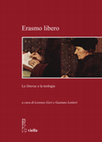
Il volume, che inaugura la collana “Laboratorio Erasmo. Biblioteca”, si propone di contribuire a ... more Il volume, che inaugura la collana “Laboratorio Erasmo. Biblioteca”, si propone di contribuire a una restituzione dell’opera e del pensiero di Erasmo da Rotterdam come testimonianza tenace di libertà e di autonomia, intenta, anche a costo di ambiguità, incoerenze, compromessi, a tutelare ed espandere il proprio vitale spazio di azione e incidenza storica.
Gli studi raccolti, nati nell’ambito dell’omonimo gruppo di ricerca, fanno perno, da diverse prospettive metodologiche, sul concetto di libertà, che è il centro irriducibilmente problematico, persino eversivo, che segna l’approccio critico di Erasmo nei confronti del cattolicesimo romano del suo tempo, il suo scarto nei confronti di Lutero, la novità radicale della sua fede razionale.
Una inquieta e vitale libertà che, allo stesso tempo, caratterizza anche l’ambiziosa e originale aemulatio erasmiana nei confronti delle letterature classiche e dell’Umanesimo italiano.
Contributi di A. Annese, L. Battista, E. Cerqua, M. Fallica, L. Geri, V. Lauria, G. Lettieri, C. Presezzi, M. Quatrale.
Gli studi raccolti, nati nell’ambito dell’omonimo gruppo di ricerca, fanno perno, da diverse prospettive metodologiche, sul concetto di libertà, che è il centro irriducibilmente problematico, persino eversivo, che segna l’approccio critico di Erasmo nei confronti del cattolicesimo romano del suo tempo, il suo scarto nei confronti di Lutero, la novità radicale della sua fede razionale.
Una inquieta e vitale libertà che, allo stesso tempo, caratterizza anche l’ambiziosa e originale aemulatio erasmiana nei confronti delle letterature classiche e dell’Umanesimo italiano.
Contributi di A. Annese, L. Battista, E. Cerqua, M. Fallica, L. Geri, V. Lauria, G. Lettieri, C. Presezzi, M. Quatrale.
Papers (selection) by Andrea Annese
This article begins by reviewing several scholarly hypotheses concerning possible conceptual conn... more This article begins by reviewing several scholarly hypotheses concerning possible conceptual connections between Vatican II, Ernesto Buonaiuti, and Catholic modernism, while also offering some critical reflections. It then analyzes Buonaiuti’s concept of the church, concluding with a focus on the sources that illuminate the crucial final phase of his life – when he chose to leave the Catholic Church and advocated for a «new ecumenical Christian Church».
This article examines a number of issues related to the formation of the New Testament canon betw... more This article examines a number of issues related to the formation of the New Testament canon between the 2nd and 4th centuries CE, focusing in particular on the historiographical debate about the role to be attributed to Marcion (a debate recently revived by some publications by Markus Vinzent) and the discussion surrounding the "Muratorian Fragment" (reignited by a 2022 monograph by Clare K. Rothschild). The article surveys a range of studies on the development of the canon, outlines current research trends, and offers a critical assessment of the most debated hypotheses.
Erasmo da Rotterdam (1469-1536) viene spesso annoverato tra i grandi pacifisti nella storia del p... more Erasmo da Rotterdam (1469-1536) viene spesso annoverato tra i grandi pacifisti nella storia del pensiero occidentale. Si discute tuttora sulla tipologia del pacifismo erasmiano (un pacifismo assoluto, opportunista, retorico o realista? Irenismo o pacifismo?), e molteplici sono le declinazioni del discorso di Erasmo sulla pace (e sulla guerra), a partire dai due scritti più noti – la Querela pacis (1517) e l’adagio Dulce bellum inexpertis (1508/1515 e revisioni successive) – fino alle ulteriori riflessioni disseminate nella sua vasta produzione. Il saggio prova a schematizzare i tratti principali del pensiero di Erasmo sulla pace e sulla guerra, analizzando una selezione di testi ed evidenziando in particolare il nucleo cristiano della riflessione erasmiana sulla pace, ovvero l'interpretazione erasmiana di specifici testi scritturistici (a partire da alcuni passi dei vangeli).
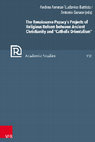
In Catholic anti-Protestant polemics, the attempt to construct "genealogies of error" has often b... more In Catholic anti-Protestant polemics, the attempt to construct "genealogies of error" has often been a central strategy. The "heretical" doctrines of Luther and his followers were traced back to Hus, to Wycliffe, and even further. One of the most significant associations is that between Luther (and, more generally, Protestant doctrines) and Mani, founder of the syncretic dualistic religion that bore his name. For early sixteenth-century Catholic controversialists, Protestantism echoes Manichaeism in its questioning of free will, appearing as a determinist doctrine that would deprive individuals of moral responsibility. Protestant authors reacted to this identification, accusing Catholics of neo-Pelagianism. This paper focuses on the early decades of the controversy, before the Council of Trent, specifically the first instances in Catholic anti-Protestant treatises where heresiological categories and motifs inherited from late antique Christianity were employed (e.g., from Chrysostom and Augustine). In particular, the present investigation maps the most interesting occurrences of the polemical use of the figure of Mani and Manichaeism, because such use touches the doctrinal heart of the controversy: the matters of free will, grace, and the human capacity to cooperate (or not) in one’s salvation. The analysis concerns not only prominent works such as those of Erasmus and Eck, but also other writings, especially from the Italian milieu.
This essay analyzes the Christology and the soteriology of the books which constitute the composi... more This essay analyzes the Christology and the soteriology of the books which constitute the composite Gnostic work commonly known as Pistis Sophia. The author(s) and the first users of this work represent a case study of the resilient and metamorphic nature of a Gnostic group that, in a late stage of ancient Gnosticism, proposed an encyclopaedic religious “synthesis” of several sources and traditions, reinterpreted in a creative way. The present contribution hypothesizes that the author(s) of Pistis Sophia not only adopted some Sethian motives, but also engaged both with issues debated within Valentinianism and with doctrines of “mainstream Christianity”. This essay pays specific attention to representations of the body and death of Jesus, and to the understanding of the remission of sins in the Pistis Sophia texts, compared with other Gnostic writings.
Following the fruitful research paths about the potential intertextual relations between Origen a... more Following the fruitful research paths about the potential intertextual relations between Origen and the Nag Hammadi texts, this contribution focuses on a possible intertextual relationship between Origen and the Book of Thomas (NHC II,7), starting from an unexplored parallel between this writing and one passage in Origen’ s Exhortation to Martyrdom. Both develop an allegorical interpretation of Dan 3,50 LXX, perhaps also under the influence of the Fourth Book of Maccabees. After an analysis of these texts and several potential parallels, the peculiar connection between
some of Origen’ s texts and one passage in NHC II,7 is highlighted, and some hypotheses are formulated on the possibility of the influence of one on the other.
some of Origen’ s texts and one passage in NHC II,7 is highlighted, and some hypotheses are formulated on the possibility of the influence of one on the other.
This article investigates the Christology of the Pistis Sophia, a composite Gnostic writing datab... more This article investigates the Christology of the Pistis Sophia, a composite Gnostic writing datable between the third and early fourth centuries, showing both its soteriological implications and its peculiarities compared to other Gnostic christological doctrines. The text of the Pistis Sophia should be investigated by paying attention to its complex compositional history and some internal « discrepancies » : while in the first three books salvation depends primarily on the possession of the « mysteries », in the fourth book a pivotal section thematizes the significance of Jesus’ coming into the world – that is, the coming of the « Savior » in a material body – and seems to attribute to his (real) death a salvific and atoning significance. After an introduction to the writing as a whole and to the Codex Askewianus, this article examines the main christological and soteriological passages, also analyzing them in parallel with other Gnostic texts (especially Valentinian ones) and with the doctrine that was becoming established in the so-called « Great Church » during the third century.
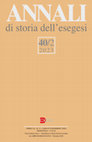
Alfred Loisy (1857–1940) is a key figure for the history of Christianity and the history of exege... more Alfred Loisy (1857–1940) is a key figure for the history of Christianity and the history of exegesis. While his involvement in the so-called “Modernist crisis” and his role as a Biblical scholar have been the subject of several publications, his role in the history of religions and in the historical development of religious comparativism is far less investigated. A recent
monograph by Annelies Lannoy (Alfred Loisy and the Making of History of Religions, 2020) is now helping to fill this scholarly lacuna. In the present article, I will offer some considerations on Lannoy’s book, taking it as a starting point to develop some additional thoughts on the theoretical and methodological connections that Loisy has with John Henry Newman and
with Ernst Troeltsch. In particular, I will address Troeltsch’s “relativization” of Christianity and its relation to religious comparativism. I will also recall the pivotal debate between Loisy and Harnack.
monograph by Annelies Lannoy (Alfred Loisy and the Making of History of Religions, 2020) is now helping to fill this scholarly lacuna. In the present article, I will offer some considerations on Lannoy’s book, taking it as a starting point to develop some additional thoughts on the theoretical and methodological connections that Loisy has with John Henry Newman and
with Ernst Troeltsch. In particular, I will address Troeltsch’s “relativization” of Christianity and its relation to religious comparativism. I will also recall the pivotal debate between Loisy and Harnack.

This article delves into David Graeber’s references to Jesus’s teaching and to some early Christi... more This article delves into David Graeber’s references to Jesus’s teaching and to some early Christian texts contained in Debt (2011) in order to bring Graeber’s approach into dialogue with scholarly research (especially social-scientific studies) on the historical Jesus and his movement. This enables one to explore the implications of Graeber’s ideas for the study of such topics and offers the opportunity to contribute to the study of the historical Jesus’s thoughts on debt relief, the « kingdom of God », and its relation to human society, as they can be pieced together from texts such as Matthew 18,23-34 and 6,12. Graeber’s conclusions are compared with the analyses of scholars attentive to the sociohistorical and cultural-anthropological background of Jesus’s parables. Jesus employed the imagery of the kingdom of God to also promote a social transformation; Graeber (although offering some stimulating thoughts) does not sufficiently take into account the discontinuity between Jesus and his followers, and the later allegorization of certain Jesus’s teachings.
This introductory article contextualizes the essays by Daniele Tripaldi and René Falkenberg on Go... more This introductory article contextualizes the essays by Daniele Tripaldi and René Falkenberg on Gos. Thom. 61 within the current debate on the “Old Philology” and the “New Philology,” as well as on the Nag Hammadi Codices. It also provides some brief methodological considerations on the study of the Gospel of Thomas and other early Christian texts.
A. Annese, "Erasmo da Rotterdam tra fundamentalia e adiaphora: la Inquisitio de fide (1524) e il ... more A. Annese, "Erasmo da Rotterdam tra fundamentalia e adiaphora: la Inquisitio de fide (1524) e il dibattito con Lutero", in L. Geri, G. Lettieri (a cura di), Erasmo libero. Le litterae e la teologia, “Laboratorio Erasmo”, 1, Viella, Roma 2023, pp. 213-247.
![Research paper thumbnail of Rappresentazioni della trasmissione scritta della memoria in alcuni testi cristiani del II secolo (Apocrifo di Giacomo, Frammento di Muratori, Epistula Apostolorum) [Sample and TOC]](https://attachments.academia-assets.com/105103649/thumbnails/1.jpg)
In: Aa. Vv., La memoria. Forme e finalità del ricordare nel cristianesimo antico. XLVIII Incontro... more In: Aa. Vv., La memoria. Forme e finalità del ricordare nel cristianesimo antico. XLVIII Incontro di Studiosi dell’Antichità Cristiana (Roma, 5-7 maggio 2022), “Studia Ephemeridis Augustinianum”, 164, Institutum Patristicum Augustinianum – Nerbini International, Roma – Firenze 2023, pp. 97-108.
Abstract:
Diversi scritti protocristiani presentano non solo differenti memorie relative a parole e azioni di Gesù di Nazaret, ma anche differenti rappresentazioni dell’atto di messa per iscritto di tali memorie ovvero della trasmissione scritta della memoria. La costruzione della memoria delle origini, dunque anche della propria identità, per il gruppo (o gli autori) connesso con un determinato testo, concerne non solo la selezione delle memorie trasmesse finalizzata all’identificazione di uno specifico contenuto kerygmatico, ma anche la narrazione del quando, come e perché determinate memorie sono state trasposte in scrittura. Questo contributo intende focalizzarsi sulla questione specifica della rappresentazione della messa per iscritto delle memorie, evidenziandone alcune attestazioni in scritti databili al II secolo, di differente origine: l’Apocrifo di Giacomo, il Frammento di Muratori e l’Epistola degli Apostoli.
Abstract:
Diversi scritti protocristiani presentano non solo differenti memorie relative a parole e azioni di Gesù di Nazaret, ma anche differenti rappresentazioni dell’atto di messa per iscritto di tali memorie ovvero della trasmissione scritta della memoria. La costruzione della memoria delle origini, dunque anche della propria identità, per il gruppo (o gli autori) connesso con un determinato testo, concerne non solo la selezione delle memorie trasmesse finalizzata all’identificazione di uno specifico contenuto kerygmatico, ma anche la narrazione del quando, come e perché determinate memorie sono state trasposte in scrittura. Questo contributo intende focalizzarsi sulla questione specifica della rappresentazione della messa per iscritto delle memorie, evidenziandone alcune attestazioni in scritti databili al II secolo, di differente origine: l’Apocrifo di Giacomo, il Frammento di Muratori e l’Epistola degli Apostoli.
In G. Lettieri, M. Fallica, A.-Ch. Jacobsen (eds.), Progress in Origen and the Origenian Traditio... more In G. Lettieri, M. Fallica, A.-Ch. Jacobsen (eds.), Progress in Origen and the Origenian Tradition, series “Early Christianity in the Context of Antiquity”, 25, Peter Lang, Berlin 2023, pp. 253-273.
Abstract: This essay aims at providing data about the role of Origen and the Alexandrian tradition in Antonio Rosmini’s thought. Origen is one of Rosmini’s auctoritates in several significant issues, such as the election of bishops and the (non- ordained) “priesthood of all believers.” But Rosmini also rejects some of Origen’s views, e.g., in his exegesis of John’s Prologue. The last part of this study deals with the “Alexandrian” heritage in Rosmini’s (and J.H. Newman’s) thoughts on the doctrinal, dogmatic,
hermeneutical, and ecclesiological progress.
Keywords: Antonio Rosmini, Origen, Alexandrian tradition, John Henry Newman, Exegesis
Abstract: This essay aims at providing data about the role of Origen and the Alexandrian tradition in Antonio Rosmini’s thought. Origen is one of Rosmini’s auctoritates in several significant issues, such as the election of bishops and the (non- ordained) “priesthood of all believers.” But Rosmini also rejects some of Origen’s views, e.g., in his exegesis of John’s Prologue. The last part of this study deals with the “Alexandrian” heritage in Rosmini’s (and J.H. Newman’s) thoughts on the doctrinal, dogmatic,
hermeneutical, and ecclesiological progress.
Keywords: Antonio Rosmini, Origen, Alexandrian tradition, John Henry Newman, Exegesis
Vetera Christianorum, 2022
The extant fragments of the Greek Gospel according to the Egyptians, quoted by Clement of Alexand... more The extant fragments of the Greek Gospel according to the Egyptians, quoted by Clement of Alexandria, belong to a dialogue between Jesus and his disciple “Salome,” and deal with the issues of sexual intercourse, procreation, and gender differentiation. Following an overview of the fragments, this paper will focus on the enigmatic saying about “the herb which has bitterness” (str. 3.9.66.2), trying to shed new light on its meaning and especially on the sense and background (often overlooked) of the anti-Encratite interpretation given by Clement. The text will be examined in parallel with other passages from Clement’s works and with other literature as well, including ancient medical and botanical literature.