Numismatics by Andrei Baltag

Memoria Antiqvitatis, Arheologie, XLI/1 (2025), 2026
The archaeological research of the borough of Roman has led to the discovery of artifacts and med... more The archaeological research of the borough of Roman has led to the discovery of artifacts and medieval dwellings. The archaeological investigation carried out in two sites (La Bibliotecă and Spitalul Precista), at different stages (2012 and 2024), revealed two medieval gold coins.

Research paper thumbnail of Un lot de monede și artefacte metalice recent intrate în colecția Muzeului de Istorie a Moldovei din cadrul Complexului Muzeal Național Moldova Iași

Cercetări Istorice, 2025

The batch of pieces that we present entered the collection of the History Museum of Moldova in 20... more The batch of pieces that we present entered the collection of the History Museum of Moldova in 2022. It contains 32 coins and 5 modern metal artifacts (3 medallions, an applique and a button). The identification of the coins is as follows: 1 AE Greece (4th-2nd BC); 1 as, Augustus; 1 as, Tiberius; 3 asses, Titus; 3 asses, Domitian; 2 asses, Antoninus Pius; 1 sestertius, Commodus; 1 as, 1st-2nd centuries; 1 antoninianus, Gallienus; 1 antoninianus, Claudius Gothius; 2 AE, Constantine I; 1 AE, Constantine II; 3 AE Constantine II; 1 piece of 1 soldo, Francesco II Gonzaga, Margraviate of Mantua; 2 pieces of 1 quattrino, Guglielmo Gonzaga, Duchy of Mantua; 1 piece of 1 grosso, Ferdinand Gonzaga, Duchy of Mantua, Cassale Montferrat (Italian States); 1 piece of 2 centesimi, Vittorio Emanuele II, Kingdom of Italy; 1 piece of 1 quattrino, Pius VI, Bologna (Papal States); 1 piece of 1 quattrino, Charles II, Duchy of Milan (Kingdom of Spain); 1 piece of 1 soldo, Maria Theresa, Duchy of Milan (Holy Roman Empire); 1 piece of 1 centisimo, Napoleon I, Kingdom of Italy (First French Empire); 1 unidentified AE and 1 piece of 5 bani, Romania.

Revista de Arheologie, Antropologie și Studii Interdisciplinare, 7, 2025
During the 1997 archaeological campaign, carried out at the Medieval site of Traian (La Izvoare I... more During the 1997 archaeological campaign, carried out at the Medieval site of Traian (La Izvoare II point), Săbăoani Commune, Neamț County, dwelling L.13 was discovered in the S.VIII section. Its inventory included several objects (such as knives, sickles, chisel, axe, sewing needles, gouges, hooks) and iron slag, which indicate the use of the dwelling as a blacksmith’s workshop. The fragmentary ceramics, some of which have been restored (cups with a handle, jar vessels/pots, lids), as well as the two-room division, suggest a double functionality, both as a living space and as a workshop. The coin (Moldavian pul) from the dwelling allows for an approximate, narrow dating of the Mediaeval dwelling, between 1430–1456.

Research paper thumbnail of Descoperiri monetare din Moldova. XVI, în: Arheologia Moldovei, 47, 2024, p. 91-105

Arheologia Moldovei, 2024

We continue the publication of the monetary discoveries from Moldova , by presenting some coins m... more We continue the publication of the monetary discoveries from Moldova , by presenting some coins mentioned briefly or misidentified in the specialized literature, along with other unpublished issues, which are remarkable. Most of the coins come from Vaslui county, from the following locations: I. Dănești - 2 pcs. (1 AE, Crispus (Caesar), Nicomedia, 321-324 AD; 1 AE, Crispus (Caesar), 320-325 AD); II. Ivănești - 1 pc. (1 siliqua, Constantius II, Antiohia, 347-355 AD); III. Poienești - 6 pcs. (1 antoninianus, Philippus Arabs: Otacilia Severa, Roma, 246-248 AD; 1 sestertius, Philippus Arabs, Viminacium, 243-244 AD; 1 AE, Philippus Arabs: Philippus II (Augustus), Metropolis (Ionia), 247-249 AD; 1 AE, Trebonianus Gallus, Lampsacus, 251-253 AD; 1 AE, Elagabalus - Trebaonianus Gallus/Valerianus, Alexandria (Troas); 1 siliqua, Constantius II, Sirmium, 351-355 AD; 1 siliqua, Constantius II, Sirmium, 351-361 AD); IV. Pungești - 1 pc. (1 denarius, Hadrianus, Roma, 130-133 AD); V. Rădeni - 1 pc. (1 denarius, Vespasianus, Roma, 76 AD); VI. Trestiana (1 pentassarion, Gordianus III, Istros, 238-244 AD); VII. Vaslui (County) - 1 pc. (1 AE Valentinianus I, Siscia, 364-367 AD); VIII. Bârlad (and its surroundings) (?) - 10 pcs. (Wallachia - 2 pcs. [2 ducat, Mircea I, Târgoviște, 1386-1405]; Principality of Moldavia - 2 pcs. [1½ groș, Alexandru I, Suceava, 1409-1415; 1 groș, Ștefan III, Suceava, 1457-1470]; Ottoman Empire - 5 pcs. [1 akçe, Selim I, 1512/1518-1520; 1 akçe fourrée (imitation), Ahmed I,  Kostantiniye, 1603-1617; 1 akçe fourrée (imitation), Mustafa I (?), Rumelia (?), 1617-1618/1622-1623; ¼ zeri mahbub, Mahmud II, Kostantiniye, 1815-1816; 1 para, Mahmud II, Mısır, 1819-1820]; Holy Roman Empire - 1 pc. [10 Kreuzer, Heinrich VIII, Bishopric of Fulda, 1766 (?)]).

Research paper thumbnail of Preliminary data on a monetary hoard from a medieval dwelling (Iași – ”Ghica- Daniel House / St. Petersburg Hotel” archaeological site)

FORTRESSES, TOWNS AND SETTLEMENTS EVERYDAY LIFE ON THE EDGE OF EMPIRES (7TH–13TH CENTURIES), PONTICA LVII SUPPLEMENTUM XI, 2024

During the preventive archaeological investigations from “Ghica-Daniel House/St. Petersburg Hotel... more During the preventive archaeological investigations from “Ghica-Daniel
House/St. Petersburg Hotel” point, from the archaeological site ”Old Town Center-Princely Court” in Iași, were identified and investigated 199 complexes and archaeological contexts, dated in the Eneolithic, Middle Ages and Modern era. Thus, in this perimeter were found the stone structures corresponding to the fencing wall of the “Three Holy Hierarchs” monastery, most likely dated to the 17th century, to which was added the foundation of the northern wall of the secondary building belonging to the complex “Ghica-Daniel House/St. Petersburg Hotel” (18th–19th centuries). These structures overlap and incorporate foundations and walls from the “Ghica Houses”, which in turn overlap medieval complexes from the 15th–17th centuries, as well as some remains of Cucutenian complexes. During the archaeological excavations, no less than 14 habitation complexes have been identified. Among them, complex
94/96/108 can be dated on the basis of particularly rich archaeological material in the 15th–16th centuries. The most important discovery in this archaeological complex is the recovery in situ of a imitation after a Venetian ducat, next to a hoard of Genoese-Tatar coins (15th century), partially outlined in the following.

Memoria Antiquitatis, 2024
Research paper thumbnail of Tezaurul monetar din așezarea medievală timpurie de la Onișcani-Aldești 2 (jud. Bacău)

Vasile Ursachi, George-Dan Hânceanu, Vasile Diaconu, Andrei Baltag, Comunităţi preistorice, antice şi medievale de pe cursul mijlociu al Siretului: Aşezările de la Filipeşti şi Aldeşti, 2024

The Aldești hoard was discovered in an Early Medieval dwelling, located in the village of Aldești... more The Aldești hoard was discovered in an Early Medieval dwelling, located in the village of Aldești (commune of Filipești, Bacău County, Romania), in the archaeological site called Aldești 2. The lot consists of 13 monetary issues dated from the end of the 10th century to the first three decades of the 13th century. Out of these, seven coins were struck by the emperors of the Byzantine Empire, in Constantinople, between ca. 976-1143. According to the issuers, this batch includes the following species: 3 anonymous follis, class A2 (attributed to emperors Basil II & Constantine VIII); 1 anonymous follis, class B (attributed to emperor Roman III); 1 anonymous follis, class D (attributed to Emperor Constantine IX); 1 follis struck by Constantine X; 1 stamena issued under John II. Added to these is an imitation of a Byzantine stamena (type C), struck in the Vlaho-Bulgarian Tsarate, between 1195-1225. These Eastern specimens, dating from the time of the emperors Constantine IX Monomachus, Constantine X Ducas, John II Comnenus, as well as the anonymous imitation from south of the Danube, are quite scarce among the monetary finds between the Carpathians and the Dniester.

In the Aldești hoard, the denarii struck in the mint of Friesach and the Aquileia imitations represent a, so far, unknown category of cash in the Moldavian region. They include: 1 denarius minted by Adalbert II (1168-1200) and 2 denarii struck by Eberhard II (1200-1235), from Friesach (Archbishopric of Salzburg); 1 anonymous denarius (dated between 1145-1204) and 1 denarius minted during the reign of Pellegrino II (1195-1218), both issued within the Patriarchate of Aquileia.
Research paper thumbnail of Sondajul arheologic din incinta bisericii ortodoxe a satului Gherăești (jud. Neamț)/The archaeological survey within the Orthodox Church of the village of Gherăești (Neamț County)

Revista de Arheologie, Antropologie și Studii interdisciplinare. In Memoriam Valentin Mircea Dumitrașcu, nr. 6, 2024
On the occasion of the rehabilitation works of the Orthodox Church in Gherăești, several burial g... more On the occasion of the rehabilitation works of the Orthodox Church in Gherăești, several burial graves were accidentally discovered. Subsequently, the archaeological survey conducted in 1991 facilitated the investigation of a number of 64 graves in the La Biserică point. Predominantly individual, more rarely double, the graves contained skeletons of adults and children oriented in a west-east direction. In addition to the skeletal remains discovered in anatomical connection, graves with reburied or disturbed skeletons were also identified. With or without coffins, the pits of burial features were mostly rectangular. The funerary inventory was modest, comprising mainly coins, to which are added a few personal adornments (veil pins, globular buttons, strap). According to the coin, the cemetery was functional during the 16th-19th centuries.

Research paper thumbnail of Good or bad silver? Short remarks on the Medieval European coins in the light of XRF Compositional Analysis

Ephemeris Dacoromana, 2023

In the following, we intend to provide several remarks, based on the compositional analysis of so... more In the following, we intend to provide several remarks, based on the compositional analysis of some of the coins from our batch. The measurements were carried out at the Metropolitan Research Centre TABOR (Iași, Romania) and cover a limited group of 27 coins. It should be noted that the spectral examination of all 176 pieces from the hoard was not possible for logistical reasons. The selection of the coins was reasoned by the creation of a small but representative lot, with numismatic samples having different issuers, regularly to be found as isolated finds or in monetary deposits attested between the Carpathians and the Dniester.
By means of the present survey, our intention is to ascertain, by precise comparisons, whether the sampled coins match or show obvious deviations from the amount of silver stated in the monetary regulations behind their production. Similar attempts have been carried out in foreign publications on a much wider scale, involving larger batches . For this reason, we hope that all the data, briefly provided here, will serve as a starting point for further studies.
Research paper thumbnail of Descoperiri monetare din Moldova. XV, in Arheologia Moldovei, 46, 2023, p. 91-104

Arheologie Moldovei, 2023

In this issue of the chronicle we publish the Medieval coins, which are kept in the collection of... more In this issue of the chronicle we publish the Medieval coins, which are kept in the collection of the "Constantin Mihai" Museum, from the "Ion Neculce" Theoretical High School in Târgu Frumos. The coins have been discovered over time in the localities around the town of Târgu Frumos (Iași County): Principality of Moldavia (1 pc.): Ștefan I, gros, 1433-1435; Ottoman Empire (2 pcs.): Mehmed II, akçe, 1451-1461; Mustafa III, para, 1764/1765; Kingdom of Hungary (2 pcs.): Hunyadi Mátyás, denár, 1471-1481 (1), 1479-1485 (1); Polish-Lithuanian Commonwealth: Polish Crown (3 pcs.): Zygmunt I Stary, grosz, 1548 (1); Zygmunt III Waza, szeląg, 1626 (1), trojak, 1599 (1); Lithuania (7 pcs.): Aleksander I Jagiellończyk, pólgrosz, 1501-1506; Zygmunt II August, pólgrosz, 1557 (1), 1558 (1), 1560 (1), 1561 (2), 1565 (1); Ryga (city) (1 pc.): Zygmunt III Waza, trojak, 1593; Gdańsk (1 pc.): Zygmunt III Waza, ort, 1626; Holy Roman Empire: Kingdom of Hungary (4 pc.): Ferdinand I, denar, 1553; Maximilian II, denar, 1578; Rudolf II, denar, 1589; Ferdinand II, denar, 1629; Branderburg-Prussia (1 pc.): Georg Wilhelm, Schilling, 1626; Kampen (imperial city) (1 pc.): Leeuwendaalder, 1649; Swedish Empire (1 pcs.): Ryga (city): Krystyna, Schilling, 1637; Austrian Empire (1 pc.): Franz I, 3 Kreuzer, 1815.

în G.-D. Hânceanu et alii, Cimitirul poslușnicilor Episcopiei Romanului din incinta bisericii ort... more în G.-D. Hânceanu et alii, Cimitirul poslușnicilor Episcopiei Romanului din incinta bisericii ortodoxe Sfântul Gheorghe. Cercetările arheologice preventive din anii 2019-2020, Editura Istros a Muzeului Brăilei „Carol I”, Editura „Constantin Matasă”, Brăila, Piatra-Neamț, 2023, p. 122-155.

Research paper thumbnail of Tezaurul medieval de monede din argint descoperit în incinta Bisericii Sf. Gheorghe din Roman

Editura Istros a Muzeului Brăilei „Carol I”, Editura „Constantin Matasă”, Brăila, Piatra-Neamt, 2023

The medieval hoard of silver coins discovered in the premises of the Church of St. George in Roma... more The medieval hoard of silver coins discovered in the premises of the Church of St. George in Roman.
Since most of the land on which the poslushniks settled was in the “property” of the Bishopric, the “village”, and later the slum (from the second half of the 18th century) extended to the Moldova riverbed, but also to the base of the “plateau” on which the Roman Bishopric was located. This is the reason for which traces of habitation (dwellings, hearths located on Victoriei Street) could be discovered very close to the area of the mentioned Orthodox religious complex.
In the case of the perimeter of St. George’s Church, on the north side we can see a house from the late medieval period and a hearth from the modern era, an aspect that suggests the extension of the poslushniks’ habitation to almost the limits of the cemetery. Another evidence of habitation of the area, probably prior to the expansion so close near the modern church, is the “hiding” of the silver coin hoard from the end of the 16th century.
Research paper thumbnail of Descoperiri monetare din Moldova. XIV, in Arheologia Moldovei, 45, 2022, p. 125-140

Arheologia Moldovei, 2022

In this issue of the chronicle we publish the Medieval coins, which are kept in the collection of... more In this issue of the chronicle we publish the Medieval coins, which are kept in the collection of the Roman History Museum, within the Neamț National Museum Complex. The coins we publish have been discovered between the 60s and 80s of the last century. They come from the following locations: I. Roman - "Precista Mică" Church (Neamț County): nine coins were discovered during archaeological research from 1969-1972, in the medieval cemetery: Kingdom of Hungary (2 pcs.): Hunyadi Mátyás, denár, 1470-1471 (1), 1488 (1); Principality of Moldavia (2 pcs.): Bogdan III, groș, 1514-1517 (1), Ștefan IV, groș, 1517-1527 (1); Ottoman Empire (3 pcs.): Selim I, akçe, 1518-1520 (1), Süleyman I, akçe, 1520-1534 (1), Mehmed III, akçe, 1595-1603 (1); Polish-Lithuanian Commonwealth: Ryga (1 pc.): Zygmunt III Waza, szeląg, 1598; Holy Roman Empire: Kingdom of Hungary (1 pc.): Matthias II, denar, 1609-1611; II. Roman (Neamț County) (surroundings): Principality of Moldavia (2 pcs.): Alexandru cel Bun, 1½ groș, 1409-1415 (1), Ștefan IV, groș, 1517-1527 (1); Polish-Lithuanian Commonwealth: Polish Crown (3 pcs.): Zygmunt III Waza, szeląg, 1623 (1), półtorak, 1624 (1); Jan II Kazimierz Waza, szeląg, 1661 (1); Lithuania (2 pcs.): Zygmunt II August, pólgrosz, 1558 (1); Zygmunt III Waza, szeląg, 1623 (1); Ryga (city) (3 pcs.): Zygmunt III Waza, szeląg, 1602 (2), trojak, 1597 (1); Poznań (2 pcs.): Zygmunt III Waza, trzeciak, 1627 (2); Holy Roman Empire: Branderburg-Prussia (1 pc.): Georg Wilhelm, Schilling, 1628; Kingdom of Hungary (1 pc.): Leopold I, VI krajcár, 1670; Silesia (1 pc.): Leopold I, VI Kreuzer, 1692-1693; Liegnitz-Brieg (1 pc.): Christian von Liegnitz-Brieg, 1 Kreuzer, 1670; Kampen (imperial city) (1 pc.): Leeuwendaalder, 1648; Swedish Empire (3 pcs.): Ryga (city): Gustav Adolf, schilling, 1626 (1); Krystyna, schilling, 1644-1645 (1); Karl X Gustav, schilling, 1654-1660 / imitation of "Dabija type" (1); Republic of Venice (1 pc.): Dalmatia and Albania, 2 soldi, 1691-1701; Russian Empire (1 pc.): Catherine II, 5 kopecks, 1766; Ottoman Empire (1 pc.): Abdülhamid I, para, 1777.

Research paper thumbnail of New data on the Medieval coin hoard from Costeși (Vaslui County, Romania), in: G. M. Talmațchi, C. Paraschiv-Talmațchi, L. Munteanu (ed.), Studia Numismatica et Archaeologica in honorem Gabriel Gheorghe Custurea oblata, Ed. Eikon, București, 2022/Pontica LV Supplementum IX, p. 259-323.
Almost 60 years ago, in the area of the Costești commune (Vaslui county), at the place called "Iz... more Almost 60 years ago, in the area of the Costești commune (Vaslui county), at the place called "Izvoare Dinga", a hoard of 176 Medieval coins was discovered. The information available in the document, concluded on the 14th September 1964, attests to the handing over of a hoard of Polish silver coins from the 17th century to the Museum of History of Moldavia in Iasi, by Gheorghe Gh. Vasluianu II. Currently, the batch of coins from Costești can be found in the collection of the Numismatic Cabinet of the Institute of Archaeology from Iasi. On various occasions, the coin hoard has been flagged and briefly outlined in the scientific literature, without the numismatic material being published in full. Therefore, in the following, we intend to present the entire monetary lot, consisting of pieces originating from the Polish–Lithuanian Commonwealth (115 pcs.), Kingdom of Hungary (7 pcs.), the Holy Roman Empire (45 pcs.), Kingdom of Spain (1 pcs.), Principality of Transylvania (1 pcs.), Kingdom of Sweden (2 pcs.) and the Republic of the United Provinces (5 pcs.).

Ziridava Studia Archaeologica 36, 2022
This study aims to discuss the four medieval coins discovered by chance in the boundary of Mădera... more This study aims to discuss the four medieval coins discovered by chance in the boundary of Măderat commune. Three belong to the Kingdom of Hungary: a quarting of Zsigmond Luxemburgi, a denar of Ulászló I and a denar of Hunyadi Mátyás. One piece, a denar of Ferdinand I, belongs to the Holy Roman Empire. Even if the discussed pieces are simple stray finds, they mirror the preponderant Hungarian coin issues dominating the coinage circulation in the Transylvanian-Banat area during the 15th–16th centuries.

Research paper thumbnail of Cercetări arheologice din anii 1969-1970 în cimitirul medieval al bisericii Precista Mică din Roman/Archaeological research from 1969-1970 in the medieval cemetery of the Precista Mică Church in Roman.

Revista de arheologie, antropologie și studii interdisciplinare, 4, 2022

In 1969, the first archaeological investigations (with salvage character) were carried out in th... more In 1969, the first archaeological investigations (with salvage character) were carried out in the medieval cemetery of the Precista Mică Church in Roman (Neamț County), following accidental finds recorded during the construction of a sports ground in the courtyard of the former General School No. 5. The research method from 1969-1970 included three trenches (noted S.I-S.III) and six extensions (noted C.1-C.6), which revealed 32 inhumation graves (two of which were double). Of these, only 12 graves contained funerary objects: nine coins (in graves Gr.1, Gr.9, Gr.16, Gr.21, Gr.22, Gr.25, Gr.27, Gr.28, the last with two coins), two earrings (Gr.24), two veil pins (Gr.21) and two globular buttons (Gr.17, Gr.23). Most of the deceased are adults, but a high infant mortality rate is also reported. The cemetery dates back to the 16th-17th centuries.

Coperta I: aspect de șantier și piese arheologice descoperite în mormintele cimitirului Arhiepisc... more Coperta I: aspect de șantier și piese arheologice descoperite în mormintele cimitirului Arhiepiscopiei. Coperta IV: în imagine Arhiepiscopia Romanului și Bacăului cu vestigiile săpăturilor în fundal, aspecte cu morminte și monede. Citat din jurnalul călătorului străin, Paul din Alep (anul 1653), despre Felonul Sfântului Ioan Gură de Aur păstrat la Episcopia Romanului.

Books by Andrei Baltag

Research paper thumbnail of Cimitirul vechii biserici catolice „Sfântul Anton de Padova” de la Răchiteni. Rezultatele săpăturii arheologice „de salvare” din anii 1999-2000

Editura Istros, Muzeul Brăilei „Carol I”, Editura „Constantin Matasă” Piatra-Neamț,, 2025

The presence and evolution of the Catholic community from Răchiteni, as well as from other rural ... more The presence and evolution of the Catholic community from Răchiteni, as well as from other rural areas or urban agglomerations of Moldavia, was followed by both reigning officials, foreigners or various emissaries from the neighboring countries. They took into account not only the whereabouts of their location, within the territory of the Romanian lands, but also the number of Catholic families. Thus, detailed reports covered the social evolution or regression of the Catholics, as well as their involvement in the religious community. In order to step up this latter objective, each village required a parish and priest. Since, several inhabitans belonged to a single church (such as Săbăoani, with the surrounding villages of Răchiteni, Tămășeni, Tețcani and Adjudeni), the spiritual life of the people suffered, to a certain extent.
A total of 146 graves were recovered from the necropolis of the older stone walled church, dated in 1695. However, their real figure was much higher, as some burials were destroyed by the collapse of the Siret river bank. The 146 graves contained 170 individuals, due to the presence of double (16), triple (3) and collective (3) graves, as the latter had a different number of skeletons (four, five and six).
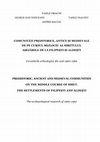
Research paper thumbnail of Comunități preistorice, antice și medievale de pe cursul mijlociu al Siretului. Așezările de la Filipești și Aldești

Editura Istros a Muzeului Brăilei „Carol I”, Editura „Constantin Matasa” Piatra-Neamt, 2024

The present volume highlights data from the sites of Filipești - Budăile Blanariu and Onișcani - ... more The present volume highlights data from the sites of Filipești - Budăile Blanariu and Onișcani - Aldești 2, located on the terrace to the right of River Siret, 3 km from each other.
In the Filipești - Budăile Blanariu site, traces of several settlements and even burial spaces have been identified: the earliest habitation stage is ascribed to the Eneolithic (Cucuteni A and B culture), the Bronze Age (Noua culture), the Early Iron Age (Corlăteni-Chișinău culture), Late Antiquity, 4th century AD (Sântana de Mureș-Chernyakhov culture) and the Middle Ages, 15th-16th centuries.
Also, in the 1960s, the archaeological site of Onișcani - Aldești 2 was investigated. It is multi-stratified and contains habitation levels from the Bronze Age (Noua Culture), Antiquity (2nd-3rd centuries AD), early medieval (10th-11th centuries AD) and late medieval (16th century) periods.