Papers by Anushree Bhattacharjee
BirdLife International and UNEP-WCMC., 2025
Ecosystem restoration in Europe faces significant obstacles. Research and 'on-the-ground' experie... more Ecosystem restoration in Europe faces significant obstacles. Research and 'on-the-ground' experience indicate that the main barriers include low political prioritization, weak stakeholder engagement and conflicting stakeholder interests. The adopted EU Nature Restoration Regulation and the Kunming-Montreal Global Biodiversity Framework present valuable opportunities to reverse biodiversity loss. To fully seize these opportunities, restoration efforts must be grounded in just and inclusive approaches that acknowledge and integrate diverse stakeholder perspectives.
Opportunities for forest landscape restoration in Uttarakhand, India using ROAM
Current Science, 2018
ROAM (Restoration Opportunities Assessment Methodology) provides a flexible and affordable framew... more ROAM (Restoration Opportunities Assessment Methodology) provides a flexible and affordable framework for countries to rapidly identify and analyse areas that are primed for forest landscape restoration (FLR) and to identify specific priority areas at a national or subnational level. Realizing the urgent need for restoration in India, IUCN in partnership with G. B. Pant National Institute of Himalayan Environment and Sustainable Development, Kosi-Katarmal, is using ROAM in priority FLR areas through a sub-national assessment in Uttarakhand. While broad restoration opportunities and appropriate interventions are being identified at the State level, districts of Pithoragarh and Garhwal (Pauri) have been taken up for intensive studies.
Forests and Beyond: Proceedings of the South Asia Regional Consultation on Forest Landscape Restoration

Forest Landscape Restoration as a NbS Strategy for Achieving Bonn Challenge Pledge: Lessons from India’s Restoration Efforts
Bonn Challenge is an ambitious global restoration pledge that was launched in 2011, with the natu... more Bonn Challenge is an ambitious global restoration pledge that was launched in 2011, with the nature-based solutions (NbS) strategy of forest landscape restoration (FLR) as its underlying principle. India has one of the largest pledges from Asia with the aim of bringing 13 million hectares of degraded land into restoration by the year 2020, and an additional eight million hectares by 2030, and thus should maintain a leadership position in South Asia on Bonn Challenge and landscape restoration. Government of India (GoI) and IUCN have prepared the first country progress report towards the Bonn Challenge pledge in 2018 which showed that India has already brought 9.8 million hectares into restoration. This report is the first progress report from any Bonn Challenge country and is also unique as it includes restoration efforts undertaken by the government, NGOs and the private sector. Although the government was the majority contributor (94.4%), the efforts of NGOs (3.6%) and private comp...
Ministry of Environment, Forest and Climate Change (MoEFCC) and IUCN are thankful to all those wh... more Ministry of Environment, Forest and Climate Change (MoEFCC) and IUCN are thankful to all those who willingly shared data on restoration efforts and responded to the questionnaire survey on restoration which provided the basis of this report.
First record of Baillon's Crake Porzana pusilla from Tumariya Reservoir in the Corbett landscape of District Nainital, Uttarakhand
... A Field Guide to the Birds of India, Sri Lanka, Pakistan, Nepal, Bhutan, Bangladesh and theMa... more ... A Field Guide to the Birds of India, Sri Lanka, Pakistan, Nepal, Bhutan, Bangladesh and theMaldives. ... This will include Icebreaker event, Gala dinner, Silent Auction evening, Night Safari event, Lunch and Morning Tea Monday–Thursday and afternoon tea on two days. ...
Another Exotic Weed Invading Corbett Landscape
The Indian Forester, 2014
Sighting of Lesser Adjutant Leptoptilos javanicus at Haripura Reservoir in Uttarakhand, India
Diversity and abundance of wetland birds in Tumaria wetland, Uttarakhand, India and management strategies for their conservation
Harnessing Nature 3(1), 2021
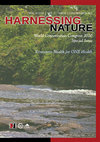
From the desk of Chair Conservation of Threatened Species and Ecosystems through Landscape Approa... more From the desk of Chair Conservation of Threatened Species and Ecosystems through Landscape Approach One Nature, One Future: Multi-stakeholder involvement in conservation and restoration efforts to address societal challenges in South Asia Maharani speaks her mind for a safer, healthier world World Conservation Congress 2021: Highlighting the role of forests, trees and agriculture in the South Asian region Nature-based Solutions towards Circular Economy Beyond net gain and net-zero: Holistic conservation of ecosystems and biodiversity Challenges and opportunities for healthier societies and healthier ecosystems Post CoVID Ecosystem Health for One Health: Changing the concept to reality Mainstreaming biodiversity for food and health: Wild edibles as a case Nature-based solutions for eco-restoration in Sundarbans Enhancing Urban Biodiversity through Ecosystem Restoration and Rejuvenation of Waterbody at Jamshedpur Maximum Sustainable yields, Marine trophic status and Nature-based Solutions-balancing the ying-yang of marine sustainability BLUE ECONOMY: A pathway for inclusive growth and recovery Ecorestoration of Degraded Sodic Lands: Introducing a success story at the start of UN Decade on Ecosystem Restoration Consuming high value tropical forests to fulfil growing Palm Oil demands in S. Asia: Native oil seeds can be a better option Traditional farming systems-a way of life AgroTEK for Sustainable Environment and Food Security: Choice or Necessity? Unto Nature's wilderness until harmonise our understandings to restore healthy ecosystems Synthetic Fertilizers and Pesticides: A Tribal Nemesis
Harnessing Nature 2(2), 2020
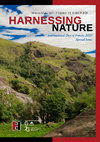
Bonn Challenge and forest landscape restoration (FLR) in India: present status and future strateg... more Bonn Challenge and forest landscape restoration (FLR) in India: present status and future strategies Emerging Zoonotic diseases and the need to protect forests and biodiversity Forests and Sustainable Developmental Goals Restoration of degraded land: A case from west Himalaya Community-based Step by Step Strategic Approach on Mainstreaming Mangrove Conservation into Production Sectors Wet Rice Cultivation cum Fish Culture by Apatani tribes of Arunanchal Pradesh, India Forest Regeneration & Niche Nesting for Bird Conservation at Tata Steel Redefining Conservation: the case of the Indian Sundarbans Climate Change and its Impact on Biodiversity Contribution of NTFPs in livelihood and household income of forest fringe communities in Bangus landscape of Kashmir Himalayan forests Impact of Transformation of Forests to Other Land Use Types on Earthworm Community, Ecological and Functional Guild Changes What drives the forest fire? A case study of Valmiki Tiger Reserve in Indian Terai The paradigm of plant invasion in a sustainability framework
Current Science, 2018
ROAM (Restoration Opportunities Assessment Methodology) provides a flexible and affordable framew... more ROAM (Restoration Opportunities Assessment Methodology) provides a flexible and affordable framework for countries to rapidly identify and analyse areas that are primed for forest landscape restoration (FLR) and to identify specific priority areas at a national or subnational level. Realizing the urgent need for restoration in India, IUCN in partnership with G. B. Pant National Institute of Himalayan Environment and Sustainable Development, Kosi-Katarmal, is using ROAM in priority FLR areas through a sub-national assessment in Uttarakhand. While broad restoration opportunities and appropriate interventions are being identified at the State level, districts of Pithoragarh and Garhwal (Pauri) have been taken up for intensive studies.
Indian Forester, Sep 17, 2013
Field survey was carried out during the winter migration season over three years (2009-2012) to m... more Field survey was carried out during the winter migration season over three years (2009-2012) to monitor the avifaunal diversity in Tumariya Wetland, lying in the Corbett landscape. Sixty seven species of waterbirds belonging to 15 families
were recorded. Common coot (Fulica atra) was the dominant species at Tumariya. The dominant family was Anatidae followed by Ardeidae and Scolopacidae. Mean species richness, diversity and mean abundance of wetland birds was found to have increased over the duration of the study. Seven species are categorized as “Globally Threatened” and are also listed under Schedule IV of the Wildlife (Protection) Act, 1972. Two species are listed under CITES. Interesting sightings included vagrant bean goose (Anser fabalis) and uncommon passage migrant Baillon's crake (Porzana pusilla). Major threats and conservation issues were also identified and possible measures to mitigate these problems are suggested.
Key words: Wetland birds, Tumariya, Corbett, Species richness, Threatened species, Habitat, Conservation Strategies.
Human Dimensions of Wildlife, 2013
This article sought to understand the human–leopard conflict scenario in the western Duars region... more This article sought to understand the human–leopard conflict scenario in the western Duars region of northern West Bengal. We found human depredation levels by leopards have increased by 65% from 2001 to 2008. Tea estates adjoining the forested areas were identified as conflict hotspots. We found a significant increase in human depredation levels in the tea estates adjoining Gorumara National Park (GNP) from 2005 to 2007, following the release of a large number of rescued leopards into GNP during 2005–06. This may indicate that translocation of problem” leopards into forests have increased conflict in adjoining areas. Monitoring captured leopards after relocation can confirm this. Most locals felt fear and hatred toward leopards. The local communities need to be involved while framing management guidelines. Existing short-term mitigation strategies like compensation must be supplemented with long-term strategies like habitat restoration, and better livestock guarding techniques. Alternate strategies like incentive programs should be explored.
Keywords: Panthera pardus, conflict, translocation, conflict hotspots, local perceptions
Books by Anushree Bhattacharjee
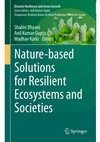
Nature-based Solutions for Resilient Ecosystems and Societies. Disaster Resilience and Green Growth, 2020
Bonn Challenge is an ambitious global restoration pledge that was launched in 2011, with the natu... more Bonn Challenge is an ambitious global restoration pledge that was launched in 2011, with the nature-based solutions (NbS) strategy of forest landscape restoration (FLR) as its underlying principle. India has one of the largest pledges from Asia with the aim of bringing 13 million hectares of degraded land into restoration by the year 2020, and an additional eight million hectares by 2030, and thus should maintain a leadership position in South Asia on Bonn Challenge and landscape restoration. Government of India (GoI) and IUCN have prepared the first country progress report towards the Bonn Challenge pledge in 2018 which showed that India has already brought 9.8 million hectares into restoration. This report is the first progress report from any Bonn Challenge country and is also unique as it includes restoration efforts undertaken by the government, NGOs and the private sector. Although the government was the majority contributor (94.4%), the efforts of NGOs (3.6%) and private companies (2%) are important as they have the technical expertise to guarantee success. Three best practices of landscape restoration from across different ecosystems of India have been detailed here so that they may act as learnings for future restoration efforts. Lessons learnt from past restoration efforts have informed the design of a flagship project on FLR launched in five Indian States by GoI and IUCN, which will maintain India’s leadership on Bonn Challenge across South Asia.



Uploads
Papers by Anushree Bhattacharjee
were recorded. Common coot (Fulica atra) was the dominant species at Tumariya. The dominant family was Anatidae followed by Ardeidae and Scolopacidae. Mean species richness, diversity and mean abundance of wetland birds was found to have increased over the duration of the study. Seven species are categorized as “Globally Threatened” and are also listed under Schedule IV of the Wildlife (Protection) Act, 1972. Two species are listed under CITES. Interesting sightings included vagrant bean goose (Anser fabalis) and uncommon passage migrant Baillon's crake (Porzana pusilla). Major threats and conservation issues were also identified and possible measures to mitigate these problems are suggested.
Key words: Wetland birds, Tumariya, Corbett, Species richness, Threatened species, Habitat, Conservation Strategies.
Keywords: Panthera pardus, conflict, translocation, conflict hotspots, local perceptions
Books by Anushree Bhattacharjee