Conference Programmes by Beatrice Spampinato
The scope of the OSCOP project (https://pric.unive.it/projects/oscop/home) is to study and promot... more The scope of the OSCOP project (https://pric.unive.it/projects/oscop/home) is to study and promote the collection of photographs of South Caucasian art and architecture taken by the research group of Adriano Alpago Novello between the 1960s and 1980s, now preserved in the Centre of Study and Documentation of Armenian Culture in Venice. The photographs show the monumental and natural heritage of Georgia and Armenia, in particular the so-called 'crystal churches' (Brandi 1969). With their pure forms, geometrically defined spaces, and central dome, they offer a highly articulate expression of 'architectural spirituality' in which the landscape takes part. Alpago Novello's collection is particular in its context. Together with his colleagues from Italy and the Armenian diaspora he recorded the Armenian and Georgian historical landscape at a time when the territory was politically and theoretically part of the Soviet Union, and any reference to the sacred and spiritual was excluded from the critical discourse on the natural and monumental heritage. Beyond this, the photo collection raises questions about the specific elements that make a landscape 'spiritual'. What prompted people to define a landscape as spiritual rather than sacred? The study of landscape involves the consideration of the role of human interventions in its shaping, the perception of geomorphology, and of the interplay between human and non-human agencies, such as vegetation. Under which premise and in which ways is a spiritual dimension attributed to them? What is the role of architecture in the making and marking, as well as experiencing of, hierotopic landscapes (Lidov), or vice versa? While inviting contributions to the discussion of these and related questions, the workshop will also engage with photographic images and ask if photographs can stimulate or convey a religious, mystical, or ascetic
Books by Beatrice Spampinato
The othering gaze: imperialism, colonialism, and orientalism in studies on medieval art in the southern caucasus (1801-1991)., 2023
cultural interactions in the medieval subcaucasian region: historiographical and art-historical p... more cultural interactions in the medieval subcaucasian region: historiographical and art-historical perspectives vol. i the othering gaze: imperialism, colonialism, and orientalism in studies on medieval art in the southern caucasus (1801-1991) cultural interactions in the medieval subcaucasian region: historiographical and art-historical perspectives vol. i
Eurasiatica, 2023
Il volume raccoglie in gran parte le ricerche presentate durante gli ultimi Seminari sull’Arte Ar... more Il volume raccoglie in gran parte le ricerche presentate durante gli ultimi Seminari sull’Arte Armena e dell’Oriente cristiano organizzati dall’Università Ca’ Foscari Venezia. Dall’arte cristiana (gli arredi della Basilica della Natività; le cosiddette ‘croci di san Tommaso’; le illustrazioni dei Vangeli apocrifi nei manoscritti della Scuola di Vaspurakan), alla trasmigrazione di temi iconografici e simbolici tra Persia e Armenia, il racconto di viaggio di fra Guglielmo di Rubruk, il sito archeologico dell’Età del Ferro di Tatepe (Iran), per concludere con la Casa della Creatività eretta sul lago Sevan durante il periodo sovietico, i contributi restituiscono la ricchezza di temi e di possibili prospettive di ricerca che dall’Armenia si estendono anche oltre il Caucaso meridionale.
Eurasiatica, 2020
L’esplorazione dell’arte armena iniziò nel diciannovesimo secolo grazie a storici dell’arte franc... more L’esplorazione dell’arte armena iniziò nel diciannovesimo secolo grazie a storici dell’arte francesi, russi, tedeschi, finlandesi, austriaci e armeni e continuò nel ventesimo secolo prevalentemente con studiosi russi, armeni, ucraini, americani e italiani, che hanno portato all’attenzione del largo pubblico, non solo dei ricercatori, il patrimonio artistico di un territorio che supera i confini dell’attuale Armenia, e investe un’area definita Subcaucasia, termine con il quale si intende il territorio che dal Caucaso meridionale trapassa negli altopiani iranico e anatolico. L’interesse per l’arte armena, dai manoscritti miniati, ai khachkar, alle architetture, è cresciuto negli ultimi vent’anni conferendo a queste testimonianze una dimensione globale. Il volume illustra le caratteristiche, i temi e i metodi dei vari percorsi di ricerca emergenti dalle diverse tradizioni storiografiche tracciando così una mappa che aiuta ad orientarsi tra i fenomeni artistici e culturali di questo complesso territorio, fornendo diverse chiavi per comprenderli e ragionamenti utili per le future indagini scientifiche.
Papers by Beatrice Spampinato
Re-Thinking Late Antique Armenia. Historiography, Material Culture, and Heritage, 2023
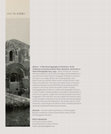
Italian art historians' interest in Armenian architecture can be said to have begun with the publ... more Italian art historians' interest in Armenian architecture can be said to have begun with the publication in 1914 of Giovanni Teresio Rivoira's monograph, Architettura musulmana. Sue origini e suo sviluppo. By then and in ensuing decades, some Italian scholars pursued this interest, which included Armenia, in their histories of architecture. This article traces Italian interest in Armenian architecture between the two World Wars by reviewing the political contexts in which these scholars framed their studies. European historiography placed Armenia in a deterministic geography of the arts, in which Armenian architectural features were taken as representative of Armenian art in general. In light of the international debate around Josef Strzygowski's Orient oder Rom, this article argues that Armenian culture as seen through its architectonic practices has been theoretically aligned with Rome and removed from Byzantium. This position calls for critical reevaluation, especially given its relation to state-controlled publications sponsored and produced under Fascist domination.
Fotografare Bisanzio, 2022
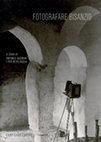
In 1967, Adriano Alpago Novello made his first study trip to Armenia; aware of the importance of ... more In 1967, Adriano Alpago Novello made his first study trip to Armenia; aware of the importance of the medieval cultural heritage of the southern Caucasus, he started storing consistent documentation. That documentation has been the core of decades of activity at the Armenian
Culture Studies and Documentation Centre, nowadays located in Venice. In the summer 2021, the personal documentation of Alpago Novello has been brought to Venice, to join the historical collection and create a unified corpus of photos and written documents. The historical collection
maintains a focus on the Armenian heritage, while the personal collection covers a wide geographical area with a special focus on byzantine Greece and Russia, Georgia, and Near East Christian heritage. This paper aims to describe the history, the state of conservation, the content, and the potential of this valuable and unknown collection of photos. A project written by the CSDCA and Ca’ Foscari University of Venice aims to promote the mentioned collection to open new research frameworks in the contemporary historical and theoretical context while strengthening
and rebuilding the great legacy rooted in Venice in the study of Eastern Christian cultures. The purpose is to collect, digitalize, and catalog Alpago Novello’s photographic documentation, to create an open-source database that will satisfy a broad request for access. The archive gives an overview of the conservation of cultural heritage during the Soviet Period and terms of comparison to look critically at the present-day monuments and landscapes after human or natural transformations have occurred. In addition, the collection shows the point of view of scholars involved in the Italian missions from the Sixties to the Nineties, opening interesting paths through several study fields like art-historical historiography, visual perception between East and West, the history of photography, and Middle Eastern history.

Peltae subacquee e specchiature marmoree La forma dell’acqua tra storia dell’arte e filosofia
Taking and Denying Challenging Canons in Arts and Philosophy, 2020
This paper focuses on two canonical representations of water in 12th-century Venetian churches: (... more This paper focuses on two canonical representations of water in 12th-century Venetian churches: (i) the so-called ‘peltae pattern’, usually defined as ‘geometric decoration’ and recognized as the symbol of water; and (ii) the ‘marble slab’, usually included among non-iconic decorations and recognized as il mare. Why did the medieval masters represent the same natural element in the same type of location in these two different ways? Our hypothesis is that (i) represented the turbulent water of terrestrial life, while (ii) represented heavenly water. We argue that support for both claims can be found by retracing the sources of the two decorative models and looking at them from an art historical point of view, and by analyzing them from a philosophical and perceptological standpoint in order to retrieve universal perceptual patterns that can sustain the iconological reading.
Quaderni di Venezia Arti 2 -Testo e Immagine. Un dialogo dall'antichità al contemporaneo, 2019
Jurgis Baltrušaitis is one of the most representative scholars of the New Formalist School led by... more Jurgis Baltrušaitis is one of the most representative scholars of the New Formalist School led by Henri Focillon in Paris during the first half of the 20th century. By going through Baltrušaitis’ publications, an interesting case of study is the representation of Gilgamesh. The Lithuanian student wrote a long genealogy of this form that goes from ancient Mesopotamian East to Christian medieval West. We will use Gilgamesh’s shape to explore and compare the formalist method of Baltrušaitis, the iconological method of Panofsky and the relation between words and pictures by Schapiro. In doing so, we will try to re-establish a bond between the visual outline of a man with two specular beasts and the written legends of Gilgamesh and Daniel.
L’arte armena. Storia critica e nuove prospettive, 2020
On 27th October 1968 the architect Adriano Alpago Novello opened the photography exhibition Armen... more On 27th October 1968 the architect Adriano Alpago Novello opened the photography exhibition Armenian Architecture. 4th-18th Century, organised in collaboration
with the Department of Humanistic Studies of the Milan Polytechnic University. In light of
the documentation of CSDCA’s (Study and Documentation Centre of Armenian Culture)
Archive, it is possible to assume the curatorial choices that made this exhibition, which
passed by thirty cities of three different continents, a large international success. The
paper aims to examine this particular case of study that covers an important step in the
overview of the Italian historiography on Armenian art studies.
Conference presentations by Beatrice Spampinato
Conferences by Beatrice Spampinato



Uploads
Conference Programmes by Beatrice Spampinato
Books by Beatrice Spampinato
Papers by Beatrice Spampinato
Culture Studies and Documentation Centre, nowadays located in Venice. In the summer 2021, the personal documentation of Alpago Novello has been brought to Venice, to join the historical collection and create a unified corpus of photos and written documents. The historical collection
maintains a focus on the Armenian heritage, while the personal collection covers a wide geographical area with a special focus on byzantine Greece and Russia, Georgia, and Near East Christian heritage. This paper aims to describe the history, the state of conservation, the content, and the potential of this valuable and unknown collection of photos. A project written by the CSDCA and Ca’ Foscari University of Venice aims to promote the mentioned collection to open new research frameworks in the contemporary historical and theoretical context while strengthening
and rebuilding the great legacy rooted in Venice in the study of Eastern Christian cultures. The purpose is to collect, digitalize, and catalog Alpago Novello’s photographic documentation, to create an open-source database that will satisfy a broad request for access. The archive gives an overview of the conservation of cultural heritage during the Soviet Period and terms of comparison to look critically at the present-day monuments and landscapes after human or natural transformations have occurred. In addition, the collection shows the point of view of scholars involved in the Italian missions from the Sixties to the Nineties, opening interesting paths through several study fields like art-historical historiography, visual perception between East and West, the history of photography, and Middle Eastern history.
with the Department of Humanistic Studies of the Milan Polytechnic University. In light of
the documentation of CSDCA’s (Study and Documentation Centre of Armenian Culture)
Archive, it is possible to assume the curatorial choices that made this exhibition, which
passed by thirty cities of three different continents, a large international success. The
paper aims to examine this particular case of study that covers an important step in the
overview of the Italian historiography on Armenian art studies.
Conference presentations by Beatrice Spampinato
Conferences by Beatrice Spampinato