Books by Benjamin Engels

Altertümer von Pergamon 17 (Wiesbaden 2021), 2021
Mit dem Grottenheiligtum am Osthang des Stadtbergs nimmt Benjamin Engels eines der innerstädtisch... more Mit dem Grottenheiligtum am Osthang des Stadtbergs nimmt Benjamin Engels eines der innerstädtischen Naturheiligtümer in den Blick, die im späten Hellenismus ein integraler Bestandteil der urbanen Struktur Pergamons waren. Neben der Architektur, die Grotten und Felsen integriert und dabei in spezifischer Weise inszeniert, wird auch das umfangreiche Fundmaterial detailliert aufgearbeitet. Der besonders günstigen Überlieferungslage ist es zu verdanken, dass sich mit diesem Fundkomplex ein großer Teil des Heiligtumsinventars erhalten hat. Ein umfangreicher Komplex von gut erhaltener Gefäßkeramik schließt eine Lücke in der Chronologie der späthellenistischen Keramik aus Pergamon. Darüber hinaus erlaubt er die Rekonstruktion von Bankettgeschirrsets und wirft damit ein Schlaglicht auf die Ausstattung und Organisation eines mutmaßlichen Vereinshauses. Etwa 130 Terrakottastatuetten sowie Funde aus Metall, Stein, Glas und zahlreiche Tierknochen vervollständigen das facettenreiche Fundspektrum.
Benjamin Engels entwirft auf Grundlage einer nahansichtigen Analyse der Funde und Befunde ein detailliertes Bild der Bankett- und Votivpraxis im Grottenheiligtum und untersucht dessen sozial- und kulturhistorische Bedeutung im lokalen und überregionalen Vergleich.
Edited Books by Benjamin Engels
J.-A. Dickmann - B. Engels - R. Känel (Eds.), Der Ton macht die Figur. Terrakotten aus der Berliner Antikensammlung (Freiburg 2021)
Katalog zur gleichnamigen Ausstellung
Archäologische Sammlung der Universität Freiburg
28. Janu... more Katalog zur gleichnamigen Ausstellung
Archäologische Sammlung der Universität Freiburg
28. Januar - 17. Juli 2022
Freiburg i. Br. 2021, 414 S. mit über 350 zumeist farbigen Abbildungen
ISBN 978-3-00-071212-8
Papers by Benjamin Engels
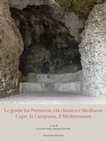
L. Di Franco – R. Perrella (Hrsg.), Le grotte tra Preistoria, età classica e Medioevo. Capri, la Campania, il Mediterraneo (Rom 2023)
Several inscriptions from the late fourth century BC onwards attest to antra as components of (pa... more Several inscriptions from the late fourth century BC onwards attest to antra as components of (particularly Dionysian) association houses and sanctuaries. These ‘caves’ or ‘grottoes’ do not necessarily seem to be natural features, for sometimes their ‘construction’ is mentioned. However, what these structures actually looked like and what constituted their specific atmosphere can only be concluded from the epigraphical sources to a very limited extent. This paper argues that Archaeological data are particularly well suited to close this gap. The starting point is the newly discovered grotto sanctuary at the eastern slope of Pergamon. Here, the architectural layout includes an artificially configured grotto, which is purposefully showcased by rock carvings and water installations. It is argued that this is an archaeological evidence of a clubhouse with an antron. By comparing this structure with other possible antra in the Pergamene micro-region it becomesapparent that there are no blanket concepts of this specific architectural feature, especially concerning the degreeof proximity to nature and the way in which pre-existing natural formations integrated.
A. Kose - B. Engels - M. Trümper, Die Basilike Stoa an der Agora von Thera. Rekonstruktion ihrer Entwicklung auf Basis stratigraphischer Grabungen, Archäologischer Anzeiger 2022/1, 168-235
The Basilike Stoa in Thera is known from several inscriptions found in situ which document repair... more The Basilike Stoa in Thera is known from several inscriptions found in situ which document repairs in the Trajanic and Antonine periods. The long, closed hall with a central internal colonnade is one of the city’s few monumental buildings, located at the agora. Its construction date is debated in scholarship, proposed dates ranging from the early 3rd century B.C., when the Ptolemies had a naval base in Thera, to the Augustan period when the city presumably revived after some 120 years of stagnation. This paper aims at clarifying the construction date and history of the Basilike Stoa, based on stratigraphic excavations carried out in 1992. Three trenches that were dug at the western and eastern external walls of the Stoa are discussed in detail, and the pottery from the most important trench is presented. The latter, trench 92 C, was located in Street F to the west of the Stoa and yielded a dense sequence of features
that are attributed to seven phases. It is shown that the Stoa was certainly built in the 2nd century B.C., most likely before the Ptolemies abandoned their naval base in 146/145 B.C., and that its west wall was almost completely rebuilt in the early Imperial period. The building on the western side of Street F, the so-called Phallos House, had a similar, if even more complex history, and the pavement in the street was renewed three times. In contrast, no evidence of the Trajanic and Antonine repairs of the Stoa
were identified in any of the three trenches. The reconstruction of the Stoa’s history provides an important contribution to assessing the urban development of ancient Thera, which is generally little known because very few stratigraphic excavations have been carried out and published so far.
Annette Haug, Adrian Hielscher, Michael Taylor Lauritsen (eds.), Materiality in Roman Art and Architecture. Aesthetics, Semantics and Function (Berlin 2022)
The paradigm of material hierarchies is increasingly losing importance in the research on transma... more The paradigm of material hierarchies is increasingly losing importance in the research on transmaterial references in artefact design. Instead, the independent aesthetic agenda of the respective objects is usually emphasised. This paper examines what constitutes this specific aesthetic, how it is produced and how it can be further differentiated by using the example of a group of stone urns whose surface design refers to the texture of wickerwork. In the analysis, the notion of linear dependencies is replaced by the concept of a design system consisting of genre-immanent and intermedial references. This approach allows clear differentiation of phenomena within this group, which has so far been regarded as homogeneous. The results are significant for interpretation of the urns within the context of ancient funerary culture, but they also provide general information on the mechanisms of ancient artefact design.

in: B. Engels – S. Huy – Ch. W. Steitler (Hrsg.), Natur und Kult in Anatolien. Viertes Wissenschaftliches Netzwerk der Abteilung Istanbul des Deutschen Archäologischen Instituts (Istanbul 2019) 117-140
Die architektonische Gestaltung des im Jahr 2010 neu entdeckten Grottenheiligtums am Osthang von ... more Die architektonische Gestaltung des im Jahr 2010 neu entdeckten Grottenheiligtums am Osthang von Pergamon wird in diesem Beitrag erstmals ausführlicher vorgestellt. Durch die Kombination von gebauten und stellenweise modifizierten natürlichen Strukturen wird hier eine bestimmte Atmosphäre erzeugt, die einer Gruppe von Akteuren einen angemessenen Rahmen für religiöse Praktiken bot. Vor diesem intergrund ist eine Neubewertung des bereits lange bekannten Grottenheiligtums auf Kapıkaya möglich. Insbesondere hinsichtlich der auf die sensuelle Erfahrbarkeit gerichteten räumlichen Gestaltung der Anlagen zeichnen sich verbindende Muster ab. Diese Gemeinsamkeiten liegen dabei vor allem auf der Ebene der räumlichen Gestaltung und haben offenbar keine unmittelbaren Auswirkungen auf die Kult- und Votivpraxis, die sich in einigen Punkten deutlich unterscheiden.
in: B. Engels – S. Huy – Ch. W. Steitler (Hrsg.), Natur und Kult in Anatolien. Viertes Wissenschaftliches Netzwerk der Abteilung Istanbul des Deutschen Archäologischen Instituts (Istanbul 2019) XI-XXIII
in: S. Japp – P. Kögler (Hrsg.), Traditions and Innovations: Tracking the Development of Pottery from the Late Classical to the Early Imperial Periods. Berlin, 7.–10. November 2013 (Wien 2016) 307– 316., 2016
Pergamenian table ware production of the Hellenistic and early Roman period is known for its comp... more Pergamenian table ware production of the Hellenistic and early Roman period is known for its comprehensive repertoire and a tendency for inventing new forms and decorative elements. One interesting feature within this repertoire is bi-coloured vessels: vessels with a red or reddish-brown and a black or brownish-black surface ( ). This polychromatism does not seem to be an accidental product of the firing process but appears to be intentional.
in: J.-A. Dickmann – A. Heinemann (Hrsg.), Vom Trinken und Bechern. Das antike Gelage im Umbruch (Freiburg 2015) 91-99.
K. Sporn - S. Ladstätter - M. Kerschner (eds.), Natur – Kult – Raum Akten des internationalen Kolloquiums Paris-Lodron-Universität Salzburg, 20.–22. Jänner 2012 (Wien 2015))
At the eastern slope of the setlement hill of Pergamon, several (potential) rock-cut sanctuaries ... more At the eastern slope of the setlement hill of Pergamon, several (potential) rock-cut sanctuaries have been discovered between 2008-10. The article presents the new evidence for natural sanctuaries within the boundaries of a Hellenistic city and discusses the atribution to specific deities.
in: F. Pirson, Pergamon - Bericht über die Arbeiten in der Kampagne 2014, AA 2015/2, 152-155.
in: F. Pirson, Pergamon – Bericht über die Arbeiten in der Kampagne 2013, AA 2014, 147–151.
Gräber am Westhang des Stadtberges dokumentiert. Ein Schwerpunkt der Arbeiten lag auf der erneute... more Gräber am Westhang des Stadtberges dokumentiert. Ein Schwerpunkt der Arbeiten lag auf der erneuten Untersuchung des Niyazi Tepe 91 , wo ein Felsgrab neu aufgenommen und der Plan des Grabtempels georeferenziert wurde. Nach der überraschenden Auffindung von Resten des Fundmaterials aus dem 1906 von Dörpfeld freigelegten Tumulus III 92 in einem der Depots der Pergamongrabung sind die Alabastra sowie diverse Metall-und Holzfunde neu konserviert und dokumentiert worden. Weitere Einzeluntersuchungen galten der Verwendung gebrannter Mauerziegel im kaiserzeitlichen Kleinasien 93 sowie dem Dionysos-Tempel auf der Theaterterrasse, der im Rahmen eines neuen baugeschichtlichen Projekts erforscht werden soll 94 . Fundmaterial Die archäometrische Untersuchung von Keramik aus Pergamon und seinem Umland wurde mit der Entnahme weiterer Proben fortgesetzt 95 . Dabei konzentriert sich ein neuer Projektabschnitt auf die (lokale?) Herkunft bestimmter Kochkeramik und Krüge. In diesem Rahmen sollen erstmals RFA-Analysen in den Labors der Koç Üniversitesi Istanbul durchgeführt werden 96 . Die Bearbeitung der Schmuck-und Trachtbestandteile aus Pergamon umfasste wiederum die Kontrolle bereits dokumentierten Materials sowie die Bearbeitung der Funde aus der Südostnekropole und den laufenden Grabungen 97 . Im Rahmen einer Studie zur handwerklichen Bearbeitung von Tierknochen und Horn wurden die Funde aus einer Knochenschnitzerwerkstatt im Bereich der Stadtgrabung nochmals untersucht 98 .
in: F. Pirson, Pergamon – Bericht über die Arbeiten in der Kampagne 2012, AA 2013, 134–138.
in: F. Pirson, Pergamon – Bericht über die Arbeiten in der Kampagne 2011, AA 2012, 251–255.
Athen – Vulci – Leipzig: ‚Hetrurische’ Vasen in europäischen Sammlungen
in: H.-U. Cain – H.-P. Müller – D. Steuernagel (Hrsg.), Renaissance der Etrusker. Vom Mythos zur Wissenschaft (Leipzig 2006) 40-41
Book Reviews by Benjamin Engels
Drafts by Benjamin Engels
Benjamin Engels, Das Grottenheiligtum am Osthang von Pergamon Resümee der Dissertation Gegenstand... more Benjamin Engels, Das Grottenheiligtum am Osthang von Pergamon Resümee der Dissertation Gegenstand meiner Dissertation ist das im Jahr 2010 ausgegrabene sogenannte Grottenheiligtum am Osthang des Stadtbergs von Pergamon. Die Anlage bestand aus zwei Grotten, die vollständig in ein Gebäude integriert waren, das sich auf der vorgelagerten Terrasse befand. In der ungestörten Verfüllung einer der beiden Grotten haben sich große Teile des Inventars aus der letzten Nutzungsphase des Heiligtums erhalten, das dort im späten 1. Jh. v. Chr. systematisch deponiert worden war. Auf Grundlage der vollständigen Vorlage aller Funde und Befunde war es möglich, ein detailliertes Bild der Praktiken und Akteure im Grottenheiligtum zu zeichnen und damit einen Beitrag zur aktuellen Diskussion um das Verhältnis von Natur und Kult in der antiken Religion zu leisten.
Talks by Benjamin Engels
Material is the substance of the world of things. In the case of man-made objects and architectur... more Material is the substance of the world of things. In the case of man-made objects and architecture, materiality is an inherent aspect of their function, aesthetics, and semantics. Consequently, the choice of specific materials can be considered an important feature of design. From an ancient perspective, the choice of appropriate materials was of primary importance. Ancient sources reflect a general recognition of materiality as an aesthetically perceived, semantically loaded and functionally bonded category. To date, this complex comprehension of the material world has not been adequately represented in archaeological research. The ambition of the colloquium Materiality as Decor is to focus on the decorative use of material in relation to the qualities of aesthetics, semantics and function.
International Conference "Religion of Quarters: Practicing Religion on a Neighbourhood Scale in t... more International Conference "Religion of Quarters: Practicing Religion on a Neighbourhood Scale in the Hellenistic and Imperial Periods"; Haus Hainstein, Eisenach, Germany; 4th–6th July 2018 |



Uploads
Books by Benjamin Engels
Benjamin Engels entwirft auf Grundlage einer nahansichtigen Analyse der Funde und Befunde ein detailliertes Bild der Bankett- und Votivpraxis im Grottenheiligtum und untersucht dessen sozial- und kulturhistorische Bedeutung im lokalen und überregionalen Vergleich.
Edited Books by Benjamin Engels
Archäologische Sammlung der Universität Freiburg
28. Januar - 17. Juli 2022
Freiburg i. Br. 2021, 414 S. mit über 350 zumeist farbigen Abbildungen
ISBN 978-3-00-071212-8
Papers by Benjamin Engels
that are attributed to seven phases. It is shown that the Stoa was certainly built in the 2nd century B.C., most likely before the Ptolemies abandoned their naval base in 146/145 B.C., and that its west wall was almost completely rebuilt in the early Imperial period. The building on the western side of Street F, the so-called Phallos House, had a similar, if even more complex history, and the pavement in the street was renewed three times. In contrast, no evidence of the Trajanic and Antonine repairs of the Stoa
were identified in any of the three trenches. The reconstruction of the Stoa’s history provides an important contribution to assessing the urban development of ancient Thera, which is generally little known because very few stratigraphic excavations have been carried out and published so far.
Book Reviews by Benjamin Engels
Drafts by Benjamin Engels
Talks by Benjamin Engels