Papers by Brisson Luc

Luc Brisson: Le Même et l'Autre dans la structure ontologique du Timée de Platon. Pp. 589. Paris: Klinksieck, 1974

The Classical Review, 1980

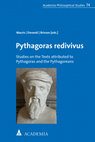
Research paper thumbnail of Pythagoras Redivivus Studies on the Texts Attributed to Pythagoras and the Pythagoreans Ed Constantinos Macris Tiziano Dorandi and Luc Brisson Baden Baden Academia Verlag 2021 509 P Series Academia Philosophical Studies Vol 74

Pythagoras Redivivus Studies on the Texts Attributed to Pythagoras and the Pythagoreans Ed Constantinos Macris Tiziano Dorandi and Luc Brisson Baden Baden Academia Verlag 2021 509 P Series Academia Philosophical Studies Vol 74

This original collection of essays by some of the best world specialists of ancient Greek philoso... more This original collection of essays by some of the best world specialists of ancient Greek philosophy focuses on the philosophical texts written during the Hellenistic and Imperial times under the names of Pythagoras and the Pythagoreans. Their unknown authors claimed to convey the positions of the pristine Pythagorean School on metaphysics, theology, number philosophy, physics, logic, political philosophy, ethics, and the proper way to live. The most audacious among them presented themselves as the sources from which Plato and Aristotle drew inspiration for the 'Timaeus' and the 'Categories', and they were considered authoritative by most ancient thinkers, thus leading to a renaissance of the Platonic and Pythagorean tradition. Table of contents 1. Constantinos Macris Texts Attributed to Pythagoras and the Pythagoreans: A Brief Introductory Guide, p.1-44 I. Sources and transmission of the fragments 2. Rosa Maria Piccione Pythagorica nell’Anthologion di Giovanni Stobeo : provenienza, principi di selezione e distribuzione, p. 73-106 3. Carole Hofstetter Les fragments d’Archytas et de Philolaos dans l’Introduction arithmétique de Nicomaque de Gérasa, p. 107-138 II. Authors and texts 4. Phillip S. Horky Archytas: Author and Authenticator of Pythagoreanism, p. 141-176 5. Francesca Scrofani Le traité Sur la loi et la justice et le fragment 3 attribués à Archytas. Une théorie de la loi en rapport avec celle du Minos attribué à Platon, p. 177-204 6. Johan C. Thom The Golden Verses as Pseudo-Pythagorean Text, p. 205-227 7. Matteo Varoli Il tempo, la Terra, i pianeti. Osservazioni sull’esegesi di Tim. 37c-39e in Ps.-Timeo di Locri, p. 229-247 8. Lucia Saudelli L’eschatologie du pseudo-Timée, p. 249-273 9. Marco Donato “Pempélos” Sur les parents et les Lois de Platon, p. 275-313 III. Expanding Holger Thesleff’s corpus 10. Johan C. Thom Androcydes’ On the Pythagorean Symbola as Pseudo-Pythagorean Text, p. 317-339 11. Leonid Zhmud The Anonymus arithmologicus and its Philosophical Background, p. 341-379 12. Luc Brisson Les lettres “pythagoriciennes” attribuées à Platon, p. 381-397 IV. Receptions 13. Adrien Lecerf Jamblique source des néoplatoniciens tardifs : les cas du Discours sacré dorien et de l’Hymne au nombre, p. 401-446 14. Marc-Antoine Gavray De l’usage d’une autorité : Timée de Locres et Simplicius, p. 447-474 15. Anna Izdebska The Riddles of Pythagoras. Arabic and Syriac symbola Attributed to Pythagoras and Socrates, p. 475-509.

Emotions in Plato

Emotions ( pathè) such as anger, fear, shame, and envy, but also pity, wonder, love and friendshi... more Emotions ( pathè) such as anger, fear, shame, and envy, but also pity, wonder, love and friendship have long been underestimated in Plato’s philosophy. The aim of Emotions in Plato is to provide a consistent account of the role of emotions in Plato’s psychology, epistemology, ethics and political theory. The volume focuses on three main issues: taxonomy of emotions, their epistemic status, and their relevance for the ethical and political theory and practice. This volume, which is the first edited volume entirely dedicated to emotions in Plato’s philosophy, shows how Plato, in many aspects, was positively interested in these affective states in order to support the rule of reason.

Emotions in Plato

Emotions ( pathè) such as anger, fear, shame, and envy, but also pity, wonder, love and friendshi... more Emotions ( pathè) such as anger, fear, shame, and envy, but also pity, wonder, love and friendship have long been underestimated in Plato’s philosophy. The aim of Emotions in Plato is to provide a consistent account of the role of emotions in Plato’s psychology, epistemology, ethics and political theory. The volume focuses on three main issues: taxonomy of emotions, their epistemic status, and their relevance for the ethical and political theory and practice. This volume, which is the first edited volume entirely dedicated to emotions in Plato’s philosophy, shows how Plato, in many aspects, was positively interested in these affective states in order to support the rule of reason.

Neoplatonic Demons and Angels, 2018

Holds a Ph.D. in Classics from the University of Dublin, Trinity College (November 2016). Her dis... more Holds a Ph.D. in Classics from the University of Dublin, Trinity College (November 2016). Her dissertation is the analysis of Porphyry's On the Cave of the Nymphs against the backdrop of his wider philosophical oeuvre. She was educated at Istanbul University where she translated Ovid's Heroides into Turkish during her M.A. degree. Her aim is to continue to work in the field of Neoplatonism and ancient allegorical interpretation.

Bloch (Raymond) La Divination dansl' Antiquité

Archives De Sciences Sociales Des Religions, 1984

L Antiquite Classique, 1976

Gordon (R.L.) éd Myth, Religion and Society

Archives De Sciences Sociales Des Religions, 1984

Philosophy and Salvation in Greek Religion

Although Greek authors treat philosophy and theology in the closest contiguity, most scholarship ... more Although Greek authors treat philosophy and theology in the closest contiguity, most scholarship still reflects the 19th century prejudice according to which philosophy is a rational enterprise, while theology is a dogmatic discipline. Yet, as this volume demonstrates, Greek philosophy emerges from and remains closely linked to the archaic religious experience. Spanning Greek thought from Homer to Neo-Platonism, this anthology is essential reading for those interested in ancient Greek philosophy in the context of its theological, soteriological and cosmological concerns.

Research paper thumbnail of Pour une relecture des écrits socratiques de Xénophon

Pour une relecture des écrits socratiques de Xénophon

Les études philosophiques, 2004

Xenophon fut certainement Tun des auteurs ?classiques? les plus deconsideres et les plus negliges... more Xenophon fut certainement Tun des auteurs ?classiques? les plus deconsideres et les plus negliges au cours du dernier siecle. Le discredit qui a frappe, entre autres, ses ecrits socratiques {Memorables, Banquet, Economique, Apologie) est une consequence directe des conclusions auxquelles sont parve nus, au debut du XXe siecle, les historiens qui cherchaient une solution a la fameuse ? Question socratique ?, c'est-a-dire au probleme de savoir s'il est possible de reconstituer la pensee du Socrate historique a partir de nos prin cipaux temoignages (Aristophane, Platon, Xenophon et Aristote). Des les origines de la Question socratique, qui remontent a l'etude de Schleierma cher, ? La valeur de Socrate en tant que philosophe ?\ le temoignage de Xenophon, considere jusqu'alors comme la source la plus fiable, fut soumis a une critique impitoyable. Dans cette etude de 1815, qui eut une influence determinante sur des generations d'historiens attaches a resoudre la Ques tion socratique, Schleiermacher a formule a Tendroit de l'auteur des Memo rabies ces deux critiques principales : premierement, Xenophon n'etait pas un philosophe, mais plutot un militaire et un politicien, de sorte qu'il n'etait pas le temoin le plus qualifie pour faire un expose fidele des principales positions philosophiques de Socrate. Deuxiemement, Xenophon deploie un tel zele pour defendre son maitre contre les accusations qui lui reprochent son enseignement subversif, que Socrate fait figure, dans ses ecrits, de representant de Tordre etabli et des valeurs les plus traditionnelles. Les posi tions defendues par le Socrate de Xenophon sont a ce point conservatrices et conventionnelles qu'on ne comprend pas comment un philosophe aussi plat et ennuyeux a pu attirer, captiver et retenir des esprits naturellement portes a la speculation, tels que Platon et Euclide, celui que Ton considere comme le fondateur de l'ecole megarique. Bref, si Socrate avait ressemble a son homonyme des ecrits de Xenophon, il n'aurait pas ete entoure de tels disciples, il les aurait au contraire fait fuir2.

Turcan (Robert) Mithras platonicus. Recherches sur l'hellénisation philosophique de Mithra

Archives De Sciences Sociales Des Religions, 1977

Research paper thumbnail of Plato the Myth Maker

Plato the Myth Maker

We think of a myth as a fictional story, and Plato was the first to use the term "muthos&quo... more We think of a myth as a fictional story, and Plato was the first to use the term "muthos" in that sense. But Plato also used "muthos" to describe the practice of making and telling myths, the oral transmission of all that a community keeps in its collective memory. In the first part of this text, Luc Brisson reconstructs Plato's multifaceted and not uncritical description of "muthos" in light of the latter's famous Atlantis story. The second part of the book contrasts this sense of myth, as Plato does, with another form of speech which he believed was far superior: the "logos" of philosophy. Brisson's work is part lexical, part philosophical, and part ethnological, and Gerard Naddaf's substantial introduction shows the originality and importance both of Brisson's method and of Plato's analysis in the context of contemporary debates over the origin and evolution of the oral tradition.

Inventer l'univers: Le Probleme de la connaissance et les modeles cosmologiques

Phoenix, 1995

Weinmann (Heinz) Du Canada au Québec. Généalogie d'une histoire

Archives De Sciences Sociales Des Religions, 1988

Etudes Philosophiques, 2004 n°69 p.137-140, 2004

Distribution électronique Cairn.info pour Presses Universitaires de France. © Presses Universitai... more Distribution électronique Cairn.info pour Presses Universitaires de France. © Presses Universitaires de France. Tous droits réservés pour tous pays.

Études Lévinassiennes 13, 2014

Pour Platon et la plupart des philosophes de l'Antiquité, c'est une seule et même loi, à laquelle... more Pour Platon et la plupart des philosophes de l'Antiquité, c'est une seule et même loi, à laquelle aucun être ne peut déroger, qui dirige la marche du monde, l'administration de la cité et la conduite de l'homme ; et cette loi dérive d'un principe universel de perfection instaurant et maintenant un ordre qui rend possible, en ce monde, l'action, la parole et la pensée.

Books by Brisson Luc

Research paper thumbnail of Pythagoras redivivus. Studies on the Texts Attributed to Pythagoras and the Pythagoreans, ed. Constantinos Macris, Tiziano Dorandi and Luc Brisson, Baden-Baden: Academia Verlag, 2021, 509 p. (series 'Academia Philosophical Studies', vol. 74).
This original collection of essays by some of the best world specialists of ancient Greek philoso... more This original collection of essays by some of the best world specialists of ancient Greek philosophy focuses on the philosophical texts written during the Hellenistic and Imperial times under the names of Pythagoras and the Pythagoreans. Their unknown authors claimed to convey the positions of the pristine Pythagorean School on metaphysics, theology, number philosophy, physics, logic, political philosophy, ethics, and the proper way to live. The most audacious among them presented themselves as the sources from which Plato and Aristotle drew inspiration for the 'Timaeus' and the 'Categories', and they were considered authoritative by most ancient thinkers, thus leading to a renaissance of the Platonic and Pythagorean tradition.

Table of contents

1. Constantinos Macris
Texts Attributed to Pythagoras and the Pythagoreans: A Brief Introductory Guide, p.1-44

I. Sources and transmission of the fragments

2. Rosa Maria Piccione
Pythagorica nell’Anthologion di Giovanni Stobeo : provenienza, principi di selezione e distribuzione, p. 73-106

3. Carole Hofstetter
Les fragments d’Archytas et de Philolaos dans l’Introduction arithmétique de Nicomaque de Gérasa, p. 107-138

II. Authors and texts

4. Phillip S. Horky
Archytas: Author and Authenticator of Pythagoreanism, p. 141-176

5. Francesca Scrofani
Le traité Sur la loi et la justice et le fragment 3 attribués à Archytas. Une théorie de la loi en rapport avec celle du Minos attribué à Platon, p. 177-204

6. Johan C. Thom
The Golden Verses as Pseudo-Pythagorean Text, p. 205-227

7. Matteo Varoli
Il tempo, la Terra, i pianeti. Osservazioni sull’esegesi di Tim. 37c-39e in Ps.-Timeo di Locri, p. 229-247

8. Lucia Saudelli
L’eschatologie du pseudo-Timée, p. 249-273

9. Marco Donato
“Pempélos” Sur les parents et les Lois de Platon, p. 275-313

III. Expanding Holger Thesleff’s corpus

10. Johan C. Thom
Androcydes’ On the Pythagorean Symbola as Pseudo-Pythagorean Text, p. 317-339

11. Leonid Zhmud
The Anonymus arithmologicus and its Philosophical Background, p. 341-379

12. Luc Brisson
Les lettres “pythagoriciennes” attribuées à Platon, p. 381-397

IV. Receptions

13. Adrien Lecerf
Jamblique source des néoplatoniciens tardifs : les cas du Discours sacré dorien et de l’Hymne au nombre, p. 401-446

14. Marc-Antoine Gavray
De l’usage d’une autorité : Timée de Locres et Simplicius, p. 447-474

15. Anna Izdebska
The Riddles of Pythagoras. Arabic and Syriac symbola Attributed to Pythagoras and Socrates, p. 475-509.

Edited Volumes by Brisson Luc

Plato's Parmenides - Selected Papers of the XIIth Symposium Platonicum, 2022