Monographs and Books (with published reviews) by Chiara Formichi

his is the first work available in any language to extensively document and critically discuss tr... more his is the first work available in any language to extensively document and critically discuss traditions of 'Alid piety and their modern contestations in the region. The concept of 'Alid piety allows for a reframing of our views on the widespread reverence for 'Ali, Fatima and their progeny that emphasizes how such sentiments and associated practices are seen as part of broad traditions shared by many Muslims, which might or might not have their origins in a specifically Shi'a identity. In doing so, it facilitates the movement of academic discussions out from under the shadow of polemical sectarian discourses on 'Shi'ism' in Southeast Asia. The chapters include presentations of new material from previously unpublished early manuscript sources from Muslim vernacular literatures in the Malay, Javanese, Sundanese, Acehnese and Bugis languages, as well as rich new ethnography from across the region. These studies engage with cultural, intellectual, and performative traditions, as well as the ways in which 'Alid piety has been transformed in relation to more strictly sectarian identifications since the Iranian revolution in 1979.
Table of Contents
Part 1: Historical Foundations
1. Debating ‘Shiʿism’ in the History of Muslim Southeast Asia — R. Michael Feener & Chiara Formichi
2. Shiʿa Devotion to the Ahl al-Bayt in Historical Perspective — Bianca Maria Scarcia Amoretti
3. Shiʿism in Thailand: From the Ayutthaya Period to the Present — Christoph Marcinkowski
Part 2: Literary Legacies
4. Soldier and Son-in-law, Spreader of the Faith and Scribe: Representations of ʿAli in Javanese Literature — Ronit Ricci
5. Fāṭima in Nusantara — Wendy Mukherjee
6. Penghulu Segala Perempuan: Fāṭima in Malay Didactic Texts for Women — Mulaika Hijjas
7. ʿAlid Piety in Bugis Texts on Proper Sexual Arts — Faried F. Saenong
8. Sex to the Next World: Holy Descent and Restorative Sex for the Mualad —Teren Sevea
Part 3: Modalities of ʿAlid Piety and Cultural Expressions in the Modern Period
9. ‘They are the Heirs of the Prophet’: Discourses on the Ahl al-Bayt and Religious Authority among the Bā ʿAlawī in Modern Indonesia — Ismail Fajrie Alatas
10. Locating the Descendants of ʿAli in Southwest Aceh: The Places of ʿAlid Piety in Late 20th-century Seunagan — Daniel Andrew Birchok
11. ʿAlid Piety and State-sponsored Spectacle: Tabot Tradition in Bengkulu, Sumatra — R. Michael Feener
12. Burlesquing Muḥarram Processions into Carnivalesque Boria — Jan van der Putten
13. A Taʿziya from 21st-century Malaysia: Faisal Tehrani’s Passion Play Karbalāʾ — E. P. Wieringa
Part 4: Contemporary Developments
14. Aspects of Shiʿism in Contemporary Indonesia: A Quest for Social Recognition in the Post-Suharto Era (1998-2008) — Umar Faruk Assegaf
15. One Big Family? Dynamics of Interaction among the ‘Lovers of the Ahl al Bayt’ in Modern Java — Chiara Formichi

Shi'ism in Southeast Asia: 'Alid Piety and Sectarian Constructions
This is the first work available in any language to extensively document and critically discuss t... more This is the first work available in any language to extensively document and critically discuss traditions of 'Alid piety and their modern contestations in the region. The concept of 'Alid piety allows for a reframing of our views on the widespread reverence for 'Ali, Fatima and their progeny that emphasises how such sentiments and associated practices are seen as part of broad traditions shared by many Muslims, which might or might not have their origins in a specifically Shi'a identity. In doing so, it facilitates the movement of academic discussions out from under the shadow of polemical sectarian discourses on 'Shi'ism' in Southeast Asia. The chapters include presentations of new material from previously unpublished early manuscript sources from Muslim vernacular literatures in the Malay, Javanese, Sundanese, Acehnese and Bugis languages, as well as rich new ethnography from across the region. These studies engage with cultural, intellectual, and performative traditions, as well as the ways in which 'Alid piety has been transformed in relation to more strictly sectarian identifications since the Iranian Revolution in 1979.
Religious Pluralism, State and Society in Asia
Taking a critical approach to the concept of ‘religious pluralism’, this book examines the dynami... more Taking a critical approach to the concept of ‘religious pluralism’, this book examines the dynamics of religious co-existence in Asia as they are directly addressed by governments, or indirectly managed by groups and individuals. It looks at the quality of relations that emerge in encounters among people of different religious traditions or among people who hold different visions within the same tradition. Chapters focus in particular on the places of everyday religious diversity in Asian societies in order to explore how religious groups have confronted new situations of religious diversity. The book goes on to explore the conditions under which active religious pluralism emerges (or not) from material contexts of diversity.
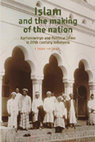
This book investigates the relation between Islam and politics in Indonesia throughout the 20th c... more This book investigates the relation between Islam and politics in Indonesia throughout the 20th century. Through accurate archival research, the author follows the career and ideology of Kartosuwiryo, the religious nationalist leader of the Sarekat Islam party and later Imam of the Islamic state of Indonesia. Focussing on the dialectic between the religious and secular anti-colonial and nationalist movements, this effort is pursued to understand the failure of political Islam in the mid-1950s and the consolidation of the Pancasila state under Sukarno’s and Suharto’s regimes.
Tracing a trajectory of political activism consistently dedicated to the formation of an Indonesian state independent of foreign intrusions, the chapters delineate the gradual radicalization of the Islamic party and Kartosuwiryo’s own ideals from the 1920s until the 1950s. For decades scholars of Indonesia have rejected the religious claims of this movement, interpreting the antagonism between the Islamic state and Soekarno’s republic as a fight for power, self-assertion, or land rights, whilst recently Kartosuwiryo and the DI have become heroic symbols of the local Islamist struggle. The author looks beyond this dichotomy unveiling a ‘third’ dimension of this character, a politician whose legacy has shaped the role of Islam in Indonesian politics.
A testament to the relevance of historical enquiry in the understanding of contemporary politics, Islam and the making of the nation guides the reader through the contingencies of the past which have led to the transformation of a nationalist leader into a ‘separatist rebel’ and a ‘martyr’, at the same time shaping Indonesia’s public perceptions of political Islam and strengthening the position of the Pancasila.
Kikue Hamayotsu (NIU DeKalb) kindly reviews Chiara Formichi's monograph "Islam and the Making of ... more Kikue Hamayotsu (NIU DeKalb) kindly reviews Chiara Formichi's monograph "Islam and the Making of the Nation" (KITLV, 2012) for Cornell's Indonesia Journal, no. 100 (Oct 2015).
"an important and fascinating intellectual enterprise to fill this lacuna [in our understanding of the trend of religious radicalism and political Islam in West Java]. Formichi’s scholarly contribution goes far beyond the study of the Darul Islam and its leader, Kartosuwiryo"
"Formichi’s study and solid grasp of empirical materials seems to shine from among numerous other studies on political Islam in Indonesia and beyond."
"Formichi’s empirical findings and theoretical assertions help us to reconsider conventional propositions and approaches in regard to Islamist movements and political Islam"
Review of Islam and the Making of the Nation, Journal of Islamic Studies (Oxford)
Journal Articles by Chiara Formichi
“Islamic Studies or Asian Studies? Islam in Southeast Asia,” The Muslim World (October 2016) 106 (4): 696-718.
"(Re)Writing the History of Political Islam in Indonesia," Sojourn (2015) 30 (1): 105-140.
The impact of Reformasi on Indonesia has extended beyond the realms of politics and economics, al... more The impact of Reformasi on Indonesia has extended beyond the realms of politics and economics, also leading to changing understandings of history. For example, the institutional and popular approaches to the Darul Islam movement (1947–65) and its leader Kartosuwiryo have shifted in Indonesian publications released between the 1940s and the 2010s. These approaches place varying degrees of emphasis on their rebellious or Islamic character. A trajectory from condemnation to glorification illustrates that, whilst formal political transitions are useful to gauge historiographical shifts, in the case at hand there is more continuity than change across regimes, and much nuanced variation within each politically defined era. Revisionism has also appeared in Indonesian military historiography.
"Religion as an overlooked category in Hong Kong legislation," Asian Anthropology (2015) 14 (1): 21-32.
Asian Anthropology, 2015
Introduction: Overlooked religions in Hong Kong
Much of what we know about religion in Hong Kong is connected to what may be considered historica... more Much of what we know about religion in Hong Kong is connected to what may be considered historically central religious traditions that are entwined with an elite institutional hierarchy in the territory, namely Christianity and Buddhism. As a result, the rich mosaic of Hong Kong's religious life and history remains a widely overlooked landscape. In response to Homi Bhabha's influential call to locate culture in the “margins and boundaries of assumed authenticities” and following up on Dru Gladney's work, which explored a representation of China through its minority communities (Gladney 2004, 1), this special issue of Asian Anthropology strives to present an account of Hong Kong through the overlooked and often dismissed relevance of religions as they exist in minority, migrant, and marginalized forms. This decentering engages with the people who are involved in such religions and religious practices, locally born ethnic minorities, foreign domestic workers, and devotees of practices sometimes viewed as feudal and out of step with the modern urbanity of the world city. What is the status of these religions? How do they affect the lives of people? And in turn how does the rhythm of Hong Kong life come to influence religious groups and practitioners? Ultimately, it is how religion is imagined in Hong Kong society that determines the quality of interaction.
"Violence, Sectarianism, and the Politics of Religion: Articulations of Anti-Shi'a Discourses in Indonesia,: Indonesia, 98 (October 2014): 1-27.
Indonesia Journal (Cornell), Oct 2014
This article explains the recent violence directed at Shi'a Muslims in Indonesia by situating the... more This article explains the recent violence directed at Shi'a Muslims in Indonesia by situating the cause of and increase in such attacks in the wider contexts of international politics, changing national political dynamics, legal provisions regulating religious minorities, and the local environment. Instead of focusing on the micro-dynamics of the attacks, this article looks at the trajectory of the violence and joins national politics and local dynamics with legal opinions in both the civil and religious realms. With the rise of Islamic orthodoxy in the Indonesian public sphere during the 2000s, Shi'a Muslims—as well as the Ahmadis—became for many the representatives of the threat to social order. The cases that support this suggested explanation for the violence are numerous, but in this essay one detailed case of marginalization and violence is given, that of the Shi'a community in Nangkernang, a village on the southern coast of Madura island, in the province of East Java.
"Shaping Shiʿa identities in contemporary Indonesia between local tradition and foreign orthodoxy," ,” Die Welt des Islams (2014) 54: 212-236.
Die Welt des Islams, 2014
This article reflects on the impact of transnational flows of students, pilgrims, and literature ... more This article reflects on the impact of transnational flows of students, pilgrims, and literature from Iran to Indonesia on the shaping of Shiʿa Islam in Indonesia since 1979, with a focus on the post-Suharto era (1998-2012) and the performance of Ashūrāʾ rituals. Since the early days of its Islamization, Southeast Asia has featured literary and ritual practices rooted in a combination of Islamic and local traditions; most notable are those expressing pre-sectarian devotion towards the ahl al-bayt - drawing a parallel with Marshall Hodgson's framework of Alid piety. Based on ethnographic and archival research, the author suggests that in the decades following the Iranian revolution some of these practices were abandoned in favour of a standard of devotion promoted by the Islamic Republic of Iran. The polarization of practices is illustrated through an analysis of the performative means used to represent the tragedy of Karbala during ʿAshūrāʾ events in Bandung, Bengkulu (West Sumatra), and Jakarta in 2011. In Bandung the play "Tragedi Karbala" was performed by a Sundanese theatrical group staging a local text; in Bengkulu the traditional Festival Tabot followed a pattern determined by the Indonesian Ministry of Education and Culture in the early 1970s but now under the sponsorship of the Iranian Embassy; the Jakarta event featured a ta'ziyeh troupe brought from Iran by the Embassy's cultural office
“From Fluid Identities to Sectarian Labels: A Historical Investigation of Indonesia’s Shi’i Communities,” al-Jami’ah: Journal of Islamic Studies (2014) 52 (1): 101-126
Since 2011 Indonesia has experienced a rise in intra-Muslim sectarian violence, with Shi‘a and Ah... more Since 2011 Indonesia has experienced a rise in intra-Muslim sectarian violence, with Shi‘a and Ahmadi communities becoming the target of radical Sunni groups. Taking as point of departure the attacks on Shi‘a Muslims and the rapid polarization of Sunni and Shi‘i identities, this article aims at deconstructing the “Shi‘a” category. Identifying examples of how since the early century of the Islamization devotion for the Prophet Muhammad and his progeny (herein referred to as ‘Alid piety) has been incorporated in the archipelago’s “Sunni” religious rituals, and contrasting them to programmatic forms of Shi’ism (adherence to Ja‘fari fiqh) which spread in the socio-political milieu of the 1970s-1990s. This article argues not only that historically there has been much devotional common ground between “Sunni” and “Shi‘a”, but also that in the last decade much polarization has occurred within the “Shi‘a” group between those who value local(ized) forms of ritual and knowledge, and those who seek models of orthopraxy and orthodoxy abroad
S.M. Kartosuwiryo, famed leader of the long and bloody Darul Islam rebellion which began in West ... more S.M. Kartosuwiryo, famed leader of the long and bloody Darul Islam rebellion which began in West Java in 1948, was a strong supporter of the Indonesian independence struggle and a champion of the Indonesian Republic proclaimed in 1945. This article seeks to understand how it was that Kartosuwiryo came to oppose that very Republic with such violence in 1948–49. Many scholars have sought to explain the origins of the DI movement in terms of Kartosuwiryo’s fanatic Islamist ambition. However, a detailed examination of the circumstances of the revolt’s gestation and outbreak indicates that it was a consequence of a complex interplay of historically contingent circumstances rather than any ideological fixity.
"Pan-Islam and religious nationalism: the case of S.M. Kartosuwiryo and Negara Islam Indonesia," Indonesia, 90 (October 2010): 125-146.
This paper investigates the (apparent) conflict between appeals to Pan-Islam transnationalism and... more This paper investigates the (apparent) conflict between appeals to Pan-Islam transnationalism and religious nationalism in the Netherlands East Indies, between the 1920s and the 1950s. Analyzing the career and writings of S. M. Kartosuwiryo (1905-1962) —Sarekat Islam leader and founder of the Islamic State of Indonesia —the article argues that shifts from one ideological platform to the other functioned to rally support for the Islamic state project, in conjunction with historical contingencies.



Uploads
Monographs and Books (with published reviews) by Chiara Formichi
Table of Contents
Part 1: Historical Foundations
1. Debating ‘Shiʿism’ in the History of Muslim Southeast Asia — R. Michael Feener & Chiara Formichi
2. Shiʿa Devotion to the Ahl al-Bayt in Historical Perspective — Bianca Maria Scarcia Amoretti
3. Shiʿism in Thailand: From the Ayutthaya Period to the Present — Christoph Marcinkowski
Part 2: Literary Legacies
4. Soldier and Son-in-law, Spreader of the Faith and Scribe: Representations of ʿAli in Javanese Literature — Ronit Ricci
5. Fāṭima in Nusantara — Wendy Mukherjee
6. Penghulu Segala Perempuan: Fāṭima in Malay Didactic Texts for Women — Mulaika Hijjas
7. ʿAlid Piety in Bugis Texts on Proper Sexual Arts — Faried F. Saenong
8. Sex to the Next World: Holy Descent and Restorative Sex for the Mualad —Teren Sevea
Part 3: Modalities of ʿAlid Piety and Cultural Expressions in the Modern Period
9. ‘They are the Heirs of the Prophet’: Discourses on the Ahl al-Bayt and Religious Authority among the Bā ʿAlawī in Modern Indonesia — Ismail Fajrie Alatas
10. Locating the Descendants of ʿAli in Southwest Aceh: The Places of ʿAlid Piety in Late 20th-century Seunagan — Daniel Andrew Birchok
11. ʿAlid Piety and State-sponsored Spectacle: Tabot Tradition in Bengkulu, Sumatra — R. Michael Feener
12. Burlesquing Muḥarram Processions into Carnivalesque Boria — Jan van der Putten
13. A Taʿziya from 21st-century Malaysia: Faisal Tehrani’s Passion Play Karbalāʾ — E. P. Wieringa
Part 4: Contemporary Developments
14. Aspects of Shiʿism in Contemporary Indonesia: A Quest for Social Recognition in the Post-Suharto Era (1998-2008) — Umar Faruk Assegaf
15. One Big Family? Dynamics of Interaction among the ‘Lovers of the Ahl al Bayt’ in Modern Java — Chiara Formichi
Tracing a trajectory of political activism consistently dedicated to the formation of an Indonesian state independent of foreign intrusions, the chapters delineate the gradual radicalization of the Islamic party and Kartosuwiryo’s own ideals from the 1920s until the 1950s. For decades scholars of Indonesia have rejected the religious claims of this movement, interpreting the antagonism between the Islamic state and Soekarno’s republic as a fight for power, self-assertion, or land rights, whilst recently Kartosuwiryo and the DI have become heroic symbols of the local Islamist struggle. The author looks beyond this dichotomy unveiling a ‘third’ dimension of this character, a politician whose legacy has shaped the role of Islam in Indonesian politics.
A testament to the relevance of historical enquiry in the understanding of contemporary politics, Islam and the making of the nation guides the reader through the contingencies of the past which have led to the transformation of a nationalist leader into a ‘separatist rebel’ and a ‘martyr’, at the same time shaping Indonesia’s public perceptions of political Islam and strengthening the position of the Pancasila.
"an important and fascinating intellectual enterprise to fill this lacuna [in our understanding of the trend of religious radicalism and political Islam in West Java]. Formichi’s scholarly contribution goes far beyond the study of the Darul Islam and its leader, Kartosuwiryo"
"Formichi’s study and solid grasp of empirical materials seems to shine from among numerous other studies on political Islam in Indonesia and beyond."
"Formichi’s empirical findings and theoretical assertions help us to reconsider conventional propositions and approaches in regard to Islamist movements and political Islam"
Journal Articles by Chiara Formichi