Books by Claudiu Turcus
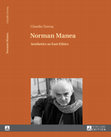
The book offers the very first critical biography on Norman Manea, a widely respected writer and ... more The book offers the very first critical biography on Norman Manea, a widely respected writer and multiple Nobel Prize Nominee. It follows two main objectives: an aesthetic and ideological interpretation of his literature and a contextualization of his ethical discourse. Manea's aesthetics is seen also as an Eastern European ethics, significant for the writer’s status while living and working under the Communist censorship in a totalitarian state and in the global context of World literature.
The two main sections of the monograph – one dedicated to literary history and criticism (Aesthetics), the other related to the intellectual history and sociology (East Ethics) – converge in re-composing the complex portrait of the writer. A personality with multiple facets: prose writer, essayist, moral being and public personality who overcame
a terrible biography.
An extremely important role in preparing and writing the book was the careful research of various documents (both primary and secondary sources) as well as the encounter I had with the writer and his personal archive during a Fellowship at Bard College, in the USA. Thus, I was able to capture equally the aesthetic aspects related to Manea’s literary production and reception of his books in North America and Europe, and
the ethical aspects of a great and widely respected personality. The result is a panoramic, although clearly focused monograph dedicated to an outstanding writer.
Papers by Claudiu Turcus
In the 1990s, Romanian cinema was structurally, legislatively and fi nancially adrift : it was ex... more In the 1990s, Romanian cinema was structurally, legislatively and fi nancially adrift : it was experiencing a sort of clinical death. To start with, there were no Romanian fi lm premieres in 1990 and 2000. Various social transformations, the lack of management expertise, as well as the political and legislative (dis)order aft er 1989 rapidly created a new and staggering context. Th e society was confused about power relations and access to resources, compared with the status quo of the socialist years (which applied at every stage of the dictatorship: from the Stalinism of the 1950s, to the liberalization of the 1960s, to the national-socialism of the 1970s and 1980s). While there have been no consistent research and documentation endeavours dedicated to explaining the state of aff airs from the fi rst decade aft er 1989, many debates were staged in the Romanian press at that time (for instance in Noul Cinema magazine), albeit to little avail. Signifi cantly, an article published in 1993 by Alex Leo Șerban, probably the most infl uential Romanian fi lm critic of the 1990s, was titled 'On a Cinema Th at Doesn't Exist'. 1) What Șerban drew attention to was the poor functioning of the fi lm industry, which had just abandoned the state-socialist mode of production. Most worrisome, however, was the questionable aesthetic quality of Romanian fi lms. Over the past twenty-fi ve years, the situation has changed from an 'inexistent' Romanian cinema to a new, intensively praised generation of fi lm directors (such as Cristi Puiu, Cristian Mungiu, Radu Muntean, Corneliu Porumboiu, or Radu Jude) who have reinvented the Neorealist 2) aesthetic style and rewritten the cinematic language. New Romanian Cinema has been described as 'an unexpected miracle' by Dominique Nasta 3) or as a late

Geographies of Capitalism in Romanian Postcommunist Literature and Film: Villages, Cities, Markets
Transilvania, 2022
This article analyses the ways in which the rural – understood in its double nature, of tradition... more This article analyses the ways in which the rural – understood in its double nature, of traditional mythological space, and of degraded periphery of the urban – was both instrumentalized by the cultural and political discourses within Romanian postcommunism, and revealed as a symptomatic field in which the harsh economic realities of the post-1989 implementation of neoliberal capitalism in Eastern Europe became evident. The first part of the article describes how misplaced public policies during 1980s’ communism favoured the underdevelopment of the rural. Later, the process of transition encouraged both external migration, which depopulated Romanian villages, and the internal migration of the urban middle-class to an economically more secure rural area. The second part of the article analyses – from a materialist viewpoint – corresponding topics developed in Romanian contemporary literature and films (authored by Adrian Șchiop, Lavinia Braniște, Bogdan Mirică, and Radu Muntean). These works envision the rural/periurban as an asymmetrical geography, where violence toward the vulnerable is enacted, where the loss of community values leaves black markets flourish, and the capitalist dismantling of social ties becomes striking.
Studies in Eastern European Cinema, 2020
This article introduces the topic of the transformation of the cultural industries in several for... more This article introduces the topic of the transformation of the cultural industries in several former East European communist countries. In the first part it delivers a critical overview of the essential contributions to research in the field and outlines the historical and methodological context in relation to which the four articles in this special-themed issue have taken convergent or polemical stances. The second part offers a descriptive-correlative reading of the articles signed by Jan Hanzlík, Radu Toderici, Balász Varga, and Adriana Stan and Cosmin Borza, focusing on how they investigate the postsocialist transformations of several East European film industries and of the Romanian book industry. The answers that the four case studies try to provide to this wide phenomenon combine (1) an analytical approach to the ideological discourses that have formed the basis of the political agendas specific to the cultural field, and (2) an examination, from a cultural studies perspectiv...
Afterlives of Romanian socialist-era historical film: reruns, story universes, reception
Canadian Slavonic Papers, 2021
This article examines present-day reruns of Romanian socialist-era historical films, their progra... more This article examines present-day reruns of Romanian socialist-era historical films, their programming, the publicity related to their programming, and their reception. It argues that, unintentionally, reruns act as an instrument of historical revisionism. It shows that the cinematic administration of the distant national past is still carried out by socialist-era films and explains the causes of this predicament and its cultural effects. It reflects on how the process of rerunning works to neutralize their labelling as Communist propaganda, a label that has been applied to these films by a large segment of Romania’s post-socialist cultural elite. The article also briefly explores the marketing of two films, Dacii (The Dacians, 1966) and Mihai Viteazul (Michael the Brave, 1971), and highlights the commemorative practices brought into the present by these films. It uses contextual and genre arguments to explain why the commemorative practices proposed by socialist-era film appeal to ...
Studies in Eastern European Cinema, 2018
Specters of Europe and Anticommunist Visual Rhetoric in Romanian Film of the Early 1990s
The Oxford Handbook of Communist Visual Cultures, 2019
This article identifies visions of European identity articulated by the anticommunist propaganda ... more This article identifies visions of European identity articulated by the anticommunist propaganda broadcasts of Radio Free Europe Romania (RFER) in the 1980s and traces the way these visions influenced the audiovisual rhetoric of the Romanian cinema of the early 1990s. It examines how RFER listeners envisioned this identity in a context of inner exile and in opposition to the communist system and its legacy. The study presents the political profile of film directors of the 1990s who gave cinematic form to RFER anticommunism. Using the concept of “hauntology,” a psycho-ideological analysis of this cinematic output is provided, with a specific focus on one of the most appreciated films of the immediate post-1989 decade, the 1994 Pepe and Fifi (Dir. Dan Pița).
Reframing New Romanian Cinema
Studies in Eastern European Cinema, 2018
as such it is a remarkable achievement. Her analysis proceeds in two parallel and mutually inform... more as such it is a remarkable achievement. Her analysis proceeds in two parallel and mutually informing registers: one interrogates the paradox of European identity deconstructing its orthodoxy of modernity, progress and universality of Western civilization, while the other provides a detailed analysis of these films’ critical practices. The four analyzed films, I suspect, were selected not only because they interrogate the paradox of European identity but also because of their esthetic congruency with Godard’s and Pasolini’s semiotics of film as well as Ravetto-Biagioli’s own film analysis. Because her analysis moves from image to image, from image to sound or from sound to sound in the way in which films are constructed, her analysis never departs from the machine of the film’s imagination. Rather than rushing to deduce a point, she patiently maps the free-floating trajectories of images or sounds to the point where they become their own referents. Such analytical strategies allow he...
Afterlives of Romanian socialist-era historical film: reruns, story universes, reception
Canadian Slavonic Papers, 2021
ABSTRACT This article examines present-day reruns of Romanian socialist-era historical films, the... more ABSTRACT This article examines present-day reruns of Romanian socialist-era historical films, their programming, the publicity related to their programming, and their reception. It argues that, unintentionally, reruns act as an instrument of historical revisionism. It shows that the cinematic administration of the distant national past is still carried out by socialist-era films and explains the causes of this predicament and its cultural effects. It reflects on how the process of rerunning works to neutralize their labelling as Communist propaganda, a label that has been applied to these films by a large segment of Romania’s post-socialist cultural elite. The article also briefly explores the marketing of two films, Dacii (The Dacians, 1966) and Mihai Viteazul (Michael the Brave, 1971), and highlights the commemorative practices brought into the present by these films. It uses contextual and genre arguments to explain why the commemorative practices proposed by socialist-era film appeal to present-day audiences and why their symbolism and ways of relating to the past are appropriated in contemporary Romanian popular culture.
The Oxford Handbook of Communist Visual Cultures, 2019
This chapter identifies visions of European identity articulated by the anticommunist propaganda ... more This chapter identifies visions of European identity articulated by the anticommunist propaganda broadcasts of Radio Free Europe Romania (RFER) in the 1980s and traces the way these visions influenced the audiovisual rhetoric of the Romanian cinema of the early 1990s. It examines how RFER listeners envisioned this identity in a context of inner exile and in opposition to the communist system and its legacy. The study presents the political profile of film directors of the 1990s who gave cinematic form to RFER anticommunism. Using the concept of “hauntology,” a psycho-ideological analysis of this cinematic output is provided, with a specific focus on one of the most appreciated films of the immediate post-1989 decade, the 1994 Pepe and Fifi (Dir. Dan Pița).
Keywords: 1990s Romanian cinema, Radio Free Europe Romania, RFER, anticommunist propaganda, European identity, transition to capitalism, hauntology
Ekphrasis, Dec 2014
The official discourse of the communist era displayed an ideological resistance towards represent... more The official discourse of the communist era displayed an ideological resistance towards representations of corporeality with the aim of desexualising the collective imaginary. This was mainly because eroticism was associated with an exclusively Western phenomenon and regarded as a symptom of sheer decadence. If this taboo could be relatively easily flouted in literature (through the suggestive power of words), in cinema, eroticism could contextually convey a form of subversive politicized sexuality. Often by reference to post-war Polish and Czechoslovakian cinema, the Romanian cinema of the 1970s attempted to legitimize the representation of eroticism through the rhetoric of emancipation. Unfortunately, for the Communist Party, emancipation meant leveling rather than disinhibiting individuals. This paper reconstructs from the perspective of the communist propaganda not only the latter's ideological motivations for prohibiting erotic representations, but also its subliminal refusal to accept such representations as relevant cultural and existential manifestations for the utilitarian project of socialism. In addition to this, this paper embarks on an analysis of several Romanian films of the 1960s-1980s, whose somber and subversive outlook on socialism was predicated, to some extent, on a depiction of raw eroticism, understood as an alternative manifestation that could counter the effects of socialist "humanism".
Ekphrasis, Dec 2013
Ostalgie under the Romanian Transition. I'm an Old Communist Hag -an Unfaithful Adaptation Claudi... more Ostalgie under the Romanian Transition. I'm an Old Communist Hag -an Unfaithful Adaptation Claudiu TURCUȘ Recycling and Confronting Ostalgie under the Romanian Transition.
Edited Issues by Claudiu Turcus
Ekphrasis. Images, Cinema, Theory, Media, vol. 12, issue 2 (2014)
All articles submitted for publication are peer-reviewed. The authors should submit the articles ... more All articles submitted for publication are peer-reviewed. The authors should submit the articles in electronic format to the issue coordinators and to the senior editor at the following e-mail address: [email protected]. By sending the material, it is understood that it contains original information that has never been published before and that the material has not been submitted for publication elsewhere.
Drafts by Claudiu Turcus
The economic, social and cultural transformation of East-Central Europe in the last decades of th... more The economic, social and cultural transformation of East-Central Europe in the last decades of the twentieth century is the last grand modern social, economic and political change in European history. Fiction film and television production of the region has recorded it and has been shaped by it. This special issue of SEEC aims to study this audiovisual testimony and look into how the filmic and television output of the region has contributed to imagining and recreating socialist and postsocialist reality in times of a change marked by sharp divisions between different imaginary projects.



Uploads
Books by Claudiu Turcus
The two main sections of the monograph – one dedicated to literary history and criticism (Aesthetics), the other related to the intellectual history and sociology (East Ethics) – converge in re-composing the complex portrait of the writer. A personality with multiple facets: prose writer, essayist, moral being and public personality who overcame
a terrible biography.
An extremely important role in preparing and writing the book was the careful research of various documents (both primary and secondary sources) as well as the encounter I had with the writer and his personal archive during a Fellowship at Bard College, in the USA. Thus, I was able to capture equally the aesthetic aspects related to Manea’s literary production and reception of his books in North America and Europe, and
the ethical aspects of a great and widely respected personality. The result is a panoramic, although clearly focused monograph dedicated to an outstanding writer.
Papers by Claudiu Turcus
Keywords: 1990s Romanian cinema, Radio Free Europe Romania, RFER, anticommunist propaganda, European identity, transition to capitalism, hauntology
Edited Issues by Claudiu Turcus
Drafts by Claudiu Turcus