Papers by Cătălin Borangic
MEMORIA ANTIQUITATIS, 2026
The present study examines the recurrent illicit trafficking of Dacian curved daggers ('sicae') o... more The present study examines the recurrent illicit trafficking of Dacian curved daggers ('sicae') originating from the archaeological complex of Luncani-Piatra Roșie (Romania), artefacts that remain registered as stolen on the official wanted list of the Romanian Police yet have been repeatedly offered for sale by major international auction houses. This persistent phenomenon exposes critical deficiencies in the capacity of Romanian state institutions to effectively monitor and intervene in the global antiquities market-a shortfall with profound implications for any society committed to the long-term preservation of its cultural heritage. Drawing on the totality of available judicial documentation, police records, and archaeological evidence, the analysis systematically compares the stolen daggers with typologically analogous specimens recovered from controlled excavations at neighbouring Dacian fortifications in the Orăștie Mountains region. The objective is to furnish the scholarly community with a rigorous, evidence-based evaluation of the cultural and scientific loss occasioned by systematic archaeological looting. 1 O versiune în limba engleză a acestui studiu a fost înaintată către Journal of Ancient History and Archaeology (octombrie 2025). Prezenta redactare include date și completări ulterioare trimiterii versiunii în limba engleză.
Journal of Ancient History and Anchaeology, 2025
The present study draws attention to the case of three Dacian daggers
about which judicial autho... more The present study draws attention to the case of three Dacian daggers
about which judicial authorities obtained information during the criminal
investigation indicating that they had been stolen from the archaeological site
of Luncani–Piatra Roșie, Romania—items that are currently listed as wanted
objects on the Romanian Police website, yet have nonetheless been resold
multiple times through international auction houses. This situation highlights
the limitations of the instruments employed by Romanian state institutions
to monitor the global antiquities market, a particularly serious issue for a
society striving to protect its cultural heritage for future generations.
Our analysis includes all available judicial and archaeological evidence,
comparing the stolen daggers with similar artefacts originating from sites
in the vicinity of Luncani–Piatra Roșie, in order to provide the academic
community with a well-documented perspective on the extent of damage
caused by archaeological looting. The findings strengthen the conviction
that the absence of such weapons in the Orăștie Mountains—the core of the
Dacian elite’s power—contrasted with their presence in nearby fortifications,
can only be explained by the systematic looting of archaeological sites and the
subsequent illicit circulation of these artefacts on the black market.
Keywords: Dacian weapons, auction, archaeological looting, forensic archaeology
Journal of Ancient History and Anchaeology, 2025
The present study draws attention to the case of three Dacian daggers about which judicial author... more The present study draws attention to the case of three Dacian daggers about which judicial authorities obtained information during the criminal investigation indicating that they had been stolen from the archaeological site of Luncani–Piatra Roșie, Romania—items that are currently listed as wanted objects on the Romanian Police website, yet have nonetheless been resold multiple times through international auction houses. This situation highlights the limitations of the instruments employed by Romanian state institutions to monitor the global antiquities market, a particularly serious issue for a society striving to protect its cultural heritage for future generations. Our analysis includes all available judicial and archaeological evidence, comparing the stolen daggers with similar artefacts originating from sites in the vicinity of Luncani–Piatra Roșie, in order to provide the academic community with a well-documented perspective on the extent of damage caused by archaeological looting. The findings strengthen the conviction that the absence of such weapons in the Orăștie Mountains—the core of the Dacian elite’s power—contrasted with their presence in nearby fortifications, can only be explained by the systematic looting of archaeological sites and the subsequent illicit circulation of these artefacts on the black market.
ACTA CENTRI LUCUSIENSIS, 2025
The sica dagger represents one of the most distinctive weapons
of the Iron Age in the Northern Ba... more The sica dagger represents one of the most distinctive weapons
of the Iron Age in the Northern Balkans, occupying a central position
within the cultural horizon conventionally defined as Padea–Panagjurski
Kolonii–Mala Kopanya. Far from being a purely functional implement,
the sica must be understood as a complex cultural artefact in which
technology, symbolism, and social identity converge. Morphologically
standardized despite its wide geographical dispersion, the weapon does
not reflect technological conservatism, but rather the persistence of a
deeply internalized cultural archetype shared by the mobile warrior elites
of the Northern Balkans. This study approaches the sica as a composite
object—simultaneously martial, ritual, and ideological. Its recurrent
presence in elite funerary contexts, often accompanied by deliberate ritual
destruction, demonstrates its integration into a coherent symbolic economy
of death, memory, and status. Equally significant is the iconography
engraved on the blades. Geometric, zoomorphic, astral, and narrative
motifs do not function as mere decoration, but as a semiotic system: a nonalphabetic
visual language through which myths, beliefs, and ideological
values were materially encoded and transmitted within a predominantly
oral society. The apparent disappearance of sica daggers from funerary
records after the age of Burebista does not indicate their abandonment,
but rather a transformation of ritual practices and ideological frameworks
associated with political centralization. The persistence of the sica in
Roman iconography—most notably on Trajan’s Column—confirms its lasting symbolic and political relevance. Ultimately, the sica emerges as
a key indicator of identity, power, and worldview within the pre-Roman
warrior cultures of the Northern Balkans. In conclusion, the historical,
morphological, and technical evidence outlines the sica dagger as a
weapon with a constant martial function, simultaneously invested with
ideological and cultic meanings, and distinguished within the repertoire
of ancient daggers by its specific form and its privileged association with
the Celto-Thracian warrior elites of the Middle Danube basin. Its use and
significance can be traced over a period of more than half a millennium,
from the late fourth century BC to the early second century AD.
Magazin istoric, 2026
Despre posibilitatea aplicări sistemului agnatic la daci
ACTA MVSEI POROLISSENSIS, 2025
The study introduces a new theme into the
iconographic repertoire of sica‑type daggers—the motif
... more The study introduces a new theme into the
iconographic repertoire of sica‑type daggers—the motif
of the horseman—based on the identification of an equestrian
representation incised on the reverse of a dagger
blade. The horseman motif, well established in Thracian,
Getic, and Dacian art yet unprecedented on a sica blade,
expands the interpretive framework of these weapons’
ornamentation and necessitates a reconsideration of their
symbolic dimension. The representation is not merely decorative
but rather conveys the concepts of passage, heroization,
and the warrior’s apotheosis. The association of the
horseman’s image with the most expressive weapon of the
warrior‑aristocrats, who are defined as both creators and
structural components of the Padea–Panagyurski Kolonii–
Mala Kopanya phenomenon, transforms the dagger into a
medium of spiritual and identitary meanings, reflecting a
unified vision of the relationship between life, death, and
transcendence. Thus, the sica iconography emerges as a
visual language specific to the Dacian warrior aristocracy,
with the decorated pieces serving as encoded messages of a
world that expressed its beliefs, dreams, strength, and values
through metal. Not without importance is the reconstruction
of the post‑depositional trajectory of the decorated
piece, which connects it to the series of fortresses in
the center of the Dacian Kingdom.
Cronica Cercetarilor Arheologice, 2021
Varia Archaeologica, 2024
The archaeological research carried out in 2021 in the perimeter of the archaeological site from ... more The archaeological research carried out in 2021 in the perimeter of the archaeological site from Crivești-"Dealul Viei" (Strunga commune, Iași County) led to the discovery of 11 features, among which a grave, a pit with uncertain functionality, a hearth and eight household pits. All datable features belong to the first half of the Late Iron Age, between the 4th-3rd centuries BC. The most important discovery is, without a doubt, Feature/Complex 4-an inhumation grave, which contained in the upper half of the pit the well-represented and moderately preserved skeleton of a (pre)adolescent of about 12-14 years, probably of male anthropological sex. Among the skeletal remains of human origin, a fragment of the diaphysis of a long bone from a medium-sized mammal was identified, most likely the rest of an offering. This feature could represent an inhumation grave that is hypothetically located at the edge of the cemetery corresponding to the known citadel and settlement of the 4th-3rd century BC. As for the other complexes identified, they do not stand out in particular, neither in inventory nor in form.
Istros, 2025
This article presents a comprehensive study of B-type sica daggers, a category of curved weapons ... more This article presents a comprehensive study of B-type sica daggers, a category of curved weapons specific to the northern Balkan region and associated with the broader archaeologicalphenomenon known as Padea–Panagjurski Kolonii–Mala Kopanya (PPK–MK). Although often more modest than other sica variants, these weapons carry deep cultural, symbolic, and ritual meaning,
reflecting the beliefs and identities of Thracian, Getic, Celtic, and Dacian communities during the Late Iron Age. The title of the study, “Little Sister”, metaphorically conveys their marginal, yet symbolically charged, role within the spiritual and social fabric of the age.
The analysis is based on a representative and diverse corpus of artifacts documented in scholarly literature, recent archaeological discoveries, and informal sources—including the antiquities trade.
Approximately half of these daggers lack precise provenance due to systematic archaeological looting, a phenomenon that has disrupted the original contexts of many finds. Despite this limitation, the study
succeeds in outlining a coherent geographical distribution, with concentrations in northwestern Bulgaria and in southern and central Romania, along with isolated finds in Serbia, Slovakia, and east of the
Eastern Carpathians. This pattern suggests a broad circulation network clearly linked to production centers.
From a morphological perspective, B-type sica daggers exhibit consistent features: short, curved blades with pointed tips, hilts fixed with one or two rivets, and a well-profiled groove typically placed along the central axis of the blade. The decoration—consisting of geometric, astral, and, more rarely, zoomorphic motifs—goes beyond aesthetic considerations, suggesting an apotropaic or mythological function and endowing these weapons with a sacred dimension. Their frequent occurrence in funerary
contexts, particularly in the region between the Iron Gates gorge and the Argeș–Ialomița interfluve, underscores their ritual function. When found beyond this core area, their symbolic significance appears to have faded or transformed into more mundane meanings.
The variability in decoration and form supports the existence of multiple workshops and indicates regional or chronological differentiation. Connections between examples from distant regions suggest long-distance cultural contact and exchange. Consequently, these daggers emerge not merely as weapons but as narrative objects—symbols of social status and repositories of religious belief.
In certain funerary contexts, they may have served as symbolic substitutes for actual weapons, indicating a prioritization of ritual over practical value. Their presence in cultic, funerary, and, lessfrequently, utilitarian contexts confirms their multifunctional nature and layered significance.
This study offers a rigorous formal and contextual assessment, proposing a refined typological classification and a well-grounded interpretive framework. Emphasis on the cultural and symbolic dimensions of these artifacts reinforces the conclusion that B-type sica daggers were primarily ritual and identity-bearing objects.
In conclusion, these daggers serve as essential archaeological indicators for understanding the spiritual and social worlds of Celto-Thracian and Dacian societies in the northern Balkans during the Second Iron Age. By synthesizing typology, ornamentation, and spatial distribution, this study contributes meaningfully to regional archaeology and provides a solid foundation for future research into prestige artifacts and symbolic practices in the pre-Roman world of the lower Danube basin.
Acta Centru Lucusiensis, 2024
This study examines a recent archaeological discovery made
using a metal detector. In September 2... more This study examines a recent archaeological discovery made
using a metal detector. In September 2023, an iron akinakes—a short
sword characteristic of the Scythian culture during the Middle Scythian
period (6th–4th centuries BC)—was unearthed at the northern boundary
of Băgău village (Lopadea Nouă commune, Alba County). The dagger,
identified as a Nógrád-type, features a curved, single-edged blade,
reflecting a hybrid design influenced by both classical Scythian forms and
local Balkan models, likely Thracian or Dacian. This find enriches the
corpus of artifacts known along the Mureș River, associated with Scythian
warriors who controlled and exploited the region’s saline resources during
the Early Iron Age.

ACTA CENTRI LUCUSIENSIS, 2024
The Combat Equipment of a Warrior Aristocrat
in the Dacian World: Efficiency, Endurance,
Standard... more The Combat Equipment of a Warrior Aristocrat
in the Dacian World: Efficiency, Endurance,
Standard and Cultural Model.
Case Study – T.II Cugir (Alba)
Abstract: This article was made possible by the recovery of a significant part
of the historical information concerning the funeral inventory of a warrior
aristocrat who was cremated and buried with all his military equipment
under a tumulus near the present-day town of Cugir. The reconstruction
of the arsenal revealed considerable economic costs, reflected in access
to resources and skilled craftsmen. The aristocrat possessed a Celtic type
sword, a Sica type dagger, chain mail armor, an iron helmet, a shield, a
lance, spurs, three riding horses with Thracian type bits, silver fibulae,
gold and bronze ornaments, imported vessels (situla) and local pottery.
The deceased was placed on a ceremonial chariot harnessed to two other
horses, also equipped with bits and harnesses. The arsenal, the spectacular
nature of the rituals and funerary rites performed during the burial, and
above all the rarity of such discoveries, lead us to believe that there was a
clear social and military hierarchy, headed by this nobleman. The entire
equipment, which included both Celtic and Thracian legacies specific to
the Padea-Panagjurski Kolonii-Mala Kopanya group, constituted what we
could now describe as a functional, efficient and expensive „uniform” that
socially conveyed the aristocrat’s status. This carefully constructed image
of a prominent warrior, together with his family and the clan he ruled,
provided his society with a successful model and part of the essential
psycho-social and military elements necessary to transform a constellation in just one or two generations. History remembers these people under the
name of the Dacians, as they called themselves.

Istros, 2021
The subject of the study is a cauldron discovered in 1952, made of
riveted sheet metal segments. ... more The subject of the study is a cauldron discovered in 1952, made of
riveted sheet metal segments. The object was discovered in a pit between the remains of a metallurgical workshop on the perimeter of the Dacian Kingdom's capital, Sarmizegetusa Regia, along with numerous tools and weapons. The artifact was presented in several exhibitions during the communist period and published in several catalogs. The rediscovery of the vessel in the repository of the National Museum of Romanian History in Bucharest triggered the authors' investigation into the complicated and largely unknown route of the cauldron from the time of its initial discovery to its presence among the museum's exhibits today. This investigation is all the more necessary since from the same archaeological site, in the same social and political conditions, many other artifacts discovered at the same moment were distributed in the territory, thus coming out of the attention of specialists and the public.

Istros, 2014
This study, conceived as a necessary prologue to more extensive research, focuses on the presenta... more This study, conceived as a necessary prologue to more extensive research, focuses on the presentation of several recent finds that are remarkable both for their characteristics and the manner in which they became part of the museum heritage. These finds include five curved sica daggers, three horse bits of the 'Thracian type,' and six spearheads, representing the contents of five pit deposits dating to the period of the Dacian Kingdom.
Other similar discoveries of associated artifacts have been attributed to the Padea–Panagjurski Kolonii cultural group. This group initially emerged in the 3rd century BC in present-day north-western Bulgaria, later spreading in the 2nd century BC to Oltenia and western Muntenia, and eventually reaching south-eastern Transylvania and the periphery of the Dacian Kingdom. These artifact assemblages are believed to have been linked to warrior clans of Celtic-Thracian origin, who were subordinated to the Dacian aristocracy and continued to use these items until the Roman conquest.
Based on these discoveries, the study addresses the sensitive issue of metal detecting by non-archaeologists, an activity that has gained increasing social popularity. While difficult to regulate, this practice poses a significant threat to archaeological heritage due to its often destructive nature.
Istros
This article presents a recent discovery of a curved sica-type dagger. These weapons were part of... more This article presents a recent discovery of a curved sica-type dagger. These weapons were part of the panoply of the warriors who built a cultural phenomenon known today, conventionally, as Padea-Panagjurski Kolonii, which began at the end of the 4th century BC and lasted until the conquest of the Dacian Kingdom by the legions of Emperor Trajan (106 AD).
The dagger was discovered with a metal detector in the radius of Sighiștel village, Câmpani commune, Bihor County. The artifact belongs to type “C” of these daggers, and it is exceptional both in its manner of manufacture and in its place of discovery. On the blade of the dagger there was engraved an ornamentation specific to this type of weapon, namely the heads of a couple of facing birds, decorated with circles. Small pieces of semi-precious stone, most likely red jasper, were set into these recessed circles.
The discovery of this dagger in the region signals the presence, sometime between the 2nd century BC and the beginning of the 1st century AD of a powerful warrior leader. It is the first discovery of its kind in a region very rich in hoards of Dacian silver coins and ornaments. The dagger completes the local landscape with the political, military and social landmarks existing in the rest of the Dacian Kingdom, being a real link between the center of the kingdom and the lands to the north.
Varia Archaeologica, 2024
The archaeological research carried out in 2021 in the perimeter of the archaeological site from ... more The archaeological research carried out in 2021 in the perimeter of the archaeological site from Crivești-"Dealul Viei" (Strunga commune, Iași County) led to the discovery of 11 features, among which a grave, a pit with uncertain functionality, a hearth and eight household pits. All datable features belong to the first half of the Late Iron Age, between the 4th-3rd centuries BC. The most important discovery is, without a doubt, Feature/Complex 4-an inhumation grave, which contained in the upper half of the pit the well-represented and moderately preserved skeleton of a (pre)adolescent of about 12-14 years, probably of male anthropological sex. Among the skeletal remains of human origin, a fragment of the diaphysis of a long bone from a medium-sized mammal was identified, most likely the rest of an offering. This feature could represent an inhumation grave that is hypothetically located at the edge of the cemetery corresponding to the known citadel and settlement of the 4th-3rd century BC. As for the other complexes identified, they do not stand out in particular, neither in inventory nor in form.
Magazin Istoric, 2024
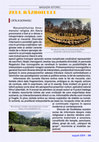
R e c o n s t i t u i r e a fe n o me nu lui religios din Dacia preromanã a fost ºi a rãmas o înt... more R e c o n s t i t u i r e a fe n o me nu lui religios din Dacia preromanã a fost ºi a rãmas o întreprindere com plexã, com plicatã ºi riscan tã. Discreþia interioarã a societãþii getoda cice în privinþa credinþelor reli gioase este ºi astãzi carac te rizatã de o tãcere aproape ob se sivã în ce priveºte aspectele care includ sacrul. Dacã în arta epocii getice transpar episodic scene complicate conþinând reprezentãri de sacrificii, libaþii, hierogamii, bestiar sau probabile divinitãþi, în perioada Regatului Dac iconografia se rarefiazã în tandem cu posibilitãþile de interpretare a puþinelor imagini existente. Polisemantismul iconografiei a generat frecvent diverse direcþii de interpretare, poziþionând irevocabil orice ipotezã în zona presupunerilor adesea tributare viziunii schimbãtoare a istoricilor sau paradigmelor sociale ºi politice emise, la fel de nestatornice. Informarea din sursele literare antice este la fel de riscantã, cãci textele oferã date fragmentare, imprecise, ambigue ºi, de regulã, extrem de confuze, atât în exprimare, cât ºi în esenþã. Este evident cã grecii ºi latinii puteau scrie doar din perspectiva propriilor culturi, aplicând natural filtrul alteritãþii. Ar fi eronat sã admitem cã aceºti autori ar fi putut înþelege în detaliu resorturile intime ale unei civilizaþii de care majoritatea doar auziserã, nu interacþionaserã direct cu ea. Informaþiile oferite sunt incerte ºi fragile. În plus, textele antice au rãmas supãrãtor de stabile ca numãr. În schimb, au proliferat interpretãrile pe baza lor, începute chiar de antici ºi continuate viguros în epoca modernã ºi contemporanã. Dincolo de fluiditatea acestor surse de informare despre viaþa religioasã a dacilor rãmâne com po nenta materialã a acesteia, constituitã din temple, sanctuare, al tare, gropi de cult, "câmpuri de gropi", morminte ºi mobilier se pulcral.
ACTA CENTRI LUCUSIENSIS, 2024
The present study started from a double reality, on the one hand
in the area of the center of the... more The present study started from a double reality, on the one hand
in the area of the center of the Dacian Kingdom the sica type daggers
associated with the powerful local warrior elites are almost absent, on
the other the antiquities trade and private collections abound with such
artifacts. A review, brief if we take into account the flexibility and fluidity of
the database built from the sum of all the daggers that could be identified
in the virtual space. The examined lot, excessively weakened by the
decontextualization of the pieces, could not offer more than a contribution
to the general statistics and some morphological observations. But most
of all, the study sheds light on the decades-old poaching of archaeologists,
the trafficking of heritage goods and the trade of the antiquities trad
The conclusions that could be drawn change, if not the state of knowledge,
then at least the paradigms regarding the Padea-Panagjurski Kolonii-
Mala Kopanya phenomenon and, by ricochet, of its most important
political creation, the Dacian Kingdom with its capital at Sarmizegetusa
Regia. The dispersion of this cultural model, initially reduced to the northwest
of present-day Bulgaria, Oltenia, western Muntenia and, in isolation,
central Transylvania, is today permanently modified by specific PPK-MK
discoveries, reaching as far as southern Ukraine, the Crișuri basin, the
Curvature of the Carpathians, Moldova, Bessarabia and Dobrogea, and to
the south and southeast in the Rhodopes and the Pontic coast.
Thus, although we can say that the edges of the dispersion are known,
with the data of the moment, of course, about the center that brought
the PPK-MK osmosis to fruition, namely the area in the mountains of
Orăștia, the fiefdom of the powerful Dacian aristocracy, we cannot yet
say the same. The most likely scenario is that the area was also poached for the archaeological goods it contained, but which fueled the antiquities
trade and furnished private collections. The presence of so many artifacts
specific to the Dacian military, religious and political elites – of which
the Sica-type curved daggers are only one indicator – in decontextualized
situations must be connected and related to the archaeological sterility of
the region. Beyond the theoretical idealism, itself rickety, unfortunately the
damage caused to the knowledge of the real history of the despoiled areas
remains immeasurable.
Keywords: Dacian Kingdom, Dacian aristocracy, Syca-type daggers

(ARCHAEO)ASTRONOMY AND DEATH Proceedings of the National Symposium, 2022
The question of the astronomical knowledge of the Dacian elites is increasingly the subject of re... more The question of the astronomical knowledge of the Dacian elites is increasingly the subject of research on Dacian civilisation. Although initially these subjects were regarded with reluctance by the Romanian academic community, the results of multidisciplinary investigations have revealed a series of mathematical notions and realities in the sacred, civil and military architecture of the Dacian Kingdom derived and reflected from astronomical constants. On closer inspection, these interdisciplinary approaches are complemented by some iconographic elements identified on the decorations of some pieces of weaponry belonging to the warrior caste. The ornamentation of weapons with cosmic symbols shows the importance of the celestial vault and astral concepts in the mentality of the period and especially in that of the elite warriors of the Dacian Kingdom.
Cercetări Arheologice nr. 28.1, 2021
Abstract: Preventive archaeological survey in Giurgiu County.
The implementation works for the BR... more Abstract: Preventive archaeological survey in Giurgiu County.
The implementation works for the BRUA project imposed the making of an archaeological evaluation for the route taken by the natural gas line and, implicitly, depending on the situations, of archaeological rescue excavations. In the following, we will focus on specific results from the BRUA route area in the center of Giurgiu country – Mirău (Stoenești commune). The stratigraphy of the site is predominantly natural. All stratigraphic interventions (a very probable diagnostic survey – Cx2, two medieval pits – Cx1 and Cx3, also a series of wooden poles that we atribute to some fencing works made during the 70’s and 80’s of the twentieth century) affect a level of ancient soil and are, stratigraphicaly, covered by the level of the current one, ploughed. The pottery and archaeozoological remains are the only materials discovered and recovered. Even if the inventory of Cx3 is weaker from a quantitative point of view, the characteristics of both categories are unitary, proving both contemporaneity and identical manifestations and behaviors.
Within the ceramic assembly Cx1 five categories of paste have been identified and defined; the material is partially completable. The pottery fragments discovered in Cx3 is very fragmentary and totally uncompletable. Just two main paste categories have been identified (P1 and P2, present also among the pottery from Cx1), with insignificant variations. We date the two contexts somewhere in the sixteenth century. The dating of the pottery is in accrod with the first documentary mention of Mirău. Even if the two pits have been dug for using the sediments – itself being an unatural activity due to the fact that clay extraction can be more easily made from the edge of the terrace –, they were later used for redepositing waste (?), including the remains of numerous domestic fires...
Within the animal economy from Mirău a series of domestic animals were bred, among these bovines are predominant, being followed in second place by ovicaprines and swines. Bovines were exploited in a mixed manner (meat and dairy), but their contribution as draft animals must not be omitted, while ovicaprines were bred for their secondary produce (dairy and wool). We notice that the use of the horse as a food source (hypophagy) was probably occasional. This phenomenon is encountered in an isolated manner in the Romanian Middle Ages in spite of religious prohibitions. In this case, we can either think about a time of food crisis or about the recovery in
food of old/ injured animals. The results of this study include the use of fish (pike, bream, carp, perch and catfish)
and domestic birds (chicken and goose) as a food source.
A series of pottery fragments, taking into consideration the characteristics of their fabric, are prehistoric – most
probably belonging to the Gumelnița culture. Of course, these are intrusive elements in that certain context.
Informations of a stratigraphic nature are fully completed by the archaeozoological ones. Leaving aside the motivation for which the two pits were dug – we estimate that the main moment of anthropic filling, chronologically placed in short time after the excavation, happened during the warm season, in order that the main moment of
natural filling to happen during the cold season. The anthropic return noticed in the case of Cx1 had happened at the end of this cold season or at the begining of the following warm season, but has absolutely none of the previous characteristics.
Sadly, we know very little about the rural medieval habitation in Wallachia, with discerned for comparison...
Keywords: preventive archaeological survey, Gumelnița culture, Middle Ages, pottery, zooarchaeology.



Uploads
Papers by Cătălin Borangic
about which judicial authorities obtained information during the criminal
investigation indicating that they had been stolen from the archaeological site
of Luncani–Piatra Roșie, Romania—items that are currently listed as wanted
objects on the Romanian Police website, yet have nonetheless been resold
multiple times through international auction houses. This situation highlights
the limitations of the instruments employed by Romanian state institutions
to monitor the global antiquities market, a particularly serious issue for a
society striving to protect its cultural heritage for future generations.
Our analysis includes all available judicial and archaeological evidence,
comparing the stolen daggers with similar artefacts originating from sites
in the vicinity of Luncani–Piatra Roșie, in order to provide the academic
community with a well-documented perspective on the extent of damage
caused by archaeological looting. The findings strengthen the conviction
that the absence of such weapons in the Orăștie Mountains—the core of the
Dacian elite’s power—contrasted with their presence in nearby fortifications,
can only be explained by the systematic looting of archaeological sites and the
subsequent illicit circulation of these artefacts on the black market.
Keywords: Dacian weapons, auction, archaeological looting, forensic archaeology
of the Iron Age in the Northern Balkans, occupying a central position
within the cultural horizon conventionally defined as Padea–Panagjurski
Kolonii–Mala Kopanya. Far from being a purely functional implement,
the sica must be understood as a complex cultural artefact in which
technology, symbolism, and social identity converge. Morphologically
standardized despite its wide geographical dispersion, the weapon does
not reflect technological conservatism, but rather the persistence of a
deeply internalized cultural archetype shared by the mobile warrior elites
of the Northern Balkans. This study approaches the sica as a composite
object—simultaneously martial, ritual, and ideological. Its recurrent
presence in elite funerary contexts, often accompanied by deliberate ritual
destruction, demonstrates its integration into a coherent symbolic economy
of death, memory, and status. Equally significant is the iconography
engraved on the blades. Geometric, zoomorphic, astral, and narrative
motifs do not function as mere decoration, but as a semiotic system: a nonalphabetic
visual language through which myths, beliefs, and ideological
values were materially encoded and transmitted within a predominantly
oral society. The apparent disappearance of sica daggers from funerary
records after the age of Burebista does not indicate their abandonment,
but rather a transformation of ritual practices and ideological frameworks
associated with political centralization. The persistence of the sica in
Roman iconography—most notably on Trajan’s Column—confirms its lasting symbolic and political relevance. Ultimately, the sica emerges as
a key indicator of identity, power, and worldview within the pre-Roman
warrior cultures of the Northern Balkans. In conclusion, the historical,
morphological, and technical evidence outlines the sica dagger as a
weapon with a constant martial function, simultaneously invested with
ideological and cultic meanings, and distinguished within the repertoire
of ancient daggers by its specific form and its privileged association with
the Celto-Thracian warrior elites of the Middle Danube basin. Its use and
significance can be traced over a period of more than half a millennium,
from the late fourth century BC to the early second century AD.
iconographic repertoire of sica‑type daggers—the motif
of the horseman—based on the identification of an equestrian
representation incised on the reverse of a dagger
blade. The horseman motif, well established in Thracian,
Getic, and Dacian art yet unprecedented on a sica blade,
expands the interpretive framework of these weapons’
ornamentation and necessitates a reconsideration of their
symbolic dimension. The representation is not merely decorative
but rather conveys the concepts of passage, heroization,
and the warrior’s apotheosis. The association of the
horseman’s image with the most expressive weapon of the
warrior‑aristocrats, who are defined as both creators and
structural components of the Padea–Panagyurski Kolonii–
Mala Kopanya phenomenon, transforms the dagger into a
medium of spiritual and identitary meanings, reflecting a
unified vision of the relationship between life, death, and
transcendence. Thus, the sica iconography emerges as a
visual language specific to the Dacian warrior aristocracy,
with the decorated pieces serving as encoded messages of a
world that expressed its beliefs, dreams, strength, and values
through metal. Not without importance is the reconstruction
of the post‑depositional trajectory of the decorated
piece, which connects it to the series of fortresses in
the center of the Dacian Kingdom.
reflecting the beliefs and identities of Thracian, Getic, Celtic, and Dacian communities during the Late Iron Age. The title of the study, “Little Sister”, metaphorically conveys their marginal, yet symbolically charged, role within the spiritual and social fabric of the age.
The analysis is based on a representative and diverse corpus of artifacts documented in scholarly literature, recent archaeological discoveries, and informal sources—including the antiquities trade.
Approximately half of these daggers lack precise provenance due to systematic archaeological looting, a phenomenon that has disrupted the original contexts of many finds. Despite this limitation, the study
succeeds in outlining a coherent geographical distribution, with concentrations in northwestern Bulgaria and in southern and central Romania, along with isolated finds in Serbia, Slovakia, and east of the
Eastern Carpathians. This pattern suggests a broad circulation network clearly linked to production centers.
From a morphological perspective, B-type sica daggers exhibit consistent features: short, curved blades with pointed tips, hilts fixed with one or two rivets, and a well-profiled groove typically placed along the central axis of the blade. The decoration—consisting of geometric, astral, and, more rarely, zoomorphic motifs—goes beyond aesthetic considerations, suggesting an apotropaic or mythological function and endowing these weapons with a sacred dimension. Their frequent occurrence in funerary
contexts, particularly in the region between the Iron Gates gorge and the Argeș–Ialomița interfluve, underscores their ritual function. When found beyond this core area, their symbolic significance appears to have faded or transformed into more mundane meanings.
The variability in decoration and form supports the existence of multiple workshops and indicates regional or chronological differentiation. Connections between examples from distant regions suggest long-distance cultural contact and exchange. Consequently, these daggers emerge not merely as weapons but as narrative objects—symbols of social status and repositories of religious belief.
In certain funerary contexts, they may have served as symbolic substitutes for actual weapons, indicating a prioritization of ritual over practical value. Their presence in cultic, funerary, and, lessfrequently, utilitarian contexts confirms their multifunctional nature and layered significance.
This study offers a rigorous formal and contextual assessment, proposing a refined typological classification and a well-grounded interpretive framework. Emphasis on the cultural and symbolic dimensions of these artifacts reinforces the conclusion that B-type sica daggers were primarily ritual and identity-bearing objects.
In conclusion, these daggers serve as essential archaeological indicators for understanding the spiritual and social worlds of Celto-Thracian and Dacian societies in the northern Balkans during the Second Iron Age. By synthesizing typology, ornamentation, and spatial distribution, this study contributes meaningfully to regional archaeology and provides a solid foundation for future research into prestige artifacts and symbolic practices in the pre-Roman world of the lower Danube basin.
using a metal detector. In September 2023, an iron akinakes—a short
sword characteristic of the Scythian culture during the Middle Scythian
period (6th–4th centuries BC)—was unearthed at the northern boundary
of Băgău village (Lopadea Nouă commune, Alba County). The dagger,
identified as a Nógrád-type, features a curved, single-edged blade,
reflecting a hybrid design influenced by both classical Scythian forms and
local Balkan models, likely Thracian or Dacian. This find enriches the
corpus of artifacts known along the Mureș River, associated with Scythian
warriors who controlled and exploited the region’s saline resources during
the Early Iron Age.
in the Dacian World: Efficiency, Endurance,
Standard and Cultural Model.
Case Study – T.II Cugir (Alba)
Abstract: This article was made possible by the recovery of a significant part
of the historical information concerning the funeral inventory of a warrior
aristocrat who was cremated and buried with all his military equipment
under a tumulus near the present-day town of Cugir. The reconstruction
of the arsenal revealed considerable economic costs, reflected in access
to resources and skilled craftsmen. The aristocrat possessed a Celtic type
sword, a Sica type dagger, chain mail armor, an iron helmet, a shield, a
lance, spurs, three riding horses with Thracian type bits, silver fibulae,
gold and bronze ornaments, imported vessels (situla) and local pottery.
The deceased was placed on a ceremonial chariot harnessed to two other
horses, also equipped with bits and harnesses. The arsenal, the spectacular
nature of the rituals and funerary rites performed during the burial, and
above all the rarity of such discoveries, lead us to believe that there was a
clear social and military hierarchy, headed by this nobleman. The entire
equipment, which included both Celtic and Thracian legacies specific to
the Padea-Panagjurski Kolonii-Mala Kopanya group, constituted what we
could now describe as a functional, efficient and expensive „uniform” that
socially conveyed the aristocrat’s status. This carefully constructed image
of a prominent warrior, together with his family and the clan he ruled,
provided his society with a successful model and part of the essential
psycho-social and military elements necessary to transform a constellation in just one or two generations. History remembers these people under the
name of the Dacians, as they called themselves.
riveted sheet metal segments. The object was discovered in a pit between the remains of a metallurgical workshop on the perimeter of the Dacian Kingdom's capital, Sarmizegetusa Regia, along with numerous tools and weapons. The artifact was presented in several exhibitions during the communist period and published in several catalogs. The rediscovery of the vessel in the repository of the National Museum of Romanian History in Bucharest triggered the authors' investigation into the complicated and largely unknown route of the cauldron from the time of its initial discovery to its presence among the museum's exhibits today. This investigation is all the more necessary since from the same archaeological site, in the same social and political conditions, many other artifacts discovered at the same moment were distributed in the territory, thus coming out of the attention of specialists and the public.
Other similar discoveries of associated artifacts have been attributed to the Padea–Panagjurski Kolonii cultural group. This group initially emerged in the 3rd century BC in present-day north-western Bulgaria, later spreading in the 2nd century BC to Oltenia and western Muntenia, and eventually reaching south-eastern Transylvania and the periphery of the Dacian Kingdom. These artifact assemblages are believed to have been linked to warrior clans of Celtic-Thracian origin, who were subordinated to the Dacian aristocracy and continued to use these items until the Roman conquest.
Based on these discoveries, the study addresses the sensitive issue of metal detecting by non-archaeologists, an activity that has gained increasing social popularity. While difficult to regulate, this practice poses a significant threat to archaeological heritage due to its often destructive nature.
The dagger was discovered with a metal detector in the radius of Sighiștel village, Câmpani commune, Bihor County. The artifact belongs to type “C” of these daggers, and it is exceptional both in its manner of manufacture and in its place of discovery. On the blade of the dagger there was engraved an ornamentation specific to this type of weapon, namely the heads of a couple of facing birds, decorated with circles. Small pieces of semi-precious stone, most likely red jasper, were set into these recessed circles.
The discovery of this dagger in the region signals the presence, sometime between the 2nd century BC and the beginning of the 1st century AD of a powerful warrior leader. It is the first discovery of its kind in a region very rich in hoards of Dacian silver coins and ornaments. The dagger completes the local landscape with the political, military and social landmarks existing in the rest of the Dacian Kingdom, being a real link between the center of the kingdom and the lands to the north.
in the area of the center of the Dacian Kingdom the sica type daggers
associated with the powerful local warrior elites are almost absent, on
the other the antiquities trade and private collections abound with such
artifacts. A review, brief if we take into account the flexibility and fluidity of
the database built from the sum of all the daggers that could be identified
in the virtual space. The examined lot, excessively weakened by the
decontextualization of the pieces, could not offer more than a contribution
to the general statistics and some morphological observations. But most
of all, the study sheds light on the decades-old poaching of archaeologists,
the trafficking of heritage goods and the trade of the antiquities trad
The conclusions that could be drawn change, if not the state of knowledge,
then at least the paradigms regarding the Padea-Panagjurski Kolonii-
Mala Kopanya phenomenon and, by ricochet, of its most important
political creation, the Dacian Kingdom with its capital at Sarmizegetusa
Regia. The dispersion of this cultural model, initially reduced to the northwest
of present-day Bulgaria, Oltenia, western Muntenia and, in isolation,
central Transylvania, is today permanently modified by specific PPK-MK
discoveries, reaching as far as southern Ukraine, the Crișuri basin, the
Curvature of the Carpathians, Moldova, Bessarabia and Dobrogea, and to
the south and southeast in the Rhodopes and the Pontic coast.
Thus, although we can say that the edges of the dispersion are known,
with the data of the moment, of course, about the center that brought
the PPK-MK osmosis to fruition, namely the area in the mountains of
Orăștia, the fiefdom of the powerful Dacian aristocracy, we cannot yet
say the same. The most likely scenario is that the area was also poached for the archaeological goods it contained, but which fueled the antiquities
trade and furnished private collections. The presence of so many artifacts
specific to the Dacian military, religious and political elites – of which
the Sica-type curved daggers are only one indicator – in decontextualized
situations must be connected and related to the archaeological sterility of
the region. Beyond the theoretical idealism, itself rickety, unfortunately the
damage caused to the knowledge of the real history of the despoiled areas
remains immeasurable.
Keywords: Dacian Kingdom, Dacian aristocracy, Syca-type daggers
The implementation works for the BRUA project imposed the making of an archaeological evaluation for the route taken by the natural gas line and, implicitly, depending on the situations, of archaeological rescue excavations. In the following, we will focus on specific results from the BRUA route area in the center of Giurgiu country – Mirău (Stoenești commune). The stratigraphy of the site is predominantly natural. All stratigraphic interventions (a very probable diagnostic survey – Cx2, two medieval pits – Cx1 and Cx3, also a series of wooden poles that we atribute to some fencing works made during the 70’s and 80’s of the twentieth century) affect a level of ancient soil and are, stratigraphicaly, covered by the level of the current one, ploughed. The pottery and archaeozoological remains are the only materials discovered and recovered. Even if the inventory of Cx3 is weaker from a quantitative point of view, the characteristics of both categories are unitary, proving both contemporaneity and identical manifestations and behaviors.
Within the ceramic assembly Cx1 five categories of paste have been identified and defined; the material is partially completable. The pottery fragments discovered in Cx3 is very fragmentary and totally uncompletable. Just two main paste categories have been identified (P1 and P2, present also among the pottery from Cx1), with insignificant variations. We date the two contexts somewhere in the sixteenth century. The dating of the pottery is in accrod with the first documentary mention of Mirău. Even if the two pits have been dug for using the sediments – itself being an unatural activity due to the fact that clay extraction can be more easily made from the edge of the terrace –, they were later used for redepositing waste (?), including the remains of numerous domestic fires...
Within the animal economy from Mirău a series of domestic animals were bred, among these bovines are predominant, being followed in second place by ovicaprines and swines. Bovines were exploited in a mixed manner (meat and dairy), but their contribution as draft animals must not be omitted, while ovicaprines were bred for their secondary produce (dairy and wool). We notice that the use of the horse as a food source (hypophagy) was probably occasional. This phenomenon is encountered in an isolated manner in the Romanian Middle Ages in spite of religious prohibitions. In this case, we can either think about a time of food crisis or about the recovery in
food of old/ injured animals. The results of this study include the use of fish (pike, bream, carp, perch and catfish)
and domestic birds (chicken and goose) as a food source.
A series of pottery fragments, taking into consideration the characteristics of their fabric, are prehistoric – most
probably belonging to the Gumelnița culture. Of course, these are intrusive elements in that certain context.
Informations of a stratigraphic nature are fully completed by the archaeozoological ones. Leaving aside the motivation for which the two pits were dug – we estimate that the main moment of anthropic filling, chronologically placed in short time after the excavation, happened during the warm season, in order that the main moment of
natural filling to happen during the cold season. The anthropic return noticed in the case of Cx1 had happened at the end of this cold season or at the begining of the following warm season, but has absolutely none of the previous characteristics.
Sadly, we know very little about the rural medieval habitation in Wallachia, with discerned for comparison...
Keywords: preventive archaeological survey, Gumelnița culture, Middle Ages, pottery, zooarchaeology.