Chinese Tea Culture
Synopsis
Chinese tea culture encompasses tea cultivation, processing, brewing, tasting, and the art of the tea ceremony — inscribed by UNESCO in 2022.
Overview
Chinese tea culture encompasses every aspect of tea (茶, chá) found in Chinese civilization — cultivation, processing, brewing, serving, consumption, arts, and ceremonial practices. Tea is not merely a beverage in China; it is a comprehensive art form integrating philosophy, aesthetics, and etiquette. In 2022, "Traditional tea processing techniques and associated social practices in China" was inscribed on UNESCO's Representative List of the Intangible Cultural Heritage of Humanity.
China is the birthplace of tea and the world's earliest nation to discover, cultivate, and utilize tea leaves. Legend holds that Shennong (the Divine Farmer) discovered tea's medicinal properties over 4,000 years ago. From its origins as medicine to its evolution into a daily beverage, from refined literati tea tasting to the humble cup of common households, tea culture has permeated thousands of years of Chinese history and profoundly influenced the tea ceremonies of Japan, Korea, and other East Asian nations.
Historical Development
Discovery and Origins (c. 2700 BC): Legend attributes the discovery of tea to Shennong, who tasted hundreds of herbs to determine their properties. Two versions exist: one holds that while boiling water, tea leaves accidentally fell into the pot, and the resulting infusion tasted sweet and invigorating; another tells that after tasting 72 poisonous leaves and falling gravely ill, Shennong chewed tea leaves that detoxified his body. The earliest medical text, Shennong Ben Cao Jing (The Divine Farmer's Materia Medica), documents tea's medicinal properties.
Han Dynasty (202 BC – 220 AD): In 2016, archaeologists announced the discovery of the earliest known physical evidence of tea from the mausoleum of Emperor Jing of Han (d. 141 BC) in Xi'an, confirming that tea was consumed by Han emperors as early as the 2nd century BC. Records indicate that during Emperor Xuan's reign (53–50 BC), tea cultivation began on Meng Mountain east of Chengdu, where Buddhist monks grew and processed Mengding Ganlu (Sweet Dew) tea, some of which was sent to the emperor as tribute.
Tang Dynasty (618–907 AD): Tea culture formally crystallized during the Tang Dynasty. Lu Yu (733–804 AD) authored The Classic of Tea (Chajing, c. 760 AD) — the world's first definitive monograph on tea, systematically covering its origins, production tools, harvesting and processing methods, brewing techniques, and the spiritual philosophy of tea. Lu Yu is revered as the "Sage of Tea" (茶圣). During this era, tea became a major export commodity, spreading to neighboring countries along the Silk Road.
Song Dynasty (960–1279 AD): The Song Dynasty represents the golden age of Chinese tea culture. The "whisked tea" method (点茶) prevailed — powdered tea was placed in a bowl, hot water was added, and the mixture was whisked with a bamboo chasen to create a frothy foam. Emperor Huizong of Song authored Treatise on Tea (Daguan Chalun), providing detailed guidance on tea evaluation and whisking techniques. Tea culture penetrated all levels of society, and teahouse culture began to flourish.
Ming and Qing Dynasties (1368–1912 AD): The founding Ming Emperor abolished compressed tea cakes and promoted loose-leaf tea. The steeping method — brewing whole leaves directly in hot water — gradually replaced whisked tea and became the dominant way of drinking tea. The Qing Dynasty further refined the production techniques for six major tea categories, establishing the classification system we know today: green tea, white tea, yellow tea, oolong tea, black tea, and dark tea (post-fermented tea).
Six Major Tea Categories
Chinese teas are classified by their degree of oxidation:
Green Tea (unoxidized): Preserves the natural green color and fresh flavor of tea leaves. Representative varieties include West Lake Longjing (Dragon Well), Biluochun, Xinyang Maojian, and Huangshan Maofeng. Green tea is the most produced and consumed tea category in China.
White Tea (minimally oxidized): The simplest production process, involving only withering and drying. Representative varieties include Baihao Yinzhen (Silver Needle), Bai Mudan (White Peony), and Shou Mei, primarily produced in Fujian Province. White tea is celebrated for its delicate "hairy fragrance and honey sweetness."
Yellow Tea (lightly oxidized): Similar to green tea but with an additional "smothering" (menhuang) step that gives the leaves a yellow hue. Representative varieties include Junshan Yinzhen, Mengding Huangya, and Huoshan Huangya. Yellow tea is rare and prized.
Oolong Tea (partially oxidized): Falling between green tea and black tea, oolong combines the best qualities of both. Representative varieties include Tieguanyin (Iron Goddess, Anxi, Fujian), Dahongpao (Big Red Robe, Wuyi Mountains, Fujian), Fenghuang Dancong (Phoenix Single Bush, Chaozhou, Guangdong), and Dongding Oolong (Taiwan). Oolong tea is renowned for its complex fragrance and lasting sweet aftertaste.
Black Tea (fully oxidized): Called "hong cha" (red tea) in Chinese due to its reddish liquor, black tea is known as "Black Tea" in English. Representative varieties include Keemun (Qimen, Anhui), Lapsang Souchong (Zhengshan Xiaozhong, Wuyi Mountains — the world's first black tea), and Dianhong (Yunnan). Black tea is the most traded tea category in international commerce.
Dark Tea (post-fermented): Produced through a "wo dui" (wet piling) fermentation process and can be aged for decades. Representative varieties include Pu-erh tea (Yunnan), Anhua dark tea (Hunan), and Liubao tea (Guangxi). Pu-erh tea is celebrated for improving with age and its significant collectible value.
The Way of Tea
Chinese tea art (茶艺, chàyì) is far more than the technique of brewing and drinking tea — it is a discipline of spiritual cultivation and a way of life:
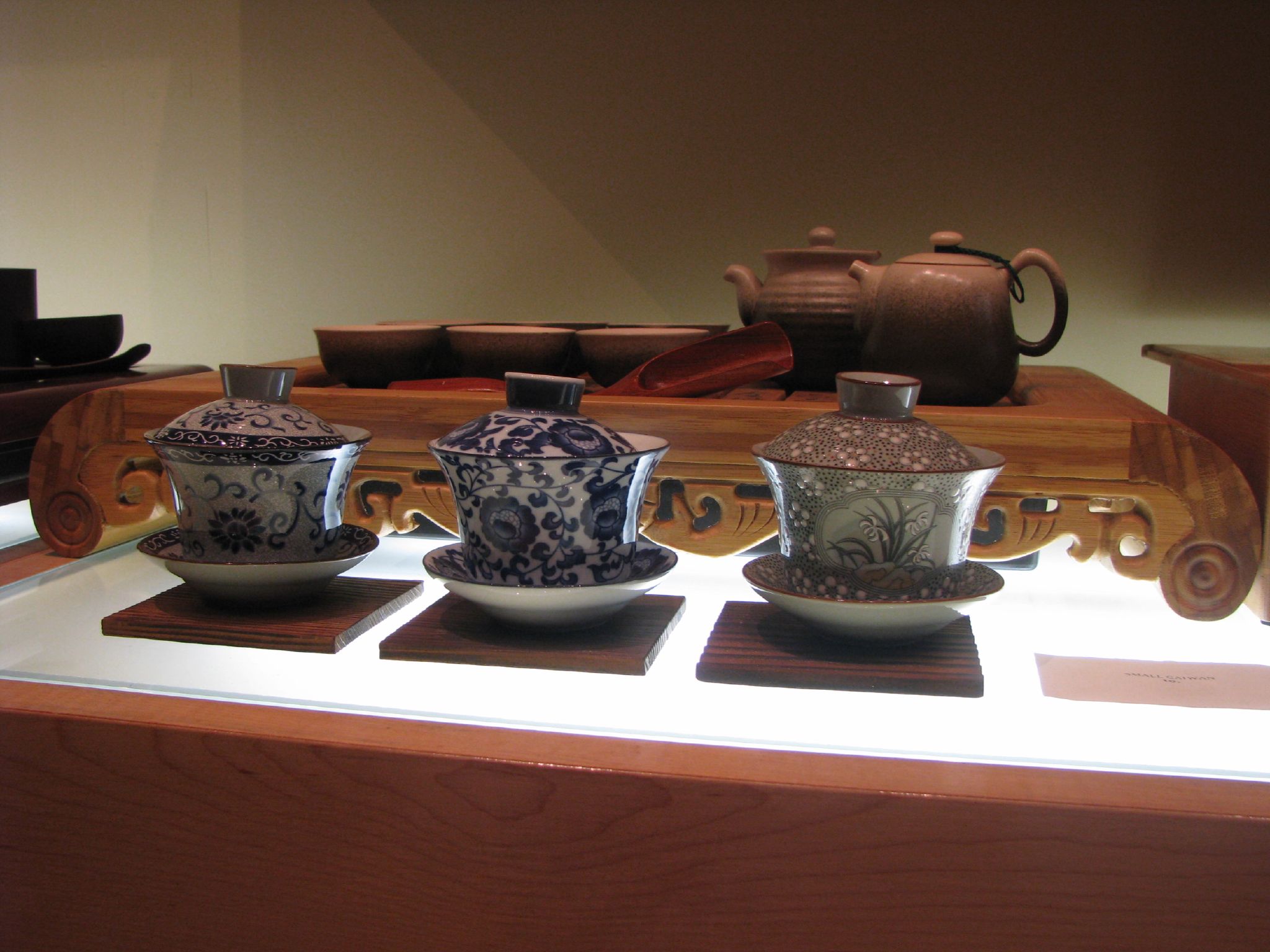
Teaware: Chinese teaware encompasses a wide array of implements, including teapots (Yixing purple clay teapots are the most prized, produced in Yixing, Jiangsu), gaiwans (lidded bowls), teacups, tea trays, tea scoops, tea needles, and tea strainers. Yixing teapots, with their unique double-pore structure, absorb tea fragrance and preserve flavor over time, making them the ultimate teaware.
Brewing Techniques: Different tea types require different water temperatures and steeping times. Green tea is typically brewed at 80-85°C, while oolong tea requires near-boiling water at 95-100°C. Pu-erh tea typically requires a "rinse" (first infusion discarded) to awaken the leaves.
Tea Tasting Etiquette: Proper tea tasting follows four steps: observe the color (观色), smell the fragrance (闻香), taste the flavor (品味), and savor the aftertaste (回味). The Gongfu tea ceremony of the Chaoshan region in Guangdong is one of China's most representative tea traditions, characterized by small teapots, tiny cups, and concentrated, skillfully brewed tea.
Global Influence
Chinese tea culture has had a profound impact on the world. Japan's chanoyu (茶の湯, tea ceremony), Korea's darye (다례, tea ritual), Britain's afternoon tea, and Russia's samovar tradition all trace their roots to Chinese tea culture. Tea spread around the world along the Silk Road and maritime trade routes, becoming one of the most beloved beverages on the planet.
Today, tea remains an indispensable part of daily life in China. Whether it's a morning cup of green tea, an afternoon pot of Pu-erh, or a Gongfu tea session shared with friends, tea embodies the Chinese people's love of life and their pursuit of harmony and beauty.
Practical Information
| Item | Details |
|---|---|
| Tea's Geographic Origin | Yunnan, Sichuan, and southwestern China |
| Cultural Birthplaces | Huzhou, Zhejiang (birthplace of The Classic of Tea); Wuyi Mountains, Fujian |
| Famous Tea Regions | Hangzhou (Longjing), Fujian (Tieguanyin, Dahongpao), Anhui (Keemun), Yunnan (Pu-erh) |
| UNESCO Heritage | 2022 — Traditional tea processing techniques inscribed |
| Best Tea Experiences | Longjing Village (Hangzhou), Wuyi Mountains, Chaozhou Gongfu tea |
| Recommended Activities | Gongfu tea ceremony, tea garden picking, tea processing workshops |
References
- Wikipedia - Chinese tea culture
- UNESCO - Traditional tea processing techniques in China (2022)
- Baidu Baike - 中国茶文化
- Lu Yu - The Classic of Tea (Chajing, c. 760 AD)
- Emperor Huizong of Song - Treatise on Tea (Daguan Chalun)
Stills & Gallery
Comments (0)