Books by David Odorisio
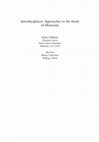
Palgrave Macmillan, 2025
Centering African Diasporic traditions, the margins of mainstream mystical traditions, and the in... more Centering African Diasporic traditions, the margins of mainstream mystical traditions, and the intersection between mysticism and psychedelics, the essays in this volume offer several diverse and unique, contemporary approaches to the study of mysticism. In a time when the word “mystic" or "mysticism" appears as often in popular and even scientific settings as it does in academic or religious discourse, a critical study of these terms and traditions becomes ever more relevant. This volume challenges normative notions of who “counts” as a mystic, and questions the definitions and
interpretive frames underlying the field of comparative mysticism itself. This is an important text for students and scholars of comparative mysticism, and those interested in what traditions, texts, communities, rituals, persons, and practices have been marginalized in the development of what "counts" as “mysticism" today.
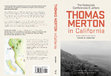
Liturgical Press, 2024
Previously unpublished material from world-renowned Trappist monk and author, Thomas Merton, feat... more Previously unpublished material from world-renowned Trappist monk and author, Thomas Merton, featuring the final conference talks given in the United States before his untimely death.
In May and October of 1968, Thomas Merton offered two extended conferences at Our Lady of the Redwoods Abbey, a Cistercian women’s community in Northern California. Comprising over twenty-six hours of previously unpublished material, Thomas Merton in California covers a variety of topics including ecology and consciousness, yoga and Hinduism, Native American ritual and rites of passage, Sufi spirituality, and inter-religious dialogue, along with extended discussions on prayer and the contemplative life. The material presented in these talks reveals Merton’s wide-ranging intellectual and spiritual pursuits in the final year of his life, and fills a long-standing lacuna around Merton’s visits to Redwoods Monastery, forming a necessary bridge to the Asian journey that was to come. Practical and applicable, as well as searching and inspired, Thomas Merton in California is essential for Merton readers and scholars, and all those interested in deepening their spiritual lives.
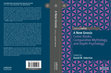
A New Gnosis: Comic Books, Comparative Mythology, and Depth Psychology, 2023
Superhero phenomena exploded into 20th and 21st century popular culture by way of the visual medi... more Superhero phenomena exploded into 20th and 21st century popular culture by way of the visual medium of comic books. In an increasingly secular (yet spiritual) culture that has largely renounced “the gods” (and even religion), what does the return of the superhero through our own pop cultural mythologies say to us—or even about us? This collection of essays from leading and up-and-coming scholars in the fields of comparative mythology and depth psychology considers the return of the superhero as representative of our own unique emergent modern mythology: a wildly diverse pantheon that reflects back to us our most far-reaching hopes and (im)possible (super)human desires. In placing the interpretive tools of comparative mythology and depth psychology alongside the comic book phenomenon, a super-powered palette emerges that unveils the hidden potential of modern readers’ own heightened imaginations. The essays in this anthology examine select comic book and superhero characters from the “Silver Age” 1960s through contemporary 21st century adaptations and innovations, as readers are invited to discover and uncover what the (re)emergence of these perennial gods and goddesses have to say about our own secret super selves today.
"[S]uperhero comics and science fiction…can and do function as transmission sites for what David Odorisio has called the "new gnosis." Superpowers are real. So are the altered states of knowing and excessively weird paranormal phenomena or "special effects"…that often lie behind the conception and within the very artistic execution of these genres on the page, on screen, and in life. This is, by far, the most important resonance between [my own Mutants and Mystics] and this book-the gnostic transmission. I would immediately add that the vast, vast majority of such psi-fi gnostics will never be known as such. They exist silently in the margins of the culture, which, paradoxically, is also somehow the center." - Jeffrey J. Kripal, from the Afterword
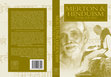
Fons Vitae, 2021
Merton and Hinduism is the first book to thoroughly and definitively trace the lasting influence ... more Merton and Hinduism is the first book to thoroughly and definitively trace the lasting influence of Yoga and Hindu traditions on the life and writings of Thomas Merton, Catholic Priest and Trappist Monk, and pioneer of inter-religious dialogue. Informative and original essays by leading scholars highlight specific points of contact between Merton and various aspects of the Hindu and Yoga traditions, such as Merton and Gandhi, Merton and the Bhagavad Gita, and Merton’s dialogue and friendship with key Indian intellectuals such as A.K. Coomaraswamy, among many others. Approximately half of the book collects Merton’s own writings on Hinduism and Yoga, and many essays are published here for the first time. These essays portray Merton as teacher and novice master, cultural commentator, and contemplative practitioner interested in the mutually enriching dialogue among Catholic Christianity, Hinduism, and Yoga traditions.
https://fonsvitae.com/product/merton-and-hinduism/
Palgrave Macmillan, 2018
Since the late 19th century, when the “new science” of psychology and interest in esoteric and oc... more Since the late 19th century, when the “new science” of psychology and interest in esoteric and occult phenomena converged – leading to the “discovery” of the unconscious – the dual disciplines of depth psychology and mysticism have been wed in an often unholy union. Continuing in this tradition, and the challenges it carries, this volume includes a variety of inter-disciplinary approaches to the study of depth psychology, mysticism, and mystical experience, spanning the fields of theology, religious studies, and the psychology of religion. Chapters include inquiries into the nature of self and consciousness, questions regarding the status and limits of mysticism and mystical phenomenon, and approaches to these topics from multiple depth psychological traditions. About the editors:
Thomas Cattoi is Associate Professor of Christology and Cultures, Jesuit School of Theology at Santa Clara University and Graduate Theological Union, USA;
David M. Odorisio is Director of The Retreat at Pacifica Graduate Institute, USA, and adjunct faculty in Pacifica’s Mythological Studies graduate program.
Book Chapters by David Odorisio
Mysticism and the Margins : From the Hip-Hop Underground to the Psychedelic Reformation, 2025
Spiritualism serves as an appropriate segue and “case study” for introducing the volume you now h... more Spiritualism serves as an appropriate segue and “case study” for introducing the volume you now hold in your hands and the questions its authors raise around “mysticism and the margins.” But first: what is “mysticism”? And what might its “margins” entail? This hotly contested category and its boundary demarcations make up the subject matter of these essays. Influentially defined by William James (1842–1910) in his Varieties of Religious Experience (1902) as forms of consciousness that are ineffable, noetic, transient, and passive,6 “mysticism” would undergo veritable scholarly warfare throughout the middle of the twentieth century through to the present day. Often at the “front lines” of this intellectual battlefield have been notions of (a)historicity, theological authority, subjectivity, gender, and “authenticity”—in other words, who “counts” as a mystic and what qualifies as “mysticism” in general.
Insights and Interviews, Vols. I & II: Works from 35 Years of The Merton Annual (1988-2022), 2025
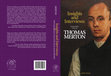
“The collection of works and interviews, first published in The Merton Annual, demonstrates the d... more “The collection of works and interviews, first published in The Merton Annual, demonstrates the development of Merton’s thought and the breadth of his interest. Written over the course of four decades, the pieces—ranging from early autobiographical pieces to reflections on monastic life, contemplation, and prayer, to sacred art and the vocation of artist, to urgent social issues posed by violence, war, and technology—weave together the monastic, the spiritual, the aesthetic, and ethical concerns that inform Merton’s legacy. The stories and reminiscences, the humorous anecdotes, the thoughtful reflections of Merton’s confreres, friends, and scholars invite us to sit in on conversations
that illuminate the person and spirit of Thomas Merton himself—the monk, the writer, the friend, the spiritual guide, the prophet. These volumes are a treasure trove! And must-reads!”
– Christine M. Bochen, professor emerita of religious studies at Nazareth College, Rochester, New York and a founding member and past president of the International Thomas Merton Society
A New Gnosis: Comic Books, Comparative Mythology, and Depth Psychology, 2023
Comic book authors and illustrators frequently incorporate mythical and mystical elements into th... more Comic book authors and illustrators frequently incorporate mythical and mystical elements into their narratives and onto their pages, redefining the boundaries of what a comic book might convey and enhancing the medium's potential for transmitting certain revelatory or "gnostic" truths. The inclusion of such material recrafts the comic book as a gateway for readers' own possible "non-ordinary" mythical encounters. This introductory essay frames the volume as a whole from within mythological and depth psychological traditions and traces the origins and intersections of these rich comparative fields, including their potential for mining "hidden knowledge" (gnosis) in the graphic medium of comic books.
Merton and Hinduism: The Yoga of the Heart, 2021
This chapter traces Merton’s evolving relationship to the varieties of yoga theory and practice t... more This chapter traces Merton’s evolving relationship to the varieties of yoga theory and practice that he engaged with throughout his lifetime.
Thomas Merton’s Notes on Patanjali’s Yoga Sutra
Merton and Hinduism: The Yoga of the Heart, 2021
Merton kept a series of “working notebooks” filled with reflections, quotations, and outlines of ... more Merton kept a series of “working notebooks” filled with reflections, quotations, and outlines of material he was reading at the time; in this instance, on yoga.
Thomas Merton’s Monastic Conferences on Hinduism and Yoga: 1963-1968
Merton and Hinduism: The Yoga of the Heart, 2021
Of Merton’s many recorded conferences to the monks at the Abbey of Gethsemani, only a few refer d... more Of Merton’s many recorded conferences to the monks at the Abbey of Gethsemani, only a few refer directly or extensively to Hinduism or yoga theory and practice. These include a 1967 conference entitled “Gurus and Jesus,” and two substantial sessions on yoga philosophy to a group of contemplative nuns in 1968. The most significant conferences from an inter-religious perspective occurred through visiting guest speakers in the summer of 1963. Swami Shivapremananda, a disciple of Swami Sivananda, visited the Abbey of Gethsemani in July of that year, and Dom Bede Griffiths, an important figure within Hindu-Christian dialogue, visited one month later in August.
Depth Psychology & Mysticism (Palgrave, Macmillan, 2018)
This chapter examines the mystical and ... more Depth Psychology & Mysticism (Palgrave, Macmillan, 2018)
This chapter examines the mystical and erotic in Hillman’s early thought through the influence of the ancient Greek god Dionysus. With a focus on the embodied, emotional, and erotic nature of Dionysus, I will show how these qualities came to formulate the core theoretical vision of Hillman’s archetypal hermeneutic, and served as a critique of traditional psychological epistemologies, as well as of normative scholarly approaches in both the humanities and sciences. In “saving” image, symbol, and even the “mystical,” from an analytic, disembodied, and misogynist reductionism, Hillman’s archetypal psychology champions a form of transformational subjectivity, and personally redemptive mysticism, through an ontological affirmation of what Jung (1937) understood as the reality of the psyche.
Articles (Peer Reviewed) by David Odorisio
The Merton Annual, 2024
This historical exegesis traces Thomas Merton’s relationship to psychedelics, mysticism, and the ... more This historical exegesis traces Thomas Merton’s relationship to psychedelics, mysticism, and the psychology of religious experience. It is through Merton’s critique of psychedelics that his nascent psychology of religious experience emerges, including how Merton defines “authentic” mystical experience, and how he understands “mysticism” in general. An analysis of Merton’s correspondence with Linda Miroslava Sabbath and Raymond Prince suggests that behind Merton’s seemingly outright dismissal of “drug-mysticism,” one can actually locate not only his thinking regarding the interrelationship between psychology and mysticism, but also a deeply pastoral approach towards working through extreme religious experience that is directly applicable to today’s psychedelic resurgence.
Journal of Psychedelic Studies, 2024
A response to the essay "Christianity and Psychedelics," drawing on the theological codification ... more A response to the essay "Christianity and Psychedelics," drawing on the theological codification that emerged from the Council of Chalcedon and its implications for a fully incarnational “psychedelic Christology.” As the authors note, for many of their Christian case studies, psychedelics occasioned experiences that were both deeply “incarnational” as well as ineffably “sacred.” In other words, psychedelics served, for many of the practitioners included here, as further affirmation and integration of the human-divine “problem” that Chalcedon sought to codify and longitudinally correct through its affirmation that Christ was both “fully human and fully divine.”
The Merton Annual (35), 2022
Brendan Collins (formerly Fr. Bernard) was editor of the journal Monastic
Studies during the peri... more Brendan Collins (formerly Fr. Bernard) was editor of the journal Monastic
Studies during the period 1962-67, first as a Trappist monk of Holy Cross
Abbey in Berryville, Virginia (1957-1964), and by 1965, a Benedictine of
Mount Saviour Monastery in Elmira, New York. His correspondence with
Thomas Merton includes 44 letters from Merton and totals over 90 pages,
including numerous calligraphic drawings that Merton sent to Collins.
Although their exchange centers primarily around issues related to Monastic
Studies, it covers and includes topics as wide-ranging as monastic
renewal, community life, ecumenism and monastic spirituality in general.
Monastic Studies ran until 1991, continuing the spirit of monastic renewal
that fueled its inception at Berryville in 1962. Here, Collins reflects on his
relationship with Merton, monastic renewal in the 1960s, and his role in
the formation and development of the Monastic Studies journal.
The Merton Seasonal, 2021
This paper outlines the unfolding dynamic and evolution of Merton’s commitments to religious “oth... more This paper outlines the unfolding dynamic and evolution of Merton’s commitments to religious “others,” beginning with his profound “radical ecumenism” of the late 1950s and early 1960s, towards an all-embracing inter-monastic mysticism in the “ground” of being. Merton’s inter-spiritual vision is paradoxically rooted in his Christian monastic commitments while remaining extraordinarily open to religious “others” through a “transcendent unity” that Merton believed was accessible to all through contemplation, love, and a heart wide open enough to say “yes to everyone.”
Jung Journal , 2018
James Hillman’s early psycho-biography and initial research at the Jung Institute in Zürich can b... more James Hillman’s early psycho-biography and initial research at the Jung Institute in Zürich can be understood through the lens of a depth psychologically-informed “tantric hermeneutic.” From his “failed” expedition to Kashmir, including the important matrilineal dream of his Mother-Grandmother, through the Jung Institute and his first research paper on the fierce Hindu Goddess Kālī, and onto his later archetypal explorations of the puer and Hero, I will show how Hillman’s maternal dream work both constellated and was “worked through” in scholarly and imaginal ways that can be considered “Tantric.”
Philosophy East and West, 65.3. July 2015.
This article offers a novel approach to the interpr... more Philosophy East and West, 65.3. July 2015.
This article offers a novel approach to the interpretation of Patañjali’s Yoga Sūtras (YS) through the Jungian lens of Western alchemy. When viewed from this perspective, the YS read not as a final separation of matter and spirit as traditionally understood, but as a path toward increased wholeness and integration. Jung found in Western alchemy evidence for his own theory of individuation, the psyche’s process of Self-becoming. First, I contextualize the YS within the broader scholarly conversation on yoga and alchemy. Second, I define Jung’s understanding of individuation, specifically in the context of Western alchemy and its processes. Finally, I interpret the prominent stages of the YS – nirodha, saṁyoga, and kaivalya – through a Jungian-alchemical lens to demonstrate that Patañjali yoga, far from a dualistic system, works with the undifferentiated matter (prakrti) of the mind (citta) in order to transmute it into a more differentiated, individuated, and clarified whole (kaivalya).
Journal of Transpersonal Psychology, 47(1).
John of the Cross’ mystical text The Dark Night (D... more Journal of Transpersonal Psychology, 47(1).
John of the Cross’ mystical text The Dark Night (DN) presents a candid portrayal of the ego’s encounter with the numinous or transpersonal dimensions of the psyche. When viewed through a Jungian alchemical lens, the encounter becomes significantly amplified to reveal novel insights into this psychospiritual ordeal. The article first unpacks and explores the DN through Jung’s Collected Works and Letters, and subsequently offers an in-depth interpretation of the dark night experience through the lens of the alchemical nigredo, including depth psychological and transpersonal perspectives. Finally, the article re-visions the DN in light of the nigredo, albedo, and rubedo stages of Western alchemy, drawing parallels between these and the purgation, illumination, and union stages of the Western Christian mystical tradition. In both instances, a coniunctio or mystical union results, where new self- and god-images arise from the illuminating darkness of night and into conscious integration.
Key words: John of the Cross, dark night, C.G. Jung, alchemy, nigredo, god image
International Journal of Transpersonal Studies , 2014
The heart is a rich symbol in religious traditions both East and West. When interpreted through a... more The heart is a rich symbol in religious traditions both East and West. When interpreted through a Jungian alchemical lens, the heart emerges as a symbol of psychospiritual
transformation, integration, and healing. This article re-visions the metaphor of the heart in the Upanisads
and in Eastern Christian prayer through the use of Jung’s lectures on the heart cakra, his transcendent function theory, and as Spirit Mercurius. Each facet of this lens offers a variegated approach through which to explore the heart as mediating center of psychic polarities, what Jung referred to as the union of opposites. When interpreted through
an alchemical lens, the heart in both Eastern and Western traditions emerges as an alchemical womb of the philosopher’s stone, and offers the possibility of profound healing through the tension of opposites when held in the heart



Uploads
Books by David Odorisio
interpretive frames underlying the field of comparative mysticism itself. This is an important text for students and scholars of comparative mysticism, and those interested in what traditions, texts, communities, rituals, persons, and practices have been marginalized in the development of what "counts" as “mysticism" today.
In May and October of 1968, Thomas Merton offered two extended conferences at Our Lady of the Redwoods Abbey, a Cistercian women’s community in Northern California. Comprising over twenty-six hours of previously unpublished material, Thomas Merton in California covers a variety of topics including ecology and consciousness, yoga and Hinduism, Native American ritual and rites of passage, Sufi spirituality, and inter-religious dialogue, along with extended discussions on prayer and the contemplative life. The material presented in these talks reveals Merton’s wide-ranging intellectual and spiritual pursuits in the final year of his life, and fills a long-standing lacuna around Merton’s visits to Redwoods Monastery, forming a necessary bridge to the Asian journey that was to come. Practical and applicable, as well as searching and inspired, Thomas Merton in California is essential for Merton readers and scholars, and all those interested in deepening their spiritual lives.
"[S]uperhero comics and science fiction…can and do function as transmission sites for what David Odorisio has called the "new gnosis." Superpowers are real. So are the altered states of knowing and excessively weird paranormal phenomena or "special effects"…that often lie behind the conception and within the very artistic execution of these genres on the page, on screen, and in life. This is, by far, the most important resonance between [my own Mutants and Mystics] and this book-the gnostic transmission. I would immediately add that the vast, vast majority of such psi-fi gnostics will never be known as such. They exist silently in the margins of the culture, which, paradoxically, is also somehow the center." - Jeffrey J. Kripal, from the Afterword
https://fonsvitae.com/product/merton-and-hinduism/
Thomas Cattoi is Associate Professor of Christology and Cultures, Jesuit School of Theology at Santa Clara University and Graduate Theological Union, USA;
David M. Odorisio is Director of The Retreat at Pacifica Graduate Institute, USA, and adjunct faculty in Pacifica’s Mythological Studies graduate program.
Book Chapters by David Odorisio
that illuminate the person and spirit of Thomas Merton himself—the monk, the writer, the friend, the spiritual guide, the prophet. These volumes are a treasure trove! And must-reads!”
– Christine M. Bochen, professor emerita of religious studies at Nazareth College, Rochester, New York and a founding member and past president of the International Thomas Merton Society
This chapter examines the mystical and erotic in Hillman’s early thought through the influence of the ancient Greek god Dionysus. With a focus on the embodied, emotional, and erotic nature of Dionysus, I will show how these qualities came to formulate the core theoretical vision of Hillman’s archetypal hermeneutic, and served as a critique of traditional psychological epistemologies, as well as of normative scholarly approaches in both the humanities and sciences. In “saving” image, symbol, and even the “mystical,” from an analytic, disembodied, and misogynist reductionism, Hillman’s archetypal psychology champions a form of transformational subjectivity, and personally redemptive mysticism, through an ontological affirmation of what Jung (1937) understood as the reality of the psyche.
Articles (Peer Reviewed) by David Odorisio
Studies during the period 1962-67, first as a Trappist monk of Holy Cross
Abbey in Berryville, Virginia (1957-1964), and by 1965, a Benedictine of
Mount Saviour Monastery in Elmira, New York. His correspondence with
Thomas Merton includes 44 letters from Merton and totals over 90 pages,
including numerous calligraphic drawings that Merton sent to Collins.
Although their exchange centers primarily around issues related to Monastic
Studies, it covers and includes topics as wide-ranging as monastic
renewal, community life, ecumenism and monastic spirituality in general.
Monastic Studies ran until 1991, continuing the spirit of monastic renewal
that fueled its inception at Berryville in 1962. Here, Collins reflects on his
relationship with Merton, monastic renewal in the 1960s, and his role in
the formation and development of the Monastic Studies journal.
This article offers a novel approach to the interpretation of Patañjali’s Yoga Sūtras (YS) through the Jungian lens of Western alchemy. When viewed from this perspective, the YS read not as a final separation of matter and spirit as traditionally understood, but as a path toward increased wholeness and integration. Jung found in Western alchemy evidence for his own theory of individuation, the psyche’s process of Self-becoming. First, I contextualize the YS within the broader scholarly conversation on yoga and alchemy. Second, I define Jung’s understanding of individuation, specifically in the context of Western alchemy and its processes. Finally, I interpret the prominent stages of the YS – nirodha, saṁyoga, and kaivalya – through a Jungian-alchemical lens to demonstrate that Patañjali yoga, far from a dualistic system, works with the undifferentiated matter (prakrti) of the mind (citta) in order to transmute it into a more differentiated, individuated, and clarified whole (kaivalya).
John of the Cross’ mystical text The Dark Night (DN) presents a candid portrayal of the ego’s encounter with the numinous or transpersonal dimensions of the psyche. When viewed through a Jungian alchemical lens, the encounter becomes significantly amplified to reveal novel insights into this psychospiritual ordeal. The article first unpacks and explores the DN through Jung’s Collected Works and Letters, and subsequently offers an in-depth interpretation of the dark night experience through the lens of the alchemical nigredo, including depth psychological and transpersonal perspectives. Finally, the article re-visions the DN in light of the nigredo, albedo, and rubedo stages of Western alchemy, drawing parallels between these and the purgation, illumination, and union stages of the Western Christian mystical tradition. In both instances, a coniunctio or mystical union results, where new self- and god-images arise from the illuminating darkness of night and into conscious integration.
Key words: John of the Cross, dark night, C.G. Jung, alchemy, nigredo, god image
transformation, integration, and healing. This article re-visions the metaphor of the heart in the Upanisads
and in Eastern Christian prayer through the use of Jung’s lectures on the heart cakra, his transcendent function theory, and as Spirit Mercurius. Each facet of this lens offers a variegated approach through which to explore the heart as mediating center of psychic polarities, what Jung referred to as the union of opposites. When interpreted through
an alchemical lens, the heart in both Eastern and Western traditions emerges as an alchemical womb of the philosopher’s stone, and offers the possibility of profound healing through the tension of opposites when held in the heart