Papers by Debashree Mukherjee
Public Books, 2016
A review of Aparna Sen's comic ghost story from 2013, with analyses of female desire, widowhood a... more A review of Aparna Sen's comic ghost story from 2013, with analyses of female desire, widowhood and intergenerational solidarity, and the layered traumas of national history.
Shipwreck Media: Crisis Ornaments and How to Read Them
JCMS: Journal of Cinema and Media Studies, 2025
On July 25, 2020, amid global COVID-19 lockdowns, the MV Wakashio ran
aground off the coast of Ma... more On July 25, 2020, amid global COVID-19 lockdowns, the MV Wakashio ran
aground off the coast of Mauritius. Drawing on a range of materialist media
theories, this article analyzes shipwrecks as media. It revisits Siegfried Kracauer’s concept of the mass ornament to approach shipwrecks as “crisis ornaments”—non-figurative and highly mediatized disasters that tend to abstract systemic crises. Examining photography, literature, and oil spills, the article explores how histories of racial capitalism have shaped Mauritius, demonstrating the value of improbable media objects in reconsidering the role of cultural and aesthetic inquiry in our current epoch.
BioScope: South Asian Screen Studies, 2024
This archival piece presents an excerpted translation from the memoirs of Willy Haas, Die Litera... more This archival piece presents an excerpted translation from the memoirs of Willy Haas, Die Literarische Welt (1958). Haas was a Czech-German writer and scenarist who migrated to Bombay during the Nazi purge of European Jews. Translated by Xan Holt, the excerpt offers a rare glimpse into the professional networks that sustained the eastward migration of Jewish exiles during Hitler’s fascist takeover of Europe. Haas fled from Prague to Bombay, with the help of his friend Walter Kaufmann, a music composer who was already well-entrenched in Bombay’s cultural scene. Holt’s translation offers up both technical and sensory detail about this other ‘passage to India’, one of desperate exile rather than colonial adventure. Along the way, we get a textured view of screenwriting techniques and logic during the early phase of Bombay’s talkie transition.
Modern Asian Studies, 2023
Recent Second World War historiography has rightly highlighted the forgotten contributions of Sou... more Recent Second World War historiography has rightly highlighted the forgotten contributions of South Asia in the Allied war effort, and the everyday meanings of the war in South Asia. The role of cinema here, however, remains largely overlooked. This article focuses on British efforts to produce war propaganda in India with the help of Indian filmmakers, through varying tactics of incentivization and coercion. Between 1940 and 1945, the British colonial administration attempted several strategies to build a local film propaganda apparatus in India but, as I demonstrate, each stage was met with differentiated forms of cooperation, reluctance, and outright refusal, finally leading to the adoption of the unlikely genre of the full-length fiction film as the main mode of war propaganda in India. Derided as frivolous and half-hearted by critics at the time, the Indian-language 'war effort' film is more generatively framed as a form of 'useless cinema' that defied the logics of propaganda and privileged ideological ambivalence. This article brings together media history, film analysis, industrial debates about supply chains and licence regimes, aesthetic concerns about subtlety, and political differences about the ideological meanings of the war to situate the Second World War within the complex cine-ecologies of India. I read films and film industrial negotiations together to add to the multi-sited story of India's experience of the Second World War that this special issue develops.
Ecocinema Theory and Practice 2, 2022
*OPEN ACCESS* Melodrama serves as an important mode to interrogate the temporal, spatial, and ont... more *OPEN ACCESS* Melodrama serves as an important mode to interrogate the temporal, spatial, and ontic features of carbon modernity. This chapter analyses the 1979 Hindi coal melodrama, Kaala Patthar (Black Rock), to present a situated history of mediatized sentimental coal imaginaries and their role in the extractivist developmental logics of a postcolony. The film opens up the history of coal and cinema as a history of not just energy, but also exhaustion, offering glimpses into the simultaneous co-depletion of minerals and humans. Drawing on recent work in energy humanities and ecocriticism, and moving across histories of public advertising, film form and production, the chapter reframes theories of slow violence and geologic life to argue for a relational and non-binary study of extractivism and cinema’s relation to carbon modernity.
Film Quarterly, 2022
Payal Kapadia’s feature debut, A Night of Knowing Nothing (2021), is at once a political chronicl... more Payal Kapadia’s feature debut, A Night of Knowing Nothing (2021), is at once a political chronicle of contemporary India, an ode to the intimate struggles of love, and a love letter to cinema. Winner of the Best Documentary award at Cannes, the film radically blurs the lines between fiction and documentary by using an epistolary narrative structure interspersed with multiple genres of staged and documentary footage, animation, news reportage, and home movies. In its promiscuous crossing of genre-boundaries and its critical citational ethics, A Night of Knowing Nothing does more than simply mobilize archive effects: it collates its own archive of loss and longing, resistance and repair.
A Companion to Indian Cinema, 2022
This essay practices “archival conjugation,” a reflexive method committed to the non-hierarchical... more This essay practices “archival conjugation,” a reflexive method committed to the non-hierarchical and libidinal coupling of texts, images, facts, and memories towards a queer historiography of lost films. Sensitive to the archival trace, conjugation confronts the historian’s desire to know and repurposes this desire as an urgent critical-affective force that refuses to abdicate analysis in the face of absence. I consider the film career of Protima Dasgupta, a prominent actress, screenwriter, director and producer of the 1940s through a reading of her lost films and discursive constellations around their reception. Using a range of extra-filmic materials I conjure a precarious history of queer female practice and representation, tracked though film analysis, discourse analysis, oral history, and material networks of film circulation.
BioScope: South Asian Screen Studies, Dec 1, 2017
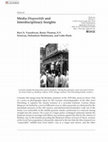
Crowds outside the Imperial Cinema, Bombay, during the premiere week of Jawani ki Hawa (d. Franz ... more Crowds outside the Imperial Cinema, Bombay, during the premiere week of Jawani ki Hawa (d. Franz Osten, p. Bombay Talkies, 1935). Image courtesy: The Wirsching Family Archive. Consider this image from the Bombay premiere of the 1935 film, Jawani ki Hawa. Part of a series of photographs taken by the German cinematographer of the film, Josef Wirsching, it captures the chaotic textures of a crowded moment. Curious future filmgoers are hailed by a movie billboard, even as other passersby are distracted by the immediate presence of the still camera, and disinterested bystanders walk out of the frame. Less noticeable, in the middle ground, stands a policeman in a raincoat staring straight into the camera. He is part of a larger police contingent stationed outside the Imperial cinema to preempt and diffuse any protests against the film by the citizens of Bombay city. In the months preceding the theatrical release of Jawani ki Hawa, sections of the local Parsi population vehemently objected to the fact that the film featured two "respectable" middle-class Parsi ladies-one as a singer and actress, and the other BioScope 8(2) vii-x

The Aesthetic and Material Force of Landscape in Cinema: Mediating Meaning from the Scene of Production
Representations, 2022
*free to download* This essay explores the aesthetic and material force of landscape in cinema, a... more *free to download* This essay explores the aesthetic and material force of landscape in cinema, an entity that has long been considered an index of localized climates. I adopt a transmedial and triangulated approach to cinematic landscape as filmed image, as circulating imaginary, and as the physical ground of film production. I argue that cinema reveals, in the scene of production, a mutual exertion of spatial influence and the co-production of aesthetic-material meaning by multiple human and nonhuman actants. The polyphonous relationship of landscape and cinema allows me to complicate climate and Anthropocene abstractions with situated histories of desire, dispossession, circulation, and collaboration.
Keywords: landscape, transmedial, Savitri, Izzat, Adivasi, Western ghats, Ajanta caves, location shooting, Anthropocene, mediation, wildness, nation, Raja Ravi Varma, Prabasi magazine, lithography, photography.
Feminist Media Histories, 2022
When we—that is, Pavitra and Debashree—sat down to articulate our understanding of a decolonial a... more When we—that is, Pavitra and Debashree—sat down to articulate our understanding of a decolonial and feminist media studies, we knew that we were entering a conversation that had long been underway. Anticolonial movements of the twentieth century ousted powerful and globe-spanning modern empires. Postcolonial and decolonial theories helped us understand the epistemic violence that made the material extraction of colonialism possible. They cautioned us that colonialism looked different in different parts of the world, used different weapons, and had different avatars in the present.
As many of the authors in this issue observe, the work of decolonization does not end at a definite historical milestone, and calls to decolonize become defanged when they are appropriated by the very institutions we seek to challenge. The struggle against the colonization of our minds and bodies and lands is ongoing. The task of the feminist media scholar, then, is to enter the struggle midstream and try to make sense of the different currents that make up the turbulence.
BioScope, 2021
The Keywords Issue marks 10 years of BioScope: South Asian Screen Studies. At its most polemical,... more The Keywords Issue marks 10 years of BioScope: South Asian Screen Studies. At its most polemical, the ambition of this issue is to confront the geopolitics of knowledge production and disciplinary norms. A keywords approach allows us to ask what some of the central epistemes currently at play in film and media studies are. Each keyword in this collection aims to present concise accounts of core themes and debates, thereby illustrating the conceptual underpinnings upon which the field has been built. As such, the issue serves to highlight important areas of media scholarship pertaining to South Asia and serves as a ready reference for those unfamiliar with this thriving field of study. More significantly, this special issue also allows us to interrogate these central epistemes, illuminating both the promises and the challenges of South Asian screen studies.
Film History, 2019
This article follows the colonial censorship paper trail of a lost film written by Premchand in 1... more This article follows the colonial censorship paper trail of a lost film written by Premchand in 1934, titled Mill or Mazdoor, to tell a particular history of Bombay and the entwined lives of politics, culture, and affect. Through archival research, analysis of publicity materials, and engagement with scholarship on film censorship, urban and industrial history, and geography, I embed the story of Mill within a dense history of local industrial unrest, transnational fears of filmic communism, and wranglings with a colonial censor regime. The singular travails of a proscribed film thus embody the stories of a specific place whose specificity is wrought out of its links with other places in the world.
Available here: https://www.jstor.org/stable/10.2979/filmhistory.31.4.02?seq=1
International Encyclopedia of Gender, Media, and Communication, 2020
Co-authored with Melanie Bell, Christine Gledhill, Shelley Cobb, Rashmi Sawhney, Laraine Porter, ... more Co-authored with Melanie Bell, Christine Gledhill, Shelley Cobb, Rashmi Sawhney, Laraine Porter, Ulrike Sieglohr.
While 1970s/1980s feminist film theory questioned the representability of women within a male-dominated industry, renewed interest in early film history revealed unexpected numbers of women film makers. The international Women Film Pioneers Project (WFPP), an ever-growing database housed at Columbia University, New York, documents research into the pioneering work of women in cinema's first crucial decades as it became a mass and transnational medium. A surge of monographs has followed, focusing on women's diverse careers, the gendering of film studio organization and practices, and the cultural impacts of female audiences, campaigners, journalists, and critics. These discoveries are emerging in festival and film theater programming, film education, and local cultural activity. In Britain, the Women's Film & Television History Network-UK/Ireland, encourages research across the barriers between silence and sound, cinema and television. In what follows, the Network records key issues and figures emerging from the project of women's film history.
Filmi Jagat: A Scrapbook (Shared Universe of Early Hindi Cinema), 2014
A study of amateur film archiving and the impulse of the 'collector' as a means to approach cinem... more A study of amateur film archiving and the impulse of the 'collector' as a means to approach cinema as more than the projected image. Offers the concept of ‘kinetomania’ to theorize the work of amateur film archivists as evidenced through scrapbooks.
BioScope: South Asian Screen Studies, Jan 2013
The final, definitive version of this paper has been published in BIOSCOPE: SOUTH ASIAN SCREEN ST... more The final, definitive version of this paper has been published in BIOSCOPE: SOUTH ASIAN SCREEN STUDIES, January 2013 by SAGE Publications India Pvt Ltd, All rights reserved. Copyright © 2013 Screen South Asia Trust
Media and Utopia: History, Imagination and Technology. Eds. Arvind Rajagopal & Anupama Rao
This article analyzes a range of modes through which the promise of utopia was mobilized in late ... more This article analyzes a range of modes through which the promise of utopia was mobilized in late colonial Bombay cinema. We witness a conflicted terrain of interests and desires as alternate film histories come into view. I look at 3 lost films written by Sa'adat Hasan Manto, examine their content and context, and open up discussion of technological utopianism, the impact of socialist thought, and prescriptive visions of secular harmony in pre-Independence talkie cinema.
No Limits: Media Studies from India, Aug 2013
The final, definitive version of this paper has been published in Ravi Sundaram (ed.), NO LIMITS:... more The final, definitive version of this paper has been published in Ravi Sundaram (ed.), NO LIMITS: MEDIA STUDIES FROM INDIA, August 2014 by Oxford University Press. Copyright © 2014.
Doing Women's Film History: Reframing Cinemas, Past and Future
Women Screenwriters: An International Guide
This is an essay on two lost films by music composer, director, singer, producer, actress, and sc... more This is an essay on two lost films by music composer, director, singer, producer, actress, and screenwriter Bai Jaddan Bai. Starting with Talash-e-Haq/Search for Truth (1935) Jaddan Bai wrote and produced films that often featured socially ostracized actresses, singers, and performers as heroines. Plots revolved around the many hardships and insults suffered by these protagonists as they displayed symptoms of sexual amorality, consumerist avarice, or plain bad luck. Given that Jaddan Bai had herself been a renowned tawa’if (courtesan) and singer it would appear that she transposed her own dilemmas onto her characters, even playing them herself on screen. At the same time, one can read fascinating parallels in plot and moral philosophy with the transnationally circulating fallen woman melodrama. Such a reading enables us to see connections across urban sites which were similarly grappling with anxieties about female sexuality and consumerism. The “modern girl” who had embraced fast cars, fashion, and sexual freedom, featured centrally in this globally circulating mode, even starring in Jaddan Bai’s second directorial venture, Madam Fashion (1936).
In Nandita Jaishankar & Arnav Adhikari (eds.) Projects/Processes, Volume I, Serendipity Arts Foundation. , 2018
This essay discusses the career and craft of Josef Wirsching, a German cinematographer who migrat... more This essay discusses the career and craft of Josef Wirsching, a German cinematographer who migrated to India in the 1930s and made a deep impact on the aesthetic form and production techniques of Bombay cinema. It was written as a companion piece to the first public exhibition production stills and publicity photographs from the Wirsching family archive. These photographs give us unprecedented access to the aesthetic decisions, creative communities, and international exchanges that were vital to filmmaking in late colonial India.


Uploads
Papers by Debashree Mukherjee
aground off the coast of Mauritius. Drawing on a range of materialist media
theories, this article analyzes shipwrecks as media. It revisits Siegfried Kracauer’s concept of the mass ornament to approach shipwrecks as “crisis ornaments”—non-figurative and highly mediatized disasters that tend to abstract systemic crises. Examining photography, literature, and oil spills, the article explores how histories of racial capitalism have shaped Mauritius, demonstrating the value of improbable media objects in reconsidering the role of cultural and aesthetic inquiry in our current epoch.
Keywords: landscape, transmedial, Savitri, Izzat, Adivasi, Western ghats, Ajanta caves, location shooting, Anthropocene, mediation, wildness, nation, Raja Ravi Varma, Prabasi magazine, lithography, photography.
As many of the authors in this issue observe, the work of decolonization does not end at a definite historical milestone, and calls to decolonize become defanged when they are appropriated by the very institutions we seek to challenge. The struggle against the colonization of our minds and bodies and lands is ongoing. The task of the feminist media scholar, then, is to enter the struggle midstream and try to make sense of the different currents that make up the turbulence.
Available here: https://www.jstor.org/stable/10.2979/filmhistory.31.4.02?seq=1
While 1970s/1980s feminist film theory questioned the representability of women within a male-dominated industry, renewed interest in early film history revealed unexpected numbers of women film makers. The international Women Film Pioneers Project (WFPP), an ever-growing database housed at Columbia University, New York, documents research into the pioneering work of women in cinema's first crucial decades as it became a mass and transnational medium. A surge of monographs has followed, focusing on women's diverse careers, the gendering of film studio organization and practices, and the cultural impacts of female audiences, campaigners, journalists, and critics. These discoveries are emerging in festival and film theater programming, film education, and local cultural activity. In Britain, the Women's Film & Television History Network-UK/Ireland, encourages research across the barriers between silence and sound, cinema and television. In what follows, the Network records key issues and figures emerging from the project of women's film history.