Articles by Diederik J H Halbertsma
Archeologia e Calcolatori, 2025
The goal of this paper is to present an operational protocol for 3D site
recording at an aerial s... more The goal of this paper is to present an operational protocol for 3D site
recording at an aerial scale using ground-based photogrammetry methods. These methods are easily accessible, time- and cost-effective, and practicable in a wide range of field situations, particularly when access to UAVs is unfeasible. This protocol was deployed in a recent survey of the site of Khirbet al-Mudayna al-‘Aliya, Jordan, where both restrictions on the importation and deployment of UAVs and perpetually high winds and strong updrafts, make the use of drone photography impractical. Through this protocol, we aim to provide a reliable alternative to aerial-scale documentation, expanding the scope for effective site recording in challenging circumstances.
Zeitschrift des Deutschen Palästina-Vereins, 2024
This article investigates and tests recent theories regarding Iron Age I period so-called casemat... more This article investigates and tests recent theories regarding Iron Age I period so-called casemate sites in south-central Jordan, specifically in light of the sites of Hirbet es-Safra and Boz el-Mushelle and the Iron Age I copper production in the Wadi Arabah.
Archaeology in Jordan 4: the 2022 and 2023 Seasons, 2024
A brief report on the 2022 Season of the Renewed Tall Dayr 'Alla Temple Project
Archaeology in Jordan 4: 2022 and 2023 Seasons, 2024
A brief report on the 2022 survey at Khirbet al-Mudayna al-'Aliya, Jordan
Annual of the Department of Antiquities of Jordan, 2023
The ninth excavation season at Tall Dāmiyah took place from the 29 th of September until the 31 s... more The ninth excavation season at Tall Dāmiyah took place from the 29 th of September until the 31 st of October, 2019. It was a joint project between the Dutch National Museum of Antiquities, represented by Lucas Petit, and the Yarmouk University, represented by Zeidan Kafafi. Work was carried out in 5 squares on the summit of the tall. The main goal was to study the late 8 th and 7 th century BC levels and to relate the findings to other Iron Age sites in the vicinity. During the 2019 season adjacent rooms of the sanctuary were excavated resulting in the discovery of the main storage area of the complex. The team encountered numerous restorable vessels that were used to store mainly organic material such as barley and wheat. In the most northern squares late Iron Age layers were investigated, suggesting that after the destructive conflagration in the early 7 th century BC, people remained at the site. During the 2019 season also some Persian-Hellenistic silos and Byzantine and Ottoman period graves were investigated.
Semitica, 2022
The following article presents an exploration of utopian theory and its potential for studying th... more The following article presents an exploration of utopian theory and its potential for studying the archaeology of ritual and religion, particularly that of the Iron Age Southern Levant. While there is still little intersection between the two fields, the enigmatic aspects of duality established as typical for the concept of utopia lend themselves especially well for a novel methodology of approaching this already well-researched field. Through an exploration of the theory behind these aspects, and applying them to case-studies of so-called Iron Age wayside shrines and Iron Age temples in the Southern Levant, this article attempts to converge utopian and archaeological theory on religious practice.
Palestine Exploration Quarterly, 2022
This report is on the 2022 survey season at Khirbet al-Mudayna al-'Aliya (KMA for short), an earl... more This report is on the 2022 survey season at Khirbet al-Mudayna al-'Aliya (KMA for short), an early Iron Age site in Jordan, dating to roughly the end of the 11th/early 10th century BCE.
Religions, 2021
In this paper we examine why common methodologies for determining ‘religious architecture’ do not... more In this paper we examine why common methodologies for determining ‘religious architecture’ do not account for the diverse and fluid ways in which religious behaviour can be expressed. We focus on religious architecture from the Iron Age Southern Levant highlighting certain sites that ‘fall through the cracks’ of current taxonomies. We propose a different way of approaching evidence for religious practice in the archaeological record, viewing religion as one dimension of social action made visible along a spectrum of ritualization.
Phoenix 65(1), 2019
Tell Deir ‘Alla, one of the most important archaeological sites in the Jordan Valley dating from ... more Tell Deir ‘Alla, one of the most important archaeological sites in the Jordan Valley dating from the Late Bronze Age to the Late Iron Age, was excavated by the late Dr H. J. Franken (Leiden University) during the 1960’s. While the Early Iron Age sequence was published in the late ‘60’s, it was limited to a generalised discussion of the stratigraphy, as well as a study of the pottery. Much more in-depth information is present in the raw excavation data, gathered in several boxes at Leiden University.
This archive from the 1960’s excavations at Tell Deir ‘Alla has been made available to the author for further research and publication. The current research aims to digitise and analyse the relevant archaeological strata for further use, as well as re-evaluate several of the early interpretations made concerning the Early Iron Age, and in particular Tell Deir ‘Alla’s role in it.
While working with legacy data is not without its challenges, it comes with many opportunities. This archive contains a wealth of data, consisting of for example excavation plans, elaborate cross-sections, photographs, find drawings, and metal samples. Most of these data have not before been subject to detailed analysis, and remain unpublished. By revisiting this old excavation archive from a modern perspective, the role of Tell Deir ‘Alla during this poorly understood period can be re-evaluated. Furthermore, by evaluating the finds in relation to their archaeological contexts, our understanding of life at Deir ‘Alla during the Early Iron Age can be refined.
Book Reviews by Diederik J H Halbertsma
Journal of Near Eastern Studies, 2021
With the publication of this volume Prof Daviau and her colleagues have made a significant contri... more With the publication of this volume Prof Daviau and her colleagues have made a significant contribution to our understanding of Levantine archaeology, particularly that of ritual behavior during the Iron Age. The book provides an in-depth study of numerous aspects of a semi-isolated cultic site's material culture and their implications. WT-13 (Wadi ath-Thamad Survey site 13) is a small site in south-central Jordan, dating to the late Iron Age I-IIA and Iron Age IIB (10 th-8 th centuries BCE). It comprises the remains of a single building, located ca. 300 m. south of the Iron Age II site of al-Rumayl (WT-18). WT-13 was excavated as part of a rescue excavation by Daviau and her team over four seasons between 1997 and 2003 and yielded an impressive assemblage of objects associated with ritual activity. Among its most noteworthy finds are Stratum II's numerous anthropomorphic ceramic statues and figurines, which resemble assemblages from sites such as Horvat Qitmit, 'En Hazeva, and Tell Damiyah. These ritual finds give this volume a distinct focus and make it of broad interest beyond specialists in Iron Age Jordan.
Conference Presentations by Diederik J H Halbertsma
Presented at the University of Liverpool Department of Archaeology, Classics and Egyptology 'Work... more Presented at the University of Liverpool Department of Archaeology, Classics and Egyptology 'Work in Progress' Seminar series.
The early Iron Age in the Southern Levant is often described as ‘dark ages’, during which the region had to reconfigure after the Late Bronze Age collapse, adapting to newly emerging power structures. It is often seen as a period devoid of a fixed social hierarchy, with a focus on smaller-scale architecture and isolated village structures. In contrast to this picture, the early Iron Age archaeological record shows ample evidence for large-scale building works. In a period characterised by decentralisation of power this sudden appearance of highly organised building projects at numerous sites in the Southern Levant is unexpected, and shows that the idea of this period being ‘dark ages’ is outdated. This project will focus on investigating the large fortification structures, construction events and archaeological material from the early Iron Age site of Khirbet al-Mudayna al-‘Aliya, Jordan, and their implications for the archaeological debates on Early Iron Age social organisation and complexity
Presented at the workshop "SACRED SPACES IN THE ANCIENT NEAR EAST: BETWEEN REALITY AND UTOPIA", C... more Presented at the workshop "SACRED SPACES IN THE ANCIENT NEAR EAST: BETWEEN REALITY AND UTOPIA", College de France, Paris, February 4–5, 2022.
The enigmatic duality of the term ‘utopia’, simultaneously meaning a ‘non-existing place’ and ‘good or ideal place’, is reflected in scholarly thought on utopias. Utopias are often understood as “the ought that never is,” one of the recurring paradoxes in studies on utopian theory. One of these paradoxes is that utopias are often best understood when proposed as an alternative to, or in conjunction with, other phenomena that are either similar or antithetical.
In the study of religion during the Iron Age of the Ancient Near East, the search for similar phenomena is quite well-attested. Here, well-known biblical descriptions of important religious architecture (e.g., Ex: 25-40, 1 Kgs 6-8, Ezek 40-48) can be envisioned as utopias, ideal versions of what sacred space could or should have looked like. The search for similarities between these utopian descriptions and the archaeological record is a popular, albeit not unproblematic, topic of ongoing research.
Interestingly, the Iron Age archaeological record shows that these utopian descriptions don’t always fit neatly with what is encountered in the ground. Indeed, during this period there seems a near endless variety in ‘sacred architecture’, in particular in Southern Levant, which is often far removed from the architectural ideals portrayed in the Bible. Here we reach a stalemate between reality and utopia. While expanding on utopian theories might seem futile from this point of view, this presentation will attempt to circumvent this apparent stalemate by exploring not that which is similar to utopian as presented in the Bible but will instead focus on the antithetical. Through various examples from the Iron Age archaeological record, I will attempt to shift our focus from the utopian as a fixed place, to utopia as seen through practice.
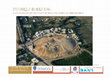
Presented at BANEA 2021 Online Conference:
Tell Deir ‘Alla, an important site in the Eastern Jord... more Presented at BANEA 2021 Online Conference:
Tell Deir ‘Alla, an important site in the Eastern Jordan Valley, saw a reconfiguration of most of the site’s aspects following the destruction of its Late Bronze Age temple. Whereas the Late Bronze Age temple had stood for centuries, the subsequent short-lived Iron Age I villages often changed their entire layout and were accompanied by significant changes in material culture. Tell Deir Alla’s Iron Age I ceramic chronology is still an important backbone for the Iron Age in Jordan. While the pottery chronology established by Franken in 1969 still largely stands up to scrutiny, the characteristics of the site which produced it were only schematically published. Following the digitisation of the excavation archive, new data has become available to shine a new light on the archaeological contexts which produced this fine-meshed ceramic chronology.
With this newly digitised excavation archive, a pilot study was conducted on one of the site’s more well-known Iron Age strata: Phase B. Phase B yielded evidence for what was interpreted as a series of bronze-casting furnaces. The size of these installations would indicate that in the Iron Age I the potential existed to cast bronze objects of substantial size, or at least several sizeable objects during the same shift. While the casting of few and smaller items does not necessitate much preparation or large-scale organisation, casting on a larger scale would require significant organisation of skill, labour, and resources. This is a tantalising dilemma when placed in the larger dominant narratives of societal (re)configurations in the Iron Age I, a period where nomadism and permanent settlement are said to have been in an oscillating relationship.
This paper will explore the archaeological evidence from the Phase B installations, and their implications for Iron Age I social organisation, trade, and the role of Tell Deir ‘Alla in the Iron Age I.
Recent archaeological excavations at Tell Damiyah, located in the Jordan Valley, have yielded man... more Recent archaeological excavations at Tell Damiyah, located in the Jordan Valley, have yielded many unique finds and significant results.
The settlement mound, situated at the confluence of the Jordan and Zerqa rivers, commanded one of the few fords over the Jordan River. Interestingly, during recent excavations a 7th century BC sanctuary complex was encountered, which gives evidence of connections with ancient Israel, Ammon, and Moab, both in trade and culture.
This sanctuary has been interpreted as a wayside shrine, which one would pass crossing the Jordan River. New results from the ongoing excavations at this small but significant site will be presented and placed in a larger archaeological perspective.
Presented at the British Association for Near Eastern Archaeology (BANEA) 2019 conference, at the University of Liverpool.
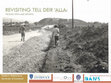
Conference Presentation from BANEA 2018:
Tell Deir ‘Alla, one of the most important archaeolog... more Conference Presentation from BANEA 2018:
Tell Deir ‘Alla, one of the most important archaeological sites in the Jordan Valley dating from the Late Bronze Age to the Late Iron Age, was excavated by the late Dr H. J. Franken (Leiden University) during the 1960’s. While the Early Iron Age sequence was published in the late ‘60’s, it was limited to a generalised discussion of the stratigraphy, as well as a study of the pottery. Much more in-depth information is present in the raw excavation data, gathered in several boxes at Leiden University.
This archive from the 1960’s excavations at Tell Deir ‘Alla has been made available to the author for further research and publication. The current research aims to digitise and analyse the relevant archaeological strata for further use, as well as re-evaluate several of the early interpretations made concerning the Early Iron Age, and in particular Tell Deir ‘Alla’s role in it.
While working with legacy data is not without its challenges, it comes with many opportunities. This archive contains a wealth of data, consisting of for example excavation plans, elaborate cross-sections, photographs, find drawings, and metal samples. Most of these data have not before been subject to detailed analysis, and remain unpublished. By revisiting this old excavation archive from a modern perspective, the role of Tell Deir ‘Alla during this poorly understood period can be re-evaluated. Furthermore, by evaluating the finds in relation to their archaeological contexts, our understanding of life at Deir ‘Alla during the Early Iron Age can be refined.
Religion at Tel Damiya
A presentation about religion at Tell Damiyah at the 'Recent Results and Reflections on Ongoing W... more A presentation about religion at Tell Damiyah at the 'Recent Results and Reflections on Ongoing Work at Tel Kinrot and Horvat Kur' Workshop, on April 16th 2016.
Thesis by Diederik J H Halbertsma
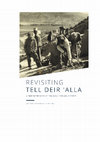
MPhil Dissertation University of Liverpool:
Excavations produce significant quantities of data, ... more MPhil Dissertation University of Liverpool:
Excavations produce significant quantities of data, a fact that was no different 60 years ago than it is today. Unfortunately, the resulting data are not always (fully) published, and the excavation archives, comprising photographs, notebooks and drawings, are sometimes left to gather dust for decades in storerooms, basements and attics. One such archive is the Tell Deir ‘Alla archive, which resulted from the 1960s excavations done by Prof Dr H. J. Franken on this important site in the Jordan Valley.
While Tell Deir ‘Alla received significant scholarly and popular attention mainly due to the discovery of two religious complexes dating to both the Late Bronze Age and the Iron Age II periods, the layers in between them, corresponding to the Iron Age I, somewhat fell through the cracks. While a robust pottery chronology was published by the excavator, in combination with a summary of the stratigraphy, a significant amount of the excavated data was left out. While architecture and stratigraphy were touched upon, they were significantly summarised, as were the associating finds. A lot more detail and complexity existed in the original field documentation.
The Iron Age I is not well understood, and of the few excavations that were done, not many have been published. As such, the Tell Deir ‘Alla archive holds significant potential for further research on this period. To demonstrate the potential of working with this archive, a pilot-study was started in a well-defined area of the site, for a specific archaeological period: the the end of the Late Bronze Age and the Iron Age I (ca. 1200-1000). One of the most standout features from this period was chosen: the Phase B installations. These installations, interpreted by the excavator as large-scale bronze casting-foundries, play an important role in various debates regarding the Iron Age I period, varying from the biblical link between metallurgy and the Jordan Valley, to the presence of the ‘Sea Peoples’. In this MPhil project the following research question was addressed:
“How can a re-evaluation of the excavation documentation of the Phase B installations at Tell Deir ‘Alla contribute to understanding their function, and their overall role in the Iron Age I economy?”
A major research outcome was the digitisation of the excavation archive. While this proved a significant and arduous task, it was successfully completed over the course of this research. This digitised Tell Deir ‘Alla archive can now be made available in open-access, allowing future archaeologists to scrutinise Franken’s theories, as well as the theories proposed in this thesis. After digitising the archive was completed, it was shaped into a workable database. This allowed for subsequent research, focusing on the Phase B installations. By analysing and bringing together the information provided by the section drawings, top-plans, fieldnotes, and photographs, the chronology of this phase could be refined, the stratigraphy amended, and the find categories which were left out in the original publication added. This in turn allowed for a re-evaluation of the Phase B installations, based on all of the available evidence in the archive. An extensive literature review allowed these new insights to be placed in a wider historical framework. By revisiting this old excavation archive from a modern perspective, the role of Tell Deir ‘Alla during this poorly understood period could be re-evaluated.
Leiden University BA thesis
Papers by Diederik J H Halbertsma
A Wayside Shrine in Northern Moab: Excavations in Wadi ath-Thamad. Edited by P. M. Michèle Daviau and Margreet L. Steiner. Wadi Ath-Thamad Project I. Oxford: Oxbow Books, 2017. Pp. 272 + 120 figures + 1 plate. £60 (cloth)
Journal of Near Eastern Studies, Oct 1, 2021
The 2022 survey season at Khirbet al-Mudayna al-ʿAliya, Jordan
Palestine Exploration Quarterly, Nov 7, 2022
This report is on the 2022 survey season at Khirbet al-Mudayna al-'Aliya (KMA for short),... more This report is on the 2022 survey season at Khirbet al-Mudayna al-'Aliya (KMA for short), an early Iron Age site in Jordan, dating to roughly the end of the 11th/early 10th century BCE.



Uploads
Articles by Diederik J H Halbertsma
recording at an aerial scale using ground-based photogrammetry methods. These methods are easily accessible, time- and cost-effective, and practicable in a wide range of field situations, particularly when access to UAVs is unfeasible. This protocol was deployed in a recent survey of the site of Khirbet al-Mudayna al-‘Aliya, Jordan, where both restrictions on the importation and deployment of UAVs and perpetually high winds and strong updrafts, make the use of drone photography impractical. Through this protocol, we aim to provide a reliable alternative to aerial-scale documentation, expanding the scope for effective site recording in challenging circumstances.
This archive from the 1960’s excavations at Tell Deir ‘Alla has been made available to the author for further research and publication. The current research aims to digitise and analyse the relevant archaeological strata for further use, as well as re-evaluate several of the early interpretations made concerning the Early Iron Age, and in particular Tell Deir ‘Alla’s role in it.
While working with legacy data is not without its challenges, it comes with many opportunities. This archive contains a wealth of data, consisting of for example excavation plans, elaborate cross-sections, photographs, find drawings, and metal samples. Most of these data have not before been subject to detailed analysis, and remain unpublished. By revisiting this old excavation archive from a modern perspective, the role of Tell Deir ‘Alla during this poorly understood period can be re-evaluated. Furthermore, by evaluating the finds in relation to their archaeological contexts, our understanding of life at Deir ‘Alla during the Early Iron Age can be refined.
Book Reviews by Diederik J H Halbertsma
Conference Presentations by Diederik J H Halbertsma
The early Iron Age in the Southern Levant is often described as ‘dark ages’, during which the region had to reconfigure after the Late Bronze Age collapse, adapting to newly emerging power structures. It is often seen as a period devoid of a fixed social hierarchy, with a focus on smaller-scale architecture and isolated village structures. In contrast to this picture, the early Iron Age archaeological record shows ample evidence for large-scale building works. In a period characterised by decentralisation of power this sudden appearance of highly organised building projects at numerous sites in the Southern Levant is unexpected, and shows that the idea of this period being ‘dark ages’ is outdated. This project will focus on investigating the large fortification structures, construction events and archaeological material from the early Iron Age site of Khirbet al-Mudayna al-‘Aliya, Jordan, and their implications for the archaeological debates on Early Iron Age social organisation and complexity
The enigmatic duality of the term ‘utopia’, simultaneously meaning a ‘non-existing place’ and ‘good or ideal place’, is reflected in scholarly thought on utopias. Utopias are often understood as “the ought that never is,” one of the recurring paradoxes in studies on utopian theory. One of these paradoxes is that utopias are often best understood when proposed as an alternative to, or in conjunction with, other phenomena that are either similar or antithetical.
In the study of religion during the Iron Age of the Ancient Near East, the search for similar phenomena is quite well-attested. Here, well-known biblical descriptions of important religious architecture (e.g., Ex: 25-40, 1 Kgs 6-8, Ezek 40-48) can be envisioned as utopias, ideal versions of what sacred space could or should have looked like. The search for similarities between these utopian descriptions and the archaeological record is a popular, albeit not unproblematic, topic of ongoing research.
Interestingly, the Iron Age archaeological record shows that these utopian descriptions don’t always fit neatly with what is encountered in the ground. Indeed, during this period there seems a near endless variety in ‘sacred architecture’, in particular in Southern Levant, which is often far removed from the architectural ideals portrayed in the Bible. Here we reach a stalemate between reality and utopia. While expanding on utopian theories might seem futile from this point of view, this presentation will attempt to circumvent this apparent stalemate by exploring not that which is similar to utopian as presented in the Bible but will instead focus on the antithetical. Through various examples from the Iron Age archaeological record, I will attempt to shift our focus from the utopian as a fixed place, to utopia as seen through practice.
Tell Deir ‘Alla, an important site in the Eastern Jordan Valley, saw a reconfiguration of most of the site’s aspects following the destruction of its Late Bronze Age temple. Whereas the Late Bronze Age temple had stood for centuries, the subsequent short-lived Iron Age I villages often changed their entire layout and were accompanied by significant changes in material culture. Tell Deir Alla’s Iron Age I ceramic chronology is still an important backbone for the Iron Age in Jordan. While the pottery chronology established by Franken in 1969 still largely stands up to scrutiny, the characteristics of the site which produced it were only schematically published. Following the digitisation of the excavation archive, new data has become available to shine a new light on the archaeological contexts which produced this fine-meshed ceramic chronology.
With this newly digitised excavation archive, a pilot study was conducted on one of the site’s more well-known Iron Age strata: Phase B. Phase B yielded evidence for what was interpreted as a series of bronze-casting furnaces. The size of these installations would indicate that in the Iron Age I the potential existed to cast bronze objects of substantial size, or at least several sizeable objects during the same shift. While the casting of few and smaller items does not necessitate much preparation or large-scale organisation, casting on a larger scale would require significant organisation of skill, labour, and resources. This is a tantalising dilemma when placed in the larger dominant narratives of societal (re)configurations in the Iron Age I, a period where nomadism and permanent settlement are said to have been in an oscillating relationship.
This paper will explore the archaeological evidence from the Phase B installations, and their implications for Iron Age I social organisation, trade, and the role of Tell Deir ‘Alla in the Iron Age I.
The settlement mound, situated at the confluence of the Jordan and Zerqa rivers, commanded one of the few fords over the Jordan River. Interestingly, during recent excavations a 7th century BC sanctuary complex was encountered, which gives evidence of connections with ancient Israel, Ammon, and Moab, both in trade and culture.
This sanctuary has been interpreted as a wayside shrine, which one would pass crossing the Jordan River. New results from the ongoing excavations at this small but significant site will be presented and placed in a larger archaeological perspective.
Presented at the British Association for Near Eastern Archaeology (BANEA) 2019 conference, at the University of Liverpool.
Tell Deir ‘Alla, one of the most important archaeological sites in the Jordan Valley dating from the Late Bronze Age to the Late Iron Age, was excavated by the late Dr H. J. Franken (Leiden University) during the 1960’s. While the Early Iron Age sequence was published in the late ‘60’s, it was limited to a generalised discussion of the stratigraphy, as well as a study of the pottery. Much more in-depth information is present in the raw excavation data, gathered in several boxes at Leiden University.
This archive from the 1960’s excavations at Tell Deir ‘Alla has been made available to the author for further research and publication. The current research aims to digitise and analyse the relevant archaeological strata for further use, as well as re-evaluate several of the early interpretations made concerning the Early Iron Age, and in particular Tell Deir ‘Alla’s role in it.
While working with legacy data is not without its challenges, it comes with many opportunities. This archive contains a wealth of data, consisting of for example excavation plans, elaborate cross-sections, photographs, find drawings, and metal samples. Most of these data have not before been subject to detailed analysis, and remain unpublished. By revisiting this old excavation archive from a modern perspective, the role of Tell Deir ‘Alla during this poorly understood period can be re-evaluated. Furthermore, by evaluating the finds in relation to their archaeological contexts, our understanding of life at Deir ‘Alla during the Early Iron Age can be refined.
Thesis by Diederik J H Halbertsma
Excavations produce significant quantities of data, a fact that was no different 60 years ago than it is today. Unfortunately, the resulting data are not always (fully) published, and the excavation archives, comprising photographs, notebooks and drawings, are sometimes left to gather dust for decades in storerooms, basements and attics. One such archive is the Tell Deir ‘Alla archive, which resulted from the 1960s excavations done by Prof Dr H. J. Franken on this important site in the Jordan Valley.
While Tell Deir ‘Alla received significant scholarly and popular attention mainly due to the discovery of two religious complexes dating to both the Late Bronze Age and the Iron Age II periods, the layers in between them, corresponding to the Iron Age I, somewhat fell through the cracks. While a robust pottery chronology was published by the excavator, in combination with a summary of the stratigraphy, a significant amount of the excavated data was left out. While architecture and stratigraphy were touched upon, they were significantly summarised, as were the associating finds. A lot more detail and complexity existed in the original field documentation.
The Iron Age I is not well understood, and of the few excavations that were done, not many have been published. As such, the Tell Deir ‘Alla archive holds significant potential for further research on this period. To demonstrate the potential of working with this archive, a pilot-study was started in a well-defined area of the site, for a specific archaeological period: the the end of the Late Bronze Age and the Iron Age I (ca. 1200-1000). One of the most standout features from this period was chosen: the Phase B installations. These installations, interpreted by the excavator as large-scale bronze casting-foundries, play an important role in various debates regarding the Iron Age I period, varying from the biblical link between metallurgy and the Jordan Valley, to the presence of the ‘Sea Peoples’. In this MPhil project the following research question was addressed:
“How can a re-evaluation of the excavation documentation of the Phase B installations at Tell Deir ‘Alla contribute to understanding their function, and their overall role in the Iron Age I economy?”
A major research outcome was the digitisation of the excavation archive. While this proved a significant and arduous task, it was successfully completed over the course of this research. This digitised Tell Deir ‘Alla archive can now be made available in open-access, allowing future archaeologists to scrutinise Franken’s theories, as well as the theories proposed in this thesis. After digitising the archive was completed, it was shaped into a workable database. This allowed for subsequent research, focusing on the Phase B installations. By analysing and bringing together the information provided by the section drawings, top-plans, fieldnotes, and photographs, the chronology of this phase could be refined, the stratigraphy amended, and the find categories which were left out in the original publication added. This in turn allowed for a re-evaluation of the Phase B installations, based on all of the available evidence in the archive. An extensive literature review allowed these new insights to be placed in a wider historical framework. By revisiting this old excavation archive from a modern perspective, the role of Tell Deir ‘Alla during this poorly understood period could be re-evaluated.
Papers by Diederik J H Halbertsma