Papers by Diem-Trinh Le-Klähn
A Review of “Slow tourism: experiences and mobilities” : by S. Fullagar, K. Markwell and E. Wilson, Bristol, Channel View Publications, 2012, pp. xiv + 233, £29.95 (hbk), ISBN-13: 978-1-84541-281-4 (hbk), ISBN-13: 978-1-84541-280-7 (pbk)
A Review of “Slow tourism: experiences and mobilities” : by S. Fullagar, K. Markwell and E. Wilson, Bristol, Channel View Publications, 2012, pp. xiv + 233, £29.95 (hbk), ISBN-13: 978-1-84541-281-4 (hbk), ISBN-13: 978-1-84541-280-7 (pbk)
This study investigates the use of public transport by visitors in the city of Munich, Germany. I... more This study investigates the use of public transport by visitors in the city of Munich, Germany. It seeks to understand how visitors perceive public transport services and which factors influence their level of satisfaction. Data were collected from a survey in April and May 2012 with a random sample at selected tourist sites in Munich. Factor analysis resulted in four different service dimensions—traveling comfort, service quality, accessibility and additional features. Visitors were found to be generally satisfied with public transport services in Munich, and their perceptions are independent from most factors.
Factors affecting tourists' public transport use and areas visited at destinations
Tourism Geographies, 2015
Journal of Hospitality, Leisure, Sport and Tourism Education, 2014
The BEST EN Education Network is a long established network which holds annual workshop in the fi... more The BEST EN Education Network is a long established network which holds annual workshop in the field of sustainable tourism. This year the conference attracts numerous tourism researchers and experts in the three days extensive discussion on engaging communities in sustainable tourism development. This report summarises the presentations and discussions at the conference. It highlights the key findings of the papers presented at the conference and emphasizes the framework for research and education on community tourism.
Journal of Destination Marketing & Management, 2014
Although its importance for sustainable tourism is recognised little research has been conducted ... more Although its importance for sustainable tourism is recognised little research has been conducted on tourist use of public transport. This paper examines the use of public transport by visitors in the city of Munich, Germany. Its objectives are twofold. First, it investigates the motivations for using or not using public transport. It focuses on distinctive characteristics between the users and non-users and how they are different in their demographic and travel profiles as well as their attitude towards public transport. Second, it seeks to understand which factors influence visitor use of public transport. The main reasons for visitor use of public transport are drive-free benefits, traffic reduction, advantages of local public transport, and car unavailability. In contrast, what often discourages public transport use are inconvenience and restrictions, lack of information, disadvantages of public transport and personal preferences. The five most important variables that differentiate visitor user of public transport from a non-user are length of stay, main purpose of trip, age group, frequency of public transport use at place of residence, and valid driving license ownership.
12 Promoting public transport use in tourism
Analysis of Visitor Satisfaction with Public Transport in Munich
Journal of Public Transportation, 2014
ABSTRACT This study investigates the use of public transport by visitors in the city of Munich, G... more ABSTRACT This study investigates the use of public transport by visitors in the city of Munich, Germany. It seeks to understand how visitors perceive public transport services and which factors influence their level of satisfaction. Data were collected from a survey in April and May 2012 with a random sample at selected tourist sites in Munich. Factor analysis resulted in four different service dimensions—traveling comfort, service quality, accessibility and additional features. Visitors were found to be generally satisfied with public transport services in Munich, and their perceptions are independent from most factors.
Journal of Destination Marketing & Management
Cuauhtemoc Luna-Nevarez n, Michael R. Hyman 1 ... New Mexico State University, College of Busines... more Cuauhtemoc Luna-Nevarez n, Michael R. Hyman 1 ... New Mexico State University, College of Business, Box 30001, Dept. 5280, Las Cruces, NM 88003-8001, USA ... Article history: Received 6 February 2012 Accepted 12 August 2012 Available online 25 October 2012 Keywords: Destination marketing organization (DMO) Gathering tourist information Destination website Content analysis ... The Internet has become a key marketing channel for tourist destinations. To identify typical features of destination websites, a content analysis of websites for top global ...

Tourist use of public transport at destinations – a review
Understanding tourists' use of public transport (PT) at the destination is important for sustaina... more Understanding tourists' use of public transport (PT) at the destination is important for sustainable mobility, destination satisfaction, PT management and destination management. This paper provides an overview of research in PT and tourism since 2000. The review identifies main topics and issues including how PT is used for tourism purposes in different contexts. It also recommends policies and strategies for a modal shift to PT in tourism, and identifies potential areas for future research. The review indicates that there are differences in the level of PT use by visitors between rural and urban destinations. PT is often not favoured by visitors in remote areas, although the situation is more promising in urban destinations. However, the overall potential of PT as an alternative mode for travelling is unclear, given tourist motivations and behaviours, and provision of visitor-oriented PT services including the need for appropriate communication and social marketing strategies.
Visitor users vs. non-users of public transport: The case of Munich, Germany
Although its importance for sustainable tourism is recognised little research has been conducted ... more Although its importance for sustainable tourism is recognised little research has been conducted on tourist use of public transport. This paper examines the use of public transport by visitors in the city of Munich, Germany. Its objectives are twofold. First, it investigates the motivations for using or not using public transport. It focuses on distinctive characteristics between the users and non-users and how they are different in their demographic and travel profiles as well as their attitude towards public transport. Second, it seeks to understand which factors influence visitor use of public transport. The main reasons for visitor use of public transport are drive-free benefits, traffic reduction, advantages of local public transport, and car unavailability. In contrast, what often discourages public transport use are inconvenience and restrictions, lack of information, disadvantages of public transport and personal preferences. The five most important variables that differentiate visitor user of public transport from a non-user are length of stay, main purpose of trip, age group, frequency of public transport use at place of residence, and valid driving license ownership.
The study highlights the importance of public transport information and accessible and conveniently located train stations and bus stops for visitors and locals alike. A significant finding is the extent to which public transport needs to be promoted as part of strategic destination marketing. The use of social marketing techniques to influence behavioural change with respect to public transport use is therefore desirable in the pre-trip decision stage as well as at the destination.
Segmenting Visitors to Battlefield Sites: International Visitors to The Former Demilitarized Zone in Vietnam
Paradoxically, part of the appeal of Vietnam as an emerging destination lies in the commodificati... more Paradoxically, part of the appeal of Vietnam as an emerging destination lies in the commodification of images, artifacts, and battlefield sites of the Vietnam War. While studied from the supply-side, little research has been undertaken yet in terms of the patterns of demand for battlefield tourism. Based on a survey of 481 visitors to the former Demilitarized Zone (DMZ), this article uses factor analysis and cluster analysis to segment then profile battlefield visitors based on their motivations. Three groups of visitors to the DMZ were identified: the Battlefield Tourism Enthusiast, the Opportunist, and Passive Tourists. Significant differences were found between the three segments with regard to various sociodemographics and trip characteristics. However, results from the study also emphasize that analyses of demand based on site visits should be contextualized in terms of visits to the country as a whole and that care must be taken in distinguishing specialist visitors from generalists.
Book Reviews by Diem-Trinh Le-Klähn
A Review of “Slow tourism: experiences and mobilities” by S. Fullagar, K. Markwell and E. Wilson, Bristol, Channel View Publications, 2012, pp. xiv+ 233,£ 29.95 (hbk), …
Journal of Sustainable Tourism, 2012
Books by Diem-Trinh Le-Klähn
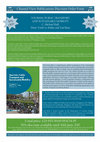
Hall, C.M., Le-Klähn, D-T., & Ram, Y. 2017, Tourism, Public Transport and Sustainable Mobility, C... more Hall, C.M., Le-Klähn, D-T., & Ram, Y. 2017, Tourism, Public Transport and Sustainable Mobility, Channel View Press, Bristol.
Please do not request that a copy of the entire book be loaded. If you wish to see the book please order via a library or purchase online. Please note that a 50% discount is available for purchase before the end of June 2017 (the pdf for this offer is available for download here) See http://www.channelviewpublications.com/
The contents of the book are as follows:
Contents
Boxed Insights and Case Studies
Figures
Tables
Plates
Acronyms
Preface
1 Introduction
2 Tourism Demand for Public Transport
3 Local and Intra-Destination Public Transport
4 Long-Distance and Inter-Destination Public Transport
5 Tourism and Public Transport Planning, Operational Management and Marketing
6 Futures and Conclusions
References
Index
Boxed Insights and Case Studies
1.1 The Kusttram: Belgium’s coastal tram
1.2 A shuttle bus service in order to reduce car access to Campo di Dentro Valley, South Tyrol
1.3 Local Public Transport Services in the EU28
1.4 From airport to the city: Compulsory inter–destination and intra-destination travel with public transportation
1.5 The scope of paratransit transport services
2.1 Offering bicycles to tourists and expanding the visitor season in Riccione, Italy
2.2 Electric vehicle service for disabled tourists, Córdoba, Spain
2.3 Public transport, religious imperatives and gender segregation
2.4 Tourist choice of transport mode in Munich
2.5 Park and Ride
3.1 Explore the Cotswolds by public transport
3.2 Public transport ridership in Europe
3.3 World metro statistics
3.4 The TRAM for tourists in Alicante
3.5 Jurassic CoastlinX53 – The Jurassic Coast Bus in Devon and Dorset, UK
3.6 Public transport in Singapore
3.7 Dortrecht Waterbus
3.8 Integrating cycling into the public transport system of South Moravia, Czech Republic
3.9 Combining hiking and trains in the Gorges de la Loire, France
3.10 Walkability and visitor attractions: the case of Montreal, Quebec
4.1 Public attitudes towards and use of long-distance train services in the UK
4.2 The Rail Pass
4.3 Double collective passenger land transport to tackle climate change
4.4 Cycling tourism: EuroVelo
4.5 Walking in the footsteps of Abraham through a tempestuous region: the Abraham Path
5.1 Public transportation for tourists – a comparison of three urban destinations
5.2 Public transport, tourism and the hosting of hallmark events
5.3 English travel information and twitter on buses in The Hague
5.4 Moovit – bridging the information gap in public transport?
5.5 Free public transport services for tourists
6.1 Shenzhen: New Energy Vehicle Promotion (Winner of the Urban Transportation category in the C40 City Climate Leadership Awards)
6.2 Cycle travel and public transport in South Moravia, Czech Republic
6.3 Automated transit vehicles in Singapore
6.4 Danish bike touring: Powered by cycling
Figures
1.1 Frameworks for public-private partnerships in transport services
1.2 Regulatory and competitive structures for public transport as a common pool resource
1.3 Relationships between institutions, organisational forms and technologies
1.4 Elements of a return journey using public transport
1.5 Examining the interrelationships between tourism and public transport
2.1 Mode of transport by Austrian tourists for main holidays 1969-2012
2.2 Mode of transport by domestic tourists
2.3 Mode of transport by foreign tourists
2.4 Tourist use of public transport: A decision-making model
2.5 Transport behaviour characteristics of the respondents
2.6 Importance of mode quality attributes in tourists’ choice of transport mode
2.7 Tourists’ transport mode choices and places visited
3.1 Metro networks worldwide in 2014
3.2 The correlation between number of visitors and Walkscore based on the Montreal Tourism Organisation's list of attractions
3.3 The correlation between number of reviews and Walkscore based on TripAdvisor list of top things to do in Montreal
5.1 Marketing public transport services to tourists
6.1 Encouraging public transport use via service design, network integration and behavioural and policy interventions
Tables
1.1 International tourism arrivals and forecasts 1950-2030
1.2 International tourist arrivals and estimates by region per 100 population 1995-2030
1.3 Global international and domestic tourist arrivals 2005-2030
1.4 Analysis of public transportation services provided by the sixteen busiest airports
1.5 Typology of paratransit services
1.6 Passenger transport mode shares in select cities
2.1 Countries for which data is available
2.2 Tourists’ mode of arrival (%)
2.3 Reasons for tourist public transport use/non-use
2.4 Respondent profile
3.1 Examples of taxi-booking mobile phone applications
3.2 Montreal Tourism Organization list of attractions (Montreal list)
3.3 TripAdvisor's Montreal Top Attractions (TripAdvisor list)
4.1 Impact of HSR on tourism
4.2 Benefits and disadvantages of a rail pass
4.3 Some train routes in Europe and their relative costs
4.4 EU-27 regions with highest number of maritime passengers, 2008–11
4.5 Demand bands for cycle tourism in Europe
5.1 Comparison of public transport and walking times in tourism destinations
5.2 Public transport initiatives for the Summer Olympic Games 2000-2016
5.3 Transportation information on destination websites
5.4 Local public transport providers’ websites
5.5 New mobility services
6.1 Behavioural and policy interventions to encourage greater public transport use
Plates
1.1 Ferry terminal Tallinn, Estonia
1.2 Scandlines ferry entering Helsingborg ferry terminal, Sweden
1.3 Electric-hybrid bus, Oxford Bus Company, UK
1.4 Green tramline, Freiburg, Germany
1.5 Stornoway Ullapool ferry, Scotland
1.6 Melbourne Airport, Victoria, Australia
3.1 Riverside tram system as part of the revitalisation of the Bilbao waterfront, Spain
3.2 Southern Cross Railway Station, Melbourne, Victoria, Australia
3.3 Tram, bus and taxi, Stockholm, Sweden
3.4 Luna Bus transport, Flic en Flac, Mauritius
3.5 Waterbus, Vancouver, British Columbia, Canada
3.6 Bicycles for rent, New York City, USA
4.1 Eastside entrance to London St. Pancras Station
5.1 Railway maps in Spanish and English, São Paulo, Brazil
5.2 Co-location of customer service centre and ticketing machines, Britomart Transportation Centre, Auckland, New Zealand
5.3 Staten Island Ferry, New York, USA
6.1 Waiting for the Oslo train at Lillehammer Station
6.2 Knutpunkten is the integrated transport centre for bus, train and ferry in Helsingborg, Sweden
6.3 Walking and cycling path Amager Beach Park, Copenhagen, Denmark



Uploads
Papers by Diem-Trinh Le-Klähn
The study highlights the importance of public transport information and accessible and conveniently located train stations and bus stops for visitors and locals alike. A significant finding is the extent to which public transport needs to be promoted as part of strategic destination marketing. The use of social marketing techniques to influence behavioural change with respect to public transport use is therefore desirable in the pre-trip decision stage as well as at the destination.
Book Reviews by Diem-Trinh Le-Klähn
Books by Diem-Trinh Le-Klähn
Please do not request that a copy of the entire book be loaded. If you wish to see the book please order via a library or purchase online. Please note that a 50% discount is available for purchase before the end of June 2017 (the pdf for this offer is available for download here) See http://www.channelviewpublications.com/
The contents of the book are as follows:
Contents
Boxed Insights and Case Studies
Figures
Tables
Plates
Acronyms
Preface
1 Introduction
2 Tourism Demand for Public Transport
3 Local and Intra-Destination Public Transport
4 Long-Distance and Inter-Destination Public Transport
5 Tourism and Public Transport Planning, Operational Management and Marketing
6 Futures and Conclusions
References
Index
Boxed Insights and Case Studies
1.1 The Kusttram: Belgium’s coastal tram
1.2 A shuttle bus service in order to reduce car access to Campo di Dentro Valley, South Tyrol
1.3 Local Public Transport Services in the EU28
1.4 From airport to the city: Compulsory inter–destination and intra-destination travel with public transportation
1.5 The scope of paratransit transport services
2.1 Offering bicycles to tourists and expanding the visitor season in Riccione, Italy
2.2 Electric vehicle service for disabled tourists, Córdoba, Spain
2.3 Public transport, religious imperatives and gender segregation
2.4 Tourist choice of transport mode in Munich
2.5 Park and Ride
3.1 Explore the Cotswolds by public transport
3.2 Public transport ridership in Europe
3.3 World metro statistics
3.4 The TRAM for tourists in Alicante
3.5 Jurassic CoastlinX53 – The Jurassic Coast Bus in Devon and Dorset, UK
3.6 Public transport in Singapore
3.7 Dortrecht Waterbus
3.8 Integrating cycling into the public transport system of South Moravia, Czech Republic
3.9 Combining hiking and trains in the Gorges de la Loire, France
3.10 Walkability and visitor attractions: the case of Montreal, Quebec
4.1 Public attitudes towards and use of long-distance train services in the UK
4.2 The Rail Pass
4.3 Double collective passenger land transport to tackle climate change
4.4 Cycling tourism: EuroVelo
4.5 Walking in the footsteps of Abraham through a tempestuous region: the Abraham Path
5.1 Public transportation for tourists – a comparison of three urban destinations
5.2 Public transport, tourism and the hosting of hallmark events
5.3 English travel information and twitter on buses in The Hague
5.4 Moovit – bridging the information gap in public transport?
5.5 Free public transport services for tourists
6.1 Shenzhen: New Energy Vehicle Promotion (Winner of the Urban Transportation category in the C40 City Climate Leadership Awards)
6.2 Cycle travel and public transport in South Moravia, Czech Republic
6.3 Automated transit vehicles in Singapore
6.4 Danish bike touring: Powered by cycling
Figures
1.1 Frameworks for public-private partnerships in transport services
1.2 Regulatory and competitive structures for public transport as a common pool resource
1.3 Relationships between institutions, organisational forms and technologies
1.4 Elements of a return journey using public transport
1.5 Examining the interrelationships between tourism and public transport
2.1 Mode of transport by Austrian tourists for main holidays 1969-2012
2.2 Mode of transport by domestic tourists
2.3 Mode of transport by foreign tourists
2.4 Tourist use of public transport: A decision-making model
2.5 Transport behaviour characteristics of the respondents
2.6 Importance of mode quality attributes in tourists’ choice of transport mode
2.7 Tourists’ transport mode choices and places visited
3.1 Metro networks worldwide in 2014
3.2 The correlation between number of visitors and Walkscore based on the Montreal Tourism Organisation's list of attractions
3.3 The correlation between number of reviews and Walkscore based on TripAdvisor list of top things to do in Montreal
5.1 Marketing public transport services to tourists
6.1 Encouraging public transport use via service design, network integration and behavioural and policy interventions
Tables
1.1 International tourism arrivals and forecasts 1950-2030
1.2 International tourist arrivals and estimates by region per 100 population 1995-2030
1.3 Global international and domestic tourist arrivals 2005-2030
1.4 Analysis of public transportation services provided by the sixteen busiest airports
1.5 Typology of paratransit services
1.6 Passenger transport mode shares in select cities
2.1 Countries for which data is available
2.2 Tourists’ mode of arrival (%)
2.3 Reasons for tourist public transport use/non-use
2.4 Respondent profile
3.1 Examples of taxi-booking mobile phone applications
3.2 Montreal Tourism Organization list of attractions (Montreal list)
3.3 TripAdvisor's Montreal Top Attractions (TripAdvisor list)
4.1 Impact of HSR on tourism
4.2 Benefits and disadvantages of a rail pass
4.3 Some train routes in Europe and their relative costs
4.4 EU-27 regions with highest number of maritime passengers, 2008–11
4.5 Demand bands for cycle tourism in Europe
5.1 Comparison of public transport and walking times in tourism destinations
5.2 Public transport initiatives for the Summer Olympic Games 2000-2016
5.3 Transportation information on destination websites
5.4 Local public transport providers’ websites
5.5 New mobility services
6.1 Behavioural and policy interventions to encourage greater public transport use
Plates
1.1 Ferry terminal Tallinn, Estonia
1.2 Scandlines ferry entering Helsingborg ferry terminal, Sweden
1.3 Electric-hybrid bus, Oxford Bus Company, UK
1.4 Green tramline, Freiburg, Germany
1.5 Stornoway Ullapool ferry, Scotland
1.6 Melbourne Airport, Victoria, Australia
3.1 Riverside tram system as part of the revitalisation of the Bilbao waterfront, Spain
3.2 Southern Cross Railway Station, Melbourne, Victoria, Australia
3.3 Tram, bus and taxi, Stockholm, Sweden
3.4 Luna Bus transport, Flic en Flac, Mauritius
3.5 Waterbus, Vancouver, British Columbia, Canada
3.6 Bicycles for rent, New York City, USA
4.1 Eastside entrance to London St. Pancras Station
5.1 Railway maps in Spanish and English, São Paulo, Brazil
5.2 Co-location of customer service centre and ticketing machines, Britomart Transportation Centre, Auckland, New Zealand
5.3 Staten Island Ferry, New York, USA
6.1 Waiting for the Oslo train at Lillehammer Station
6.2 Knutpunkten is the integrated transport centre for bus, train and ferry in Helsingborg, Sweden
6.3 Walking and cycling path Amager Beach Park, Copenhagen, Denmark