Papers by Eleftheria Daleziou
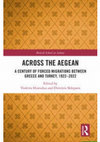
Hionidou, V., & Skleparis, D. (Eds.). (2026). Across the Aegean: A Century of Forced Migrations Between Greece and Turkey, 1922-2022 (1st ed.). Routledge. https://doi.org/10.4324/9781003467083, 2026
The chapter discusses the presence and activities of the Near East Relief (NER), an American reli... more The chapter discusses the presence and activities of the Near East Relief (NER), an American relief organisation operating in Greece in the aftermath of the Asia Minor Catastrophe of 1922. For Greece, the arrival of thousands of refugees immediately after the catastrophe had a catalytic effect on the country in more than one way. NER had been providing relief in the form of food, clothing, and shelter as well as rehabilitation projects for refugees and orphans in the region of the Near East since 1915. The organisation specialised in the care of Armenian and Greek orphaned children, and it was in this capacity that it started operating in Greece during the winter of 1922, continuing until 1929. NER was one among an array of international and local relief agencies operating in Greece during this period. In addition, the organisation ran several side projects of a smaller scale, such as the Child Welfare Bureau, distribution of old clothes, health services, vocational training for adults, and the running of industrial workshops which employed women refugees. NER completed its mission to provide for the Armenian and Greek orphans transferred to Greece under its aegis. The organisation's contribution to the provision for the general refugee population was limited to emergency relief support (late 1922–23). From the second half of 1923 up to 1929, NER's provision of relief for the general refugee population included only small-scale initiatives.
Nodarou, E. and E. Daleziou 2026. Anna Marie Farnsworth (1895-1991): a pioneer in archaeological science and materials analysis. In S. Déderix and M. Bastide (eds) Pencil and Dust. Women Who Shaped Archaeology in Greece and the Greek World. BCH Suppl. 74, 127-134. Open Access (see link below).
Pencil and Dust. Women who shaped archaeology in Greece and the Greek world , 2026
https://books.openedition.org/efa/20301
The Asia Minor Disaster and the Humanitarian Response: International Philanthropic Organizations and the Arrival of the Refugees in Greece, 1918-1924 , 2025
Near East Relief was one of the most significant
international humanitarian agencies responding ... more Near East Relief was one of the most significant
international humanitarian agencies responding to the humanitarian
crisis that followed the Asia Minor Catastrophe of
1922. Prior to 1922, Near East Relief was the primary channel
for US aid, post-WW I, in the Near East, providing food, medical
services, and care for orphans. In Greece, post-1922 Near East
Relief tended Armenian and Anatolian Greek refugees. Here I
examine the organization’s orphanages in Greece, in particular
its educational and vocational practices, outplacement, and
the social welfare of the children under its care.
Ημερίδα του Τμήματος Πολιτικής Επιστήμης και Διεθνών Σχέσεων του Πανεπιστημίου Πελοποννήσου και ... more Ημερίδα του Τμήματος Πολιτικής Επιστήμης και Διεθνών Σχέσεων του Πανεπιστημίου Πελοποννήσου και του Πολιτιστικού και Λαογραφικού Συλλόγου Βόχας με θέμα «Γράμματα προς την πατρίδα. Υπερπόντια μετανάστευση και αλληλογραφία» Τετάρτη 3 Μαΐου 2023 - Τμήμα Πολιτικής Επιστήμης και Διεθνών Σχέσεων, Πανεπιστήμιο Πελοποννήσου, Κόρινθος
Η σύντομη ανακοίνωση έχει σκοπό την ανάδειξη τμήματος αρχειακού υλικού (αλληλογραφία) από το Αρχείο Νικολάου Μαυρή, το οποίο εναπόκειται στα Αρχεία της Αμερικανικής Σχολής Κλασικών Σπουδών στην Αθήνα. Ο Νικόλαος Μαυρής γεννήθηκε στην Αιγύπτο το 1899 με καταγωγή από τα Δωδεκάνησα (Κάσος). Σπούδασε Ιατρική στο Πανεπιστήμιο Αθηνών και στο Παρίσι. Μετά το πέρας των σπουδών του επέστρεψε αρχικά στην Αίγυπτο και στη συνέχεια εγκαταστάθηκε στην Αθήνα όπου ανέπτυξε έντονη δράση για το ζήτημα της απελευθέρωσης των Δωδεκανήσων και της ένωσής τους με την Ελλάδα. Διετέλεσε πρόεδρος του Κεντρικού Δωδεκανησιακού Συλλόγου και στη συνέχεια εγκαταστάθηκε στην Αμερική το 1940 όπου ανέλαβε ηγετικό ρόλο στη σύσταση και συγκρότηση του Εθνικού Δωδεκανησιακού Συμβουλίου. Το υπό εξέταση αρχειακό υλικό, πρωτίστως αλληλογραφία και έντυπα, αφορά στον αγώνα των Δωδεκανήσιων στην καταγωγή ομογενών της Αμερικής για την απελευθέρωση των νησιών από την ιταλική κατοχή. Τα τεκμήρια αφορούν στην ομογενειακή οργάνωση «Δωδεκανησιακή Νεολαία Αμερικής» και καλύπτουν την περίοδο από τη δημιουργία της, το 1934, έως και τη σύσταση του Εθνικού Δωδεκανησιακού Συμβουλίου το 1940, του οργάνου που ανέλαβε τις προσπάθειες των Δωδεκανησίων της Αμερικής για την απελευθέρωση των νησιών στην Αμερική αλλά και στα διεθνή φόρα.

Britain agreed to a plan that called for a Russian occupation of the Straits and Constantinople i... more Britain agreed to a plan that called for a Russian occupation of the Straits and Constantinople in the event of the Ottoman Empire's dismemberment. The events in Russia, that is, its withdrawal from the alliance, changed British policy again. With the Treaty of Brest-Litovsk signed with the Central Powers on 3 March 1918, Russia and its leaders renounced all its previous claims and participation in dismemberment schemes. 5 Namely the 1907 Anglo-Russian Convention over spheres of influence in Asia. However, the question of the Straits was not directly discussed. 6 With the Treaty of London (1840), the Straits Convention (184 1), the Treaty of Paris (185 6), the Treaty of London (187 1) and with the decisions of the Congress of Berlin (1878). 7 The treaties are discussed in this Chapter: 'British strains and strengths at home and abroad in the aftermath of the War. ' p. 35. The Straits once again needed 'another protector. '8 The Balkan Wars of 1912-3 was'the cause for another retreat of Britain's backing to the Ottoman Empire. The armed conflict in this sensitive part of the world was putting British interests in danger: the Ottoman Empire was on the verge of a final collapse, facing the united forces of its former subjects. It was also the time in which Greece appeared for the first time as a potential stronghold in the eyes of several British politicians. 9 Greece had proved capable of becoming a major power in the area, defeating the Ottoman Empire that seemed even more ready to revert completely to German influence. 10 A factor that had worked in favour of Greece during this period was the Greek Prime Minister, Eleftherios Venizelos, who had undertaken the leadership of the country since 1910, and had been an ardent supporter of pro-British feelings. ýHis attitude was epitomised with the outbreak of the war., The Great War and the Ottoman entry on the side of the Triple Alliance, on 31 October 1914, had also been the event destined to alter the British attitude towards the Ottoman Empire. Greece seemed to have two alternatives, given the British supremacy in the Mediterranean, neutrality or war on the side of the Entente. Venizelos came out strongly for a policy of war, on the side of the Entente Powers as early as in August 1914. However, Constantine I, the King of Greece, brother-in-law of the German Kaiser, despite his pro-German feelings, 8 The end of the War witnessed the fall of the Straits zone and Constantinople to the Allies. The Armistice of Mudania (November 1918) catered for the opening of the Straits and gave to the Allies 'the right to occupy any strategic points, in the event of a situation arising which threatens the security of the Allies. ' Great Britain, Parliamentary Papers, Cmd. 53, Terms ofthe, 4rmistices concluded between the, 41lied Governments and the Governments of Germany, 4 ustria-Hungary and Turkey (HMSO, 1919). See also Chapter Two: 'The Armistice of Mudros-Allied tactics and British preponderance. ' p. 62. 9 The Balkan Wars constitute a landmark for Greek history, through joint military action with its Balkan neighbours the country acquired a major part of Macedonia, South Epirus, some of the Aegean islands and Crete. Greece had mobilised an army of 282,000 during the course of the two Balkan Wars, 1912-3. Andr6 Andr6a&s, Les effets iconomiques et sociaux de la guerre en Gr&e (Paris, 1928), p. 5. '0 For a survey of German-Ottoman relations prior to the Great War see U. Trumpener, 'Germany and the End of the Ottoman Empire, ' in The Great Powers and the End ofthe Ottoman Empire, ed. by M. Kent (London, 1984), pp. 111-140.
Thesis: Britain and the Greek-Turkish war and settlement of 1919-1923 : the pursuit of security by "proxy" in Western Asia Minor /
University of Glasgow, UK, 2002
Talks by Eleftheria Daleziou
Conference Presentations by Eleftheria Daleziou
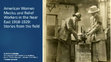
The 28th MGSA Symposium | October 17-19 2024 | Princeton University , 2024
Considerable research has focused on the most important, larger, non-governmental American organi... more Considerable research has focused on the most important, larger, non-governmental American organizations during and post WWI (e.g., American Red Cross, Near East Relief). Their help was immediate, pioneering, and effective in many instances, given the circumstances. Women medics and humanitarian workers form a large part of the organizations’ personnel on the ground. It is not an overstatement that the core of the relief work was to a large extent in the hands of women doctors, nurses, and relief humanitarian workers. Nevertheless, their vital role in humanitarian relief work has received relatively little attention. At a time when women could not vote and lacked basic rights, many of them engaged in humanitarian work overseas. Their motives may have been patriotism, self-empowerment, a sheer desire to offer, a sense of adventure, or a combination thereof. To address this issue the presentation will focus on two American relief workers, Alice G. Carr (1887-1968) and Dorothy H. Sutton (1878-1970). Both women had served with the Near East Relief in various places, while Carr was also member of the American Red Cross. Following their ‘itineraries’ and casting a closer look over their correspondence, this paper will try to explore their ‘motives’ for and inner thoughts about their humanitarian endeavors. The research was conducted as part of the exhibition In the Name of Humanity: American Humanitarian Aid 1918-1929 at the American School of Classical Studies (2023-2024) and is part of an ongoing project to study the humanitarian work of American women doctors and relief workers who served in the Ottoman Empire and Greece during and post WWI.
Επετειακό Επιστημονικό Συνέδριο. Η Βόχα στον Χρόνο. Βραχάτι 16-17 Οκτωβρίου 2021, Oct 2022
Conference A Century of Human Displacement and Dispossession: Europe and the Middle East 1919-1920. May14, 15 and 16, 2019. American University of Beirut -The Center of Arts and Humanities
Αρχαιολογικοί Διάλογοι 2017, Ιωάννινα
Conference Special Collections in the context of cultural heritage: Protection and Cultural Development Fostering. 2-4 October , 2017. National Library of Serbia, Belgrade, Serbia
Books by Eleftheria Daleziou
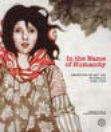
American School of Classical Studies at Athens, 2025
On the centenary of the signing of the Lausanne Convention, the American School of Classical Stud... more On the centenary of the signing of the Lausanne Convention, the American School of Classical Studies at Athens presented an exhibition highlighting a monumental humanitarian undertaking etched in the memory of history: the American relief aid offered to Greece from 1918 to 1929. The exhibition brought to light the tireless efforts of diverse individuals, ranging from political appointees and philanthropoic leaders to educators and dedicated relief workers. Motivated by a sense of duty rooted in their Christian, patriotic or personal beliefs, they collectively played a pivotal role in reshaping Greece after 1922. The exhibition drew on a rich array of sources, including correspondence, official documents, rare publications, photographs, artifacts, posters, and short films. These treasures, which come from the important collections of the American School of Classics in Athens, but also from various institutions, are presented here for the first time, weaving a fascinating narrative with special significance.



Uploads
Papers by Eleftheria Daleziou
international humanitarian agencies responding to the humanitarian
crisis that followed the Asia Minor Catastrophe of
1922. Prior to 1922, Near East Relief was the primary channel
for US aid, post-WW I, in the Near East, providing food, medical
services, and care for orphans. In Greece, post-1922 Near East
Relief tended Armenian and Anatolian Greek refugees. Here I
examine the organization’s orphanages in Greece, in particular
its educational and vocational practices, outplacement, and
the social welfare of the children under its care.
Η σύντομη ανακοίνωση έχει σκοπό την ανάδειξη τμήματος αρχειακού υλικού (αλληλογραφία) από το Αρχείο Νικολάου Μαυρή, το οποίο εναπόκειται στα Αρχεία της Αμερικανικής Σχολής Κλασικών Σπουδών στην Αθήνα. Ο Νικόλαος Μαυρής γεννήθηκε στην Αιγύπτο το 1899 με καταγωγή από τα Δωδεκάνησα (Κάσος). Σπούδασε Ιατρική στο Πανεπιστήμιο Αθηνών και στο Παρίσι. Μετά το πέρας των σπουδών του επέστρεψε αρχικά στην Αίγυπτο και στη συνέχεια εγκαταστάθηκε στην Αθήνα όπου ανέπτυξε έντονη δράση για το ζήτημα της απελευθέρωσης των Δωδεκανήσων και της ένωσής τους με την Ελλάδα. Διετέλεσε πρόεδρος του Κεντρικού Δωδεκανησιακού Συλλόγου και στη συνέχεια εγκαταστάθηκε στην Αμερική το 1940 όπου ανέλαβε ηγετικό ρόλο στη σύσταση και συγκρότηση του Εθνικού Δωδεκανησιακού Συμβουλίου. Το υπό εξέταση αρχειακό υλικό, πρωτίστως αλληλογραφία και έντυπα, αφορά στον αγώνα των Δωδεκανήσιων στην καταγωγή ομογενών της Αμερικής για την απελευθέρωση των νησιών από την ιταλική κατοχή. Τα τεκμήρια αφορούν στην ομογενειακή οργάνωση «Δωδεκανησιακή Νεολαία Αμερικής» και καλύπτουν την περίοδο από τη δημιουργία της, το 1934, έως και τη σύσταση του Εθνικού Δωδεκανησιακού Συμβουλίου το 1940, του οργάνου που ανέλαβε τις προσπάθειες των Δωδεκανησίων της Αμερικής για την απελευθέρωση των νησιών στην Αμερική αλλά και στα διεθνή φόρα.
Talks by Eleftheria Daleziou
Conference Presentations by Eleftheria Daleziou
Books by Eleftheria Daleziou