Books by Elizabeth Otto
Zeitschrift für Kunstgeschichte, 2025
Questions of archival presence and absence are especially charged in relation to photography, the... more Questions of archival presence and absence are especially charged in relation to photography, the form and status of which has been in nearly constant flux since its advent almost two centuries ago. This special issue of the Zeitschrift für Kunstgeschichte (Journal of Art History) was co-edited by Elizabeth Otto and Steffen Siegel. Its 9 essays--all available for free download--address topics in photographic history related to scientific experimentation, conservation, colonialism, sexuality, gender, the Holocaust, computer vision, and home curation.
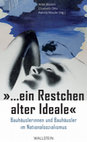
"...ein Restchen alter Ideale": Bauhäuslerinnen und Bauhäusler im Nationalsozialismus ("...a Remnant of Old Ideals": Bauhaus Members in National Socialism], 2025
Until well after the Second World War, Bauhaus and National Socialism were considered irreconcila... more Until well after the Second World War, Bauhaus and National Socialism were considered irreconcilable opposites. This volume--available only in German--brings together the latest findings on the ambivalent work of Bauhaus members after 1933.
___________
Bauhaus und Nationalsozialismus galten bis weit nach dem Zweiten Weltkrieg als unvereinbare Gegensätze. Der Band versammelt neueste Erkenntnisse zum ambivalenten Schaffen Bauhausangehöriger nach 1933.
»Wir stehen mitten im Existenzkampf und haben höchstens ein Restchen alter Ideale in ganz, ganz persönliche Gebiete retten können, aber nie werden Sie erfahren, was die Bauhäusler in Prag, Paris und Berlin wirklich tun«, schrieb der frühere Bauhaus-Student Ernst Göhl 1935 an den langjährigen Direktor Walter Gropius. In 15 biografischen Studien verdeutlicht der Band anhand neuester Forschungsergebnisse, wie sich Bauhausangehörige, die nach 1933 in Deutschland verblieben waren, mit den neuen Machthabern im NS-Staat arrangierten. Von den Konflikten mit völkisch-nationalen Kräften während der Weimarer Republik ausgehend, zeigen Untersuchungen renommierter deutscher und internationaler Autorinnen und Autoren – u.a. zu Wassily Kandinsky und Ludwig Mies van der Rohe, Else Mögelin und Wilhelm Wagenfeld – das breite Spektrum im Umgang mit dem verbrecherischen NS-Regime. Die seit über 30 Jahren erste umfassende Auseinandersetzung mit dem ambivalenten Verhältnis von Bauhaus und Nationalsozialismus wendet sich an Kunsthistorikerinnen und Kunsthistoriker mit Schwerpunkt auf der Geschichte der Moderne im 20. Jahrhundert, aber auch an alle, die sich für die vielfältigen Schicksale von Künstlerinnen und Künstlern in einer Diktatur interessieren.
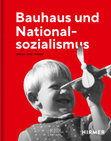
Bauhaus und Nationalsozialismus, 2024
Table of contents and Introduction to the exhibition catalogue on Bauhaus and National Socialism ... more Table of contents and Introduction to the exhibition catalogue on Bauhaus and National Socialism co-curated by Anke Blümm, Elizabeth Otto, and Patrick Rössler, on view in Weimar, Germany during the summer of 2024. With essays by Ute Ackermann; Ingrid Below; Ulrike Bestgen; Regina Bittner; Anke Blümm; Ute Brüning; Sylvia Claus; Dagobert Cohrs; Stephan Dahme; Mirjam Deckers; Magdalena Droste; Jens-Uwe Fischer; Christian Fuhrmeister; Erhard Gerwien; Arie Hartog; Josenia Hervás y Heras; Kate Kangashlati; Jennifer Kapczynski; Zsófia Kelm; Gloria Köpnick; Miriam Krautwurst; Marianne Kröger; Caroline Kühne; Annette Ludwig; Alexandra Matz; Antje Neumann; Christopher Oestereich; Philipp Oswalt; Elizabeth Otto; Miriam Owesle; Patrick Rössler; Rolf Sachsse; Margot Schmidt; Katja Schneider; Steffen Schröter; Aya Soika; Christiane Stahl; Wolfgang Thöner; Justus Ulbricht; Astrid Volpert; Nader Vossoughian; Gerda Wendermann; Antonia Wolff; Christoph Wowarra; and Christoph Zuschlag.
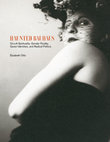
*Winner of the Peter C. Rollins Book Prize*
An investigation of the irrational and the unconvent... more *Winner of the Peter C. Rollins Book Prize*
An investigation of the irrational and the unconventional currents swirling behind the Bauhaus's signature sleek surfaces and austere structures.
The Bauhaus (1919–1933) is one of the twentieth century's most influential art schools, celebrated as the archetypal movement of rational modernism and famous for bringing functional and elegant design to the masses. In Haunted Bauhaus, art historian Elizabeth Otto liberates Bauhaus history, uncovering a movement that is vastly more diverse and paradoxical than previously assumed. Otto traces the surprising trajectories of the school's engagement with occult spirituality, gender fluidity, queer identities, and radical politics. The Bauhaus, she shows us, is haunted by these untold stories.
The Bauhaus is most often associated with a handful of famous artists, architects, and designers―notably Paul Klee, Walter Gropius, László Moholy-Nagy, and Marcel Breuer. Otto enlarges this narrow focus by reclaiming the historically marginalized lives and accomplishments of many of the more than 1,200 Bauhaus teachers and students (the so-called Bauhäusler), arguing that they are central to our understanding of this movement. Otto reveals Bauhaus members' spiritual experimentation, expressed in double-exposed “spirit photographs” and enacted in breathing exercises and nude gymnastics; their explorations of the dark sides of masculinity and emerging female identities in design; the “queer hauntology” of certain Bauhaus works; and the school's communist period (1928–1932), when Bauhäusler put their skills into the service of the revolution―even as Nazism emerged and entered the Bauhaus itself.
With Haunted Bauhaus, Otto not only expands our knowledge of a foundational movement of modern art, architecture, and design, she also provides the first sustained investigation of the irrational and the unconventional currents swirling behind the Bauhaus's signature sleek surfaces and austere structures. This is a fresh, wild ride through the Bauhaus you thought you knew.
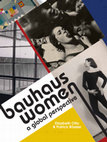
Bauhaus Women: A Global Perspective, 2019
The story of the Bauhaus has usually been kept narrow, localized to its original time and place a... more The story of the Bauhaus has usually been kept narrow, localized to its original time and place and associated with only a few famous men such as Walter Gropius, Marcel Breuer, Paul Klee, Wassily Kandinsky, and László Moholy-Nagy. Global Bauhaus Women bursts the bounds of this slim history by revealing fresh Bauhaus faces: forty-five Bauhaus women unjustifiably forgotten by most history books. This book reveals the women of the Bauhaus who came from many parts of Europe and beyond, and how, through these cosmopolitan female designers, artists, and architects, it sent the Bauhaus message out into the world and to a global audience.
Essential reading on the Bauhaus or for anyone interested in the too-often-missed centrality of women artists to modern art and design, Global Bauhaus Women reclaims the other half of Bauhaus history, yielding a new understanding of the radical experiments in art and life undertaken at the Bauhaus and the innovations that continue to resonate with viewers around the world today.
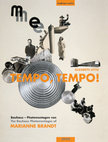
Tempo, Tempo! is the first scholarly examination of the diverse corpus of powerful photomontages ... more Tempo, Tempo! is the first scholarly examination of the diverse corpus of powerful photomontages that Marianne Brandt created in interwar Paris and at the Bauhaus. Rooted in the Bauhaus project of engaging mass-produced visual cultures, Brandt’s montages served not only as a culturally-critical pendant to the sleek, practical metal designs for which she is better known; they also provided a model for confronting radical changes in gendered ideals in the wake of the First World War and addressing dynamic shifts in the visual fields of architecture, advertising and film. Bringing together images of Brandt’s 45 extant photomontages for the first time, the book explores this artist’s embrace of the dynamism of the modern metropolis and her engagement with pictorial theories of Bauhaus colleagues Wassily Kandinsky and László Moholy-Nagy.
Tempo, Tempo! was written to accompany the exhibition of the same name that was shown at the Bauhaus-Archiv, Museum of Design in Berlin (Oct. 2005–Jan. 2006), Harvard University’s Busch-Reisinger Museum (March–May 2006) and the International Center of Photography in New York (June–Aug. 2006). This volume was supported by a generous publication grant from the Alexander von Humboldt Foundation.
Bauhaus Bodies, 2019
Published in January 2019 in an affordable paperback edition, Bauhaus Bodies offers a new take. ,... more Published in January 2019 in an affordable paperback edition, Bauhaus Bodies offers a new take. ,A century after the Bauhaus's founding in 1919, this book reassesses it as more than a highly influential art, architecture, and design school. In myriad ways, emerging ideas about the body in relation to health, movement, gender, and sexuality were at the heart of art and life at the school. Bauhaus Bodies reassesses the work of both well-known Bauhaus members and those who have unjustifiably escaped scholarly scrutiny, its women in particular.
In fourteen original, cutting-edge essays by established experts and emerging scholars, this book reveals how Bauhaus artists challenged traditional ideas about bodies and gender. Written to appeal to students, scholars, and the broad public, Bauhaus Bodies will be essential reading for anyone interested in modern art, architecture, design history, and gender studies; it will define conversations and debates during the 2019 centenary of the Bauhaus's founding and beyond.
In 1919, the program of the State Bauhaus promised a modern education for the talented, regardles... more In 1919, the program of the State Bauhaus promised a modern education for the talented, regardless of age and gender, which drew many young women to apply. The “Bauhaus-Girl Type,” described in a January 1930 issue of the magazine The Week, knew what she wanted and would succeed. This volume’s essays question the euphoria of the time period with the knowledge of Bauhaus members’ subsequent destinies. These essays take as exemplary the biographies of Gertrud Arndt, Marianne Brandt, Margarete Heymann, and Margaretha Reichardt, both during their training and as Bauhaus graduates.
This 336-page book is the catalogue to the exhibition of the same name at the Angermuseum in Erfurt, Germany, March-June 2019.
Art and Resistance in Germany, 2018
Many are confounded by the recent rise of right-wing populism and resurgent nationalism, racism, ... more Many are confounded by the recent rise of right-wing populism and resurgent nationalism, racism, misogyny, homophobia and demagoguery around the globe. With the knowledge that such polarized politics have arisen before, this book investigates how cultural producers in Germany over the past century have sought to resist, confront, confound, mock, or call out situations of political oppression. This profoundly topical volume of 13 essays contextualizes in fresh ways current events within broader histories and intellectual traditions. Though the focus in on Germany, the collection includes essays with compelling transnational dimensions--and features provacative images of resistance.
Passages of Exile / Passagen des Exiles, 2017
The current fight of refugees crossing the Mediterranean Sea, on trips which often take tragic tu... more The current fight of refugees crossing the Mediterranean Sea, on trips which often take tragic turns, has exposed the pressing importance of researching escape routes.
Passages of Exile, an interdisciplinary volume edited by Burcu Dogramaci (Munich) and Elizabeth Otto (Buffalo), takes a closer look at these routes as spaces of artistic, filmic, and literary resonance from the twentieth century to the present.
Alongside its twenty original scholarly and creative essays, this book includes three previously unpublished short stories by author and Nazi resistance fighter Lisa Fittko that engage her own passage of escape from Europe to Cuba.
Table of Contents; Forward by Linda Nochlin; and the Introduction, "Imagining and Embodying New Womanhood" by Elizabeth Otto and Vanessa Rocco, 2011
Available in this download: Table of Contents, forward by Linda Nochlin, and Introduction by Eliz... more Available in this download: Table of Contents, forward by Linda Nochlin, and Introduction by Elizabeth Otto and Vanessa Rocco.
Published in hardback and paper, this book is also available for free in its entirety online at: http://www.digitalculture.org/books/the-new-woman-international/
The book contains essays by Jan Bardsley, Matthew Biro, Gianna Carotenuto, Melody Davis, Kristine Harris, Karla Huebner, Kristen Lubben, Maria Makela, Elizabeth Otto, Martha H. Patterson, Vanessa Rocco, Clare I. Rogan, Despina Stratigakos, Brett M. Van Hoesen, Kathleen M. Vernon, and Lisa Jaye Young.
Images of flappers, garçonnes, Modern Girls, neue Frauen, and trampky—all embodiments of the dashing New Woman—symbolized an expanded public role for women from the suffragist era through the dawn of 1960s feminism. Chronicling nearly a century of global challenges to gender norms, The New Woman International: Representations in Photography and Film from the 1870s through the 1960s is the first book to examine modern femininity's ongoing relationship with the nineteenth and twentieth centuries' most influential new media: photography and film. This volume examines the ways in which novel ideas about women's roles in society and politics were disseminated through these technological media, and it probes the significance of radical changes in female fashion, appearance, and sexual identity. Additionally, these original essays explore the manner in which New Women artists used photography and film to respond creatively to gendered stereotypes and to reconceive of ways of being a woman in a rapidly modernizing world.
The book brings together generations of scholars to analyze the New Woman from her inception in the later nineteenth century through her full development in the interwar period, and the expansion of her forms in subsequent decades. These essays show how controversial female ideals figured in discourses including those on gender norms, race, technology, sexuality, female agency, science, media representation, modernism, commercial culture, internationalism, colonialism, and transnational modernity. Inaugurating a new chapter in the scholarship of representation and New Womanhood and spanning North America, Western and Eastern Europe, Asia, and the colonial contexts of Africa and the Pacific, this volume reveals the ways in which a feminine ideal circled the globe to be translated into numerous visual languages.
Journal Articles by Elizabeth Otto
Published in the peer-reviewed journal _Genders_ (36, 2002), this essay was the first to link Mar... more Published in the peer-reviewed journal _Genders_ (36, 2002), this essay was the first to link Marie Laurencin and her work to the lesbian neoclassical circles of Natalie Barney, Romaine Brooks, and Pierre Louÿs. The limited understanding of Laurencin's work as merely that of a peripheral cubist hanger on meant that its more radical aspects--experiments in form based in a distinctly lesbian iconography--went unseen. "Memories of Bilitis" unpacks and reinterprets Laurencin's oeuvre in this light.
This essay examines early twentieth-century German representations of men and women in uniform to... more This essay examines early twentieth-century German representations of men and women in uniform to consider how mass culture allowed individuals to participate in aspects of gender construction. It also reveals how masculinity was increasingly linked to military ideals. The pictures under scrutiny here were made in two significant but as yet under-researched types of pictures: pre-avant-garde photomontaged soldier portraits and popular postcards. Both of these visual forms originated in the 1870s, the decade that Germany was itself founded, and they both were in wide circulation by the early twentieth century. Individualized soldier portraits and postcards offered a glorious vision of a man's military service, and they performed what Theodor Lessing has called Vergemütlichung, the rendering harmless of history. These idealized images of soldierly life were available to a broad swath of the public, but their democratization only extended so far. Representations of women in uniform served to reinforce-through stereotyping and humor-the unquestionably male nature of military institutions and, by extension, of public space. At the same time, by making apparent their own constructed nature, these portraits and postcards offered viewers a glimpse behind the masquerade of masculinity. This essay thus also identifies these images' links to the subsequent work of avant-garde artists and to the National Socialists' return to the ideal of uniformed masculinity.
From a special issue of The Brooklyn Rail on “Art and Protest,” this short essay focuses on a pai... more From a special issue of The Brooklyn Rail on “Art and Protest,” this short essay focuses on a pair of album pages in which Yugoslavian Bauhaus member Ivana Tomljenović symbolically electrifies and explodes the Dessau Bauhaus building as an act of protest on behalf of a communist movement that the school could not tame. Artist, fashion plate, sports star, revolutionary, and spy, Tomljenović's life in the 1920s and '30s reads like a novel. This picture, which was created around 1930 and then pieced into an album in 1980, reflects moments of both revolutionary zeal and late-Balkan nostalgia in a Europe of shifting allegiances and boundaries. Available online: http://www.brooklynrail.org/2015/06/criticspage/good-luck-bauhaus-and-berlin-comrades-and-see-you-after-the-revolution
This review of "From Bauhaus to Buenos Aires: Grete Stern and Horacio Coppola" at the Museum of M... more This review of "From Bauhaus to Buenos Aires: Grete Stern and Horacio Coppola" at the Museum of Modern Art in New York was published in Artforum 9/2015. Stern and Copolla both studied at the Bauhaus and did much to bring modern photography to Argentina after they immigrated. Stern was also one half (with Ellen Auerbach) of the fabulous ringl + pit duo in the late 1920s and early '30s in Berlin; their intentionally strange advertisements and intense portraits (of Berthold Brecht, among others) receive their due in this outstanding exhibition.
October, 2020
In 1929, in the midst of the artistic and political ferment that was Weimar Berlin, the young pho... more In 1929, in the midst of the artistic and political ferment that was Weimar Berlin, the young photographers Ellen Auerbach and Grete Stern formalized their personal and creative affinities to create Studio ringl + pit. Their collaboration, which would continue for the next four years, produced groundbreaking portraits, still lifes, and a handful of print advertisements that were celebrated for their inventively formal daring. In line with their training with Bauhaus photography master Walter Peterhans, ringl + pit's pictures were meticulously constructed and technically perfect, but they were also uniquely imprinted with the artists' characteristic blend of the playful, the strange, and, in multiple senses of the word, the queer. In this essay, Auerbach and Stern's adventurous approach to photographic experimentation is explored within the context of their correspondingly adventurous inclination to defy bourgeois conventions in their personal lives. In concert with the aesthetic synchrony that inspired their creative collaboration (such that, for its duration, they disavowed individual authorship in favor of the collective moniker “ringl + pit”) they were also lovers, a fact which, until now, has not been integrated into scholarly engagement with their work. Passionate photographic explorations, their work consistently privileged play, discovery, and intimacy over such conventional markers of success as money or fame. In this light, ringl + pit's audaciously anticipatory collective body of work might be said to adhere to the delineations of what Jack Halberstam has described as a “queer art of failure.”
Passegen des Exils/Passages of Exile, 2017
This essay considers the passages of exile taken by citizens of Soviet-controlled East Germany es... more This essay considers the passages of exile taken by citizens of Soviet-controlled East Germany escaping to freedom in the West, and I analyze the psychological, emotional, and evidential components of such events. This includes reflecting on the ways in which these events of passage were seen and recorded, and the ways in which emotion is either conveyed through or is caused by the act of photographing such incidents. The photographs are sourced from the Imperial War Museum, London and the Stasi Archive, Berlin.
Papers by Elizabeth Otto
8: Schaulust: Sexuality and Trauma in Conrad Veidt’s Masculine Masquerades
Boydell and Brewer eBooks, Dec 31, 2010
Bauhaus for Children: Care Work and Art Therapy with Friedl Dicker-Brandeis and Edith Kramer
Modernism Art Therapy, 2024
This chapter appears in a book edited by Suzanne Hudson and Tanya Sheehan for Yale University Pre... more This chapter appears in a book edited by Suzanne Hudson and Tanya Sheehan for Yale University Press. Modernism Art Therapy is a new transnational history of modernist art that connects discourses on art as therapy to questions of gender, disability, race, and the politics of care.
Brochure: Bauhaus and National Socialism, 2024
This major exhibition--with three stations and over 450 objects--reassesses the relationship of t... more This major exhibition--with three stations and over 450 objects--reassesses the relationship of the Bauhaus to Nazism, demonstrating that it was far from a movement exclusively in exile. Will be accompanied by an exhibition catalogue (Hirmer Verlag) and a volume of scholarly essays (Wallstein).



Uploads
Books by Elizabeth Otto
___________
Bauhaus und Nationalsozialismus galten bis weit nach dem Zweiten Weltkrieg als unvereinbare Gegensätze. Der Band versammelt neueste Erkenntnisse zum ambivalenten Schaffen Bauhausangehöriger nach 1933.
»Wir stehen mitten im Existenzkampf und haben höchstens ein Restchen alter Ideale in ganz, ganz persönliche Gebiete retten können, aber nie werden Sie erfahren, was die Bauhäusler in Prag, Paris und Berlin wirklich tun«, schrieb der frühere Bauhaus-Student Ernst Göhl 1935 an den langjährigen Direktor Walter Gropius. In 15 biografischen Studien verdeutlicht der Band anhand neuester Forschungsergebnisse, wie sich Bauhausangehörige, die nach 1933 in Deutschland verblieben waren, mit den neuen Machthabern im NS-Staat arrangierten. Von den Konflikten mit völkisch-nationalen Kräften während der Weimarer Republik ausgehend, zeigen Untersuchungen renommierter deutscher und internationaler Autorinnen und Autoren – u.a. zu Wassily Kandinsky und Ludwig Mies van der Rohe, Else Mögelin und Wilhelm Wagenfeld – das breite Spektrum im Umgang mit dem verbrecherischen NS-Regime. Die seit über 30 Jahren erste umfassende Auseinandersetzung mit dem ambivalenten Verhältnis von Bauhaus und Nationalsozialismus wendet sich an Kunsthistorikerinnen und Kunsthistoriker mit Schwerpunkt auf der Geschichte der Moderne im 20. Jahrhundert, aber auch an alle, die sich für die vielfältigen Schicksale von Künstlerinnen und Künstlern in einer Diktatur interessieren.
An investigation of the irrational and the unconventional currents swirling behind the Bauhaus's signature sleek surfaces and austere structures.
The Bauhaus (1919–1933) is one of the twentieth century's most influential art schools, celebrated as the archetypal movement of rational modernism and famous for bringing functional and elegant design to the masses. In Haunted Bauhaus, art historian Elizabeth Otto liberates Bauhaus history, uncovering a movement that is vastly more diverse and paradoxical than previously assumed. Otto traces the surprising trajectories of the school's engagement with occult spirituality, gender fluidity, queer identities, and radical politics. The Bauhaus, she shows us, is haunted by these untold stories.
The Bauhaus is most often associated with a handful of famous artists, architects, and designers―notably Paul Klee, Walter Gropius, László Moholy-Nagy, and Marcel Breuer. Otto enlarges this narrow focus by reclaiming the historically marginalized lives and accomplishments of many of the more than 1,200 Bauhaus teachers and students (the so-called Bauhäusler), arguing that they are central to our understanding of this movement. Otto reveals Bauhaus members' spiritual experimentation, expressed in double-exposed “spirit photographs” and enacted in breathing exercises and nude gymnastics; their explorations of the dark sides of masculinity and emerging female identities in design; the “queer hauntology” of certain Bauhaus works; and the school's communist period (1928–1932), when Bauhäusler put their skills into the service of the revolution―even as Nazism emerged and entered the Bauhaus itself.
With Haunted Bauhaus, Otto not only expands our knowledge of a foundational movement of modern art, architecture, and design, she also provides the first sustained investigation of the irrational and the unconventional currents swirling behind the Bauhaus's signature sleek surfaces and austere structures. This is a fresh, wild ride through the Bauhaus you thought you knew.
Essential reading on the Bauhaus or for anyone interested in the too-often-missed centrality of women artists to modern art and design, Global Bauhaus Women reclaims the other half of Bauhaus history, yielding a new understanding of the radical experiments in art and life undertaken at the Bauhaus and the innovations that continue to resonate with viewers around the world today.
Tempo, Tempo! was written to accompany the exhibition of the same name that was shown at the Bauhaus-Archiv, Museum of Design in Berlin (Oct. 2005–Jan. 2006), Harvard University’s Busch-Reisinger Museum (March–May 2006) and the International Center of Photography in New York (June–Aug. 2006). This volume was supported by a generous publication grant from the Alexander von Humboldt Foundation.
In fourteen original, cutting-edge essays by established experts and emerging scholars, this book reveals how Bauhaus artists challenged traditional ideas about bodies and gender. Written to appeal to students, scholars, and the broad public, Bauhaus Bodies will be essential reading for anyone interested in modern art, architecture, design history, and gender studies; it will define conversations and debates during the 2019 centenary of the Bauhaus's founding and beyond.
This 336-page book is the catalogue to the exhibition of the same name at the Angermuseum in Erfurt, Germany, March-June 2019.
Passages of Exile, an interdisciplinary volume edited by Burcu Dogramaci (Munich) and Elizabeth Otto (Buffalo), takes a closer look at these routes as spaces of artistic, filmic, and literary resonance from the twentieth century to the present.
Alongside its twenty original scholarly and creative essays, this book includes three previously unpublished short stories by author and Nazi resistance fighter Lisa Fittko that engage her own passage of escape from Europe to Cuba.
Published in hardback and paper, this book is also available for free in its entirety online at: http://www.digitalculture.org/books/the-new-woman-international/
The book contains essays by Jan Bardsley, Matthew Biro, Gianna Carotenuto, Melody Davis, Kristine Harris, Karla Huebner, Kristen Lubben, Maria Makela, Elizabeth Otto, Martha H. Patterson, Vanessa Rocco, Clare I. Rogan, Despina Stratigakos, Brett M. Van Hoesen, Kathleen M. Vernon, and Lisa Jaye Young.
Images of flappers, garçonnes, Modern Girls, neue Frauen, and trampky—all embodiments of the dashing New Woman—symbolized an expanded public role for women from the suffragist era through the dawn of 1960s feminism. Chronicling nearly a century of global challenges to gender norms, The New Woman International: Representations in Photography and Film from the 1870s through the 1960s is the first book to examine modern femininity's ongoing relationship with the nineteenth and twentieth centuries' most influential new media: photography and film. This volume examines the ways in which novel ideas about women's roles in society and politics were disseminated through these technological media, and it probes the significance of radical changes in female fashion, appearance, and sexual identity. Additionally, these original essays explore the manner in which New Women artists used photography and film to respond creatively to gendered stereotypes and to reconceive of ways of being a woman in a rapidly modernizing world.
The book brings together generations of scholars to analyze the New Woman from her inception in the later nineteenth century through her full development in the interwar period, and the expansion of her forms in subsequent decades. These essays show how controversial female ideals figured in discourses including those on gender norms, race, technology, sexuality, female agency, science, media representation, modernism, commercial culture, internationalism, colonialism, and transnational modernity. Inaugurating a new chapter in the scholarship of representation and New Womanhood and spanning North America, Western and Eastern Europe, Asia, and the colonial contexts of Africa and the Pacific, this volume reveals the ways in which a feminine ideal circled the globe to be translated into numerous visual languages.
Journal Articles by Elizabeth Otto
Papers by Elizabeth Otto