Books by Emmanuel Alloa
Meltemi, 2025
Cosa ci fanno vedere le immagini? Ma soprattutto, come ci fanno vedere? Perché oggi sono le immag... more Cosa ci fanno vedere le immagini? Ma soprattutto, come ci fanno vedere? Perché oggi sono le immagini a darci accesso al mondo? In cosa consiste il loro potere? Queste sono solo alcune delle domande che Emmanuel Alloa si pone in Attraverso l’immagine, un saggio filosofico di ampio respiro che indaga le origini del nostro rapporto ambivalente con le immagini.
Traduzione: Alessandro de Cesaris
Collana di Estetica e Cultura visuale
ISBN: 9791256150670
Traduzione: Alessandro de Cesaris
Collana di Estetica e Cultura visuale
ISBN: 9791256150670
Zouk Editora, 2022
Uma análise crítica da imagem e sua relação com o corpo; menos em sua totalidade do que em suas n... more Uma análise crítica da imagem e sua relação com o corpo; menos em sua totalidade do que em suas nuances fragmentárias: o olho, o rosto, a perna.
R$ 40,00 - 13x18 cm - ISBN 978-65-5778-053-4
R$ 40,00 - 13x18 cm - ISBN 978-65-5778-053-4
Columbia University Press , 2021
Fayard, 2020
Le point de vue, ce n’est pas seulement ce qui divise, c’est aussi ce qui se partage.
Shanghai, Oriental Publishing Center, 2024
The book initially based on lectures at Shanghai, Fudan University, that also came out in French ... more The book initially based on lectures at Shanghai, Fudan University, that also came out in French as "Partages de la perspective"
Palinodia, 2023
Es una cuestión de punto de vista... Hoy en día, la perspectiva se asocia al individualismo, a la... more Es una cuestión de punto de vista... Hoy en día, la perspectiva se asocia al individualismo, a la afirmación de una verdad privada e insuperable. Se olvida así la tradición de la perspectiva communis, que hace de la perspectiva el vector de un horizonte común. En la encrucijada de la ciencia, el arte y la filosofía, este libro desentierra una tradición que se debe redescubrir: el punto de vista no es solo lo que divide, sino también lo que se comparte. En lugar de acusar al perspectivismo de haber dado paso a la posverdad y a la pérdida de la referencia a un mundo real, es el momento de redescubrir cómo la perspectiva no es solo una cuestión de relativización, sino de realización. Es a la perspectiva a la que debemos nuestra comprensión: "a través de" es la palabra clave para entender su funcionamiento.
Emmanuel Alloa examina la cuestión de la perspectiva a partir de un contrapunto entre lo antiguo y lo contemporáneo, donde se cruzan las artes visuales, la arquitectura, la fenomenología y la antropología social. Múltiples formas de vindicar una perspectiva que se expresa invariablemente en plural.
Emmanuel Alloa examina la cuestión de la perspectiva a partir de un contrapunto entre lo antiguo y lo contemporáneo, donde se cruzan las artes visuales, la arquitectura, la fenomenología y la antropología social. Múltiples formas de vindicar una perspectiva que se expresa invariablemente en plural.
Dass Bilder zwischen dem Regime der Dinge und dem Regime der Zeichen niemals einen angestammten P... more Dass Bilder zwischen dem Regime der Dinge und dem Regime der Zeichen niemals einen angestammten Platz erhielten und nicht Gegenstand einer eigenen Wissenschaft wurden, ist keinem wiedergutzumachenden Vergessen geschuldet, sondern Ausdruck eines anfänglichen Skandalons, das historisch auch die Geburtsstunde der Philosophie einläutete. Bilder lassen sich nicht einmal als reine Erscheinungen absondern, weil in ihnen als Wasserzeichen stets durchscheint, was sie sichtbar werden ließ. An Husserls Grundlegung einer Phänomenologie des Bildes lässt sich das obstinate Unterfangen verfolgen, die Bilderscheinung von jeder medialen Kontamination freizuhalten. Emmanuel Alloas Archäologie der Medienvergessenheit legt jenes Doppelparadigma frei, das die westliche Tradition seit Anbeginn begleitet – Transparenz und Opazität – und sich vor jenen Begriff schiebt, den es zu übersetzen beanspruchte: In der aristotelischen Wahrnehmungstheorie bezeichnet das Diaphane die Fähigkeit eines Mediums, die Form von etwas anzunehmen, ohne es zu sein. Auf unerwartete Weise wird durch Aristoteles’ Lehre vom Diaphanen erhellt, worin die Macht von Bildern liegt.
metales pesados, 2021
Las imágenes siempre han provocado reacciones ambivalentes. Sean miradas fascinadas o repulsión i... more Las imágenes siempre han provocado reacciones ambivalentes. Sean miradas fascinadas o repulsión iconoclasta, las imágenes sin embargo raramente fueron vistas como verdaderas fuentes de conocimiento. Hoy en día, parece que la crítica tradicional del espectáculo ha dado paso a una aceptación incondicional de lo visual. Sin embargo, no es en absoluto obvio que nuestras interacciones cotidianas con las imágenes también implican que entendemos cómo funcionan. La imagen diáfana recorre la historia de la actitud occidental hacia las imágenes, y de la provocación que aquellas representan para el intelecto. Al mostrar cómo en la premodernidad, la cuestión de las imágenes estaba indisociablemente ligada a la dimensión de las apariencias y sus medios, el libro ofrece una novedosa genealogía de la fenomenología y del concepto de medio. Las imágenes no son ventanas transparentes al mundo ni son medios ocultos que realizan sus actividades a nuestra espalda. En su propia superficie, en su despliegue material, reactivan constantemente el poder de aparecer, dando visibilidad a algo que no podría aparecer de otra manera.
Bucharest: R&R, Series Epoché, 2025. Translated by Patricia Apostol
Fujian Education Press, 2016 Translation: QU Xiaorui
It would be unfair to blame a philosophy whose development was brutally interrupted for not being... more It would be unfair to blame a philosophy whose development was brutally interrupted for not being conclusive. But while this openness incited many readers toward other fertile horizons, the oeuvre is hardly ever studied for itself.
In this book, Emmanuel Alloa offers a handrail for venturing into the complexities of the work of the French philosopher Maurice Merleau-Ponty (1908-1961). Through a comprehensive analysis of the three main phases of his thinking and a thorough knowledge of Merleau-Ponty's many unpublished manuscripts, he traces how Merleau-Ponty's philosophy evolved and exposes the remarkable coherence that structures it from within.
While stressing two turns Merleau-Ponty's thought underwent--a linguistic turn after 1945 and an ontological turn in the late 1950s, Alloa teases out the continuity of a motive that traverses the entire oeuvre as a common thread. Merleau-Ponty struggled incessantly against any kind of ideology of transparency, whether of the world, the self, of knowledge, or of the self's relation to others.
Alloa's innovative reading of this crucially important thinker not only offers a new look at Merleau-Ponty but also shows why the issues he raised are more than ever those of our time.
In this book, Emmanuel Alloa offers a handrail for venturing into the complexities of the work of the French philosopher Maurice Merleau-Ponty (1908-1961). Through a comprehensive analysis of the three main phases of his thinking and a thorough knowledge of Merleau-Ponty's many unpublished manuscripts, he traces how Merleau-Ponty's philosophy evolved and exposes the remarkable coherence that structures it from within.
While stressing two turns Merleau-Ponty's thought underwent--a linguistic turn after 1945 and an ontological turn in the late 1950s, Alloa teases out the continuity of a motive that traverses the entire oeuvre as a common thread. Merleau-Ponty struggled incessantly against any kind of ideology of transparency, whether of the world, the self, of knowledge, or of the self's relation to others.
Alloa's innovative reading of this crucially important thinker not only offers a new look at Merleau-Ponty but also shows why the issues he raised are more than ever those of our time.
Edited Books by Emmanuel Alloa
Presses du réel, 2025
Nouvelle édition française de "Mechanization Takes Command" (1948), parue dans la collection "méd... more Nouvelle édition française de "Mechanization Takes Command" (1948), parue dans la collection "médias/théories". Préface E. Alloa & Postface E. Quinz.
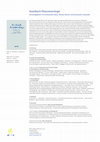
Handbuch Phänomenologie, 2023
Die Phänomenologie stellt eine der Hauptströmungen der Gegenwartsphilosophie dar und findet in za... more Die Phänomenologie stellt eine der Hauptströmungen der Gegenwartsphilosophie dar und findet in zahlreichen Wissenschaften sowie in Praxis und Therapeutik starke Resonanz. Nach 120 Jahren Wirkungsgeschichte füllt die Bibliothek phänomenologischer Werke zahllose Bücherregale und selbst für Expertinnen und Experten ist die Forschungsliteratur mittlerweile unüberschaubar geworden. An allgemeinen Einführungen sowie spezialisierter Fachliteratur mangelt es dabei keineswegs, wohl aber an einem Handbuch, in dem sowohl der Vielfalt der historischen Entwicklungen als auch dem berechtigten Wunsch nach innerer systematischer Kohärenz Rechnung getragen wird. Das Handbuch Phänomenologie schließt diese Lücke. Ausgewiesene Autorinnen und Autoren bereiten in eigens für diesen Band verfassten Artikeln komplexe sachliche Zusammenhänge übersichtlich auf. Durch seinen Aufbau eignet sich das Handbuch sowohl für Neulinge als auch für Fortgeschrittene. Anhand bündig präsentierter Grundbegriffe und Verfahren konturiert das Handbuch die Spezifik der phänomenologischen Methode, spart dabei jedoch nicht die Kontroversen und methodologischen Neuausrichtungen aus, die von ihrer Lebendigkeit und Vielstimmigkeit zeugen. Ein umfangreicher Schlussteil ist der Rezeption und Anwendung in einzelnen Wirkfeldern gewidmet. Als Hilfsmittel zur eigenständigen Erschließung der phänomenologischen Denkrichtung und zu ihrer Anwendung auf aktuelle Probleme zeichnet sich das Handbuch durch seine Lesefreundlichkeit und einen stark forschungspraktischen Bezug aus.
Inhaltsübersicht
A. Einleitung
Emmanuel Alloa, Thiemo Breyer, Emanuele Caminada: Phänomenologie als lebendige Bewegung
Zum Handbuch – eine Gebrauchsanleitung – Was ist Phänomenologie? – Hintergründe und Orientierungen – Wider die Orthodoxie – Phänomenologie und/als Wissenschaft – Metaphysik und Methodik – Wozu Phänomenologie heute? – Ein Ausblick
B. Historische Entwicklungen
I. Anfänge der Phänomenologie
Emanuele Caminada: Husserl im Kontext – Matthias Schloßberger: Münchener und Göttinger Kreis - Emanuele Caminada: Die Freiburger Jahre – Emmanuel Alloa: Martin Heideggers Sonderstellung – Emmanuel Alloa/Emanuele Caminada: Phänomenologie im Nationalsozialismus – Dieter Thomä: Heideggers Schwarze Hefte. Eine Bestandsaufnahme
II. Marco Cavallaro: Rezeptionen der Phänomenologie
III. Wendungen der Phänomenologie
Matthias Schloßberger: Realistische Wendung – Jens Bonnemann: Existenzialistische Wendung – Inga Römer: Hermeneutische Wendung – Iris Laner: Dekonstruktion – Regula Giuliani: Responsive Wendung – Peter Gaitsch: Theologische Wende – Ovidiu Stanciu: Kosmologische Wende – Søren Overgaard: Phänomenologie und Analytische Philosophie – Thiemo Breyer: Naturalisierung der Phänomenologie
C. Werkzeugkasten
I. Grundkonzepte
Emmanuel Alloa: Korrelation: Phänomenologie als Korrelationsforschung – Thiemo Breyer: Intentionalität: Bewusstsein als Akt – Julia Jansen: Evidenz: Anschauliche Wahrheit – Nicolas de Warren: Konstitution: Was das Bewusstsein leistet – Tobias Keiling: Gegenständlichkeit: Gegenstand und Gegebenheitsweise – Christopher Erhard: Positionalität: Stellungnahme, Einstellung, Haltung – Nicolas de Warren: Zeitbewusstsein: Retention, Impression, Protention – Emmanuel Alloa: Gegenwärtigung und Vergegenwärtigungen: Wahrnehmung, Erinnerung, Fantasie – Maren Wehrle: Leiblichkeit: Orientierung und Bewegung – Marco Cavallaro: Perspektivität und Horizontalität: Situation, Feld, Welt – Christian Ferencz- Flatz: Intersubjektivität: Ego und Alter Ego – Maren Wehrle: Habitualität: Passivität, Gewohnheit, Tradition – Karl-Heinz Lembeck: Lebenswelt: praktisch, ontologisch, transzendental – Karl-Heinz Lembeck: Historizität: Geschichtlichkeit und Generativität
II. Methoden
Andrea Staiti: 1 . Deskription – Andrea Staiti: Epoché – Thiemo Breyer/Julia Jansen: Eidetische Variation – Dieter Lohmar: Reduktion – Jagna Brudzińska: Statische und genetische Methode
D. Wirkfelder
I.Emmanuel Alloa/Andris Breitling: Logik und Sprachphilosophie
Mathematische Voranfänge – Von der Mathematik zur Logik – Logische Bedeutung und sprachlicher Ausdruck – Phänomenologie der 'sprechenden Sprache' – Einsätze und Entwicklungen phänomenologischen Sprachdenkens
II. Paul Livingston: Erkenntnistheorie und Metaphysik
Gibt es eine phänomenologische Metaphysik? – Kritik des Repräsentationalismus: Internalismus, Externalismus und Cartesianismus – Konzeptualismus vs. Nonkonzeptualismus: Die Dreyfus-McDowell-Debatte – Die Transformationen des Transzendentalen: Der Schatten Kants – Formales, materiales und historisches Apriori – Sinn, Wahrheit und Zeit: Kann die Phänomenologie eine realistische Philosophie sein?
III. Emanuele Caminada: Ethik und Normen
Werttheoretische Ansätze – Das Problem der Normativität. Von der Wertethik zur Verantwortungsethik – Kritische Phänomenologie: auch eine Ethik?
IV. Thomas Fuchs/Samuel Thoma: Psychologie und Psychiatrie
Zum Verhältnis der Phänomenologie zu Psychologie – und Psychiatrie – Phänomenologische Psychologie – Phänomenologie und Psychoanalyse – Phänomenologische Psychiatrie – Phänomenologische Psychopathologie einzelner Erkrankungen – Schluss
V. Anthropologie und Ethnologie
Oliver Müller: Philosophische Anthropologie – Hans Peter Hahn: Ethnologie
VI.Hans Bernhard Schmid/Gerhard Thonhauser: Sozialphilosophie und Soziologie
Ist Phänomenologie Solipsismus? – Ist eine phänomenologische Gesellschaftstheorie möglich? – Kann empirische Sozialforschung phänomenologisch betrieben werden? – Was ist Gemeinschaft eigentlich? – Gibt es eine Phänomenologie der Pluralperspektive? – Resümee
VII.Thomas Bedorf: Politische Philosophie
Husserls Staatsphilosophie – Totalitarismuskritik – Institution – Radikale Demokratie – Die politische Differenz – Situiertheit – Politische Affekte – Phänomenologien der Rassifizierung
VIII.Christina Schües: Feministische Theorie und Gender Studies
Feministischer Aufbruch – Gender Studies – Feministische Phänomenologie
IX. Emmanuel Alloa/Eva Schürmann: Medien- und Kulturwissenschaften
Vermittelte Unvermitteltheit oder: Der Topos der Unmittelbarkeit – Phänomenologie der Kultur – Phänomenologie der Technik – Phänomenologie der Medien – Ausblick
X.Christian Grüny:Ästhetik und Künste
Positionen und Konstellationen – Felder
XI.Thiemo Breyer: Kognitions- und Lebenswissenschaften
Kognitionswissenschaften – Lebenswissenschaften
E. Apparat
I. Hilfsmittel und Ressourcen
II. Ausgaben phänomenologischer Hauptwerke
ISBN 978-3-16-154560-3
Inhaltsübersicht
A. Einleitung
Emmanuel Alloa, Thiemo Breyer, Emanuele Caminada: Phänomenologie als lebendige Bewegung
Zum Handbuch – eine Gebrauchsanleitung – Was ist Phänomenologie? – Hintergründe und Orientierungen – Wider die Orthodoxie – Phänomenologie und/als Wissenschaft – Metaphysik und Methodik – Wozu Phänomenologie heute? – Ein Ausblick
B. Historische Entwicklungen
I. Anfänge der Phänomenologie
Emanuele Caminada: Husserl im Kontext – Matthias Schloßberger: Münchener und Göttinger Kreis - Emanuele Caminada: Die Freiburger Jahre – Emmanuel Alloa: Martin Heideggers Sonderstellung – Emmanuel Alloa/Emanuele Caminada: Phänomenologie im Nationalsozialismus – Dieter Thomä: Heideggers Schwarze Hefte. Eine Bestandsaufnahme
II. Marco Cavallaro: Rezeptionen der Phänomenologie
III. Wendungen der Phänomenologie
Matthias Schloßberger: Realistische Wendung – Jens Bonnemann: Existenzialistische Wendung – Inga Römer: Hermeneutische Wendung – Iris Laner: Dekonstruktion – Regula Giuliani: Responsive Wendung – Peter Gaitsch: Theologische Wende – Ovidiu Stanciu: Kosmologische Wende – Søren Overgaard: Phänomenologie und Analytische Philosophie – Thiemo Breyer: Naturalisierung der Phänomenologie
C. Werkzeugkasten
I. Grundkonzepte
Emmanuel Alloa: Korrelation: Phänomenologie als Korrelationsforschung – Thiemo Breyer: Intentionalität: Bewusstsein als Akt – Julia Jansen: Evidenz: Anschauliche Wahrheit – Nicolas de Warren: Konstitution: Was das Bewusstsein leistet – Tobias Keiling: Gegenständlichkeit: Gegenstand und Gegebenheitsweise – Christopher Erhard: Positionalität: Stellungnahme, Einstellung, Haltung – Nicolas de Warren: Zeitbewusstsein: Retention, Impression, Protention – Emmanuel Alloa: Gegenwärtigung und Vergegenwärtigungen: Wahrnehmung, Erinnerung, Fantasie – Maren Wehrle: Leiblichkeit: Orientierung und Bewegung – Marco Cavallaro: Perspektivität und Horizontalität: Situation, Feld, Welt – Christian Ferencz- Flatz: Intersubjektivität: Ego und Alter Ego – Maren Wehrle: Habitualität: Passivität, Gewohnheit, Tradition – Karl-Heinz Lembeck: Lebenswelt: praktisch, ontologisch, transzendental – Karl-Heinz Lembeck: Historizität: Geschichtlichkeit und Generativität
II. Methoden
Andrea Staiti: 1 . Deskription – Andrea Staiti: Epoché – Thiemo Breyer/Julia Jansen: Eidetische Variation – Dieter Lohmar: Reduktion – Jagna Brudzińska: Statische und genetische Methode
D. Wirkfelder
I.Emmanuel Alloa/Andris Breitling: Logik und Sprachphilosophie
Mathematische Voranfänge – Von der Mathematik zur Logik – Logische Bedeutung und sprachlicher Ausdruck – Phänomenologie der 'sprechenden Sprache' – Einsätze und Entwicklungen phänomenologischen Sprachdenkens
II. Paul Livingston: Erkenntnistheorie und Metaphysik
Gibt es eine phänomenologische Metaphysik? – Kritik des Repräsentationalismus: Internalismus, Externalismus und Cartesianismus – Konzeptualismus vs. Nonkonzeptualismus: Die Dreyfus-McDowell-Debatte – Die Transformationen des Transzendentalen: Der Schatten Kants – Formales, materiales und historisches Apriori – Sinn, Wahrheit und Zeit: Kann die Phänomenologie eine realistische Philosophie sein?
III. Emanuele Caminada: Ethik und Normen
Werttheoretische Ansätze – Das Problem der Normativität. Von der Wertethik zur Verantwortungsethik – Kritische Phänomenologie: auch eine Ethik?
IV. Thomas Fuchs/Samuel Thoma: Psychologie und Psychiatrie
Zum Verhältnis der Phänomenologie zu Psychologie – und Psychiatrie – Phänomenologische Psychologie – Phänomenologie und Psychoanalyse – Phänomenologische Psychiatrie – Phänomenologische Psychopathologie einzelner Erkrankungen – Schluss
V. Anthropologie und Ethnologie
Oliver Müller: Philosophische Anthropologie – Hans Peter Hahn: Ethnologie
VI.Hans Bernhard Schmid/Gerhard Thonhauser: Sozialphilosophie und Soziologie
Ist Phänomenologie Solipsismus? – Ist eine phänomenologische Gesellschaftstheorie möglich? – Kann empirische Sozialforschung phänomenologisch betrieben werden? – Was ist Gemeinschaft eigentlich? – Gibt es eine Phänomenologie der Pluralperspektive? – Resümee
VII.Thomas Bedorf: Politische Philosophie
Husserls Staatsphilosophie – Totalitarismuskritik – Institution – Radikale Demokratie – Die politische Differenz – Situiertheit – Politische Affekte – Phänomenologien der Rassifizierung
VIII.Christina Schües: Feministische Theorie und Gender Studies
Feministischer Aufbruch – Gender Studies – Feministische Phänomenologie
IX. Emmanuel Alloa/Eva Schürmann: Medien- und Kulturwissenschaften
Vermittelte Unvermitteltheit oder: Der Topos der Unmittelbarkeit – Phänomenologie der Kultur – Phänomenologie der Technik – Phänomenologie der Medien – Ausblick
X.Christian Grüny:Ästhetik und Künste
Positionen und Konstellationen – Felder
XI.Thiemo Breyer: Kognitions- und Lebenswissenschaften
Kognitionswissenschaften – Lebenswissenschaften
E. Apparat
I. Hilfsmittel und Ressourcen
II. Ausgaben phänomenologischer Hauptwerke
ISBN 978-3-16-154560-3
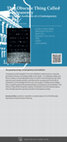
Leuven University Press, 2022
The paradoxical logic of transparency and mediation
Transparency is the metaphor of our time. ... more The paradoxical logic of transparency and mediation
Transparency is the metaphor of our time. Whether in government or corporate governance, finance, technology, health or the media – it is ubiquitous today, and there is hardly a current debate that does not call for more transparency. But what does this word actually stand for and what are the consequences for the life of individuals? Can knowledge from the arts, and its play of visibility and invisibility, tell us something about the paradoxical logics of transparency and mediation? This Obscure Thing Called Transparency gathers contributions by international experts who critically assess the promises and perils of transparency today.
Contributors: Emmanuel Alloa (University of Fribourg), Loup Cellard (Melbourne Law School), Riccardo Donati (Università di Salerno), Mark Fenster (University of Florida), Sara Guindani (Université Paris 7), David Heald (University of Glasgow), Vlad Ionescu (UHasselt/PXL MAD), Dorota Mokrosinska (Leiden University), Herman Parret (KU Leuven), John Pitseys (UCLouvain), Natacha Pfeiffer (Université Saint-Louis), Philippe Van Parijs (UCLouvain), Bart Verschaffel (Ghent University), Patrick Vandermeersch (KU Leuven), Christophe Van Gerrewey (EPFL).
Transparency is the metaphor of our time. Whether in government or corporate governance, finance, technology, health or the media – it is ubiquitous today, and there is hardly a current debate that does not call for more transparency. But what does this word actually stand for and what are the consequences for the life of individuals? Can knowledge from the arts, and its play of visibility and invisibility, tell us something about the paradoxical logics of transparency and mediation? This Obscure Thing Called Transparency gathers contributions by international experts who critically assess the promises and perils of transparency today.
Contributors: Emmanuel Alloa (University of Fribourg), Loup Cellard (Melbourne Law School), Riccardo Donati (Università di Salerno), Mark Fenster (University of Florida), Sara Guindani (Université Paris 7), David Heald (University of Glasgow), Vlad Ionescu (UHasselt/PXL MAD), Dorota Mokrosinska (Leiden University), Herman Parret (KU Leuven), John Pitseys (UCLouvain), Natacha Pfeiffer (Université Saint-Louis), Philippe Van Parijs (UCLouvain), Bart Verschaffel (Ghent University), Patrick Vandermeersch (KU Leuven), Christophe Van Gerrewey (EPFL).
Berlin/New York: De Gruyter, 2020
Images are not neutral conveyors of messages shipped around ... more Berlin/New York: De Gruyter, 2020
Images are not neutral conveyors of messages shipped around the globe to achieve globalized spectatorship. They are powerful forces that elicit very diverse responses and can resist new visual hegemonies of our global world.Bringing together case studies from the field of media, art, politics, religion,anthropology and science, this volume breaks new ground by reflecting on the very power of images beyond their medial exploitation.The contributions by Hans Belting, Susan Buck-Morss, Georges Didi-Huberman, W.J.T. Mitchell, and Ticio Escobar among others testify that globalization does not necessarily equal homogenization, and that images can open up alternative ways of picturing what is to come.
Images are not neutral conveyors of messages shipped around the globe to achieve globalized spectatorship. They are powerful forces that elicit very diverse responses and can resist new visual hegemonies of our global world.Bringing together case studies from the field of media, art, politics, religion,anthropology and science, this volume breaks new ground by reflecting on the very power of images beyond their medial exploitation.The contributions by Hans Belting, Susan Buck-Morss, Georges Didi-Huberman, W.J.T. Mitchell, and Ticio Escobar among others testify that globalization does not necessarily equal homogenization, and that images can open up alternative ways of picturing what is to come.
The Supermarket of Images, 2020
Catalogue of the Exhibition at the Galerie Nationale du Jeu de Paume (Paris, 2020) | English edi... more Catalogue of the Exhibition at the Galerie Nationale du Jeu de Paume (Paris, 2020) | English edition
With texts by: Quentin Bajac, Peter Szendy, Emmanuel Alloa, Marta Ponsa, Jean-Joseph Goux, Matthias Bruhn, Hervé Aubron, Antonio Somaini, Maurizio Lazzarato, Yves Citton, Marie Rebecchi&Elena Vogman, Dork Zabunyan, Elena Esposito, Leah Temper, Catherine Malabou
With texts by: Quentin Bajac, Peter Szendy, Emmanuel Alloa, Marta Ponsa, Jean-Joseph Goux, Matthias Bruhn, Hervé Aubron, Antonio Somaini, Maurizio Lazzarato, Yves Citton, Marie Rebecchi&Elena Vogman, Dork Zabunyan, Elena Esposito, Leah Temper, Catherine Malabou
Bielefeld: transcript, 2019
Im Zeitalter der Hochspezialisierung sind sie selten geworden, die Philosoph*innen, die an der Un... more Im Zeitalter der Hochspezialisierung sind sie selten geworden, die Philosoph*innen, die an der Universität wie im Feuilleton gleichermaßen zuhause sind. Dieter Thomä ist einer dieser Wenigen. Ob in leichtfüßigen Kolumnen oder in tiefschürfenden Studien zur Geistesgeschichte – stets gilt sein Interesse den Unruheherden innerhalb von Ordnungen, den Umschlagspunkten, an denen ein System kippt. In vier Jahrzehnten publizistischer Tätigkeit hat er der Philosophie neue Gegenstände erschlossen und die Öffentlichkeit mit provokativen Zeitdiagnosen bereichert. Anlässlich seines 60. Geburtstags werden die Denkanstöße gewürdigt, die von seiner beherzten theoretischen Quertreiberei ausgingen.

Paris, PUF, coll. "MétaphysiqueS", 2018
La scène philosophique connaît depuis quelques années une ruée vers le réel, dont témoigne un ret... more La scène philosophique connaît depuis quelques années une ruée vers le réel, dont témoigne un retour massif à certaines positions de type réaliste. Les formes de ce réalisme sont diverses : épistémologique, moral, spéculatif… Mais qui sont les vrais réalistes ? De quelle idée du réel se réclament-ils ? Et que reste-t-il de l'idéalisme sous la profusion des vocables (constructivisme, perspectivisme, relativisme…) ? Une quarantaine de philosophes livrent ici leur diagnostic, sous la forme d'un vaste état des lieux de la métaphysique contemporaine. La discussion tourne pour partie autour d'une notion maudite, associée à Kant : la « chose en soi », dont le spectre continue de hanter la philosophie. Comment parler des choses elles-mêmes, indépendamment de ce qu'elles sont pour nous ? Comment aborder la réalité dans ce qu'elle a d'irréductible, sinon d'absolu ? Tout existe-t-il au même titre, comme le proclament les nouvelles ontologies « plates » ? Outre quelques drôles de pensées, on croisera au fil de ces questions une multitude d'objets, grands ou petits : la Vérité, le Monde et Dieu, mais aussi la Terre, le jaguar, et même la « table en soi ».
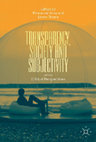
London: Palgrave Macmillan, 2018
This book critically engages with the idea of transparency whose ubiquitous demand stands in star... more This book critically engages with the idea of transparency whose ubiquitous demand stands in stark contrast to its lack of conceptual clarity. The book carefully examines this notion in its own right, traces its emergence in Early Modernity and analyzes its omnipresence in contemporary rhetoric. Today, transparency has become a catchword outplaying other Enlightenment values like empowerment, sincerity and the notion of a public sphere. In a suspicious manner, transparency is entangled in the discourses on power, surveillance, and self-exposure. Bringing together prominent scholars from the emerging field of Critical Transparency Studies, the book offers a map of the various sites at which transparency has become virulent and connects the dots between past and present. By studying its appearances in today’s hyper-mediated economies of information and by linking it back to its historical roots, the book analyzes transparency and its discontents, and scrutinizes the reasons why it has become the imperative of a supposedly post-ideological age.
“Incessantly invoked as a necessary condition of all aspects of democratic life, transparency is being hailed as a top priority in public management, corporate business, and international relations. But the more we critically examine what transparency actually means, the more it emerges as an opaque, and perhaps even occluding, concept. By offering a bold and comprehensive picture of the new field of Critical Transparency Studies, this collection of essays is certain to become the standard reference for years to come.” (Giovanna Borradori, Professor of Philosophy at Vassar College, USA)
“This important collection historicizes and criticizes transparency, one of neoliberalism’s most ubiquitous norms. As the contributors draw out the normative presumptions of the concept, they alert us to its regulatory effects, its implications for surveillance and subjectivation. Rather than an ideal of democratic freedom, transparency mobilizes distrust and commands exposure. Crucial reading for anyone interested in critical assessment of our present values. ” (Jodi Dean, Hobart and William Smith Colleges, USA, and author of Publicity's Secret: How Technoculture Capitalizes on Democracy, 2002)
“Incessantly invoked as a necessary condition of all aspects of democratic life, transparency is being hailed as a top priority in public management, corporate business, and international relations. But the more we critically examine what transparency actually means, the more it emerges as an opaque, and perhaps even occluding, concept. By offering a bold and comprehensive picture of the new field of Critical Transparency Studies, this collection of essays is certain to become the standard reference for years to come.” (Giovanna Borradori, Professor of Philosophy at Vassar College, USA)
“This important collection historicizes and criticizes transparency, one of neoliberalism’s most ubiquitous norms. As the contributors draw out the normative presumptions of the concept, they alert us to its regulatory effects, its implications for surveillance and subjectivation. Rather than an ideal of democratic freedom, transparency mobilizes distrust and commands exposure. Crucial reading for anyone interested in critical assessment of our present values. ” (Jodi Dean, Hobart and William Smith Colleges, USA, and author of Publicity's Secret: How Technoculture Capitalizes on Democracy, 2002)
Si elles ne manquent certainement pas de visibilité, les images contemporaines souffrent par cont... more Si elles ne manquent certainement pas de visibilité, les images contemporaines souffrent par contre d'un défaut de lisibilité. Suralphabétisés que nous sommes, nous sommes encore imparfaitement préparés pour déchiffrer les nouvelles réalités visuelles qui déterminent pourtant nos vies, plus que jamais. Comment réarmer le regard et faire de la lecture un outil critique du présent ? Regards croisés (histoire de l'art, philosophie, photographie, cinéma, architecture, histoire des sciences...) sur les formes hétérogènes que peut prendre le discours des images. Avec, incidemment, un retour sur la notion même de lecture qui, au contact des images, vient toucher à sa propre limite. Comment lire donc, au risque de l'illisibilité ?