Synopsis
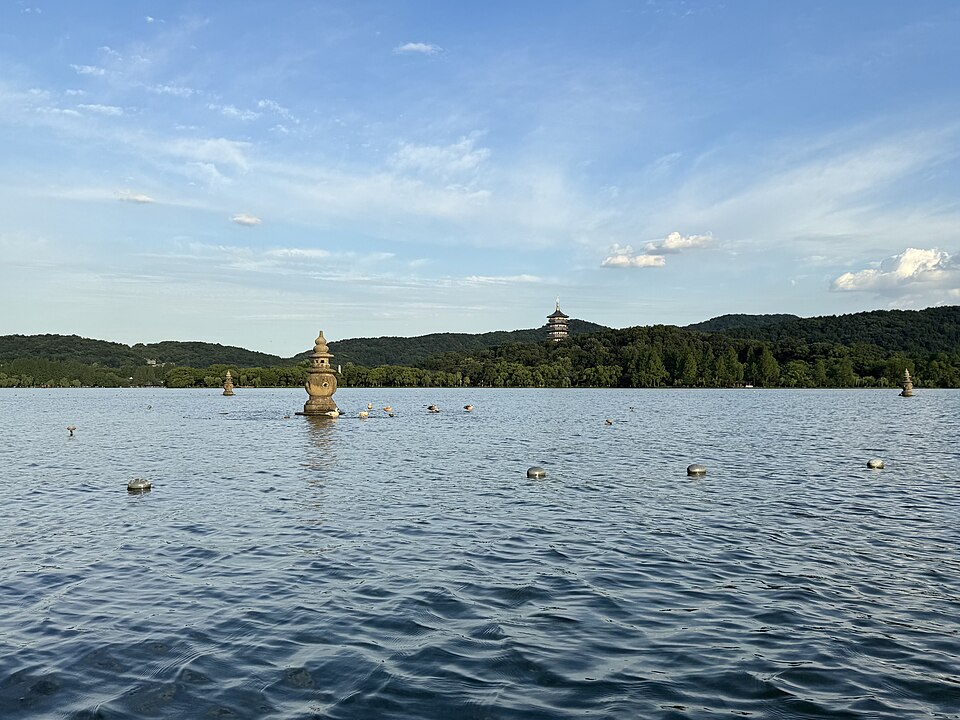
West Lake is Hangzhou's soul — one of China's most famous freshwater lakes and a UNESCO World Heritage Site since 2011, renowned for its Ten Scenes.
Overview
West Lake (Chinese: 西湖; pinyin: Xī Hú) is located in western Hangzhou, Zhejiang Province, and is one of the most famous scenic areas and freshwater lakes in China. The lake is surrounded by hills on three sides, covering an area of approximately 6.39 square kilometers, measuring about 2.8 kilometers east to west and 3.2 kilometers north to south, with a circumference of nearly 15 kilometers.
On June 24, 2011, at the 35th session of the World Heritage Committee in Paris, the West Lake Cultural Landscape of Hangzhou was inscribed on the UNESCO World Heritage List, becoming China's only lake-type cultural heritage site.
West Lake is renowned worldwide for its stunning natural scenery and profound cultural heritage. For over a thousand years, countless poets, scholars, and artists have been inspired by its beauty, leaving behind an extraordinary legacy of poetry and paintings. Literary giants such as Bai Juyi and Su Dongpo both served as officials in Hangzhou and left indelible cultural marks on the lake.
The Ten Scenes of West Lake
The most famous attractions are the "Ten Scenes of West Lake," first established during the Southern Song Dynasty, each named with a poetic four-character phrase:
| Scene | Features | Best Season |
|---|---|---|
| Spring Dawn at Su Causeway | A causeway built by Su Dongpo, peach blossoms in spring | Spring |
| Breezes Ruffling Lotus Flowers at Qu Yuan Garden | Summer lotus blooms, refreshing breeze | Summer |
| Autumn Moon over the Calm Lake | Moon viewing on still waters | Autumn |
| Melting Snow at Broken Bridge | Snow-covered Broken Bridge in winter | Winter |
| Viewing Fish at Flower Pond | Koi viewing, garden landscapes | Year-round |
| Listening to Orioles Singing in the Willows | Willow-shaded paths, birdsong | Spring |
| Three Pools Mirroring the Moon | Three stone pagodas reflecting moonlight — featured on the one-yuan banknote | Autumn |
| Twin Peaks Piercing the Clouds | North and South peaks reaching skyward | Year-round |
| Evening Glow at Leifeng Pagoda | Sunset views from Leifeng Pagoda — setting of the Legend of the White Snake | Year-round |
| Evening Bell Ringing at Nanping Hill | Evening bells from Jingci Temple | Year-round |
History and Culture
The history of West Lake stretches back over 2,000 years. During his tenure as governor of Hangzhou from 822 to 824 AD, Tang Dynasty poet Bai Juyi dredged the lake and built dams, leaving behind numerous poems describing its beauty. In 1089, Song Dynasty literary master Su Dongpo dredged the lake once again, using the excavated silt to construct the famous Su Causeway — a 2.8-kilometer-long path that remains one of the lake's most beautiful features today.
West Lake is inseparable from classical Chinese literature. The Legend of the White Snake, in which the White Snake and her beloved Xu Xian meet on the Broken Bridge, adds a romantic dimension to the landscape. Literary figures throughout history — including Su Shi, Bai Juyi, and Yang Wanli — all left behind masterpieces inspired by the lake.
After its UNESCO inscription in 2011, West Lake has undergone continuous ecological restoration and heritage preservation. Over 180 cultural sites have been restored, the water area has been returned to its Ming Dynasty scale, and the panoramic view of "one lake reflecting twin pagodas, three islands embedded in the lake, and three causeways spanning the green waves" has been beautifully restored.
Practical Information
| Item | Details |
|---|---|
| Location | Xihu District, Hangzhou, Zhejiang Province |
| Admission | Free (some attractions like Leifeng Pagoda require tickets) |
| Best Time to Visit | Spring (March-May) and Autumn (September-November) |
| Transportation | Hangzhou Metro Line 1, Longxiangqiao Station, walking distance |
| Ways to Explore | Walking, cycling, boat tours |
| Recommended Duration | Half day to full day |
| Nearby Attractions | Lingyin Temple, Longjing Tea Village, Songcheng |
Cultural Significance
West Lake is far more than a natural landscape — it is a perfect embodiment of the traditional Chinese philosophy of "harmony between heaven and humanity" (天人合一). The cultural landscape demonstrates over a millennium of harmonious interaction between humans and their natural environment, reflecting traditional Chinese aesthetics of mountains, water, and garden art. Created by generations of Chinese cultural elites guided by the ideals of "harmony with nature" and "finding inspiration in landscapes," West Lake has profoundly influenced garden design across East Asia.
Stills & Gallery
Comments (0)