Synopsis
The Yangtze River Three Gorges stretch 193 km from Chongqing to Hubei, comprising Qutang, Wu, and Xiling Gorges. One of China's most iconic natural landscapes.
Overview
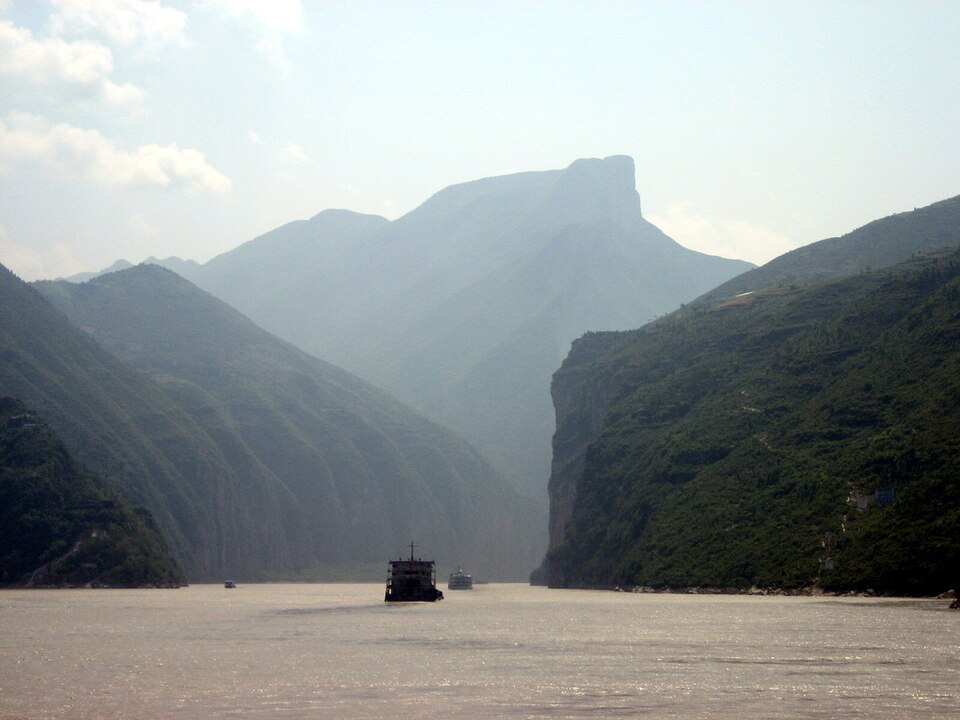
The Yangtze River Three Gorges (长江三峡) stretch from Baidi City in Fengjie County, Chongqing Municipality, in the west, to Nanjin Pass in Yichang City, Hubei Province, in the east, covering a total distance of 193 kilometers. The Three Gorges consist of the Qutang Gorge, Wu Gorge, and Xiling Gorge, and represent the most spectacular and beautiful stretch of landscape along the Yangtze River.
The Three Gorges region lies in a subtropical monsoon climate zone, spanning Fengjie, Wushan in Chongqing, and Badong, Zigui, and Yichang in Hubei. The gorge walls rise steeply on both sides of the river, with the narrowest point only about 100 meters wide, creating the magnificent landscape captured in the ancient verse: "While apes call endlessly on both banks, my light boat has already passed ten thousand mountains."
Throughout Chinese history, the Three Gorges have inspired countless poets and writers. Li Bai, Du Fu, Bai Juyi, Su Shi, and other literary giants all left behind immortal poems about this region.
The Three Gorges
| Gorge | Length | Features |
|---|---|---|
| Qutang Gorge | 8 km | The shortest, narrowest, and most precipitous of the Three Gorges, known for its "grandeur." The Kui Gate entrance appears on the back of the 10-yuan banknote |
| Wu Gorge | 44 km | Known for its "elegance," with continuous peaks on both sides — most famous for the Twelve Peaks of Wushan and the Goddess Peak |
| Xiling Gorge | 66 km | The longest of the Three Gorges, known for its "danger," with many rapids and swift currents — historically the most treacherous section |
Qutang Gorge
Qutang Gorge, located in Fengjie County, Chongqing, is the shortest of the Three Gorges at only 8 kilometers, yet it is the most magnificent and precipitous. The Kui Gate (also known as Qutang Pass) at the gorge entrance features towering cliffs on both sides like a gateway, with the river only about 100 meters wide. It is the iconic landmark of the Yangtze Three Gorges. The image on the back of the fifth series 10-yuan RMB banknote (issued in 2004) is a photograph of Kui Gate.
Both sides of Qutang Gorge contain numerous historical sites, including Baidi City, ancient plank road ruins, Mengliang Ladder, and the Upside-Down Monk rock formation.
Wu Gorge
Wu Gorge lies between Wushan County, Chongqing, and Badong County, Hubei, stretching 44 kilometers and known for its deep, elegant beauty. The continuous peaks on both sides are most famous for the Twelve Peaks of Wushan, among which the Goddess Peak (Wangxia Peak) rises to 922 meters. At its summit stands a rock formation resembling a young maiden, hence the name.
Wu Gorge is also famous for the "Wushan clouds and rain" phenomenon, where in autumn the gorges are shrouded in mist, creating an ethereal atmosphere. The Song Dynasty poet Su Shi wrote: "Having seen the vast ocean, no other water impresses — except for Wushan, no cloud is beautiful."
The Little Three Gorges (on the Daning River) and the Tiny Three Gorges are also located in Wushan County, offering equally stunning side-gorge scenery.
Xiling Gorge
Xiling Gorge, located between Zigui County and Yichang City, Hubei, is the longest of the Three Gorges at 66 kilometers. Historically, it was known for its many rapids and dangerous currents, with the saying: "Qingtan and Xietan are no real rapids — Kongling is the gate of the underworld."
Both sides of Xiling Gorge contain numerous historical sites, including Qu Yuan's hometown, Zhaojun's hometown, the Sanyou Cave, and Huangling Temple.
Three Gorges Dam
The Three Gorges Dam is located in Sandouping Town, Yiling District, Yichang City, Hubei Province, and is the world's largest water conservancy project. The dam is 2,309 meters long, with a crest elevation of 185 meters and a normal water level of 175 meters.
The Three Gorges Project serves multiple functions: flood control, power generation, and navigation. The hydroelectric power station has a total installed capacity of 22,500 megawatts, making it the world's largest hydropower station.
The Three Gorges Dam Tourist Area is a National 5A Tourist Attraction, where visitors can view the main dam structure, Tanziling, the 185 Platform, and the River Closure Memorial Park up close.
Practical Information
| Item | Details |
|---|---|
| Best Season | Spring (Mar-May) and Autumn (Sep-Nov) |
| Recommended Way to Visit | Cruise ship (Chongqing→Yichang or Yichang→Chongqing, 3-5 days) |
| Cruise Options | Standard boats (~300-800 RMB/person/night), luxury cruises (~1,500-5,000 RMB/person/night) |
| Qutang Gorge | Included in cruise fare; Baidi City separate ticket ~60 RMB |
| Goddess Stream/Shennong Stream | ~120 RMB |
| Three Gorges Dam Tourist Area | Free (advance reservation required) |
| Transportation | Depart from Chongqing or Yichang; both accessible by high-speed rail and air |
Cultural Significance
The Yangtze River Three Gorges hold a special place in Chinese culture:
- Poetry: Li Bai's "Departing from Baidi City in the Morning," Du Fu's "Climbing High," Li Shangyin's "Night Rain Sent North," and other immortal poems are all associated with the Three Gorges
- Historical Sites: Baidi City is where Liu Bei of the Three Kingdoms period entrusted his son to Zhuge Liang; Qu Yuan's hometown in Zigui is an important origin of China's Dragon Boat Festival
- Geological Value: The geological profiles of the Three Gorges region record billions of years of Earth's history, making it an important base for geological research
- Engineering Marvel: The Three Gorges Dam is a modern engineering miracle, demonstrating humanity's ability to reshape nature
References
- Baidu Baike: https://baike.baidu.com/item/长江三峡
- Wikipedia: https://zh.wikipedia.org/wiki/长江三峡
- Zhihu: https://zhuanlan.zhihu.com/p/649115039
- Sohu Travel: https://www.sohu.com/a/924733571_122248575
Stills & Gallery
Comments (0)