Books by Fabian Stroth
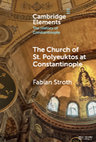
Cambridge Elements. The History of Constantinople, 2024
The Church of St. Polyeuktos is one of the most magnificent, but also most peculiar, architectura... more The Church of St. Polyeuktos is one of the most magnificent, but also most peculiar, architectural achievements in Byzantine Constantinople. The accidental rediscovery of the building during construction work in Istanbul in the 1960s is legendary and considered one of the most sensational finds in Byzantine archaeology. Built by the aristocrat Lady Anicia Juliana, the reconstruction of the structure and the interpretation of its strange forms continue to challenge scholars today.
The building gave rise to a whole series of archaeo-historical narratives, in which the City’s Byzantine protagonists and major monuments were
woven into a coherent plot.
This Element on the archaeology of St. Polyeuktos takes a closer look at these narratives and subjects them to critical examination. In the end,
the study of St. Polyeuktos will tell us as much about Byzantine architectural history in the second half of the twentieth century as about early Byzantine architecture itself.
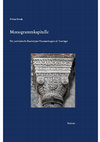
Reichert Verlag Wiesbaden, 2021
In der Studie werden die Kapitellserien der Hagia Sophia, der Sergios- und Bakchoskirche und der ... more In der Studie werden die Kapitellserien der Hagia Sophia, der Sergios- und Bakchoskirche und der Irenenkirche erstmals systematisch untersucht. Zu- dem werden die Stifterepigramme der Sergios- und Bakchoskirche sowie der Polyeuktoskirche in die Untersuchung mit einbezogen, deren materielle Ausführung bislang zu wenig Beachtung gefunden hat. Der dabei erprobte Forschungsansatz, die justinianische Bauskulptur Konstantinopels als Textträger in den Blick zu nehmen ist ungewöhnlich, hat sich jedoch auf den zweiten Blick als naheliegend und in vielfältiger Weise als ergebnisreich erwiesen. Die Vorlage von mehr als 150 frühbyzantinischen Kapitellen dieser prominenten Kirchen Konstantinopels in mehr als 850 Fotografien und 50 Zeichnungen leistet einen grundlegenden Beitrag für die Byzantinische Archäologie.
This study is the first to systematically analyse the capital series of the Hagia Sophia, the Church of Sergios and Bakchos and the Church of Irene. In addition, the donor epigrams of the Sergios and Bakchos Churches and the Polyeuktos Church are included in the study, the material execution of which has received too little attention to date. The research approach of focussing on the Justinianic architectural sculpture of Constantinople as a text carrier is unusual, but at second glance has proven to be obvious and rich in results in many ways. The presentation of more than 150 early Byzantine capitals of these prominent churches of Constantinople in more than 850 photographs and 50 drawings makes a fundamental contribution to Byzantine archaeology.
Edited books by Fabian Stroth
De Gruyter (open access), 2017
In: Materiale Textkulturen, 14
Herausgegeben von: Irene Berti , Katharina Bolle , Fanny Opdenhof... more In: Materiale Textkulturen, 14
Herausgegeben von: Irene Berti , Katharina Bolle , Fanny Opdenhoff und Fabian Stroth
Gefördert durch: Deutsche Forschungsgemeinschaft
De Gruyter | 2017
"[...] this volume offers an important contribution to understanding incised texts and will be of value to students and scholars of various disciplines."
Alexandra Wilding in: Bryn Mawr Classical Review 2018.04.43
Organization of Conferences and Workshops by Fabian Stroth
Funerary Archaeology of Byzantine Constantinople, 2025
Mortuary practices are cultural phenomena common to humanity, and therefore burials and the “arch... more Mortuary practices are cultural phenomena common to humanity, and therefore burials and the “archaeology of death” have long been recognized as essential sources for all archaeologies. This is also true of Byzantine archaeology, and in recent decades graves and tombs, cemeteries and burial churches have increasingly been the focus of historical, art historical, and scientific research. By reason of its importance and size, the Byzantine capital of Constantinople occupies a central place in the historical
development of Byzantine burial practices, and its funerary archaeology can be recognized as an essential source for understanding society, religion, demography, and urbanism in the imperial city. However, despite this importance, in contrast to the funerary archaeology of Old Rome, that of Constantinople is relatively poorly documented and often badly preserved, with data scattered in disparate publications, and lack a theoretical base and detailed synthesis. Fundamental information is still lacking, and even what is known has never been systematically compiled and evaluated.
Our conference seeks to address these issues by focusing on new approaches, new methodologies, and new discoveries. We aim to synthesize and devise a new understanding of the funerary archaeology of Constantinople and its suburbs, moving beyond just the primary documentation of empirical data to consider challenges of its
recovery and interpretation, and to build up a new diachronic understanding of the development of burial practices in the capital region from the 4th to the 16th centuries.
"Skeuomorphs. Transmaterial Design in the Ancient and Medieval Mediterranean"
International Confe... more "Skeuomorphs. Transmaterial Design in the Ancient and Medieval Mediterranean"
International Conference, Freiburg University, 17-19 November 2021
with Pelin Yoncacı-Arslan (Ankara), Jesko Fildhuth (Freiburg), Carey Thompson Wells (New York), E... more with Pelin Yoncacı-Arslan (Ankara), Jesko Fildhuth (Freiburg), Carey Thompson Wells (New York), Elena Boeck (Chicago), Robert G. Ousterhout (Philadelphia)
with Solvejg Langer (Heidelberg), Nadine Viermann (Heidelberg), Arne Effenberger (Berlin)
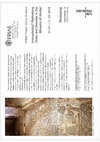
The churches in Byzantine and Umayyad-era Jordan and Palestine attest to a fascinating change in ... more The churches in Byzantine and Umayyad-era Jordan and Palestine attest to a fascinating change in visual culture in their significant alterations of mosaic pavements. The tesserae of animal and human figures were removed, shuffled, and reinserted to pixelate faces and other body parts.
In the relevant field of study these phenomena have so far been summarized as ›Iconophobia‹ and too narrowly considered as damage or loss of the initial archaeological record. Instead, the manipulations and restricted recognisability even reinforce the visual and medial capacities of these images and evoke a stronger artifactual presence. These noisy surfaces have a retarding effect on perception and perpetuate the process of manufacture. This perspective holds significant potential for future archaeological research concerning the aesthetics of abstraction, the interplay of ornament and figure, text and image, order and disorder.
The FRIAS Project Group SurFace explores new methodological approaches to describe, analyze and (hope)fully understand the complexity of such multi-layered image-artifact relations.
with Gudrun Bühl (Dumbarton Oaks), Falko Daim (RGZM) and Gabriele Mietke (Berlin)
with Charlotte Tümpler (Frankfurt) and Stephan Westphalen (Heidelberg)
Talks by Fabian Stroth
Byzantium in a Point Cloud. Potentials and Limitations of Augmented Reality (AR) for Byzantine Architectural Studies
Cleveland, Ohio, 2020 Byzantine Studies Conference (Session "New Directions in Byzantine Architec... more Cleveland, Ohio, 2020 Byzantine Studies Conference (Session "New Directions in Byzantine Architectural Studies") 23-25.10.2020 (COVID-19 postponed)
Neues zum Templon der Johanneskirche in Ephesos
25. Tagung der AGCA, 13.–14. Mai 2021
Kleine Kirche, große Architektur. Neue Beobachtungen zur Sergios- und Bakchoskirche in Konstantinopel
Vortragsreihe am Leibniz-Wissenschaftscampus Byzanz zwischen Orient und Okzident 11.05. Mainz/Fra... more Vortragsreihe am Leibniz-Wissenschaftscampus Byzanz zwischen Orient und Okzident 11.05. Mainz/Frankfurt
Digital approaches in experimental learning. MARBLE as a case study
27th EAA Annual Meeting (session: New Technologies, New Theories? Reflections on the Perception a... more 27th EAA Annual Meeting (session: New Technologies, New Theories? Reflections on the Perception and Simulation of Building Environments and Architecture) 6–11 September 2021
MARBLE – Mixed and Augmented Reality in Blended Learning Environments
1st Annual EPICUR Forum, Experimential Learning & Experimental Teaching in Digital Settings 10.12... more 1st Annual EPICUR Forum, Experimential Learning & Experimental Teaching in Digital Settings 10.12.2020
Conference: Bildtaktiken. Visuelle Subversion zwischen Spiel und Widerstand, Tagung des Forschungsschwerpunkts Historische Bildkulturen, Wolfenbüttel , 2020
DAI Workshop, Constantinople in Late Antiquity: Sacred Space and Urban Topography, 2021
Vortrag an der Universität Marburg, 2020
Internationaler Workshop „Verrätselung von Geschriebenem", Internationales Wissenschaftsforum Heidelberg, 2019
Die Präsenz von Schrift ist zumeist mit dem Bestreben verbunden, Mitteilungen zu machen und zu ko... more Die Präsenz von Schrift ist zumeist mit dem Bestreben verbunden, Mitteilungen zu machen und zu kommunizieren. Es gibt aber auch Fälle, in denen dem Leser das Entschlüsseln der Botschaft bewusst erschwert wird, z. B. durch kryptographische Inschriften, die ungewöhnliche, sonst nicht gebräuchliche Zeichen verwenden oder an sich bekannten Zeichen andere Lesungen zuweisen. Letzteres kann einerseits ganz elementar der Geheimhaltung dienen, andererseits aber auch auf andere Intentionen zurückzuführen sein. So finden sich Beispiele, in denen die Aufgabe gerade umgedreht wird: Der Leser muss sich Gedanken machen, wie die konkret gewählten Schriftzeichen zu identifizieren und zu entschlüsseln sind, damit sie ihrer Situierung entsprechend einen Sinn ergeben. Der Workshop zeigt die Vielfalt der hieran anknüpfenden Fragen in einer breiten interdisziplinären Zugangsweise auf. Dabei bringt er Vertreter verschiedener Disziplinen zusammen, die zeitlich vom 3. Jahrtausend v. Chr. bis in die Gegenwart und räumlich vom europäischen Mittelalter bis Ostasien und Indonesien reichen.
Freiburg, Conference: Iconophobia? Rethinking Order and Disorder in the Mosaics of Jordan, Freiburg, 2019


Uploads
Books by Fabian Stroth
The building gave rise to a whole series of archaeo-historical narratives, in which the City’s Byzantine protagonists and major monuments were
woven into a coherent plot.
This Element on the archaeology of St. Polyeuktos takes a closer look at these narratives and subjects them to critical examination. In the end,
the study of St. Polyeuktos will tell us as much about Byzantine architectural history in the second half of the twentieth century as about early Byzantine architecture itself.
This study is the first to systematically analyse the capital series of the Hagia Sophia, the Church of Sergios and Bakchos and the Church of Irene. In addition, the donor epigrams of the Sergios and Bakchos Churches and the Polyeuktos Church are included in the study, the material execution of which has received too little attention to date. The research approach of focussing on the Justinianic architectural sculpture of Constantinople as a text carrier is unusual, but at second glance has proven to be obvious and rich in results in many ways. The presentation of more than 150 early Byzantine capitals of these prominent churches of Constantinople in more than 850 photographs and 50 drawings makes a fundamental contribution to Byzantine archaeology.
Edited books by Fabian Stroth
Herausgegeben von: Irene Berti , Katharina Bolle , Fanny Opdenhoff und Fabian Stroth
Gefördert durch: Deutsche Forschungsgemeinschaft
De Gruyter | 2017
"[...] this volume offers an important contribution to understanding incised texts and will be of value to students and scholars of various disciplines."
Alexandra Wilding in: Bryn Mawr Classical Review 2018.04.43
Organization of Conferences and Workshops by Fabian Stroth
development of Byzantine burial practices, and its funerary archaeology can be recognized as an essential source for understanding society, religion, demography, and urbanism in the imperial city. However, despite this importance, in contrast to the funerary archaeology of Old Rome, that of Constantinople is relatively poorly documented and often badly preserved, with data scattered in disparate publications, and lack a theoretical base and detailed synthesis. Fundamental information is still lacking, and even what is known has never been systematically compiled and evaluated.
Our conference seeks to address these issues by focusing on new approaches, new methodologies, and new discoveries. We aim to synthesize and devise a new understanding of the funerary archaeology of Constantinople and its suburbs, moving beyond just the primary documentation of empirical data to consider challenges of its
recovery and interpretation, and to build up a new diachronic understanding of the development of burial practices in the capital region from the 4th to the 16th centuries.
International Conference, Freiburg University, 17-19 November 2021
In the relevant field of study these phenomena have so far been summarized as ›Iconophobia‹ and too narrowly considered as damage or loss of the initial archaeological record. Instead, the manipulations and restricted recognisability even reinforce the visual and medial capacities of these images and evoke a stronger artifactual presence. These noisy surfaces have a retarding effect on perception and perpetuate the process of manufacture. This perspective holds significant potential for future archaeological research concerning the aesthetics of abstraction, the interplay of ornament and figure, text and image, order and disorder.
The FRIAS Project Group SurFace explores new methodological approaches to describe, analyze and (hope)fully understand the complexity of such multi-layered image-artifact relations.
Talks by Fabian Stroth