Books by Fabrizio D'Avenia
Il Pozzo di Giacobbe, 2025
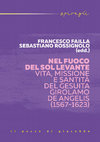
Il volume raccoglie gli interventi proposti in occasione del convegno di studi organizzato nel 40... more Il volume raccoglie gli interventi proposti in occasione del convegno di studi organizzato nel 400° anniversario del martirio di Girolamo De Angelis (1567-1623), missionario gesuita in Giappone. Gli autori, provenienti da università italiane e straniere, da facoltà teologiche e dalle istituzioni culturali della Compagnia di Gesù, affrontano per la prima volta, in un’ottica interdisciplinare, la complessità dell’opera del beato De Angelis e la sua rilevanza nel favorire l’incontro tra Oriente e Occidente, sia sul piano culturale che religioso. I contributi raccolti nel volume – corredati da una ricca bibliografia, trascrizioni di manoscritti coevi, testimonianze artistiche e documenti d’archivio alcuni dei quali inediti – offrono l’opportunità di approfondire la vita e le opere di Girolamo De Angelis nel contesto dei rapporti e delle relazioni che ne hanno plasmato la formazione, la spiritualità, la tensione evangelizzatrice. Al tempo stesso, permettono di comprendere le sfide affrontate dai gesuiti nelle missioni in Asia Orientale.
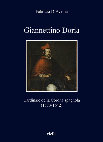
The cardinal of the Spanish Crown Giannettino Doria embodies the typical international profile of... more The cardinal of the Spanish Crown Giannettino Doria embodies the typical international profile of an ecclesiastic involved in multiple political loyalties within the context of the transformations affecting the Habsburg "Monarquía católica" and the Holy See between the Sixteenth and the Seventeenth century. The book reconstructs Giannettino’s Genoese origins, his proud family membership, his long Spanish formation and the complex negotiations for his cardinal promotion. It then illuminates his power relations, his frustrated career ambitions in the Roman Curia and his political and pastoral choices. These latter were characterized by a jealous defense of his reputation and jurisdiction, and marked his second life in Sicily, where he served as archbishop of Palermo and as interim viceroy. The analysis of a wide geography of sources shows that his figure is much more complex than that reconstructed by hagiographic works. These mainly focused on his prominent role in the invention of the cult of Santa Rosalia and in the liberation from the plague in 1624.
La storiografia siciliana cade spesso in una tentazione “siculo-centrica”, viziata dalla rivendic... more La storiografia siciliana cade spesso in una tentazione “siculo-centrica”, viziata dalla rivendicazione dell’unicità dell’esperienza storica dell’isola, dallo spettro delle famigerate “dominazioni straniere”, nonché dall’ambivalente giudizio sulla sua classe dirigente e le sue istituzioni, ora baluardo delle libertates del Regnum Siciliae contro sovrani dispotici o in frangenti di anarchia politica, ora ostacolo a tutti i tentativi di modernizzazione. Il volume propone invece un’analisi di più ampio respiro storico e storiografico attraverso la ricostruzione della complessa articolazione della Chiesa siciliana nei primi due secoli dell’età moderna, quando essa è stata all’origine di continue controversie, caratterizzate dalla pluralità tanto degli attori coinvolti quanto dei livelli di conflitto: a livello locale, tra le giurisdizioni ecclesiastiche
(e tra queste ultime e quelle secolari); a livello centro-periferia, tra le istituzioni del Regno di Sicilia e la corte di Madrid; a livello centrale, tra il sovrano e il Consiglio d’Italia; a livello internazionale, tra il governo spagnolo e la Santa Sede. Insomma né “misero” né “splendido isolamento”.
Malo esse quam videri. La fonte documentaria dei processi di nobiltà degli Ordini militari (o rel... more Malo esse quam videri. La fonte documentaria dei processi di nobiltà degli Ordini militari (o religioso-cavallereschi), e dell’Ordine di Malta in particolare, ha dimostrato la sua utilizzabilità come “specchio” nel quale seguire le evoluzioni di una società – in particolare quella siciliana lungo i secoli dell’età moderna – in continuo mutamento e, perciò, teatro di frequenti conflitti tra famiglie in cerca di affermazione politico-economica. Come tutte le rappresentazioni di una società, quella risultante dai processi di nobiltà è naturalmente un’immagine indiretta, riflessa dalla particolarità della fonte utilizzata. L’analisi attenta dei singoli dossier dei processi di nobiltà svela spesso una realtà governata da logiche parentali e clientelari: dispense, raccomandazioni, complicità, ma anche scontri tra famiglie e patriziati concorrenti o tra le stesse sedi istituzionali dell’Ordine preposte al giudizio delle prove di nobiltà, all’interno delle quali, per di più, non sempre si raggiungeva l’unanimità dei consensi. Il risultato dei processi – promozione o bocciatura – non sempre era quindi il riflesso della vera condizione del candidato: sembrare contava più di essere! (dall’introduzione)
Papers by Fabrizio D'Avenia
Albane Cogné and Benoît Maréchaux (eds.), Le élites italiane e la Monarchia ispanica (secoli XVI-XVII). Servizio, mobilità e poteri, 2025
From the perspective of the social history of the clergy, this article offers a
synthesis of the ... more From the perspective of the social history of the clergy, this article offers a
synthesis of the profiles of royal patronage bishops who ruled over dioceses in the kingdoms of Naples and Sicily, as well as in the duchy of Milan. The analysis of available sources allows for a comparison with the general outline of royal patronage in the kingdoms of Castile and Aragon, aggregating and relating information on the dioceses (e.g. revenue, institutional status, geographical position) and about their holders (nationality, city of origin, number of benefices held, age, duration of their episcopal tenure, affiliation – if any – to regular clergy orders with the detail of the orders involved, recurrence of surnames and shared familial affiliations).

L’Ordine di Malta e la Lingua D’Italia. Architettura e temi decorativi dalla Controriforma al Settecento, ed. by Federico Bulfone Gransinigh, Valentina Burgassi, Daniel K. Gullo, Alessandro Spila, 2024
The Order of Malta between Revolution and Restoration. The Nationalisation of the Langue of Italy... more The Order of Malta between Revolution and Restoration. The Nationalisation of the Langue of Italy.
Between the end of the 18th and the beginning of the 19th century, the Order of Malta went through a critical phase of its history, in which its very existence was in jeopardy. Indeed, the Order had long been the target of the Catholic European states’ jurisdictional policies: in particular, in 1784 the Langue of Italy was ‘nationalised’ by the sovereigns and princes of the Italian peninsula with the abolition of ‘promiscuity’ in the granting of commanderies, which from that moment onwards could be assigned only to knights born within the borders of their respective priorate. The loss of the island of Malta in 1798 – conquered first by France and then by the United Kingdom – represented a major disruption for the Order. The latter diplomatic efforts during peace congresses to claim back its ancient see were all in vain: on top of this, it saw its patrimony confiscated (although a small part was retrieved in the wake of the post-Napoleonic Restoration)
and for about forty years was forced to transfer its Convent in various cities. However, the Order showed a remarkable ability to resist and adapt to adverse circumstances. The hospitaller vocation of its origins was rediscovered as the state of affairs mirrored its current predicaments: the appointment of an external commissioner by the Pontiff, the approval of new constitutions, the celebration of an extraordinary general chapter.
I patrimoni aristocratici tra eredità materiali e immateriali, 2024

The concentration of ecclesiastical powers held by the Spanish crown in the kingdom of Sicily in ... more The concentration of ecclesiastical powers held by the Spanish crown in the kingdom of Sicily in the early modern period was very often translated into jurisdictional competencies among the ecclesiastical courts of the island: each of them tried, indeed, to extend his own prerogatives over suspects and crimes in spite of others, putting its "falcem in alienam messem". The defendants themselves, often clerics, were well aware of this jurisdictional overlap and tried, often successfully, to take advantage of it, sometimes involving Roman congregations and courts. Other times it was the Holy See itself to tackle the Sicilian caesaropapism head-on, sending commissars and apostolic vicars in quarrelsome dioceses (bishop against local communities), or devoid of a bishop (temporarily absent), or with bishops unable to govern due to his advanced age. The consequences of this struggle between Rome and Madrid are well summarised in an anonymous "Discurso" – drafted on occasion of some disputes that broke out in the early 1630s in three Sicilian dioceses (Messina, Catania and Agrigento) – which this article focuses on, putting it in relation to its historical context.
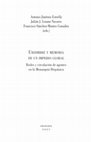
A. Jiménez Estrella, J.J. Lozano Navarro, F. Sánchez-Montes González (eds.), "Urdimbre y memoria de un imperio global. Redes y circulación de agentes en la Monarquía Hispánica", Editorial Universidad de Granada Granada, Granada, pp. 551-571, 2023
The royal patronage was configured as a space for mobility of bishops not only among the dioceses... more The royal patronage was configured as a space for mobility of bishops not only among the dioceses of continental Spain, but among all the kingdoms and territories of the Habsburg Monarchy, including America. In this context, the examination of the careers of the Spanish prelates who were bishops in Sicily (sometimes before or after occupying Neapolitan sees) allows to reconstruct well-drawn and narrow routes, which hardly communicate with each other. The investigation of these trajectories is a clear demonstration of how ecclesiastical careers woven a warp through the domains of the Habsburg Monarchy over which a web of close relations and exchanges of religious, cultural, and political experiences was woven. There is no doubt that the redistribution of the resources of the ecclesiastical patronage constituted, in fact, one of the avenues – along with the granting of nobility titles, public offices and pecuniary favors- – that guaranteed the loyalty of individuals and groups (family and clientele) to the Crown, in this case from the common adherence to the Catholic confession and its institutions.

G. Braghi, D. Dainese (ads.), "War and Peace in the Religious Conflicts of the Long Sixteenth Century", Vandenhoeck & Ruprecht, Göttingen, pp. 167-188, 2023
After the fall of Rhodes (1522), the Order of St. John needed to recover its reputation as militi... more After the fall of Rhodes (1522), the Order of St. John needed to recover its reputation as militia Christi and to redraft its chivalrous ideals within the context of the Catholic Renewal. However, this so-called Religion met this challenge partially and late, although it represented its glorious past as a gallery of saints and martyrs, even if they were not always officially recognised by the Church. This past, since its origin in the Holy Land, casted a shadow of sanctity into the present, confirming this Religion as being semper eadem. Such a representation is found in the book Il glorioso trionfo della sacrosanta religion militare di S. Giovanni Gierosolimitano, published in 1619 in Italy and Spain, which is investigated in this paper. In these peculiar acta sanctorum, the knights of St. John were por-trayed between their religious fidelity and military value up to the extreme of martyrdom. However, this sacrifice silenced the real behaviour of men whose religious practice was often inadequate. The narrative strategies of this work are set within the context of the coeval literature on the Crusades and the “Christian soldier”, and included: the hagiographic reconstruction of the Order origins and devel-opment, the providential interpretation of military victory/defeat, the stereotyped portrayal of the “bar-barous” infidel, the complaint about the internal divisions of Christianity against the Turk, the urgent appeal to the reconquest of the Holy Land.
Gli ordini militari nella Monarchia spagnola: una lunga latitanza storiografica
C. Cremonini, E. Riva (eds), Il Seicento allo specchio. Le forme del potere nell'Italia spagnola: uomini, libri, strutture", pp. 79-93, 2011
Cremonini, C., Riva, E., Musi, A., Lerra, A., Cirillo, G., Rosiello, C., et al. (2011). Gli ordin... more Cremonini, C., Riva, E., Musi, A., Lerra, A., Cirillo, G., Rosiello, C., et al. (2011). Gli ordini militari nella Monarchia spagnola: una lunga latitanza storiografica. In Il Seicento allo specchio. Le forme del potere nell'Italia spagnola: uomini, libri, strutture (pp.79-93). Roma : Bulzoni Editore.
Mediación y circulación cultural en la Monarquía Hispánica: obispos entre España e Italia (siglos XVI-XVII)
Manuscrits. Revista d'Història Moderna, 2020
Dossier de la revista Manuscrits. Revista d'Història Moderna.
Coordinat per Ignasi Fernández Ter... more Dossier de la revista Manuscrits. Revista d'Història Moderna.
Coordinat per Ignasi Fernández Terricabras i Ida Mauro
Politics and Piety at the Royal Sites of the Spanish Monarchy in the Seventeenth Century (Habsburg Worlds, 5), ed. by J. E. Hortal Muñoz, Brepols, Turnhout, 2021
Mediación y circulación cultural en la Monarquía Hispánica: obispos entre España e Italia (siglos XVI-XVII) / Mediation and cultural circulation in the Hispanic Monarchy: bishops between Spain and Italy (16th-17th centuries), ed. by Ida Mauro and Ignasi Fernández Terricabras, 2020
Between the 16th and 17th centuries the kings of Spain appointed distinguished Spanish prelates o... more Between the 16th and 17th centuries the kings of Spain appointed distinguished Spanish prelates of converso origin as bishops in Sicily because their «tainted» blood prevented them from holding Spanish episcopal seats. The article aims to establish whether the converso condition of these bishops could have influenced their pastoral reforms as well as «radicalised» their application of the Tridentine model. If so, this could be interpreted as a clear proof of their loyalty to the Catholic faith in the name of which their ancestors were persecuted. This work will shed light on the cases of Cardinal Luis de Torres, Archbishop of Monreale (1588-1609), and of Juan de Orozco y Covarrubias, Bishop of Agrigento (1594-1606), both model guides and reformers in their dioceses. Their converso descent as well as family entourage and the ecclesiastical careers built by some of their relatives in Spain, Rome, and Sicily will be analysed.
La Iglesia en Palacio. Los eclesiásticos en las cortes hispánicas (siglos XVI-XVII), ed. by R. Valladares, Viella, Rome, 2019
Los Judeoconversos en el mundo ibérico, ed. by E. Soria Mesa and A. J. Díaz Rodríguez, Universidad de Córdoba, Córdoba, 2019
7 -ÍNDICE • Introducción 9 • Judeoconversos y espiritualidad cristiana en la España de los siglos... more 7 -ÍNDICE • Introducción 9 • Judeoconversos y espiritualidad cristiana en la España de los siglos XV y XVI. El proceso formativo Rafael M. Pérez García 13 • Conversos, curiales y canónigos. Limpieza de sangre y negociación en los cabildos ibéricos Antonio J. Díaz Rodríguez 33 • Conversos sevillanos a principios de la época moderna: ¿élites financieras o familias relacionadas? Béatrice Perez 47 • Conversos sevillanos y conversos portugueses en la construcción del Atlántico Ibérico. La quiebra de 1575 Manuel F. Fernández Chaves 65
Journal of Early Modern History, n. 22/6, 2018
This article focuses on a group of conversos families from Spain, who established themselves in P... more This article focuses on a group of conversos families from Spain, who established themselves in Palermo after the Expulsion of the Jews in 1492. There they supported financial activities of the Nazione Catalana and established strong relationships with the local aristocracy. Thanks to this alliance, they managed to avoid persecution by the Spanish Inquisition, “cleanse” their “impure” blood and reach high positions within politics and
society: feudal titles, political and financial offices, habits of military orders, ecclesiastical appointments and sometimes even sainthood. Firstly, the paper will give a brief sketch of the phenomenon of conversos in Sicily as well as the activities of the Spanish Inquisition before and after the expulsion of 1492. A significant case study will then be presented, focusing on the Torongi family (New Christians from Majorca settled in Palermo) and its network of relationships in the sixteenth and seventeenth centuries.

The Council of Trent: Reform and Controversy in Europe and Beyond (1545-1700), vol. II, Between Bishops and Princes, Göttingen: Vandenhoeck & Ruprecht, 2018
Exactly 450 years after the solemn closure of the Council of Trent on 4 December 1563, scholars f... more Exactly 450 years after the solemn closure of the Council of Trent on 4 December 1563, scholars from diverse regional, disciplinary and confessional backgrounds convened in Leuven to reflect upon the impact of this Council, not only in Europe but also beyond. Their conclusions are to be found in three impressive volumes. In particular, the second one analyzes the changes in local ecclesiastical life, initiated by bishops, orders and congregations, and the political strife and confessionalisation accompanying this reform process.
Within this historiographical context, the aim of this chapter is to include the pastoral and reforming activities of Giannettino Doria, Cardinal from 1604 and Archbishop of Palermo from 1608 to 1642, the year of his death. Belonging to one of the most prestigious noble families of the Republic of Genoa and Cardinal of the “Spanish party”, in Sicily he played a prominent political role as head of the ecclesiastical chamber of Parliament, president of the Kingdom of Sicily (four times). Despite his political career, six major fields of the Archbishop’s pastoral action sharply emerge: discipline and training of the secular clergy, improvement of the seminary, reform of nunneries, control of the lay confraternities or sodalities, worship and liturgical reform, defence of ecclesiastical immunity.



Uploads
Books by Fabrizio D'Avenia
(e tra queste ultime e quelle secolari); a livello centro-periferia, tra le istituzioni del Regno di Sicilia e la corte di Madrid; a livello centrale, tra il sovrano e il Consiglio d’Italia; a livello internazionale, tra il governo spagnolo e la Santa Sede. Insomma né “misero” né “splendido isolamento”.
Papers by Fabrizio D'Avenia
synthesis of the profiles of royal patronage bishops who ruled over dioceses in the kingdoms of Naples and Sicily, as well as in the duchy of Milan. The analysis of available sources allows for a comparison with the general outline of royal patronage in the kingdoms of Castile and Aragon, aggregating and relating information on the dioceses (e.g. revenue, institutional status, geographical position) and about their holders (nationality, city of origin, number of benefices held, age, duration of their episcopal tenure, affiliation – if any – to regular clergy orders with the detail of the orders involved, recurrence of surnames and shared familial affiliations).
Between the end of the 18th and the beginning of the 19th century, the Order of Malta went through a critical phase of its history, in which its very existence was in jeopardy. Indeed, the Order had long been the target of the Catholic European states’ jurisdictional policies: in particular, in 1784 the Langue of Italy was ‘nationalised’ by the sovereigns and princes of the Italian peninsula with the abolition of ‘promiscuity’ in the granting of commanderies, which from that moment onwards could be assigned only to knights born within the borders of their respective priorate. The loss of the island of Malta in 1798 – conquered first by France and then by the United Kingdom – represented a major disruption for the Order. The latter diplomatic efforts during peace congresses to claim back its ancient see were all in vain: on top of this, it saw its patrimony confiscated (although a small part was retrieved in the wake of the post-Napoleonic Restoration)
and for about forty years was forced to transfer its Convent in various cities. However, the Order showed a remarkable ability to resist and adapt to adverse circumstances. The hospitaller vocation of its origins was rediscovered as the state of affairs mirrored its current predicaments: the appointment of an external commissioner by the Pontiff, the approval of new constitutions, the celebration of an extraordinary general chapter.
Coordinat per Ignasi Fernández Terricabras i Ida Mauro
society: feudal titles, political and financial offices, habits of military orders, ecclesiastical appointments and sometimes even sainthood. Firstly, the paper will give a brief sketch of the phenomenon of conversos in Sicily as well as the activities of the Spanish Inquisition before and after the expulsion of 1492. A significant case study will then be presented, focusing on the Torongi family (New Christians from Majorca settled in Palermo) and its network of relationships in the sixteenth and seventeenth centuries.
Within this historiographical context, the aim of this chapter is to include the pastoral and reforming activities of Giannettino Doria, Cardinal from 1604 and Archbishop of Palermo from 1608 to 1642, the year of his death. Belonging to one of the most prestigious noble families of the Republic of Genoa and Cardinal of the “Spanish party”, in Sicily he played a prominent political role as head of the ecclesiastical chamber of Parliament, president of the Kingdom of Sicily (four times). Despite his political career, six major fields of the Archbishop’s pastoral action sharply emerge: discipline and training of the secular clergy, improvement of the seminary, reform of nunneries, control of the lay confraternities or sodalities, worship and liturgical reform, defence of ecclesiastical immunity.