Books by Felix Pirson

Pergamenische Forschungen 20, 2025
nistic capital in Anatolian Mysia on the other. Rather, a diversification at the local level becomes clear, which contributed to a remarkable diversity in memorial culture. With its historical and landscape focus, this volume is the first to offer a comparative regional study of Hellenistic funerary culture in Asia Minor. With the interdisciplinary definition of funerary archaeology, it can show perspectives on how the complex social and cultural-historical phenomenon of death and memory can be re-evaluated in the future on the basis of a broad dataset.

Tagungen und Kongresse 3, 2024

Häfen und Hafenstädte im östlichen Mittelmeerraum von der Antike bis in byzantinische Zeit. Neue Entdeckungen und aktuelle Forschungsansätze - Harbors and Harbor Cities in the Eastern Mediterranean from Antiquity to the Byzantine Period: Recent Discoveries and Current Approaches
2 Bände, 836 Seiten
Band 1 464 Seiten
Band 2 372 Seiten, farbig und schwarz-weiß. Beiträge in Englisch, Deutsch und Türkisch (Zusammenfassungen in Englisch und Türkisch)
Band 1
Vorwort / S. Ladstätter – F. Pirson – Th. Schmidts
Einführung / S. Ladstätter – F. Pirson – Th. Schmidts
Geschichte und Perspektiven der Forschung
History of Research and Perspectives
Julia Daum – Nicola Daumann – Sarah Wolfmayr:
Karl Lehmann-Hartleben und die Erforschung antiker Häfen
Hannah Baader – Gerhard Wolf :
Ästhetiken der Schwelle. Sieben Aspekte der Morphologie und Topologie von Hafenstädten im nachantiken Mittelmeerraum
Neue Forschungen und Entdeckungen: Die Levante und Ägypten
New Research and Discoveries: The Levant and Egypt
Christopher J. Brandon:
The Herodian Harbour of Caesarea Maritima. Recent Research and Related Studies
Franck Goddio – David Fabre:
Heracleion-Thonis and Alexandria, Emporia of Egypt. New Researches and Recent Discoveries
Marianne Bergmann – Michael Heinzelmann:
Schedia – Zollstation und Flusshafen Alexandrias am Kanopischen Nil
Stefano De Luca – Anna Lena:
The Harbor of the City of Magdala/Taricheae on the Shores of the Sea of Galilee, from the Hellenistic to the Byzantine Times. New Discoveries and Preliminary Results
Eva Grossmann:
The Harbours of Tel Michal and Apollonia 1750 B.C.–A.D. 1265
Neue Forschungen und Entdeckungen: Türkei, Südküste
New Research and Discoveries: Turkey, South Coast
Hatice Pamir:
Recent Researches and New Discoveries in the Harbours of Seleucia Pieria
K. Levent Zoroğlu:
Kelenderis’in Limanları ve Çapalama Yerleri
Nevzat Çevik – Süleyman Bulut – Çakır Afşin Aygün:
Myra’nın Limanı Andriake
T. Mikail P. Duggan – Çakır Afşin Aygün:
The Medieval and Later Port of Myra/Stamira – Taşdibi
Havva Işkan – Mustafa Koçak, mit Beiträgen von Harun Özdaş, Nilhan Kızıldağ, Pascal Brengel, Frederik Berger:
Der Hafen von Patara. Altes Wissen, neue Forschungen
Neue Forschungen und Entdeckungen: Türkei, Westküste
New Research and Discoveries: Turkey, West Coast
Hayat Erkanal:
Klazomenai/Liman Tepe’nin Limanları
Akın Ersoy:
Smyrna: Yeni Keşfedilen Kamu Yapıları ve Alanlar (2007–2010) Çerçevesinde Bir Değerlendirme
Martin Steskal:
Ephesos and its Harbors: A City in Search of its Place
Felix Pirson:
Elaia, der (maritime) Satellit Pergamons
Winfried Held:
Häfen der Rhodischen Peraia
Neue Forschungen und Entdeckungen: Türkei, Marmarameer
New Research and Discoveries: Turkey, Marmara Sea
Rahmi Asal – Zeynep Kızıltan:
M.Ö. 7 – M.S. 12. Yüzyıllar Theodosius Limanı’nın 1900 Yılı
Şehrazat Karagöz:
Marmaray Kazıları ve Antik Liman Khrysopolis Limanı
Reyhan Körpe – Mehmet Fatih Yavuz:
Eski Çağlarda Gelibolu Yarımadası’nın Limanları
Şengül Aydıngün – Haldun Aydıngün – Hakan Öniz:
Küçükçekmece Lake’s Basin Antique Harbours
Neue Forschungen und Entdeckungen: Griechenland
New Research and Discoveries: Greece
Kalliopi Baika :
Ancient Harbour Cities – New Methodological Perspectives and Recent Research in Greece
Theotokis Theodoulou:
Recording the Harbour Network of Ancient Lesbos (2008–2009)
Band 2
Hafenbauten und Bautechnik
Harbour Installations and Building Techniques
John Peter Oleson:
The Evolution of Harbour Engineering in the Ancient Mediterranean World
David J. Blackman:
Ancient Shipsheds
Scott Redford:
Medieval Anatolian Arsenals at Sinop and Alanya
Wirtschaft und Politik
Economy and Politics
Mantha Zarmakoupi:
Die Hafenstadt Delos
Thomas Schmidts:
Der Einfluss der römischen Administration auf die Entwicklung der Hafenstädte im östlichen Mittelmeerraum
Caroline Autret – Matthew Dillon – John Lund – Nicholas Rauh – Levent Zoroğlu:
The Trading Networks of Ancient Rough Cilicia
Hafenstädte: Städtebau und Wahrnehmung
Harbour Cities: City Planning and Perception
Felix Pirson :
Antike Hafenstädte – Gestaltung, Funktion, Wahrnehmung
Martina Schupp:
Caput Ioniae. Zur Untersuchung römischer Hafenfassaden am Beispiel von Milet
Catherine Bouras.
On the Urbanism of Roman Harbours: the Evolution of Space Organization in Harbours of the Aegean Sea
Stefan Feuser:
Torbauten und Bogenmonumente in römischen Hafenstädten
Geowissenschaften und die Erforschung antiker Häfen
Geo-Sciences and the Exploration of Ancient Harbours
Christophe Morhange – Nick Marriner – Guénaelle Bony – Nicolas Carayon – Clément Flaux – Majid Shah-Hosseini:
Coastal Geoarchaeology and Neocatastrophism: a Dangerous Liaison?
Jean-Philippe Goiran – Nick Marriner – Christophe Morhange – Julien Cavero – Christine Oberlin – Jean-Yves Empereur:
Geoarchaeology of Alexandria (Egypt): 8,000 Years of Coastal Evolution
Andreas Vött – Hanna Hadler – Timo Willershäuser – Konstantin Ntageretzis – Helmut Brückner – Heinz Warnecke – Pieter M. Grootes – Franziska Lang –Oliver Nelle – Dimitris Sakellariou:
Ancient Harbours Used as Tsunami Sediment Traps – the Case Study of Krane (Cefalonia Island, Greece)
Helmut Brückner – Alexander Herda – Marc Müllenhoff –Wolfgang Rabbel – Harald Stümpel:
Der Löwenhafen von Milet – eine geoarchäologische Fallstudie
Pergamon A Hellenistic Capital in Anatolia Anadolu’da Bir Hellenistik Dönem Başkenti
Consequently this book concentrates above all on Pergamon as a city and a royal capital, on its inhabitants and its sacred spaces, which feature so prominently in the urban fabric and include the Sanctuary of Athena, the Great Altar, the Asklepieion and the Red Hall (or Red Basilica). Although the chronological focus lies on the Hellenistic epoch, the articles in this volume cover a span from prehistory to the Byzantine period, as is essential if one is to understand the prerequisites for the city's development within its landscape, and also to appreciate how the legacy of Hellenism was handed down, changed, enriched and also destroyed in subsequent periods.
Ansichten des Krieges. Kampfreliefs klassischer und hellenistischer Zeit im Kulturvergleich
Extended Summary:
Battle scenes are not only among the most common, but also among the most impressive subjects of ancient art. Archaeology, however, has not dedicated many studies to these images, dealing with their visual language and their messages. The ongoing discussion about the conditions under which modern journalistic images of war are generated and about their influence on public opinion has influenced archaeology and classical studies as well and led to an increasing interest in the subject of battle and fighting in visual media. Against this background, the study shows that ancient images are testimonies of selective perceptions as well, which provided the contemporary viewers with models of explanation for their own cognition. Analysis and interpretation of such models of explanation contribute very much to the comprehension of the importance of war and military force in different social contexts, but tell us relatively little about war as such. Accordingly, this study has been conceived as a further element in a history of the perception of war examining media practices in association
with a central phenomenon of ancient and modern cultures as well.
The comparison of different conceptions of war, victory and military force depicted on reliefs dating from the late 5th to the early 1st cent. B.C. serves this particular aim. They originate from various cultural complexes defined by chronological and geographical criteria, reaching from Athens to Lycia, the Black Sea region and Etruria. These contexts share a common visual language in the Greek tradition, which ensures their comparability. Furthermore, the study can contribute to the understanding of the functioning of one visual language in changing cultural and contextual frameworks.
The concentration on reliefs has two main reasons: the particular applicability of this genre for images in the public sphere and their wide spread both spatially and chronologically. Thematically, the study is confined to images showing armed conflicts between opponents which were familiar to contemporary ancient viewers or at least came from their historical environment. Thus historical scenes, showing battles between Persians and Greeks for instance, were much closer to the presence of the contemporaries than images of mythological battles. General battle depictions, however, confront the viewer with an always updatable behaviour, since they are of purely descriptive nature and not based on a specific narrative.
The analysis of altogether 195 reliefs with battle depictions concentrates on three central elements of their visual language: first the repertoire of motifs, i. e. the totality of figure schemes of a relief, which envisage the actions of the players and therefore become an expression of specific perceptions of battle and fighting. Second are basic stylistic features, which together with the repertoire of motifs create the aesthetic evidence of the images. Finally the modes of representation – such as historical scenes – which defined the relation of the images to the present of the ancient viewer both temporally and regarding the content.
The examination of reliefs from Athens, Lycia, the Black Sea region, the Hellenistic world and Etruria has shown that, besides similarities in the basics of visual language and some general aspects of content, there are significant differences between the various cultural complexes concerning the perception of war, battle and violence. Within the different cultural complexes a great variety of new figure schemes have been created in addition to the generally accepted basic motifs. The new schemes can be regarded as products of specific interests of the viewers and hence are first-rate sources for the various concepts of war and battle. The same goes for new formal solutions which were developed for instance in the northern Black Sea region in order to show the confusion and swiftness of cavalry combat in a most convincing way. The flexibility of the language of images in relation to motifs and form is the precondition of its remarkable adaptability. On this basis it could create convincing solutions in very different cultural contexts. The differences between the various cultural complexes analysed here become particularly obvious in the
weight given to the depiction of fight on the one hand, of victory and defeat on the other. Similarly significant are the frequency and the functions of extreme violence in the images and the importance of individual actors vs. the collective. Thus the representation of accomplished victory is limited at Athens to the collective of the citizen soldiers, while at Lycia also individuals can be shown as triumphant vanquishers. The rule of local dynasts at Lycia is in accordance with the subordination of the single subject under the leadership of one distinguished person, who becomes a guarantor of success. Images from the northern Black Sea region, in contrast, completely do without the representation of the collective and just focus on the single actor with his individual military skills and achievements. In Etruria, on the other hand, the perception of war and battle
strongly depends on the sepulchral context of the images. Inside the burial chambers of extended family units, the achievements of the gens of the deceased are put forward along with possible references to the eschatological meaning of battle.
Battle depictions of some cultural complexes also contain references to contemporary military practice that go beyond the use of antiquarian details. The reliefs thereby sought to appeal to the interests of viewers with military training and experience. Thus the Attic images, especially the friezes of the Athena–Nike temple, contributed to the discourse about the right way of fighting – i. e. the just measure between attack and cover, or daring and caution. In the northern Black-Sea region, on the other hand, not only are the above mentioned specific features of cavalry combat highlighted but also comradeship is particularly praised. Thereby a level of meaning of the images becomes obvious, which refers in a concrete way to personal experiences of the viewers. Nevertheless, analysis of the images often neglects this level in favour of the impact which cultural convictions and political ideologies had on the depictions of war and fighting.
The different perceptions of war transmitted by the images are rooted in the social, political and military conditions of their time of origin and evidently depend on their original contexts of display. Thus neither cultural convictions and political ideologies, nor the social and military environments alone can explain the artistic perceptions of war and fighting in antiquity. Instead a multitude of factors were responsible for the specific perceptions conveyed by the images. These factors prove to be products of the historical framework of the images. Within the various cultural complexes, the individual historical framework can be as variable and multifaceted as the perceptions of the images themselves.
Papers/Varia by Felix Pirson
S. De Caro - P. G. Guzzo (eds.), A Giuseppe Fiorelli nel primo centenario della morte. Atti convegno Napoli 1997 , 1999
Türkiye Bilimler akademisi Arkeoloji Dergisi, 2009
Wohnen und Arbeiten im antiken Pompeji : Die Erforschung der Casa dei Postumii zwischen Archäologie und Denkmalpflege
Shops and Industries
The World of Pompeii, 2009
Ü. Yalçın– H.-D. Bienert, Anatolien – Brücke der Kulturen. Kültürlerin Köprüsü Anadolu. Bericht Kolloquium Bonn 2014. Der Anschnitt. 27. Beiheft (Bochum – Bonn 2015) 39–46, 2015
Papers Pergamon and Environs by Felix Pirson

Felix Pirson - Stéphane Verger (eds.), Hellenistic Funerary Culture in Pergamon and the Aeolis: A Collection of Current Approaches and New Results. Pergameische Forschungen 20 https://doi.org/10.34780/b60xwm79, 2025

Felix Pirson - Stéphane verger (eds.), Hellenistic Funerary Culture in Pergamon and the Aeolis: A Collection of Current Approaches and New Results, Pergamenische Forschungen 20 https://doi.org/10.34780/b60xwm79, 2025
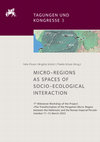
F. Pirson – B. Schütt – Th. Schulz-Brize (Hrsg.), Micro-Regions as Spaces of Socio-Ecological Interaction. 1st Milestone Workshop of the Project “The Transformation of the Pergamon Micro-Region between the Hellenistic and the Roman Imperial Period”. Istanbul 11-12 March 2022, Wiesbaden 2024, 157‒173, 2024
F. Pirson – B. Schütt – Th. Schulz-Brize (Hrsg.), Micro-Regions as Spaces of Socio-Ecological Interaction. 1st Milestone Workshop of the Project “The Transformation of the Pergamon Micro-Region between the Hellenistic and the Roman Imperial Period”. Istanbul 11-12 March 2022, Wiesbaden 2024, 2024
ANES 61 (2024) 561-582, 2025
Caves as places of human-environment interaction in the longue durée: the example of Ballık Cave in the Pergamon Micro-region
E. Menestò (ed.), «IN PRINCIPIO ERA LA GROTTA» FONDAZIONE CENTRO ITALIANO DI STUDI SULL’ALTO MEDIOEVO SPOLETO . Atti del X Convegno internazionale sulla civiltà rupestre Savelletri di Fasano (BR), 23-25 novembre 2023 (Savelletri di Fasano 2024), p. 123-139 , 2024
with the natural environment since the beginning of mankind.The longue durée of such interaction in in caves will be exemplified in by Ballık Cave next to Dikili (province of İzmir in northwest Türkiye), where layers of human occupation and usage date back to the Epipaleolithic (12th mill. BC) and can be traced at least until Byzantine times (13th C AD). The example of Ballık Cave indicates that changes in the human-environment interaction followed
no linear development with irreversible consequences, but that the same natural monument can attract human interest again and again under changed cultural and religious circumstances.
Tumuli and natural sanctuaries. Visual aspects of urban space and landscape-interaction in Hellenistic Pergamon and its micro-region
Ch. G. Williamson (ed.), Sacred Landscapes, Connecting Routes. Caeculus 10 (Leuven 2024) p. 33-62), 2024