

Figure 54 - from "Шульга, 2008. Снаряжение верховой лошади и воинские пояса на Алтае. Часть 1. 2008 // EQUIPMENT OF THE SADDLE HORSE AND WARRIOR BELTS IN ALTAI Part I Early Scythian period"
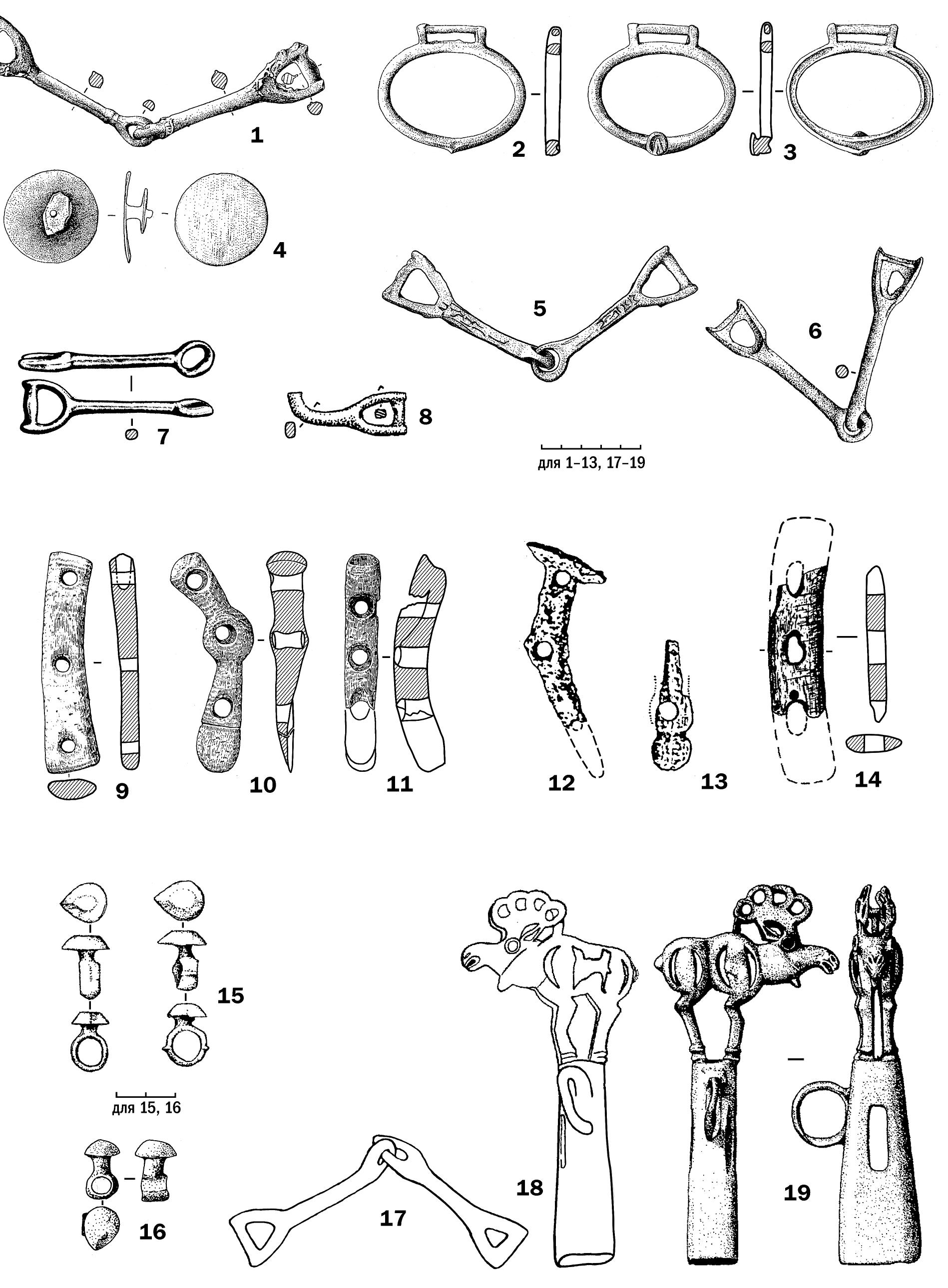
Puc. 50. eran KoHcKoro cHaps>KeHuA C paBHUHbI Antalickoro Kpas. Bpou3a — 1-8, 15-19; por — 9-14.
Figure source:
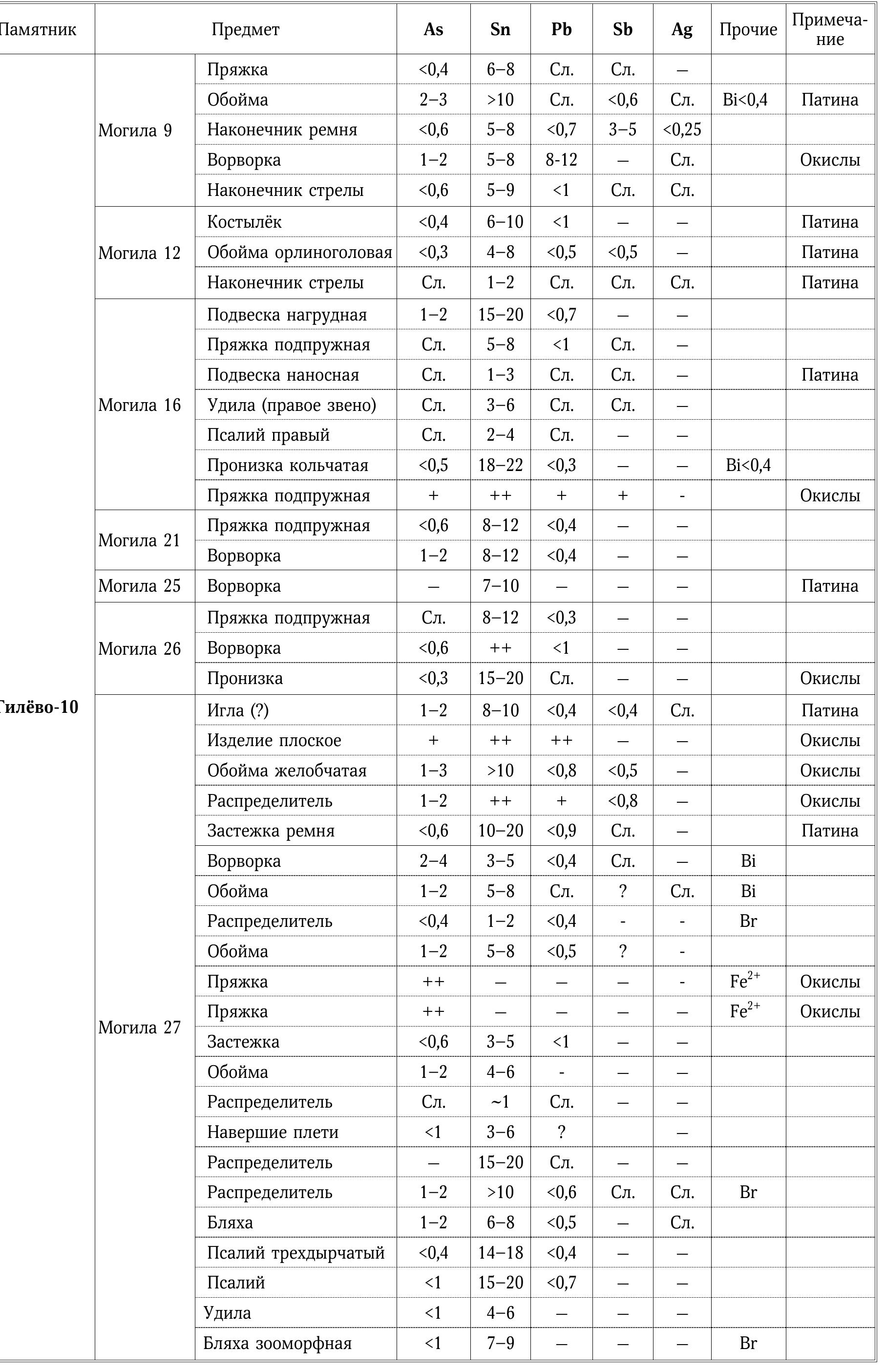
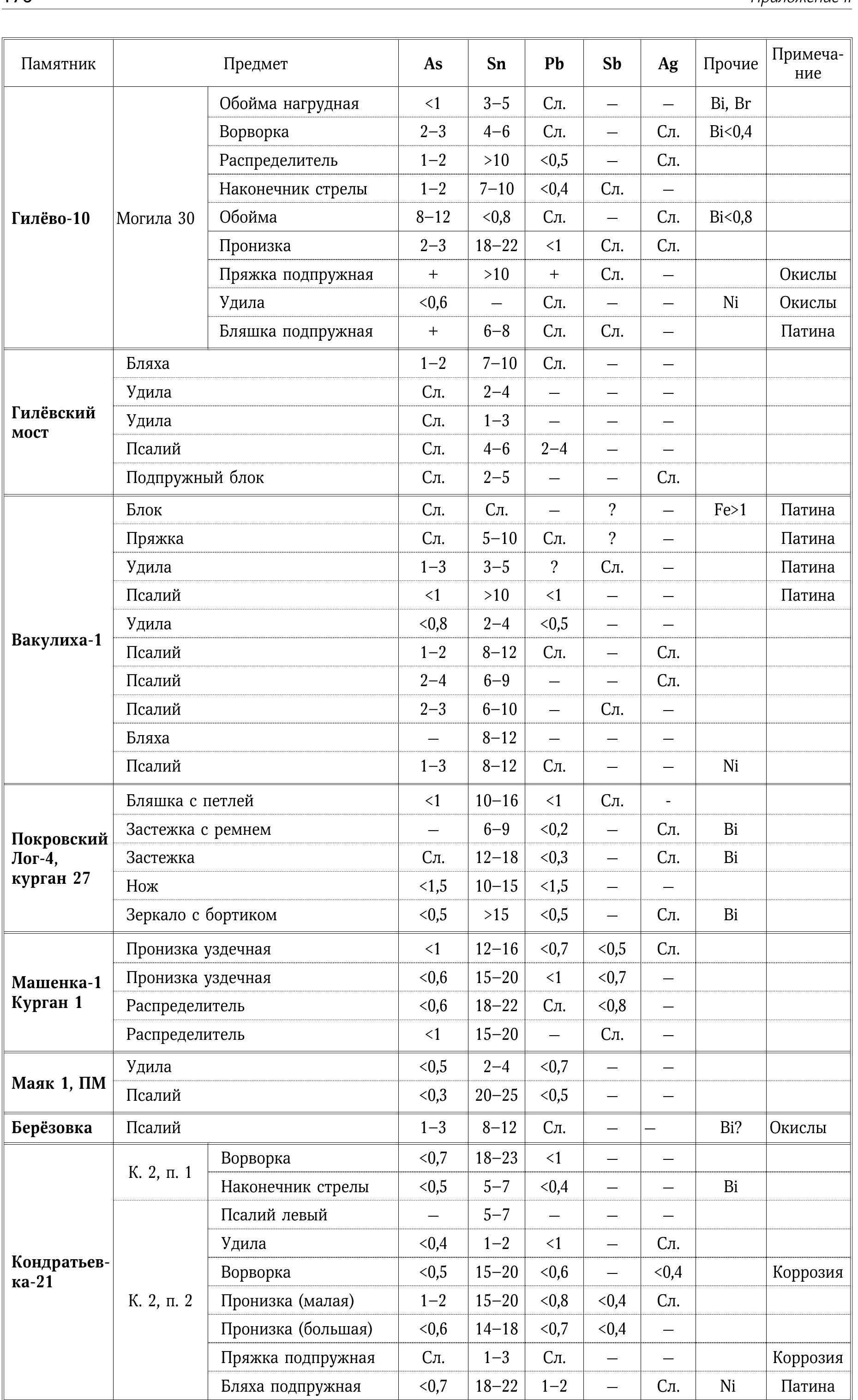
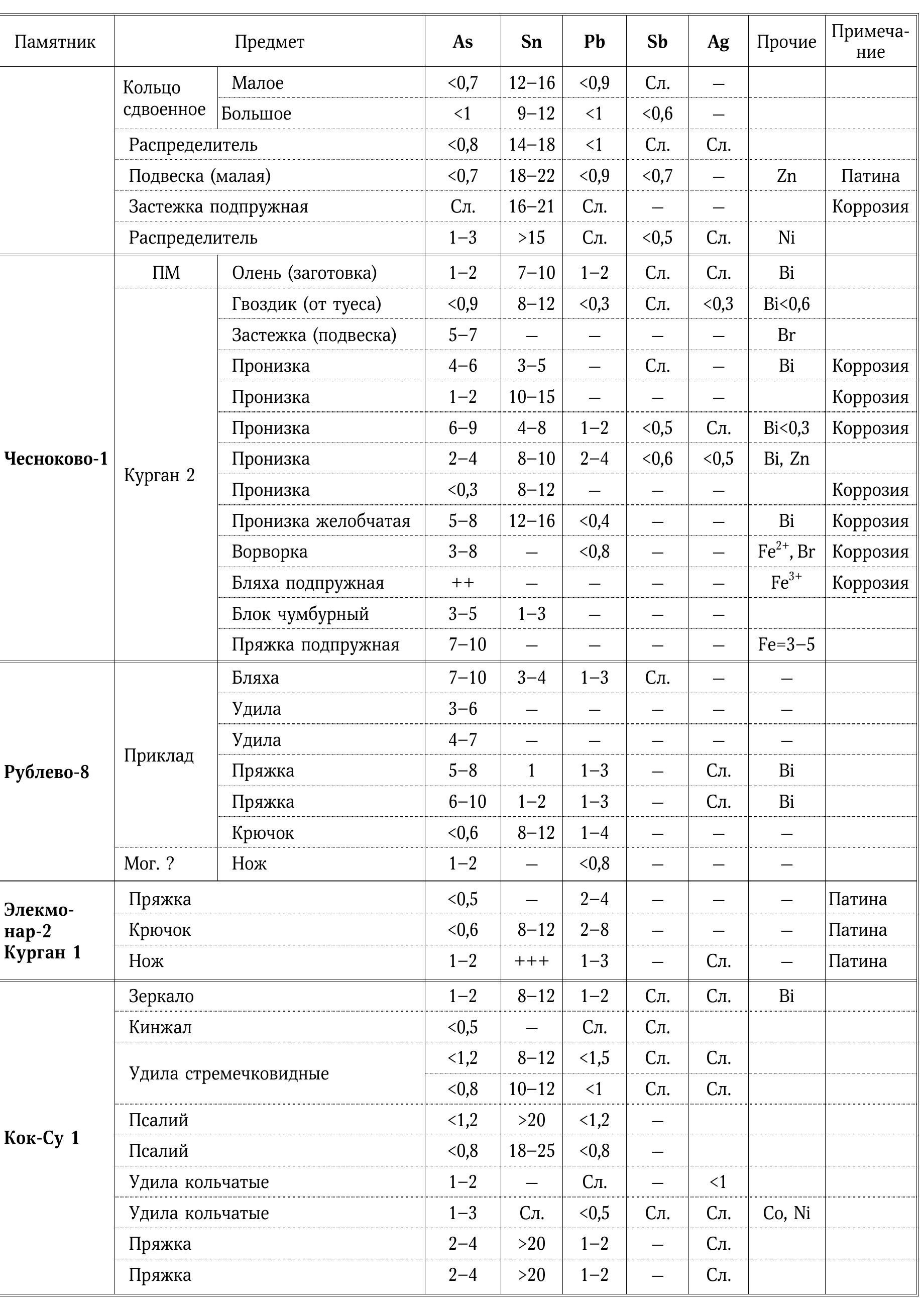

Abstract: Arrangement of Early Scythian Harness in Altai Equip ment of the sad dle horse in the VIIIth–IIId cen tu ries B. C. New data on the sad dle horse equip ment in the VIIIth-IIId cen tu ries B. C. have been gained re cently in Altai (Kubarev, Shulga, 2007). As a re sult, in Altai, for the first time in the East ern Si be ria there ap peared an op - por tu nity to com pare the Early Scythian and Pasyryk har nesses and re trace evo lu tion of sad - dle horse equip ment from the VIIIth to the IIId cen tu ries B. C. The Early Scythian har ness from foot hills of the North-West ern Altai as well as the Pasyryk one can be con sid ered stan dard for in ter pret ing nu mer ous har ness sets be yond Altai. Those find ings al low to de fine func tions of nearly all known frag ments and un der stand pe cu liar i ties of the evo lu tion of sad dle horse equip - ment in Altai and ad ja cent ter ri to ries in the VIIth–VIth cen tu ries B. C., in par tic u lar in the Cen - tral Asia and in Tuva. All over those ter ri to ries there ex isted com mon prin ci ples in ar rang ing and dec o rat ing sad dle horse har ness, which in cluded a bri dle and a sad dle with ad join ing belts. The most stan dard bri dle is the one with four al lo ca tors (usu ally small ones) placed at the cross ing of a crownpiece belt, a noseband and a throatlash, a pen dant of the noseband, a clasp of the throat lash, and a vorvorka (a fas ten ing) for fix ing crownpiece belts on the back of horse’s head (Fig. 7–10; 15; 20; 27; 34–36; 43. — 5–8; 66 and oth ers). Browbands, plaques and pen dants were not found. The find ings from Gilyovo-10 al low to sup pose that sad dles ap peared al ready in the Early Scythian pe riod. Ap par ently, such sad dles were spread among no mads in the VIIth cen tury B.C. in the East ern Eur asia, in clud ing Kazakhstan and Tuva, where har ness equip ment was anal o - gous to the one found in Altai. Sad dle equip ment wasn’t found in Sayan-Altai and Kazakhstan yet but there are rea sons to sup pose ap pear ing in Altai arched horn pom mels (Fig. 63. — 1–4) and ring lets for fix ing un der-tail belts (Fig. 63. – 5-10). Sad dle belts con sisted of a chest-piece with two with ers belts and two belly-bands (Fig. 8; 11; 20; 34; 36. – 1). The chest-piece in all known find ings was fas tened to the up per belly-belt and, as a rule, con sisted only of one belt (Fig. 20; 66. — 1). A chest-piece con sist ing of two par al lel belts with cor re spond ing set of al lo ca tors, fas ten ers, and ring lets was found only in Gilyovo-10 (Fig. 8; 11; 66. — 2). Full set of bronze de tails of stan dard sin gle-belt chest-piece in cluded two al - lo ca tors, a left-side fas tener, a cen tral pen dant and ring lets (Fig. 16. — 1, 2; 36. — 1; and oth ers). They are larger than those of the bri dle as they were used with thicker belts. Wither belts must have been sim ply tied to gether. On the belly belts there were three de tails: on the left — a belly-band buckle (with the pin down wards) on the wide up per belt; a block on the nar row lower belt (Fig. 20; 74); on the right those belts were con nected by a large plaque-fas tener (Fig. 11. — 1a; 62. — 29–43). There have been found no sad dle equip ment ex cept for flat ring lets of un der-tail belts (Fig. 63. — 5–10). As in the Pasyryk pe riod the Early Scythian sad dle was equipped with two belly-bands – a wide up per one and a nar row lower one (Fig. 64. – 2,3; 20). The buckle was fixed with a nar row belt or was fas tened pin down to the broad up per belly belt (Fig. 20; 72. — 7, 7b, 9), a block with out pin was fixed dif fer ently at the end of nar row bot tom belt (Fig. 20; 28. — 1; 72. — 7, 7a, 8). When tight en ing the girth, the nar row belt on the left end of the up per belly belt (next to the buckle) went through a large ap er ture of the block fas tened at the end of bot tom belly belt; the nar row belt was fas tened with the pin of the buckle (Fig. 20; 70. — 4) the same way as in the Pasyryk harness (Fig. 70. — 3, 5, 6). Horses were sad dled from the left, so on the left there is a vorvorka (fas ten ing) of the crownpiece belts, buck les of the throatlash and the chest-piece, as well as the belly-band buckle and the block (Fig. 20; 34). On the same side there must have been a chumbur (long rein) (Fig. 20). A whip was also placed on the left from the sad dle. Ac cord ing to the ma te ri als of Gilyovo-10 multipart chest belts could have had ad di tional buck les on the left (Fig. 11; 12; 16). In the foot hills of Altai all har ness de tails were made of bronze. Shin ing bronze of al lo ca - tors, clasps, belly-band plaques (up to 7-8 cm in di am e ter), pen dants, cheek pieces, nu mer ous ring lets (up to 128 in Mashenka-1) and other el e ments made har ness an ex pen sive and pres ti - gious horse man’s at trib ute. Horn (bone) ac ces so ries were al most never used in Early Scythian Summary 135 sad dle horse har ness. In the moun tains horn was used to make cheek pieces (Fig. 53. — 3, 5–7, 10–19) and bone ring lets of the men tioned type (Fig. 65. — 8, 9). Other parts (al lo ca tors, clasps and oth ers) were made of horn more rarely, and, as a rule at the fi nal stage (Fig. 37. — 6, 7; 40. — 8, 9; 42. — 20–25; 44. — 2, 4–7; 47. — 10, 11). Equip ment of the draught horse in the VIIIth - IIId cen tu ries B.C. In Early Scythian buri als no char i ots have been found. A team of four draught horses was found in Pasyryk-5 (around the turn of the IV–IIId cen tu ries B.C.) where a char iot sur vived (Fig. 68. – 3; Rudenko, 1953, pp. 60, 214, 232–235, 374; Rudenko, 1960, pp. 232–236). Re cently four horses have been found in Altai in elite Early Scythian kur gan (Fig. 1; 38). In both cases no sad dles were found but there were fas ten ers. Most horses from Arzhan-1,2, with out sad dles, with fas ten ings and pom mels must have been draught ones. Draught four-horse teams have been also found in Kazakhstan. For ex am ple, there are de - tails of four bri dles and pom mel of a cart in the “hoard” from Bizhe (Fig. 68. – 4; Akishev, 1978, pp. 57–58). Draught horse team was found also in Tasmola-5, where along with two pom mels two mas sive tri ple-al lo ca tors (di vid ers for three di ver gent belts) and three bells have been found (Fig. 68. — 6; See Kadyrbaev, 1966, fig. 15–19). The tri ple-al lo ca tors from Tasmola-5 could be vari a tions of well-known in the North ern Cau ca sus cyl in der tri ple-al lo ca tors with three holes in har ness sets of the VIIIth–VIIth cen tu ries B. C. In the men tioned teams vorvorkas and bells are of ten found (See Petrenko, 2006, p. 69; Erlikh, 1994). Tri ple-al lo ca tors, anal o gous to those from Tasmola-5, have been found in har ness sets in Kyryk-Oba-2 in the sur round ings of the South ern Urals (Fig. 68. — 6; Gutsalov, 2007, fig. 13. — I–IV) and in Yukhuanmyao near Beijing (Fig. 77. — III, 3.4) dated within the VIth cen tury B. C. Thus, tri ple-al lo ca tors of that kind are not ac ci den tal but widely spread (from the Urals to Ordos) in an cient har ness de tails re pro - duced for a pe riod of about 100–150 years. On the whole, in Sayan-Altai and Kazakhstan the fol low ing at trib utes of draught har nesses: 1) no sad dle belts in ac ces so ries sets; 2) bri dles are ar ranged sim i larly in a num ber of cases; 3) fas ten ings (nar rowed in the mid dle and three-trove ones) and ad di tional vorvorkas; 4) dif fer ent “pom mels”, bells and tri ple-al lo ca tors.


