Synopsis
Chinese martial arts (Wushu) have thousands of years of history. From Shaolin Kung Fu to Tai Chi, it embodies deep philosophical thought and cultural significance beyond mere combat.
Overview
Chinese martial arts, commonly known as Wushu or Kung Fu, are a unique sporting and cultural tradition developed by the Chinese people over thousands of years of social practice. Far more than just fighting techniques, Chinese martial arts integrate ancient Chinese philosophy, traditional medicine, and aesthetics, forming an essential component of Chinese civilization.
The history of Chinese martial arts stretches back millennia. According to the Records of the Grand Historian (Shiji), martial arts were already used for military training and civilian self-defense as early as the Spring and Autumn and Warring States periods (770-221 BC). Over thousands of years of development, Chinese martial arts evolved into numerous schools and styles — the 1985 publication "History of Chinese Martial Arts" documented 75 distinct fist styles alone, with weapon forms adding to an impressive catalogue.
Major Schools
Chinese martial arts are traditionally divided into five great schools:
| School | Origin | Characteristics | Representative Styles |
|---|---|---|---|
| Shaolin | Songshan, Henan | Powerful and forceful | Five Animals, Arhat Fist, Hung Gar |
| Wudang | Wudang Mountains, Hubei | Soft overcoming hard, internal & external | Tai Chi, Baguazhang, Xingyiquan |
| Emei | Mount Emei, Sichuan | Flexible and versatile | Emei Fist, White Eyebrow |
| Kunlun | Kunlun Mountains, Xinjiang | Fierce and unconventional | Kunlun Fist |
| Kongtong | Kongtong Mountains, Gansu | Balance of yin and yang | Kongtong Fist |
Additionally, there is a geographical division between Southern Fist (Nanquan, centered in Guangdong and Fujian) and Northern Leg (Beitui, centered in Hebei and Shandong), creating the famous "Southern Fist, Northern Leg" dynamic.
Shaolin Kung Fu
Shaolin Kung Fu is one of the most renowned styles of Chinese martial arts, originating from the Shaolin Temple on Mount Song in Henan Province. According to legend, around the 5th century AD, the Indian monk Bodhidharma came to the Shaolin Temple and meditated facing a wall for nine years, laying the foundations of Shaolin martial arts. Shaolin Kung Fu is characterized by its power and strength, emphasizing both "external training of muscles, bones, and skin" and "internal cultivation of breath."
The Five Animal Fist system (Dragon, Tiger, Leopard, Snake, Crane) is among its most representative techniques. In 2006, Shaolin Kung Fu was inscribed on China's National Intangible Cultural Heritage List.
Tai Chi Chuan
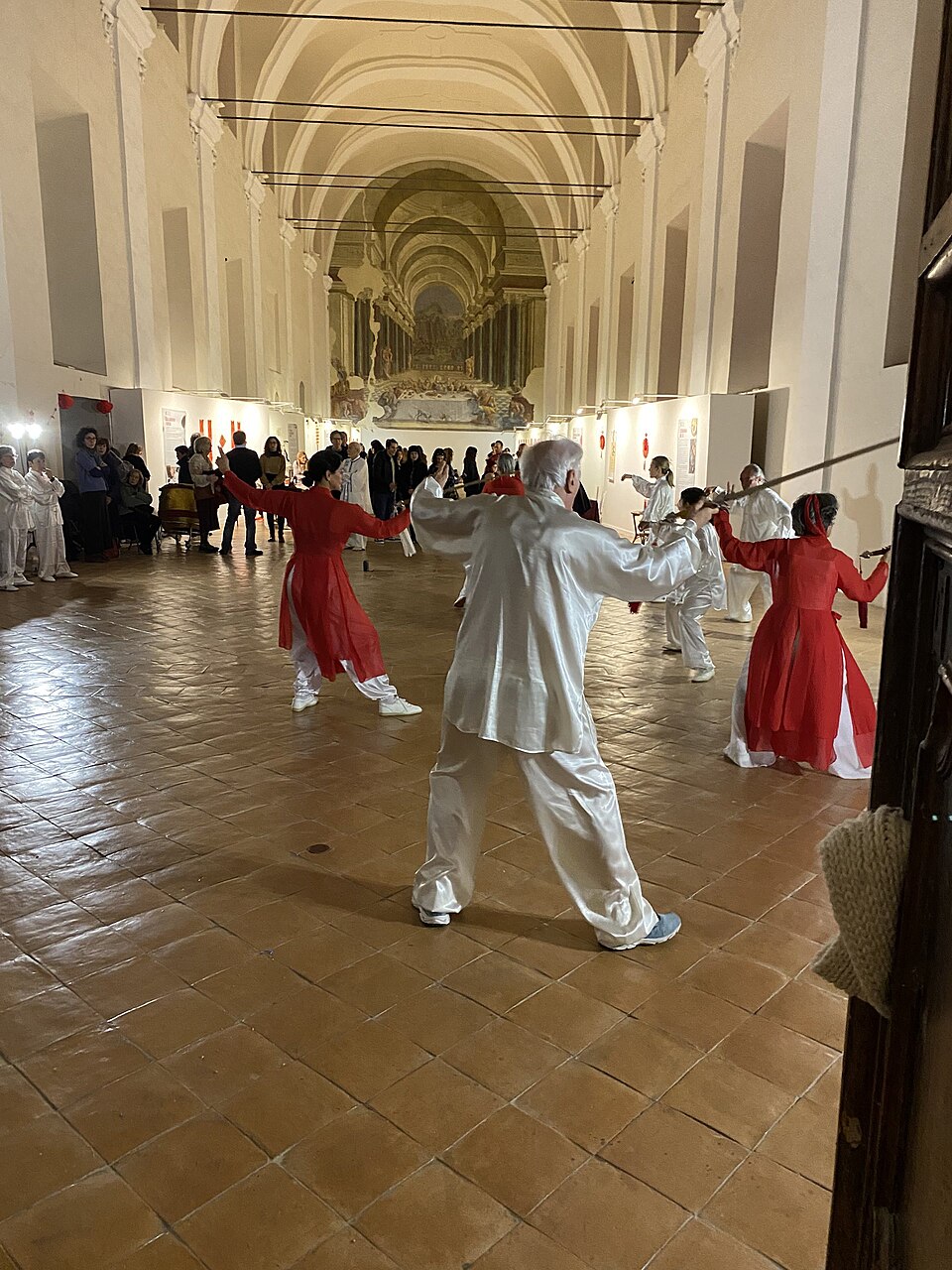
Tai Chi Chuan (Taijiquan) is one of the most widely practiced Chinese martial arts styles worldwide. It was created in the late Ming to early Qing Dynasty by Chen Wangting from Chen Village in Wenxian, Henan. Tai Chi is built on the core philosophy of "softness overcoming hardness" and "stillness controlling movement," featuring slow, fluid movements that serve both health cultivation and self-defense purposes.
Tai Chi is divided into several major families: Chen, Yang, Wu (Hao), Wu, and Sun styles. Yang Style Tai Chi, created by Yang Luchan, features expansive and graceful movements and is the most popular style worldwide. In 2020, Tai Chi was inscribed on UNESCO's Representative List of the Intangible Cultural Heritage of Humanity.
Philosophical Foundations
Chinese martial arts are deeply rooted in traditional Chinese philosophy:
- Daoism: Internal martial arts like Tai Chi and Baguazhang are based on the Daoist theory of yin and yang, emphasizing "softness overcoming hardness" and "following the natural flow"
- Confucianism: Martial arts emphasize "wu de" (martial virtue) — the principle that "one must cultivate virtue before cultivating martial skills," reflecting Confucian ethics
- Buddhism: Shaolin Kung Fu integrates Chan (Zen) Buddhist philosophy, pursuing the unity of body and mind through spiritual practice
- Traditional Chinese Medicine: Martial arts training is closely linked to meridian theory, emphasizing the flow of qi and blood
Modern Development
In modern society, Chinese martial arts have evolved from traditional combat techniques into a comprehensive activity combining sport, culture, and art:
- Competitive Wushu: Martial arts was first included as an official event at the 1990 Asian Games in Beijing and has been a staple ever since
- Film and Television: From Bruce Lee and Jackie Chan to Jet Li, Chinese martial arts films have brought kung fu culture to the world
- Global Spread: According to the International Wushu Federation, martial arts are now practiced in over 150 countries and regions worldwide
Chinese martial arts are not only a cultural treasure of the Chinese nation but also an important heritage of world sporting culture, continuing to play a vital role in cultural exchange across the globe.
Stills & Gallery
Comments (0)