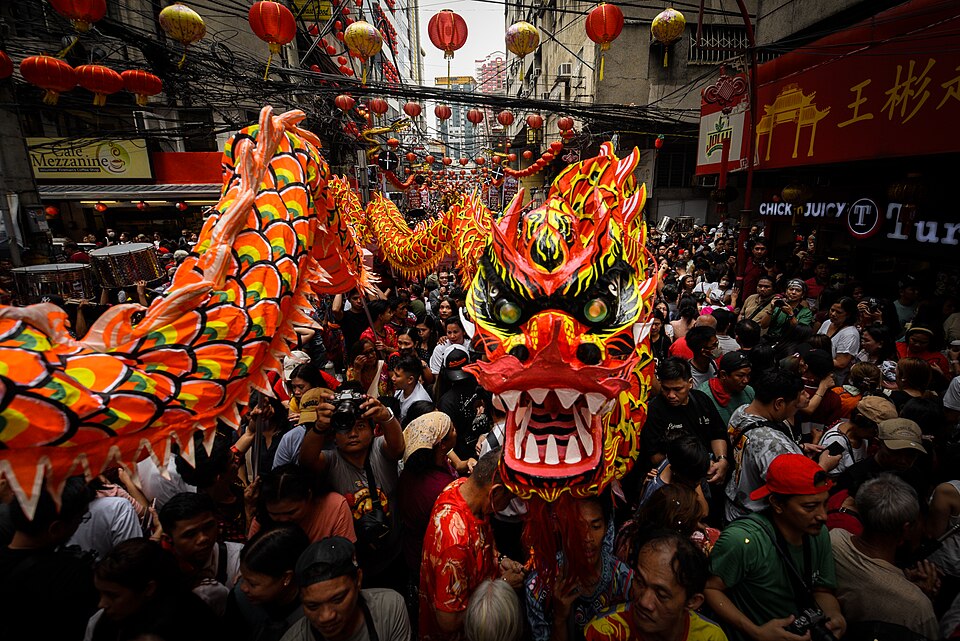
Synopsis
The Spring Festival (Chinese New Year) is China's most important traditional festival with over 3,000 years of history. Inscribed on UNESCO's Intangible Cultural Heritage list in 2024.
Overview
The Spring Festival (春节), also known as Chinese New Year or Lunar New Year, is the first day of the Chinese traditional calendar (lunar calendar) and the most important traditional festival for Chinese people and the broader Sinosphere. The Spring Festival has a long history, originating from ancient humans' primitive beliefs and nature worship, evolving from the year-beginning prayer ceremonies of ancient times. It has been celebrated in China for at least 3,000 years.
In ancient times, the first day of the first lunar month was called "Sui Shou," "Zheng Dan," "Yuan Ri," and other names. The official naming of the first day of the lunar new year as "Spring Festival" (春节) only began after the founding of the Republic of China in 1912. Celebrations typically begin on the 23rd day of the 12th lunar month (Little New Year) and continue until the 15th day of the first lunar month (Lantern Festival), with New Year's Eve and the first day of the new year being the most important.
In December 2024, "Spring Festival — Social Practices of the Chinese People in Celebrating the Traditional New Year" was inscribed on UNESCO's Representative List of the Intangible Cultural Heritage of Humanity.
History
| Period | Event |
|---|---|
| Ancient times | Year-beginning prayer ceremonies originate |
| Shang Dynasty | Year-beginning ceremonies well established |
| Han Dynasty | The first day of the first lunar month officially designated as New Year |
| Tang-Song Dynasties | Spring Festival customs become more elaborate; firecrackers and spring couplets appear |
| Ming-Qing Dynasties | Spring Festival customs take their current form |
| 1912 | After the founding of the Republic of China, the first day of the lunar new year is officially named "Spring Festival" |
| December 2024 | Inscribed on UNESCO Representative List of Intangible Cultural Heritage |
Main Customs
| Time | Custom | Description |
|---|---|---|
| 12th month, 23rd/24th day | Little New Year | Worship the Kitchen God, clean the house, prepare for the New Year |
| New Year's Eve | Reunion Dinner | Family gathers for a lavish dinner, stay up late (守岁) |
| New Year's Eve | Spring Couplets | Paste red couplets on both sides of the door for good luck |
| New Year's Eve | Red Envelopes | Elders give children lucky money (压岁钱) for peace and safety |
| 1st day of new year | New Year Greetings | Wear new clothes, visit relatives and friends to exchange blessings |
| 1st-15th day | Firecrackers | Ward off evil spirits, celebrate with noise and joy |
| 15th day (1st month) | Lantern Festival | Admire lanterns, solve lantern riddles, eat tangyuan (glutinous rice balls) |
Reunion Dinner
The reunion dinner (年夜饭) is the most important family meal during the Spring Festival. The entire family gathers to share a lavish feast. The dishes vary by region, but typically include foods with auspicious meanings:
- Fish: Symbolizes "abundance year after year" (the word for fish, 鱼, sounds like "surplus")
- Dumplings (Jiaozi): Traditional in northern China, shaped like ancient Chinese gold ingots, symbolizing wealth
- Tangyuan (Glutinous Rice Balls): Traditional in southern China, symbolizing family reunion
- Nian Gao (New Year Cake): Symbolizes "progress and growth year after year"
- Longevity Noodles: Symbolizes long life
Spring Couplets and "Fu" Character
Spring couplets (春联) are the most iconic decoration during the Spring Festival. They are typically written on red paper with black or golden ink in matching poetic lines. Spring couplets are pasted on both sides of the door — the upper line on the right, the lower line on the left, with a horizontal scroll above.
The character "Fu" (福, meaning "blessing" or "good fortune") is the most common auspicious symbol during the Spring Festival. People often paste the "Fu" character upside down, as "upside down" (倒) sounds like "arrive" (到), meaning "good fortune has arrived."
CCTV Spring Festival Gala
Since 1983, China Central Television (CCTV) has broadcast the Spring Festival Gala (春晚) every New Year's Eve. This has become a new tradition for Chinese people celebrating the New Year. The Gala is the most-watched television program in China, with a global audience exceeding one billion viewers.
Cultural Significance
The Spring Festival holds a special place in Chinese culture:
- Family Reunion: The Spring Festival is the most important time for Chinese family reunions; during the festival period, billions of trips are made during the "Chunyun" (Spring Festival travel rush)
- Cultural Heritage: The Spring Festival is an important vehicle for excellent traditional Chinese culture, carrying rich cultural connotations
- Spiritual Aspirations: The Spring Festival reflects the Chinese people's yearning for a better life and their hopes for the new year
- Global Influence: The Spring Festival has become a global cultural event, with many countries and regions recognizing it as an official holiday
Practical Information
| Item | Details |
|---|---|
| Date | First day of the first lunar month (usually between January 21 and February 20) |
| 2025 Spring Festival | January 29 (Year of the Snake) |
| 2026 Spring Festival | February 17 (Year of the Horse) |
| Celebration Period | From the 23rd of the 12th lunar month to the 15th of the 1st lunar month, ~23 days |
| Official Holiday | Typically 7 days |
| Key Activities | Reunion dinner, New Year greetings, Spring Gala, temple fairs, lantern shows |
| Travel Tips | Spring Festival is peak travel season in China; book in advance |
World Heritage
In December 2024, "Spring Festival — Social Practices of the Chinese People in Celebrating the Traditional New Year" was inscribed by UNESCO on the Representative List of the Intangible Cultural Heritage of Humanity. UNESCO's evaluation noted:
- The Spring Festival is an important component of excellent traditional Chinese culture
- The social practices of the Spring Festival embody the concepts of family reunion, social harmony, and harmony between humans and nature
- The spread of the Spring Festival has promoted exchanges and mutual learning among different civilizations
References
- Baidu Baike: https://baike.baidu.com/item/春节/136876
- Wikipedia: https://zh.wikipedia.org/wiki/中国新年
- Guangming Online: https://www.gmw.cn/xueshu/2025-01/21/content_37813207.htm
- UNESCO: https://ich.unesco.org
Stills & Gallery
Comments (0)