Books and Edited book by Francesca Mattei
Il volume racconta per la prima volta la storia dell'architettura del Rinascimento attraverso la ... more Il volume racconta per la prima volta la storia dell'architettura del Rinascimento attraverso la lente della geografia, intesa in varie accezioni: la relazione tra gli aspetti fisici del territorio e l'impiego di specifici materiali e tecniche costruttive; il legame fra le componenti culturali e identitarie di un luogo, quali il ruolo del paesaggio o delle tradizioni locali, e le scelte progettuali; la rappresentazione cartografica e le tecniche di rilievo; la mobilità degli architetti e delle idee, veicolate dai trattati sull'arte del costruire. In quindici saggi, incentrati prevalentemente sulla penisola italiana in una cronologia che coincide con un lungo Cinquecento, il libro dimostra come la configurazione del territorio e le sue componenti materiali e immateriali abbiano determinato le caratteristiche formali, costruttive e culturali di ogni progetto, proponendo una lettura alternativa alla storia del Rinascimento raccontata attraverso la biografia dei grandi architetti.
Architectural Design and History Series
Monique Chatenet, Francesca Mattei (éd.) Les diplomates de Mantoue à la cour de France (1501-1559). Extraits de la correspondance diplomatique conservée aux Archives d’État de Mantoue, Paris, Cour de France.fr, 2024, 6 vol. Ouvrage inédit mis en ligne le 1er septembre 2024
Dopo l'elezione a imperatore del Sacro Romano Impero (1530), Carlo V d'Asburgo (1500-1558) ottien... more Dopo l'elezione a imperatore del Sacro Romano Impero (1530), Carlo V d'Asburgo (1500-1558) ottiene il controllo sul più vasto dominio della storia dell'umanità. In che modo la coesistenza di tradizioni, lingue e geografie diverse si riflette sulla cultura architettonica? Utilizzando l'Impero di Carlo V come osservatorio, questo volume interroga le diverse scale del progetto, confrontandosi con i più recenti orientamenti critici. Facendo dialogare le questioni storiche con quelle storiografiche, i dieci saggi qui raccolti, dedicati al Vecchio e al Nuovo Mondo, propongono una riflessione trasversale sull'arte del costruire, apportando contributi originali e illustrando nuovi approcci alla ricerca.
Contributors: Isabella Balestreri, Amedeo Belluzzi, Claudia Candia, Claudia Conforti, Cristiana C... more Contributors: Isabella Balestreri, Amedeo Belluzzi, Claudia Candia, Claudia Conforti, Cristiana Coscarella, Bianca de Divitiis, Emanuela Garofalo, Francesca Mattei, Fulvia Scaduto
Sebbene le vicende dei Gonzaga come committenti d’architettura rappresentino un tema ampiamente e... more Sebbene le vicende dei Gonzaga come committenti d’architettura rappresentino un tema ampiamente esplorato dagli studiosi, prevale nella storiografia un’interpretazione fondata sul rapporto eroico artista-mecenate, a discapito delle altre figure che hanno contribuito a costruire la Mantova rinascimentale. Poggiando su una approfondita indagine delle fonti archivistiche e servendosi di un approccio multidisciplinare, questo lavoro ricostruisce in maniera originale il profilo di artistic adviser di letterati e agenti della diplomazia gonzaghesca, offrendo una insolita visione della città di Giulio Romano e fornendo un nuovo contributo per la conoscenza di una delle corti più affascinanti nell’Europa del primo Cinquecento.
Casa Gonzaga nel quartiere di San Leonardo. Architettura e committenza a Mantova
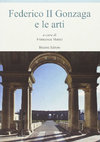
Nel terzo atto della commedia La Cortigiana, opera che Pietro Aretino compone nel 1525 per irride... more Nel terzo atto della commedia La Cortigiana, opera che Pietro Aretino compone nel 1525 per irridere l'originale declinato al maschile di Baldassarre Castiglione, lo scambio di battute tra Valerio e Flaminio, due servitori, è una straordinaria sintesi del quadro politico della penisola italica alla vigilia del Sacco di Roma. Chiede il primo: "Dove voi tu ire, adesso, ch’è in disordine tutto il mondo? Se vai a Milano, el Duca sta come Dio vole; a Ferrara, quel principe attende ad altro ch’a fare bella corte; a Napoli non ci son piú li Re; a Urbino el signor è anche fastidioso, in disagio per i passati danni. E credi a me, che quando pate la Corte di Roma, patono gli altri ancora". La risposta non lascia dubbi sul cenno autobiografico inserito dall'autore e nemmeno sul favorevole giudizio della corte dei Gonzaga: "Anderò a Mantoa, dove la eccellenzia del Marchese Federico non nega el pane a niuno et ivi mi tratterrò tanto che Nostro Signore acconci le cose del mondo, non sol d’Italia". Federico II Gonzaga (1500-1540), filo conduttore di questa raccolta di saggi, è per la prima volta protagonista di uno studio monografico. A quasi trent'anni dalla mostra dedicata a Giulio Romano a Palazzo Te nel 1989, e dopo un convegno dedicato all'artista nel 2009, il convegno Federico II e le arti organizzato nel 2014 - di cui si pubblicano in questa sede gli atti - ha rappresentato un ulteriore e fertile terreno di dialogo e di scambio. Il presente volume raccoglie contributi di carattere diverso: alcuni propongono affondi mirati sulla biografia del primo duca di Mantova, sulle opere d’arte da lui commissionate o sugli artisti che lavoravano alla sua corte; altri optano per un tentativo di sistematizzare problemi storiografici più ampi. Mettendo a confronto generazioni di studiosi italiani e stranieri, i testi qui raccolti consentono la disseminazione e la “tradizione” – nell'accezione etimologica del temine – dei saperi, in una sorta di passaggio di consegne, i cui risultati rappresentano nuovi traguardi e nel contempo tracciano nuove piste di ricerca per studi futuri.
Reviews:
http://drammaturgia.fupress.net/recensioni/recensione2.php?id=6816
https://www.journals.uchicago.edu/doi/full/10.1086/697772
http://www.burlington.org.uk/current-issue
Reviews:
http://drammaturgia.fupress.net/recensioni/recensione2.php?id=6816
https://www.journals.uchicago.edu/doi/full/10.1086/697772
http://www.burlington.org.uk/current-issue
Journal articles by Francesca Mattei
Annali di architettura, 2022
In seguito alla progressiva espansione delle reti commerciali dovuta alle navigazioni patrocinate... more In seguito alla progressiva espansione delle reti commerciali dovuta alle navigazioni patrocinate dalle corone di Spagna e di Portogallo, i mercanti diventano protagonisti della prima globalizzazione, acquisendo nel corso del Cinquecento una straordinaria potenza economica che si esprime anche nel campo del mecenatismo architettonico, strumento per render visibile il loro cambiamento di status. All’interno di una popolosa categoria di committenti si colloca la famiglia di mercanti cremonesi Affaitati, i quali, dopo aver avviato le attività commerciali nella propria città di origine, fondano numerose filiali in Italia e in Europa contando su un solido legame con gli Asburgo, che consente loro di conquistare il mercato di stoffa, spezie e zucchero di Madeira nella penisola lusoiberica e nelle Fiandre. Le loro imprese mecenatesche – che pure si diramano in molti paesi europei - sono state osservate in modo discontinuo, diversamente da quanto si riscontra nella storiografia rispetto ad altri mercanti-committenti. Il presente contributo – parte di una più ampia ricerca tutt’ora in corso - propone la prima disamina sistematica della villa extraurbana costruita dalla famiglia Affaitati a pochi chilometri da Cremona, nel feudo di Grumello, attraverso l’analisi di documenti, spesso inediti, mediante la lettura delle forme e della decorazione, e tramite la ricostruzione del profilo culturale di alcuni esponenti della famiglia, implicati nel processo di trasformazione dell’edificio attuato alla fine del XVI secolo. Lo studio sottolinea la consapevole vocazione politica delle strategie di committenza degli Affaitati, evidenti nel programma pittorico eseguito in alcuni ambienti della residenza grumellese, e delinea una rete di figure e fabbriche a loro connesse, proiettandoli nel contesto internazionale dominato dagli Asburgo.
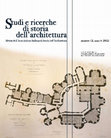
In the first half of the 19th century, Percier’s pupils at the École des Beaux-Arts developed his... more In the first half of the 19th century, Percier’s pupils at the École des Beaux-Arts developed his lesson, continuing
research on Renaissance architecture both during the Grand Tour in Italy and through the study of various theoretical models and
the reproduction of graphic tools. Through the close and comparative reading of the sketchbooks made by Guillaume Abel Blouet,
Jean-Baptiste-Cicéron Lesueur, François Debret and Prosper Barbot – materials that are known but awaiting systematic study – this
essay aims to examine the approach to the historical and visual knowledge of Renaissance architecture and its multiple refraction in
the imagery of 19th-century French architects. Starting from the autoptic analysis of sketchbooks and techniques of representation,
the essay analyses the theoretical tools used by architects to approach the study of residential architecture and to investigate in
depth a few examples of palaces and villas, i.e. Palazzo della Cancelleria and Villa d’Este a Tivoli, in order to reflecting critically on
the kaleidoscopic concept of the ‘myth of Renaissance’ and on the relationship between drawing and archaeology in the process of
patrimonialisation of early modern architecture in France.
Keywords: Percier, Fontaine, Écoles des Beaux Arts, Drawings, Grand Tour
research on Renaissance architecture both during the Grand Tour in Italy and through the study of various theoretical models and
the reproduction of graphic tools. Through the close and comparative reading of the sketchbooks made by Guillaume Abel Blouet,
Jean-Baptiste-Cicéron Lesueur, François Debret and Prosper Barbot – materials that are known but awaiting systematic study – this
essay aims to examine the approach to the historical and visual knowledge of Renaissance architecture and its multiple refraction in
the imagery of 19th-century French architects. Starting from the autoptic analysis of sketchbooks and techniques of representation,
the essay analyses the theoretical tools used by architects to approach the study of residential architecture and to investigate in
depth a few examples of palaces and villas, i.e. Palazzo della Cancelleria and Villa d’Este a Tivoli, in order to reflecting critically on
the kaleidoscopic concept of the ‘myth of Renaissance’ and on the relationship between drawing and archaeology in the process of
patrimonialisation of early modern architecture in France.
Keywords: Percier, Fontaine, Écoles des Beaux Arts, Drawings, Grand Tour
Opus Incertum n. 8, 2022
The essay focuses on the ‘talking’ façade of Palazzo Bevilacqua in Ferrara, lavishly decorated by... more The essay focuses on the ‘talking’ façade of Palazzo Bevilacqua in Ferrara, lavishly decorated by trophies,
panoplies, and eight mottos in Latin.
The text is divided into three parts. The first is dedicated to the analysis of the palace, with particular attention to the
iconographic programme sculpted on the façade, refashioned by the cardinal Bonifacio Bevilacqua in 1601. The second
focuses on the interpretation of the epigraphs in relation to the antiquarian culture of the city. The third proposes the
reconstruction of the cultural biography of the patron of the building.
Through the analysis of published and unpublished documents and sources, the essay proposes the first in-depth
investigation of Palazzo Bevilacqua, in order to place it in the artistic and cultural context of Ferrara, where the new political
establishment – a few years after the Devolution to the Papal State (1598) – coexisted with the cultural legacy forged by the
duke Alfonso II d’Este (1559-1597) and his entourage of antiquarians Enea Vico, Agostino Mosti and Pirro Ligorio.
https://oajournals.fupress.net/index.php/oi/article/view/14075/12998
panoplies, and eight mottos in Latin.
The text is divided into three parts. The first is dedicated to the analysis of the palace, with particular attention to the
iconographic programme sculpted on the façade, refashioned by the cardinal Bonifacio Bevilacqua in 1601. The second
focuses on the interpretation of the epigraphs in relation to the antiquarian culture of the city. The third proposes the
reconstruction of the cultural biography of the patron of the building.
Through the analysis of published and unpublished documents and sources, the essay proposes the first in-depth
investigation of Palazzo Bevilacqua, in order to place it in the artistic and cultural context of Ferrara, where the new political
establishment – a few years after the Devolution to the Papal State (1598) – coexisted with the cultural legacy forged by the
duke Alfonso II d’Este (1559-1597) and his entourage of antiquarians Enea Vico, Agostino Mosti and Pirro Ligorio.
https://oajournals.fupress.net/index.php/oi/article/view/14075/12998
Lexicon, 2020
This essay aims to analyze the stone construction within the architectural practice in the Este c... more This essay aims to analyze the stone construction within the architectural practice in the Este court (1450-1580). First, the article focuses on the materiality of architecture, by listing the different uses of stone from the formal and architectural point of view. Then, the essay analyzes the aspects relating to the profession and the mobility of workers involved in the construction and the sell of stones - such as lapicidi, tagliapietra, etc. The essay aims to provide a first systematic study of this topic due to a critical assessment of archival sources and material evidence.
Keywords
Ferrara, Stone, Construction in the Early Modern Period, Court Cities of Northern Italy
Keywords
Ferrara, Stone, Construction in the Early Modern Period, Court Cities of Northern Italy
Schifanoia, 2020
Autorizzazione del Tribunale di Pisa n. 8/10 del 10 maggio 2010.
In 1584 Alfonso II d’Este entered Modena together with his
third wife Margherita Gonzaga. This e... more In 1584 Alfonso II d’Este entered Modena together with his
third wife Margherita Gonzaga. This event belongs to an
established tradition in the dukedom and has been described
in various sources: they include one drawing, attributed to the
architect Gian Maria Menia, devoted to five ephemeral arches
designed for the occasion, and a detailed description of the
ceremonial entry written by the humanist Carlo Sigonio. This
work focuses on these two aspects: on the one hand, the essay
examines the references used by Menia to realize the ephemeral
architectures; on the other, the essay frames the description
of the triumphal ceremonial in the varied interests and in the
antiquarian studies of Sigonio.
third wife Margherita Gonzaga. This event belongs to an
established tradition in the dukedom and has been described
in various sources: they include one drawing, attributed to the
architect Gian Maria Menia, devoted to five ephemeral arches
designed for the occasion, and a detailed description of the
ceremonial entry written by the humanist Carlo Sigonio. This
work focuses on these two aspects: on the one hand, the essay
examines the references used by Menia to realize the ephemeral
architectures; on the other, the essay frames the description
of the triumphal ceremonial in the varied interests and in the
antiquarian studies of Sigonio.
This paper focuses on the intriguing treatise Pallazzo di
Lucullo, written in ca. 1515 by the hu... more This paper focuses on the intriguing treatise Pallazzo di
Lucullo, written in ca. 1515 by the humanist Lelio Manfredi, which reconstructs the villa in Frascati (ancient Tusculum) built for the Roman aristocrat Lucullus. The vernacular manuscript, dedicated to Isabella d’Este Gonzaga, Duchess of Mantua, and preserved in the Biblioteca Marciana in Venice, testifies to Manfredi’s antiquarian interests. First of all, the essay investigates the ancient and modern sources used by the author, dedicating particular attention to Varro’s description of his own villa of Cassino, which served as Manfredi’s model for the reconstruction of the Lucullian villa. The Pallazzo di Lucullo is then framed within the context of architectural treatises written by men of letters in the sixteenth century – such as Alvise Cornaro and Giangiorgio Trissino – and of the humanistic reception of the aviary, also admired by Erasmus and Giulio Giovio. Finally, the paper discusses the Pallazzo di Lucullo within the cultural context of the Gonzaga dukedom, where Manfredi lived for several years. By describing the ancient villa, the author presents himself as an artistic adviser of the Gonzaga, who were renowned patrons thanks to their important architectural
commissions. Thus, the analysis of the Pallazzo di Lucullo sheds new light on the dynamics at this Renaissance court, promoting the study of the intermediaries who introduced the Gonzaga to antiquarianism and ancient architecture.
Lucullo, written in ca. 1515 by the humanist Lelio Manfredi, which reconstructs the villa in Frascati (ancient Tusculum) built for the Roman aristocrat Lucullus. The vernacular manuscript, dedicated to Isabella d’Este Gonzaga, Duchess of Mantua, and preserved in the Biblioteca Marciana in Venice, testifies to Manfredi’s antiquarian interests. First of all, the essay investigates the ancient and modern sources used by the author, dedicating particular attention to Varro’s description of his own villa of Cassino, which served as Manfredi’s model for the reconstruction of the Lucullian villa. The Pallazzo di Lucullo is then framed within the context of architectural treatises written by men of letters in the sixteenth century – such as Alvise Cornaro and Giangiorgio Trissino – and of the humanistic reception of the aviary, also admired by Erasmus and Giulio Giovio. Finally, the paper discusses the Pallazzo di Lucullo within the cultural context of the Gonzaga dukedom, where Manfredi lived for several years. By describing the ancient villa, the author presents himself as an artistic adviser of the Gonzaga, who were renowned patrons thanks to their important architectural
commissions. Thus, the analysis of the Pallazzo di Lucullo sheds new light on the dynamics at this Renaissance court, promoting the study of the intermediaries who introduced the Gonzaga to antiquarianism and ancient architecture.