Papers by François Porte
Isabelle Brian et Laurent Jalabert (dir.), Histoire européenne de la Lorraine en 100 dates, , 2025
coord. por Sabino Perea Yébenes, El soldado romano y la familia, Madrid, 2024
Anticiper et gérer de l'Antiquité au Moyen Âge Journée des doctorants en mondes anciens et médiévaux de l’université de Bourgogne-Franche-Comté DOKIMA, 2024
During the 1 st century BC, civil wars in the Roman world show a different scaling of the logisti... more During the 1 st century BC, civil wars in the Roman world show a different scaling of the logistical models, with armies mobilizing resources from a same empire. The African War (47-46 BC) allows us to observe the anticipation of needs and the logistics management in the Roman armies, but also the difficulties threatening this organization. First, Republican troops controlling the African province since 49 BC rationally mobilize its resources to meet their needs, anticipating a Caesarian offensive, setting up fortified storage places spread across the province. Then, Caesar carefully plans his logistics, using Sicily as his main base of operation, spreading supply lines to Africa through the sea. However, difficult conditions of winter navigation reduce the effectiveness of these supply lines and Caesar has to set up a new logistical organization. These difficulties threaten his troops and influence his strategic decisions as he needs to change his plans. To anticipate the needs of Roman armies is the key element of logistical preparations of military campaigns, but many hazards can threaten this organization. An effective crisis management is a decisive factor of success in military operations and the adaptability of generals can make a difference.
Jean El Gammal et Laurent Jalabert (dir.), Vainqueurs et vaincus, de l'Antiquité à nos jours, Annales de l'Est (numéro spécial), pp. 23-39, 2022
Dialogues d'Histoire Ancienne supplément 26, 2023
From the 2nd century BC, Greek cities and people are faced with the imperium Romanum as it extend... more From the 2nd century BC, Greek cities and people are faced with the imperium Romanum as it extends through the East. They suffer requisitions and abuses from Roman troops, but negotiate privileges and immunities in order to maintain their autonomy. From 49 to 48 BC, Greeks find themselves caught in the middle of a civil war tearing the Roman republic apart, between Caesar and Pompey. The latter’s decision to establish his strategic base in Epirus and Macedon, followed by the landing of Caesar’s legions, expose Greek cities to their requirements: supplies, troops, money. Therefore, Greeks deal with two factions who both claim the legitimacy to represent the imperium Romanum and to benefit from the due support.
Cahiers Mondes Anciens, 17, 2023
In the political struggle against his opponents, Caesar tries to mitigate his responsibility for ... more In the political struggle against his opponents, Caesar tries to mitigate his responsibility for starting an unpopular civil war. There is no doubt that his actions are illegal, therefore his propaganda aims at rewriting history to justify them, in particular through the Bellum Ciuile, to transform his own transgression into a legitimate response to those of his opponents. Then, Caesar changes the perspective and presents himself as the only legitimate representative of the res publica: he emphasizes his respect of institutional norms, hides his own transgressions, and highlights those of his opponents. Finally, although Caesar may fail to cover up his own transgressions, it is worth considering their nature in the context of the ideological confrontation about republican norms, and assessing how they contribute to the development of a new form of power by Caesar.
Nuova Antologia Militare 3/10, 2022
The death of Caesar’s legates, Sabinus and Cotta, with their fifteen cohorts in 54 BC is the most... more The death of Caesar’s legates, Sabinus and Cotta, with their fifteen cohorts in 54 BC is the most significant defeat of Roman armies in Gaul. In his Commentarii, Caesar presents this setback as the result of one man’s fault : his legate Q. Titurius Sabinus. Behind Caesar’s propaganda, the tale of the clades Tituriana provides a rich source of information for an analysis of Roman legionaries combat experience. As it tells the story of an inevitable defeat, Caesar’s text provides details shaping the contours of this experience. The use of modern military psychiatry combined with an anthropological approach allows the reader to better identify the efficiency of the Roman legions and also their weaknesses and vulnerability.
Olivier Devillers et Breno Battistin Sebastiani (éd.), Sources et modèles des historiens anciens,... more Olivier Devillers et Breno Battistin Sebastiani (éd.), Sources et modèles des historiens anciens, 2, Ausonius Editions, Bordeaux, 2021, p. 307-326.
OpenEdition : https://books.openedition.org/ausonius/18703
Michel Roux (dir.), La présence militaire dans les campagnes aux époques hellénistique et romaine : Chance ou fatalité pour les communautés rurales ?, Presses Universitaires de Perpignan, 2020
HiMA, 2018
Abstract – Logistics and the autonomy of the Roman legions during the Ist century BC
The aim of ... more Abstract – Logistics and the autonomy of the Roman legions during the Ist century BC
The aim of this article is analyzing the logistical autonomy of the legions of the Ist century BC to precisely define its means and limits. Several elements allow the Roman armies to lead operations without depending on their rear bases. First, the legions carry their own supplies through the army train or individual loads (impedimenta and sarcinae). Then, the commanders can live directly off the land through foraging (frumentatio and pabulatio). Each element has its own limits, depending on its very own structure or on the situation. These limits do not allow the Roman armies to fully free themselves from logistical rear support.
Key words: logistics; legions; supply; autonomy; impedimenta; sarcinae; frumentatio; pabulatio; plunder.
Revue des Etudes Anciennes, 2017
When Caesar writes about frumentum commeatusque, he clearly distinguishes wheat from other suppli... more When Caesar writes about frumentum commeatusque, he clearly distinguishes wheat from other supplies gathered as commeatus. This expression reveals a reality beyond the Caesarian exercitus and questions about the variety of Republican legionaries' diet during the campaigns of the First century BC. This article reviews the characteristics of the different foodstuffs used as complements to the wheat rations. This allows us to understand the limits of their consumption, namely availability, storage or transport. Wheat remains preponderant because it is available in large quantities across Mediterranean regions, easy to transport, to store and to cook. Roman logistics assure a regular supply of wheat through the supply lines from the rear, but commanding officers also need to provide valued complements cherished by the soldiers.
Aquila Legionis, 2017
This article presents a new reading of the main Caesarian campaigns of the civil wars. Despite po... more This article presents a new reading of the main Caesarian campaigns of the civil wars. Despite positive tactical achievements, the logistical consequences of Caesar’s strategic decisions have often been criticized. Nevertheless, a more careful study of his campaigns shows how he cares about the needs of his armies and the classic yet efficient organization of his logistics. However, recurring difficulties are undeniable, particularly in Epirus in 48 or in Africa in 46. The idea of “strategic surprise” allows us to have a new analyze of Caesar’s decisions and their consequences in order to bring a new light on his military skills.
Book reviews by François Porte
Conference Presentations by François Porte
Journée d'étude "Le bilan de la bataille d'Alexandre à Auguste"
20 et 21 novembre 2025
Maison mé... more Journée d'étude "Le bilan de la bataille d'Alexandre à Auguste"
20 et 21 novembre 2025
Maison méditerranéenne des sciences humaines et sociales
Salle Paul-Albert Février & visio-conférence
5, rue du Château de l’Horloge
Aix-en-Provence
Responsables scientifiques :
Mathieu ENGERBEAUD
Simon CAHANIER
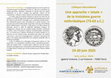
Argumentaire scientifique : Ce colloque propose une mise au point sur la troisième guerre de Mith... more Argumentaire scientifique : Ce colloque propose une mise au point sur la troisième guerre de Mithridate (73-63 a.C.) afin d'en reconstituer les réalités guerrières, politiques, culturelles et sociales dans leur aspect systémique. En ce sens, il propose une approche « totale » de cet « événement » militaire à travers l'examen de l'ensemble de ses facettes. Ce conflit, long d'une dizaine d'années et intense d'un point de vue militaire, a en effet été jugé comme particulièrement périlleux pour Rome par Cicéron et permet de s'interroger sur le « potentiel transformateur » d'un événement guerrier pour l'ensemble de la société romaine, mais aussi pour les communautés locales concernées, voire pour l'ensemble du bassin méditerranéen « connecté ». Cette guerre a en effet souvent été présentée comme le reflet de difficultés spécifiques (longueur de l'engagement, contacts avec les multiples entités orientales, mutineries) et comme cause d'innovations majeures (institutionnelles, financières, etc.). Les sources qui la relatent, nombreuses et parfois fondées sur un point de vue non romano-centré, permettent sans doute une histoire « par le bas », mais aussi une plongée dans « l'ordinaire » des guerres de Rome à une époque (post-syllanienne) de mutations profondes dans la société et la politique. In fine, le colloque vise à interroger le fait guerrier comme un « fait social total » et à questionner l'existence d'une « spécificité guerrière » isolée des réalités civiles. Il entend tester l'utilité (ou non) de certains concepts sociologiques pour comprendre le phénomène guerrier romain, à l'image d'autres analyses qui ont été entreprises pour d'autres réalités antiques.



Uploads
Papers by François Porte
OpenEdition : https://books.openedition.org/ausonius/18703
The aim of this article is analyzing the logistical autonomy of the legions of the Ist century BC to precisely define its means and limits. Several elements allow the Roman armies to lead operations without depending on their rear bases. First, the legions carry their own supplies through the army train or individual loads (impedimenta and sarcinae). Then, the commanders can live directly off the land through foraging (frumentatio and pabulatio). Each element has its own limits, depending on its very own structure or on the situation. These limits do not allow the Roman armies to fully free themselves from logistical rear support.
Key words: logistics; legions; supply; autonomy; impedimenta; sarcinae; frumentatio; pabulatio; plunder.
Book reviews by François Porte
Conference Presentations by François Porte
20 et 21 novembre 2025
Maison méditerranéenne des sciences humaines et sociales
Salle Paul-Albert Février & visio-conférence
5, rue du Château de l’Horloge
Aix-en-Provence
Responsables scientifiques :
Mathieu ENGERBEAUD
Simon CAHANIER