Books by Gabriel Radle
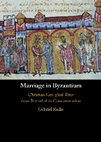
Cambridge University Press, 2024
Across cultures, weddings have historically represented some of the most important and extravaga... more Across cultures, weddings have historically represented some of the most important and extravagant celebrations. This is the first comprehensive study of marriage rituals in the Eastern Mediterranean world of Byzantine Christianity. Using a large corpus of unedited liturgical manuscripts as well as other evidence from jewelry and law to visual representations and theological treatises, Gabriel Radle reconstructs the ceremonies used by the Byzantines to formalize the marriage process, from betrothal to rites of consummation. He showcases the meanings behind rituals of kinship formation and sexual relations and explores how the practice of Byzantine Christianity crossed fluid borders between the church and the domestic sphere. The book situates the development of Byzantine Christian marriage traditions alongside those of other religious communities and, in placing liturgical manuscripts at the heart of this study, paves new methodological paths for the use of ritual sources in the writing of Byzantine history.
Eastern Christian Studies , 2014
This book comprises twenty-one selected papers from the Fourth Congress of the international scho... more This book comprises twenty-one selected papers from the Fourth Congress of the international scholarly Society of Oriental Liturgy, held at the Universities of Notre Dame and Balamand in Lebanon, July 2012. These articles reflect studies on Coptic, Ethiopian and Eritrean, Syriac, Greek-Byzantine, Slavonic, and other liturgies. The authors examine, inter alia, the rites of matrimony, the blessing of the waters, and the Eucharistic Prothesis; developments in Christian iconography; early Christian worship and liturgical theology; new methodological approaches. The papers discuss both the historical practice of diverse Eastern Churches and the current situation. The present collection of articles shows clearly the progress made in a fascinating field of research.
Published Articles & Chapters by Gabriel Radle
Byzantine Dress: A Guide, ed. Jennifer Ball, 2024
Ex Fonte, 2023
This article analyzes the “diakonia” prayers within the two oldest Greek euchologion manuscripts.... more This article analyzes the “diakonia” prayers within the two oldest Greek euchologion manuscripts. The author reviews how later liturgical usage and scholarship has connected these prayers to monastic practice, and traces the ways in which these early liturgical prayers originally developed within non-monastic contexts of late antique lay charitable organizations.
Ortodoxia, 2018
Translation of "The Development of Byzantine Marriage Rites as Evidenced by Sinai Gr. 957" in OCP... more Translation of "The Development of Byzantine Marriage Rites as Evidenced by Sinai Gr. 957" in OCP 78 (2012): 133-148
Orientalia Christiana Periodica 87, 2021
The scroll Vatican Gr. 2282 represents one of the oldest and most important witnesses to the euch... more The scroll Vatican Gr. 2282 represents one of the oldest and most important witnesses to the eucharistic liturgy attributed to St James (JAS), which was widely celebrated in medieval Jerusalem and beyond. Though most liturgiologists have followed a ninth-century dating for this scroll, scholarly datings have fluctuated greatly, including in recent publications. This article brings together recent studies on Vatican Gr. 2282 and important related manuscripts that are connected to the city of Damascus. The author argues in favor of a dating for the late ninth or early tenth century and situates this JAS scroll within a broader picture of Christian religious culture in Damascus at the time. The article also raises methodological questions connected specifically to the study of JAS as well as liturgical diversity within the medieval Patriarchate of Antioch.
Marriage, Families & Spirituality, 2020
Ancient literary works suggest that rites for marriage are as old as human civilization. 1 Anthro... more Ancient literary works suggest that rites for marriage are as old as human civilization. 1 Anthropologists claim this is because marriage is a true "life crisis" moment. 2 That is to say, in traditional societies, participating in marriage results in a dramatic alteration of an individual's identity-their family ties, sexual norms, social responsibilities, etc. Across ancient societies, marriage was a rite of passage that was generally accomplished in multiple stages, including match-making arrangements, formal betrothal, and publicly-recognized cohabitation-usually carried out in that order and often with some amount of time (whether great or small) between each step. Each one of these stages tended to employ rituals rich in symbolism and social significance. 3 Any discussion of early Christian marriage rites must attend to this simple fact: marriage, together with its ritual formation, is a human activity that existed long before the Church. Thus, while early Christian authors identified marriage as a mysterion, or sacramentum, 4 it must be underscored that this was primarily a theological claim applied to an old human social institution. What patristic authors declared about the sacramentality of marriage was precisely a soteriological and eschatological conviction: God's action through his incarnation in Jesus Christ brought about a new creation that perfected and went beyond Eden, * I would like to thank the organizers and participants of the conference "Marriage and/as Metaphor in Christian and Jewish Traditions", especially Aldegonde Brenninkmeijer-Werhahn and Oded Irshai, for the fruitful exchange of research and scholarly fellowship that this opportunity provided, and which the present article has benefited from. 1 See, for example, the oldest known love poems that allude to sacred marriage, as translated and discussed in Y. SEFATI:
BOLLETTINO DELLA BADIA GRECA DI GROTTAFERRATA Periodico del Monastero Esarchico di Grottaferrata ... more BOLLETTINO DELLA BADIA GRECA DI GROTTAFERRATA Periodico del Monastero Esarchico di Grottaferrata (Roma) fondato nel 1926. Con la II serie diviene una rivista internazionale rivolta allo studio della cultura religiosa dell'Italia meridionale bizantina e post-bizantina. Con la III serie (2004-) estende l'interesse al monachesimo, alla storia, alla liturgia, l'arte e la spiritualità delle Chiese ortodosse, anche dell'Europa centro-orientale. Editore: Congregazione d'Italia dei Monaci Basiliani Direttore responsabile: Michel Van Parys Redazione: Matteo Kryptoferritis Segreteria: Alessandro Caboni Amministrazione Corso del Popolo 128 -00046 Grottaferrata (Roma)
SIGLE AASS = Acta Sanctorum (Antvepriae et alibi, 1643 e ss.) AB = Analecta Bollandiana ABl = ∆An... more SIGLE AASS = Acta Sanctorum (Antvepriae et alibi, 1643 e ss.) AB = Analecta Bollandiana ABl = ∆Anav lekta Blatav dwn AB = ∆Anav lekta Kruptofev rj rJ h" ALW = Archiv für Liturgiewissenschaft AOr = Anaphorae Orientales ASyr = Anaphorae Syriacae BBGG = Bollettino della Badia Greca di Grottaferrata BBTT = Belfast Byzantine Texts and Translations, Belfast 1991 ss. BELS = Bibliotheca Ephemerides Liturgicae, Subsidia BHG, BHGa, BHGna = F. Halkin, Bibliotheca hagiographica Graeca, I-III (SH 8a), Bruxelles 1957 3 ; Id., Auctarium BHG (SH 47), Bruxelles 1969; Id., Novum auctarium BHG (SH 65), Bruxelles 1984. BMFD = J. Thomas -A. Hero (edd.), Byzantine Monastic Foundation Documents. A Complete Translation of the Surviving Founders' Typika and Testaments, 5 voll. (DOS 35), Washington, D. C. 2000. Byz = Byzantion BZ = Byzantinische Zeitschrift CC = Corpus Christianorum CCG = Corpus Christianorum, series Graeca CCL = Corpus Christianorum, series Latina CPG = Clavis Patrum Graecorum, 5 voll., edd. M. Geerard, F. Glorie; vol. 3A ed. J. Noret; Supplementum, edd. M. Geerard, J. Noret, J. Desmet (CC), Turnhout 1974-2003. CSCO = Corpus Scriptorum Christianorum Orientalium CSEL = Corpus Scriptorum Ecclesiasticorum Latinorum CSHB = Corpus Scriptorum Historiae Byzantinae DACL = Dictionnaire d'Archéologie Chrétienne et de Liturgie Dmitr I-III = A. A. Dmitrievskij, Описанiе литургическихъ рукописей хранящихся въ библиотекахъ православнаго Востока, I, Tupikav , Kiev 1899; II, Euj colov gia, Kiev 1901; III, Tupikav , Petrograd 1917 (Hildesheim 1965). DOP = Dumbarton Oaks Papers DOS = Dumbarton Oaks Studies EEBS = ∆Epethri; " ÔEtairiv a" Buzantinw' n Spoudw' n EL = Ephemerides Liturgicae EO = Ecclesia Orans Goar = J. Goar, Euj colov gion sive Rituale Graecorum…, Venezia 1730 2 (Graz 1960). GRBS = Greek, Roman and Byzantine Studies JAC = Jahrbuch für Antike und Christentum JLW = Jahrbuch für Liturgiewissenschaft
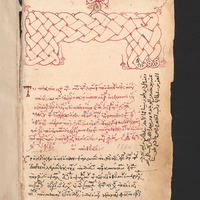
"The tenth-century Palestinian codex Sinai Gr. 957 contains one of the oldest
redactions of the... more "The tenth-century Palestinian codex Sinai Gr. 957 contains one of the oldest
redactions of the Constantinopolitan nuptial rites of Engagement and Marriage. In addition to copying the marriage practices of the tradition of the Byzantine capital, the euchology also includes local marriage rites celebrated at the nuptial bedchamber. These nuptial-chamber blessings have been overlooked or misinterpreted by Byzantine liturgiologists. This article dispels the misunderstandings surrounding these prayers, places them in their historical context, and shows how these prayers from the Byzantine periphery came to influence the development of the Byzantine Rite of Marriage as we know it today."
Online abstract of article for the Catalogue of Byzantine Manuscripts project of Brepols Publishe... more Online abstract of article for the Catalogue of Byzantine Manuscripts project of Brepols Publishers. Full article in press: Brepols, CBM Subsidia vol. 2.


Uploads
Books by Gabriel Radle
Published Articles & Chapters by Gabriel Radle
redactions of the Constantinopolitan nuptial rites of Engagement and Marriage. In addition to copying the marriage practices of the tradition of the Byzantine capital, the euchology also includes local marriage rites celebrated at the nuptial bedchamber. These nuptial-chamber blessings have been overlooked or misinterpreted by Byzantine liturgiologists. This article dispels the misunderstandings surrounding these prayers, places them in their historical context, and shows how these prayers from the Byzantine periphery came to influence the development of the Byzantine Rite of Marriage as we know it today."