Websites by Gábor Zólyomi
This project aims to create an annotated, grammatically and morphologically analysed, translitera... more This project aims to create an annotated, grammatically and morphologically analysed, transliterated, trilingual (Sumerian-English-Hungarian), parallel corpus of all Sumerian royal inscriptions.
ETCSRI is a fully lemmatized corpus; all words in it are tagged in order to generate glossaries. Its glossaries of Sumerian and various categories of proper names can therefore be used as convenient indices of the whole corpus of Sumerian royal inscriptions.
Books by Gábor Zólyomi
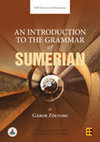
This textbook provides an introduction to the grammar of Sumerian, one of the oldest documented l... more This textbook provides an introduction to the grammar of Sumerian, one of the oldest documented languages in the world. It not only synthesizes the results of recent scholarship but introduces original insights on many important questions. The book is designed to appeal to readers of all backgrounds, including those with no prior background in Sumerian or cuneiform writing.
It is written for undergraduate students and structured for a semester-long course: the order of the topics is determined by didactic considerations, with the focus on syntactic analysis and evidence. It explains the functioning of Sumerian grammar in 16 lessons, illustrated with more than 500 fully glossed examples. Each lesson ends with a series of tasks; a solution key to selected exercises can be found at the end of the volume. Above all, this is the first Sumerian textbook that introduces and utilizes the online assyriological resources available on the internet.
An Introduction to the Grammar of Sumerian has been written on the assumption that after decades of grammatical research it has become possible now to teach a general framework of Sumerian grammar that may function as the basis of further, more intensive and elaborate studies.
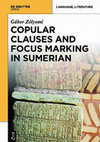
This work is the first comprehensive description of Sumerian constructions involving a copula. Us... more This work is the first comprehensive description of Sumerian constructions involving a copula. Using around 400 fully glossed examples, it gives a thorough analysis of all uses of the copula, which is one of the least understood and most frequently misinterpreted and consequently mistranslated morphemes in Sumerian.
It starts with a concise introduction into the grammatical structure of Sumerian, followed by a study that is accessible to both linguists and sumerologists, as it applies the terminology of modern descriptive linguistics. It provides the oldest known and documented example of the path of grammaticalization that leads from a copula to a focus marker. It gives the description of Sumerian copular paratactic relative clauses, which make use of an otherwise only scarcely attested relativization strategy. At the end of the book, the reader will have a clear picture about the morphological and syntactic devices used to mark identificational, polarity and sentence focus in Sumerian, one of the oldest documented languages in the world.
Sumerian literature is the oldest readable poetry in the world. It was written down on clay table... more Sumerian literature is the oldest readable poetry in the world. It was written down on clay tablets in the cuneiform script by scribes in southern Iraq some 4,000 years ago and has been read again only within the last sixty years.
The eighteen articles included into the present volume correspond to the principal spheres of Kre... more The eighteen articles included into the present volume correspond to the principal spheres of Krecher’s scholarly interests: various aspects of Sumerian morphology and syntax; Sumerian lexicon and terminology; Sumerian onomastics; analysis of literary compositions of different genres; annotated editions of literary and legal texts.
This volume is intended as a tribute to the memory of the Sumerologist Jeremy Black, who died in ... more This volume is intended as a tribute to the memory of the Sumerologist Jeremy Black, who died in 2004. The Sumerian phrase, ‘Your praise is sweet’ is commonly addressed to a deity at the close of a work of Sumerian literature. The scope of the thirty contributions, from Sumerology to the nineteenth-century rediscovery of Mesopotamia, is testament to Jeremy’s own wide-ranging interests and to his ability to forge scholarly connections and friendships among all who shared his interest in ancient Iraq.
A samizdat translation of the original English book translated by Pablo G. Dias
Papers by Gábor Zólyomi
Finite verbs in the Sumerian and Akkadian versions of “Gilgamesh, Enkidu, and the Netherworld”
OBO
The twelfth tablet of the Standard Babylonian Gilgamesh Epic is a translation of the Sumerian com... more The twelfth tablet of the Standard Babylonian Gilgamesh Epic is a translation of the Sumerian composition “Gilgamesh, Enkidu, and the Netherworld”, beginning at line 172. This extended passage offers an opportunity to examine the morphological correspondences between the finite verbal forms of the two languages in a continuous text. The Sumerian finite verb expresses several morphosyntactic categories that the Akkadian verb does not — an asymmetry that also posed challenges for the compilers of the Old Babylonian Grammatical Texts. This paper aims to explore the Sumerian competence underlying the translator’s work, with some comparison to the theoretical grammar of the OBGT texts.
A new manuscript of “Enki’s Journey to Nibru” from the 27th year of Ḫammurāpi
Journal of Cuneiform Studies, 2026
This article presents a new manuscript of the Sumerian literary composition “Enki’s Journey to Ni... more This article presents a new manuscript of the Sumerian literary composition “Enki’s Journey to Nibru”, housed in the collection of the Musées royaux d’Art et d’Histoire, Brussels. MRAH O.343 is a two-column, Type I Old Babylonian tablet of uncertain provenance, preserving the complete text of the composition in 127 lines. The colophon permits its dating to the 27th year of Ḫammurāpi. Analysis of scribal errors suggests that MRAH O.343 was copied from memory. Based on this manuscript, the obscure line 68a of the composition can now be restored with certainty.
Altorientalische Forschungen, 2025
This paper presents an Old Babylonian tablet containing a compilation of conventional phrases and... more This paper presents an Old Babylonian tablet containing a compilation of conventional phrases and lines concerning the moon-god Nanna, some of which represent the incipits of certain literary compositions. The tablet was originally found in Babylon during the German excavations conducted between 1899 and 1917. After the abrupt end of the excavations, the tablet was lost but later resurfaced in a modified form; this shortened text was published and edited multiple times. This paper provides the first edition of the tablet that combines the text from its original and present forms, based on an excavation photo taken in 1908 and modern photographs of its truncated form.
to be published in E. Cancik-Kirschbaum — I. Schrakamp, eds., Keilschriftrecht zwischen Theorie und Praxis. Episteme in Bewegung. Beiträge zu einer transdisziplinären Wissensgeschichte. Wiesbaden: O. Harrassowitz, 57–117, 2025
Die „Reformtexte“ des Urukagina stehen am Beginn und sind in fast jeder Hinsicht kontrovers. Der ... more Die „Reformtexte“ des Urukagina stehen am Beginn und sind in fast jeder Hinsicht kontrovers. Der vorliegende Beitrag skizziert ihre Forschungsgeschichte, diskutiert ihre Stellung innerhalb des frühen Keilschriftrechts, erörtert das zu Grunde liegende Verständnis von Recht und Gerechtigkeit, geht der Frage der praktischen Umsetzung der geschilderten Maßnahmen nach, interpretiert eine für die historische Interpretation entscheidende Schlüsselpassage neu und eröffnet damit weitere Forschungsperspektiven.
Review of Christopher Metcalf, Sumerian Literary Texts in the Schøyen Collection, Vol. 1: Literary Sources on Old Babylonian Religion (CUSAS 38). University Park, Pennsylvania: Eisenbrauns.
Archiv für Orientforschung, 2026

Sumerian for Beginners.
Review of Sallaberger, W. — L. Colonna d'Istria (eds.), Sumerisch: Eine Einführung in Sprache, Schrift und Texte, I-III.
Bibliotheca Orientalis, 2025
This paper explores how Sumerian might be presented in a beginner-level grammar. It takes as its ... more This paper explores how Sumerian might be presented in a beginner-level grammar. It takes as its starting point the most recent work of this kind: Sumerisch: Eine Einführung in Sprache, Schrift und Texte by W. Sallaberger and L. Colonna d’Istria, with a focus on the grammatical description authored by Sallaberger.
Using the book’s treatment of the enclitic copula as an example, the paper argues that the grammatical analysis leans heavily toward morphology, with comparatively little attention given to syntax, an approach that may limit the grammar’s usefulness for students who wish to understand why the language functions as it does. It further suggests that a more consistent application of the Item-and-Arrangement model, better suited to an agglutinative language like Sumerian, could have yielded a clearer and more systematic account of both the noun phrase and the finite verb.
The paper also challenges the notion of an imperfective suffix /-e/ as a linguistically valid component of Sumerian verbal morphology. Finally, it critiques the treatment of adverbial cases and adverbial prefixes as both linguistically unsound and pedagogically problematic, arguing that it results in an unnecessarily complex system for learners.
The paper concludes with a discussion of more specific points in Sallaberger’s grammatical description.
The borderline between Lagas and Umma. A new interpretation of En-metena 1 1:18–21 and 2:6–10
This short paper argues for a new interpretation of En-metena 1 1:18–21 and 2:6–10. The grammatic... more This short paper argues for a new interpretation of En-metena 1 1:18–21 and 2:6–10. The grammatical analysis of these and other related lines shows that the verbs written as i₃-DU (1:21) and nu-KU (2:10) must be transitive verbal forms with partly overlapping meaning, their object is being the stela of Mesilim, mentioned in the preceding clause. The paper proposes that the former verb is gub “to place, install”, while the latter is dab₅ “to install”, ku “to place”, or perhaps ku (for kur₂) “to transfer”. This understanding implies that the central concern of the conflict between Ush, ruler of Umma, and Aya-kurgal, ruler of Lagas, is not what has been commonly assumed: the narrative is not about violating the border by crossing over it, but about questioning the exact position of the borderline and repositioning Mesilim’s stela.
in D. Prechel et al., eds., Kultur – Kontakt – Kultur. Beiträge anlässlich der 66. Rencontre Assyriologqiue Internationale in Frankfurt/Main und Mainz, 25.–29. Juli 2022 (dubsar, 35). Münster: Zaphon, 579–594, 2025
This paper introduces the project “A Dictionary of the Sumerian Royal Inscriptions of the 3rd Mil... more This paper introduces the project “A Dictionary of the Sumerian Royal Inscriptions of the 3rd Millennium BC”. Its first part describes the motivations for creating a dictionary based on a consistent and detailed grammatical description as recommended once by M. Civil. The second part of the paper aims to show how verbs are treated in the project, as Sumerian verbs present the biggest challenge to a dictionary. The size of the challenge will be demonstrated with a case-study of the verb bala, showing the complications involved in creating a dictionary entry for a Sumerian verb.
Altorientalische Forschungen, 2025
In his “Reform Texts”, Urukagina of Lagash reports that during the time of his predecessors the p... more In his “Reform Texts”, Urukagina of Lagash reports that during the time of his predecessors the people of Lagash had suffered from excessive taxes and encroachments by officials, that the ruling family had appropriated the assets of the temple households and claims to have abolished these conditions. While earlier research took Urukagina’s claims at face value, more recent research denied their actual implementation and regarded the “Reform Texts” as mere propaganda. This article discusses the question of the actual implementation of Urukagina’s acts in light of contemporary archival records. Using the example of the maškim official, it demonstrates that the archival records confirm Urukagina’s claim to have removed this official and provides the first proof that a measure was implemented and thus opens a promising and hitherto neglected venue for future research.
Nouvelles Assyriologiques Brèves et Utilitaires, 2024
The inscription on Aya-ane-pada’s long-neglected metal peg (BM 90951 = CDLI Q004866) is missing f... more The inscription on Aya-ane-pada’s long-neglected metal peg (BM 90951 = CDLI Q004866) is missing from all standard editions of Sumerian royal inscriptions. N. Kraus’s edition (2024) is an important step towards a better understanding of this enigmatic inscription. This short note contains some remarks on Kraus’s edition hoping to improve our understanding of some difficult lines.
In Sz. Sövegjártó and M. Vér, eds, Exploring Multilingualism and Multiscriptism in Written Artefacts (Studies in Manuscript Cultures, 38). De Gruyter, 310–329
This paper discusses inscriptions transmitted in both Sumerian and Akkadian versions, originally ... more This paper discusses inscriptions transmitted in both Sumerian and Akkadian versions, originally prepared for the Akkadian-speaking rulers of the dynasty of Sargon in the twenty-third century BCE. They are known from manuscripts made in the first part of the second millennium BCE. The first part of the paper discusses features of the manuscripts that originate in the cuneiform manuscript culture of the Old Babylonian period, the time when their manuscripts were prepared. The second part examines features deriving from the time when they were at first composed. Its main conclusion is that these bilingual inscriptions were first composed in Akkadian. The Sumerian versions may have been prepared depending on the Akkadian ones by bilingual people who were familiar with the writing conventions of southern Babylonia.



Uploads
Websites by Gábor Zólyomi
ETCSRI is a fully lemmatized corpus; all words in it are tagged in order to generate glossaries. Its glossaries of Sumerian and various categories of proper names can therefore be used as convenient indices of the whole corpus of Sumerian royal inscriptions.
Books by Gábor Zólyomi
It is written for undergraduate students and structured for a semester-long course: the order of the topics is determined by didactic considerations, with the focus on syntactic analysis and evidence. It explains the functioning of Sumerian grammar in 16 lessons, illustrated with more than 500 fully glossed examples. Each lesson ends with a series of tasks; a solution key to selected exercises can be found at the end of the volume. Above all, this is the first Sumerian textbook that introduces and utilizes the online assyriological resources available on the internet.
An Introduction to the Grammar of Sumerian has been written on the assumption that after decades of grammatical research it has become possible now to teach a general framework of Sumerian grammar that may function as the basis of further, more intensive and elaborate studies.
It starts with a concise introduction into the grammatical structure of Sumerian, followed by a study that is accessible to both linguists and sumerologists, as it applies the terminology of modern descriptive linguistics. It provides the oldest known and documented example of the path of grammaticalization that leads from a copula to a focus marker. It gives the description of Sumerian copular paratactic relative clauses, which make use of an otherwise only scarcely attested relativization strategy. At the end of the book, the reader will have a clear picture about the morphological and syntactic devices used to mark identificational, polarity and sentence focus in Sumerian, one of the oldest documented languages in the world.
Papers by Gábor Zólyomi
Using the book’s treatment of the enclitic copula as an example, the paper argues that the grammatical analysis leans heavily toward morphology, with comparatively little attention given to syntax, an approach that may limit the grammar’s usefulness for students who wish to understand why the language functions as it does. It further suggests that a more consistent application of the Item-and-Arrangement model, better suited to an agglutinative language like Sumerian, could have yielded a clearer and more systematic account of both the noun phrase and the finite verb.
The paper also challenges the notion of an imperfective suffix /-e/ as a linguistically valid component of Sumerian verbal morphology. Finally, it critiques the treatment of adverbial cases and adverbial prefixes as both linguistically unsound and pedagogically problematic, arguing that it results in an unnecessarily complex system for learners.
The paper concludes with a discussion of more specific points in Sallaberger’s grammatical description.