Books by Giovanni Pietrangeli
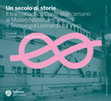
Un secolo di storie. Il transatlantico Conte Biancamano al Museo Nazionale Scienza e Tecnologia Leonardo da Vinci, 2025
Launched in 1925 and in service until 1960, the ocean liner “Conte Biancamano” was one of the mos... more Launched in 1925 and in service until 1960, the ocean liner “Conte Biancamano” was one of the most important ships in the history of Italian navigation in the first half of the twentieth century. Tracking the history of this ship provides a unique insight into some of the century's most significant events: the golden age of transoceanic travel, during which it operated on routes between North and South America carrying passengers ranging from first to third class; the Fascist era, when it sailed to East Africa, India and China; World War II, when it was requisitioned to transport American military personnel; and the post-war period, when it became the first passenger ship to undergo refitting in Italy. In 1960, when the “Biancamano” was decommissioned, the then Museo Nazionale della Scienza e della Tecnica acquired its bridge, ballroom and several cabins, all of which are now preserved in the Aeronaval Pavilion. The many lives of the "Biancamano" are explored in this book through contributions from scholars of various disciplines, including maritime, economic, industrial and labour history, as well as museology. These contributions help to enrich research into the historical and social context of which this ocean liner is now a material and symbolic testament.

Un secolo di storie Il transatlantico Conte Biancamano al Museo Nazionale Scienza e Tecnologia Leonardo da Vinci
Varato nel 1925 e in servizio fino al 1960, il transatlantico Conte Biancamano è stato uno dei pr... more Varato nel 1925 e in servizio fino al 1960, il transatlantico Conte Biancamano è stato uno dei protagonisti della storia della navigazione italiana nella prima metà del Novecento. Ripercorrere le vicende di questa nave consente di aprire uno sguardo particolare su alcuni dei momenti più significativi di questo secolo: l’epoca d’oro dei viaggi d’oltreoceano, quando servì le linee del nord e del sud America per clientele dalla prima alla terza classe; il periodo fascista, durante il quale navigò verso l’Africa orientale, l’India e la Cina; il conflitto mondiale, quando fu requisita per il trasporto di personale militare americano; il dopoguerra, in cui divenne la prima nave passeggeri a essere riallestita in Italia. Quando nel 1960 il Biancamano viene posto in disarmo, l’allora Museo Nazionale della Scienza e della Tecnica ne acquisisce il ponte di comando, il salone delle feste e alcune cabine, oggi conservati nel Padiglione Aeronavale. Queste molteplici vite del Biancamano sono esplorate nel volume attraverso le voci di studiosi e studiose di discipline diverse – storia della navigazione, storia economica e dell’industria, storia del lavoro, museologia – contribuendo ad arricchire le ricerche attorno al contesto storico e sociale di cui questo transatlantico è oggi testimonianza materiale e simbolica.
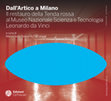
The Red Tent, which offered shelter to Umberto Nobile and the survivors of the 1928 Arctic expedi... more The Red Tent, which offered shelter to Umberto Nobile and the survivors of the 1928 Arctic expedition following the crash of the airship Italia, acquired a highly symbolic value as soon as it was returned to Italy. Since 1952, the Tent has been kept at the Museo Nazionale Scienza e Tecnologia Leonardo da Vinci, on deposit from the City of Milan: the fragility of its silk, the long time spent on the pack and the decades of exposure made the restoration work essential, which was completed in 2023. Today the Red Tent is once again accessible to the public, in the Museum's Study Collections. This volume aims to recreate not only the complex restoration process, but also the historical context of Fascist Italy, which through scientific and geographical achievements aimed at asserting a policy of power. The various essays deal with the history of the explorations and the institutions that organised the Arctic expedition, supported by the world of industry and the press, the scientific research programme, the role of the media and the imagery that was conveyed to the general public around the object at the centre of these events: the Red Tent.
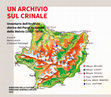
Le politiche ambientali sono da anni un elemento centrale nell'azione dell'amministrazione pubbli... more Le politiche ambientali sono da anni un elemento centrale nell'azione dell'amministrazione pubblica. I Parchi nazionali e le altre aree protette rappresentano, in tal senso, dei veri e propri avamposti di una sensibilità oggi sempre più diffusa. Le attività svolte nel corso del tempo da questo genere di enti possono divenire modelli ai quali guardare per favorire un giusto equilibrio tra tutela dell'ambiente, esigenze della cittadinanza residente e promozione turistica, obiettivo complesso da realizzare soprattutto in territori caratterizzati da una presenza antropica diffusa. In questa prospettiva, l'Archivio del Parco nazionale dello Stelvio si presenta come un'importante testimonianza storica, senza dubbio, ma anche come uno strumento operativo da riscoprire e attualizzare, per valutare le scelte del passato e progettare gli interventi futuri. È con questo spirito che la Direzione generale Archivi ha accolto con grande favore la proposta di sostenere la pubblicazione dell'inventario, mezzo attraverso il quale la potenzialità conoscitiva della documentazione può raggiungere il suo massimo livello. Grazie allo studio delle vicende istituzionali cui è andato incontro il Parco dello Stelvio dalle sue origini al 2016, inoltre, è stato possibile non solo ricostruire la struttura e la storia del complesso archivistico e delle sue partizioni interne, ma anche rimarcarne il carattere unitario, indubbio segno di continuità sostanziale del soggetto produttore. In questo caso, come in molti altri, di fronte al susseguirsi di riforme che negli ultimi decenni hanno investito molti enti pubblici, gli interventi di ordinamento e inventariazione dei loro archivi assumono infatti un valore ancor più importante, proprio perché contribuiscono a far conoscere, e dunque tutelare, patrimoni documentari che altrimenti rischierebbero la dispersione. Il progetto di ordinamento e inventariazione dell'Archivio del Parco dello Stelvio ha dunque prodotto una felice convergenza di intenti tra l'impegno di tutela e valorizzazione dell'ambiente, che un Parco nazionale adempie anche mediante la conservazione intelligente della propria memoria storica, e gli analoghi obiettivi che il Ministero della Cultura, la Direzione generale Archivi e le sue articolazioni perseguono rispetto ai beni culturali e, più nello specifico, al patrimonio archivistico. Centrale si è dimostrato, in questa, come in altre circostanze, il ruolo della Soprintendenza archivistica e bibliografica della Lombardia, che ha partecipato in maniera propositiva alla fase di progettazione dell'intervento, seguendone con attenzione l'esecuzione, all'insegna di un costante confronto con gli enti e gli archivisti coinvolti.
Book Chapters by Giovanni Pietrangeli
l biglietto da visita di Raoul Chiodelli. La Marconi italiana tra industria e memoria pubblica (1921-60)Il biglietto da visita di Raoul Chiodelli. La Marconi italiana tra industria e memoria pubblica (1921-60)
Marconi in frammenti Rileggere le collezioni del Museo Nazionale Scienza e Tecnologia Leonardo da Vinci , 2024
Una delle tante ‘eredità’ di Guglielmo Marconi riguarda l’organizzazione della rete di imprese ch... more Una delle tante ‘eredità’ di Guglielmo Marconi riguarda l’organizzazione della rete di imprese che portano il suo nome. Nelle prossime pagine, la lente verrà puntata sulla branca italiana della holding omonima dell’inventore, dalle attività strettamente industriali alla cura del ‘brand’ Marconi, esercitata nelle relazioni con istituzioni culturali e formative, compreso quello che allora era il Museo Nazionale della Scienza e della Tecnica di Milano (oggi Museo Nazionale Scienza e Tecnologia). Un rapporto, quello con il Museo, testimoniato dalla fitta corrispondenza che negli anni Cinquanta interessò il fondatore Guido Ucelli e uno dei profili più rilevanti della radiofonia in Italia a cavallo tra il fascismo e i primi anni della Repubblica: Rodolfo Raoul Chiodelli.
Tor Marancia borgata di Roma. Dal fango di Shanghai ai colori dei murales, 2019
Il saggio ripercorre le vicende che hanno portato un'ampia porzione di agro romano dai tentativi ... more Il saggio ripercorre le vicende che hanno portato un'ampia porzione di agro romano dai tentativi di lottizzazione da parte della Sgi alla sua destinazione a riserva urbana, integrata all'interno del Parco regionale dell'Appia antica.
Farsi metropoli. Roma e il Lazio tra decentramento e squilibri
Piccole tessere di un grande mosaico: nuove prospettive dei regional studies, M.Di Giacomo, N. Di Nunzio, A. Gori, F. Zantedeschi (eds.), pp. 225-242.
Articles by Giovanni Pietrangeli
A History of Paper and Silicon. The Archive of a Computer Scientist at the Museum
Archivio Magazine The Tech Issue, 2025
Il recupero delle navi di Nemi: «Una caratteristica opera del Regime»
Ricerche di Storia dell'Arte, n. 142, 2024
The article presents the archives of the recovery of the Roman ships in Lake Nemi. The documents... more The article presents the archives of the recovery of the Roman ships in Lake Nemi. The documents are part of the collections of the Museo Nazionale Scienza e Tecnologia, founded in Milan by Guido Ucelli, the developer of the archaeological dig. The photographic archive preserves around 1.400 records, on different supports, witnessing the organization of the endeavor. Moreover, the archive preserves the documents regarding the propaganda film, which was produced by the Istituto LUCE and Guido Ucelli himself.
Italia contemporanea 291, 2019
The essay focuses on the transition of the industrial parks in the eastern suburbs of Rome, betwe... more The essay focuses on the transition of the industrial parks in the eastern suburbs of Rome, between the Tiburtina and Prenestina, to today's urban assect. Particularly, the article focuses on the failure of the urban plan of the Sixties, that planned the construction of offices and high level services in this area: the so-called Sistema direzionale orientale. The failure of this project fostered the multiplication of urban empties, because of closing factories that were never been restored, and supported the uncontrolled expansion of the city, without any direction on the urban development frame work.
Sources for the Study of Postwar Reconstruction in Italy: The Export-Import Bank Loan in the Intesa Sanpaolo Group Historical Archives
Journal of European Economic History, 2018
This essay presents the findings of an inventory of the documents relating to the loan granted to... more This essay presents the findings of an inventory of the documents relating to the loan granted to Italy by the US Export Import Bank in 1947 that are conserved in the Intesa Sanpaolo Group Historical Archives – IMI Heritage. The article takes stock of the literature on postwar Italy, pointing to the relative scantiness, apart from a few essays and articles, of work on this first Ex-Im Bank loan to Italy and proposes an interpretation of the economic-political reasons for the aid accorded to Italy by the United States following the end of the war. The focus is on the description of the archival heritage, mainly still unpublished, and the article suggests some possible research questions that can be fruitfully explored using these documents as sources.
With this collection of articles on the social and economic transformations of the mountain envir... more With this collection of articles on the social and economic transformations of the mountain environments during the 19th, 20th and 21th centuries we intend to draw the frame of the modernization ways of the alpine areas on a global scale, as well as the conflicts surrounding their contradictions. This aim implies that it’s possible to compare territories that are far away from each other and to identify both similarities and differences. Moreover, from some decades cataloguing hypotheses of orographic world systems based on default standards, such as quota, verticality and relief characters are discussed and also used for environmental targets. This debate enables us to face the comparison of the world mountains with less uncertainties (Jon Mathieu, The Third Dimension. A Comparative History of Mountains in the Modern Era, White Horse Press, 2011). (…)
We assume as typical features the incidence of localized tertiarization and urbanization as interconnected processes which can modify social, occupational and professional structures, attract and produce new subjects and frequently generate conflicts over the control or the dispute of territories. (…)
The identified traits have acquired a peculiar relevance for the last two centuries particularly in the European environment, where the consequences of these processes – firstly as a cause of a deep reconfiguration of the economic systems of alpine areas through the intensification of material and immaterial connections between mountain and urban societies, and secondly as a mountain depopulation – had deeply changed the demographic, social, cultural and landscape’s physiognomy of the alpine areas.
Note sulle lotte alla nocività nell'elettronica. Il caso della Voxson di Roma
Giornale di Storia Contemporanea, 2016
Attraverso l’analisi di un caso di studio, l’articolo propone alcuni elementi di riflessione sull... more Attraverso l’analisi di un caso di studio, l’articolo propone alcuni elementi di riflessione sull’attività dei Consigli di zona a Roma all’inizio degli anni Settanta. Con questi strumenti di organizzazione, il movimento sindacale diede corpo ad alcune battaglie che riprendendole riflessioni dei gruppi di studio sulle nocività e gli studi svolti nel nord Italia da medici come Ivar Oddone, ottennero importanti conquiste sul terreno della sicurezza e della salute nel settore dell’elettronica. Questo settore, che nel secondo dopoguerra si è profondamente rinnovato grazie all’introduzione di nuove tecnologie, sia nel campo della produzione che del prodotto finale, presentava comunque numerosi fattori di rischio per le maestranze. Grazie alla cooperazione tra medici, studenti e attivisti sindacali anche l’elettronica, comunemente considerata una industria pulita”, divenne terreno di conflitto nell’ambito della salute.
Sindacato e imprese multinazionali. L'elettronica italiana tra crisi, ristrutturazione e programmazione economica
Memoria e Ricerca, 2016
The paper focuses on the crisis of Italian electronic business in the Seventies and on the influe... more The paper focuses on the crisis of Italian electronic business in the Seventies and on the influence of multinational corporations in the country after World War II. Multinational corporations, through the acquisition of brands and factories, became key players in the Italian economic life. Moreover, their influence involved also strategic industrial branches and innovation programmes and had an ambiguous effect on the labour market. In the Seventies, several enterprises faced massive restructuring and division outsourcing, while trade unions tried to organize new kinds of struggles, promoting public investments on Research and Development and technology dissemination programmes, following the example of Germany, France and other Western countries. Through the analysis of some case studies, the paper shows the impact of multinational direct investments in the Italian electronic business and the limits of trade unions proposals on the field of innovation and economic planning.
The article focuses on a struggle experience on professional diseases in Post-war Italy.
The seas... more The article focuses on a struggle experience on professional diseases in Post-war Italy.
The season of social conflict that took place in Italy between the Sixties and the Seventies involved mainly production and work issues, but immediately stretched out to health and workplace organization. Unions and New Left organizations proposed new claims to the working class, establishing a cultural turn in industrial relations, making health a non-negotiable issue.
Analysing the context of an electronic appliances factory in the suburbs of Rome, the article deepens an experience of cooperation between the main leftist union, the Fiom, and a group of medicine students and physicians involved in researches about professional diseases.
Through the use of archive sources and interviews the author proposes an historical perspective on this critical aspect of the current Italian labour economy.
Operai in camice bianco. Dalla Olivetti alla Voxson immaginario e lotte per la salute
Il lavoro o la vita. Cinema, salute, ambiente, Annale Aamod n.17, Effigi 2014
"Contemporanea" 2/2014, pp. 219-250
1 G. Doti, La seconda Zona Industriale e il suburbio orientale tra le due guerre, «Roma moderna e... more 1 G. Doti, La seconda Zona Industriale e il suburbio orientale tra le due guerre, «Roma moderna e contemporanea», 2000, 1. Fiorella Bartoccini, nel suo studio sulla Roma dell'Ottocento, pur ammettendo una complessiva debolezza dell'apparato produttivo romano, identifica nei centri prossimi a est casi di maggior orientamento alla manifattura (Tivoli e Subiaco per la carta, Velletri per le lavorazioni in ferro): cfr. F. Contemporanea / a. XVII, n. 2, aprile-giugno 2014 Non è secondaria inoltre la collocazione, lontana dal nucleo principale dell'abitato, ma prossima a borgate e zone popolari, da cui attingere la potenziale manodopera. Albino Tomei su questo punto ha aggiunto un'altra ipotesi: la distanza dal centro abitato sarebbe stata dettata da esigenze urbanistiche, per non precludere l'espansione della città 5 . Ipotesi sostanzialmente poco plausibile, se si considera che alla data di costituzione della zona industriale la direttrice di espansione urbanistica prevista dal Piano del 1931 e dalle successive varianti guardava ancora verso il mare, il nord cittadino, e il sud est. Eppure di questa riflessione dobbiamo comunque tenere conto per il suo carattere di lungimiranza, per quanto involontaria, come andremo a vedere nelle pagine seguenti.



Uploads
Books by Giovanni Pietrangeli
Book Chapters by Giovanni Pietrangeli
Articles by Giovanni Pietrangeli
We assume as typical features the incidence of localized tertiarization and urbanization as interconnected processes which can modify social, occupational and professional structures, attract and produce new subjects and frequently generate conflicts over the control or the dispute of territories. (…)
The identified traits have acquired a peculiar relevance for the last two centuries particularly in the European environment, where the consequences of these processes – firstly as a cause of a deep reconfiguration of the economic systems of alpine areas through the intensification of material and immaterial connections between mountain and urban societies, and secondly as a mountain depopulation – had deeply changed the demographic, social, cultural and landscape’s physiognomy of the alpine areas.
The season of social conflict that took place in Italy between the Sixties and the Seventies involved mainly production and work issues, but immediately stretched out to health and workplace organization. Unions and New Left organizations proposed new claims to the working class, establishing a cultural turn in industrial relations, making health a non-negotiable issue.
Analysing the context of an electronic appliances factory in the suburbs of Rome, the article deepens an experience of cooperation between the main leftist union, the Fiom, and a group of medicine students and physicians involved in researches about professional diseases.
Through the use of archive sources and interviews the author proposes an historical perspective on this critical aspect of the current Italian labour economy.