Books by Giulia Valpione
Cambridge University Press, 2026
The Early German Romantics elaborated a highly original philosophical-political framework where s... more The Early German Romantics elaborated a highly original philosophical-political framework where subjectivity is not construed as essentially the property of an isolated individual having control over other people and over nature. Rather, each subject can exist and flourish only within a web of harmonious relations of mutual dependency which connects it with history, with other people, and with the natural world. The implications of such a conception for our notion of individual and collective autonomy and for political life are radical. This book explains and analyses this novel way of thinking, places it in its historical context, and brings out some of the major consequences it has for our social life, and in particular for a number of issues of special contemporary relevance such as gender and ecology.
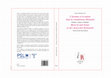
Zürich, Lit Verlag 2021.
Selon le romantisme allemand, l'être humain entre de plein droit parmi les processus naturels, ma... more Selon le romantisme allemand, l'être humain entre de plein droit parmi les processus naturels, mais en même temps, les particularités de l'humain demeurent. Le romantisme allemand offre une alternative à l'opposition homme / nature, de même qu'il prend ses distances à l'égard de l'idée selon laquelle les sciences humaines pourraient reléguer l'homme au rang de simple phénomène naturel. Mais comment se décline concrètement une telle position dans les différents domaines du savoir ? Telle est la question à laquelle cet ouvrage cherche à répondre.
Der deutschen Romantik zufolge ist der Mensch ein Teil der Natur, zugleich aber bleiben die Besonderheiten des Menschen bestehen. Die deutsche Romantik bietet eine Alternative zum Gegensatz Mensch - Natur, ebenso distanziert sie sich von der Vorstellung, die Geisteswissenschaften könnten den Menschen als bloßes Naturphänomen behandeln. Wie aber konkretisiert sich eine solche Position in den verschiedenen Wissensbereichen? Dies ist die Frage, die das vorliegende Buch zu beantworten versucht.
Articles by Giulia Valpione
Human Affairs. De Gruyter, 2023
Full draft available here: https://hal.science/hal-04547542/document.
This article focuses on N... more Full draft available here: https://hal.science/hal-04547542/document.
This article focuses on Novalis' understanding of the "I-nature" relationship demonstrating that he anticipates some aspects developed by later environmental and ecological philosophies. After an introductory part on Novalis' criticism against Fichte's conception of the Self, the article investigates the crucial role played by Spinoza for the reassessment of natural sciences (physiology in particular) in Novalis' philosophy and, as a consequence, for the conception of a "metaphysics of Having". This particular metaphysics implies that subjects and objects interpenetrate each other, and that this relationship precedes their respective identities. In the last part, the article sketches a parallel with the current philosophical debate on ecology.

British Journal for the History of Philosophy. Routledge, 2023
This article examines the role played by 'feeling' (Gefühl) and 'love' within the philosophy of... more This article examines the role played by 'feeling' (Gefühl) and 'love' within the philosophy of German Romanticism. After an introduction (I) to the actual debate on German Romanticism, paragraph II sketches an analysis of the concept of Gefühl at the end of the eighteenth century and highlights the differences with its actual meaning. The successive three sections are dedicated to three pivotal figures of German Romanticism: F. Schlegel (III), Novalis (IV), and Baader (V). Similarities and differences between these authors will be emphasized. It will be demonstrated that they deny the reason˗feeling opposition, and that 'feeling' and 'love' are at the heart of their ontology, epistemology, and conception of subjectivity, conditioning the Romantic human-nature relationship and Romantic political philosophy. In the concluding remarks (VI), this paper explains how German Romanticism can still help to better understand the role of feelings in politics.
Conceptos Historicos, 6, 9, 2020, p. 56-84., 2020
In this article I focus on the concept of habit in Kant's philosophy. First of all, I concentrate... more In this article I focus on the concept of habit in Kant's philosophy. First of all, I concentrate on the criticisms he delineates against 'Gewohnheit' in his epistemological and moral philosophy. In particular, habit is seen as absence of moral freedom. This conclusion is pretty different from Kant's position expressed in his Anthropology From the Pragmatic Point of View and in the last part of the Conflict of the Faculties. After a deep insight on the different terms referred to the conceptual field of habit, I focus on the relation between 'Gewohnheit' and desire: in fact, Kant recognized that habit is not the mere repetition of an act, but more precisely it is the desire of repetition. That is why it is not strictly bonded to the deterministic world and it does not refer to machines: only the living beings may have habits. This way, it is possible to understand its role within the theme of health: in the reflections on dietetics, habit is particularly useful. The last part of the article is devoted to the new perspective on Kantian political philosophy opened by this positive view on this concept.
"Scienza & Politica", vol. XXX, no. 58, 2018, p. 171-188., 2018
In questo saggio l’autrice approfondisce le riflessioni di Fr. Schlegel, considerato il primo fil... more In questo saggio l’autrice approfondisce le riflessioni di Fr. Schlegel, considerato il primo filosofo del Romanticismo Tedesco, sul concetto di storia. Le opere trattate vanno dal 1798 al 1805 e comprendono i suoi saggi, lezioni, appunti personali e frammenti. Negli anni considerati è centrale la considerazione della pluralità delle storie (Geschichten) e delle genealogie di contro alla storia (Geschichte) come singolare collettivo, ideale regolativo della narrazione e della prassi. Nel saggio svolgono un ruolo portante le analisi di Koselleck su Schlegel, da cui il presente saggio tende a distanziarsi.
"Filosofia Politica", vol. XXXII, 3/2018, p. 511-522, 2018
The category of «Political Romanticism» identifies an incredibly large area of research, whose bo... more The category of «Political Romanticism» identifies an incredibly large area of research, whose boundaries are still not clear today. Discussing the recent Italian translation of a book by Michael Löwy e Robert Sayre (Rivolta e malinconia, 2017), this article argues that this notion (despite its uncertainty) is still relevant not only to understand the emergence of the fascist ideology, but also to open new perspectives in the history of subjectivity and in politics of literature.
"Ipseitas", vol. 3, n. 2, 2017, p. 177-196.
In this article, after having described the role and functioning of general rules and of customs ... more In this article, after having described the role and functioning of general rules and of customs by Hume, I will show that the centrality of these in his political reflection leads to a denial of the identification of man as the subject, intending with this concept the union of the conceptual pair subjectum (support of personal peculiarity) and subditus. Hume doubts the presence of an element that is able to impose itself on man, subduing him to its own will; the man himself, if he tries to impose a norm on himself, attains only useless sufferings.
Chapters by Giulia Valpione
Joseph J. Tinguely, Philosophy and Money: A Historical and Interdisciplinary Consideration of Economies and Worldviews, Palgrave, 2024
The thesis presented in this chapter is that the presence of the question on money within a philo... more The thesis presented in this chapter is that the presence of the question on money within a philosophy can change the way philosophy itself is conceived. I take in consideration the women philosophers of German Romanticism to show how the role of money within their philosophy changed, transforming also the conception of philosophy previously formulated by the male philosophers of German Romanticism, briefly discussed after the introductory remarks. After this, I firstly concentrate on Caroline Schlegel-Schelling, who put forth the materiality of the conditions that allow a subject to philosophize. For her, money is a necessary instrument for women to build a space and time where they can dedicate to philosophical studies. The protagonist of the last part of the article is Bettina von Arnim. In her political-philosophical works, she explained the crucial role played by money in the capitalist world: money was the condition of possibility of freedom, morality, and philosophy itself. She showed not only that a wealthy economic status is a condition for being able to devote time to philosophy, but also that philosophy has the task of critically questioning the injustices that pervade those conditions, thus transforming philosophy into a social critique.
Giulia Valpione (éd.), "L'homme et la nature dans le romantisme allemand. Politique, critique et esthétique / Mensch und Natur in der deutschen Romantik. Politik, Kritik und Ästhetik", Zürich, LIT Verlag, 2021.
Giulia Valpione (éd.) L'homme et la nature dans le romantisme allemand Mensch und Natur in der de... more Giulia Valpione (éd.) L'homme et la nature dans le romantisme allemand Mensch und Natur in der deutschen Romantik
in Giulia Valpione (éd.), "L'homme et la nature dans le romantisme allemand. Politique, critique et esthétique / Mensch und Natur in der deutschen Romantik. Politik, Kritik und Ästhetik", Lit Verlag, 2021, p. 147-162.
Dans cet article je me propose d'analyser l'interprétation donnée par Friedrich Schlegel du rappo... more Dans cet article je me propose d'analyser l'interprétation donnée par Friedrich Schlegel du rapport entre l'homme et la nature, qui influence directement sa pensée politique. Pour lui, l'homme et la nature ne sont pas opposés. Ce sont des sédimentations du même mouvement dynamique 1 de la vie qui essaye de se donner une forme (Gestalt) -une forme jamais parfaite, qui est toujours dépassée. De la même manière, l'homme n'est pas totalement réductible aux autres créatures naturelles -hypothèse qui est à la base des sciences humaines en cours de formation dans cette période 2 -: l'homme est mis au même niveau que la nature, même si on garde une différence entre eux 3 . On verra que cela implique, dans la philosophie de Schlegel, le refus ou du moins une reformulation des mots « état de nature » et « droit naturel ».
in M. N. Forster, L. Steiner (eds.), Romanticism, Philosophy, and Literature, Palgrave Macmillan, 2020, p. 193-215.
La actualidad del primer romanticismo alemán - Teseo Press 2019
La actualidad del primer romanticismo alemán reúne ensayos de investigadores especializados en el... more La actualidad del primer romanticismo alemán reúne ensayos de investigadores especializados en el campo de los estudios sobre filosofía alemana a los fines de evidenciar la fuerza que el pensamiento romántico tiene para el presente.
Los ensayos destacan los aspectos políticos, filosóficos, estéticos y literarios de un movimiento de pensamiento que aún requiere ser indagado en profundidad. Frente al equívoco prejuicio que ha pesado sobre el primer romanticismo en la historia de la literatura y la filosofía, los ensayos pretenden evidenciar las características más sobresalientes de autores como Novalis, Schleiermacher, los hermanos Schlegel, entre otros.
in Denat C., Fillon A., Wotling P. (éd.), Logiques du discours philosophique, EPURE, Reims, 2019
Proceedings of the 12th International Kant Congress, Bd. 5, ed. Weibel V., Ruffing M., Wagner D., De Gruyter, Berlin Boston, 2018., 2018
In diesem Vortrag werde ich einen Aspekt der Beziehungz wischenK ant und Schlegelbeleuchten und g... more In diesem Vortrag werde ich einen Aspekt der Beziehungz wischenK ant und Schlegelbeleuchten und gehe dabei besonders aufdie zwei verschiedenen Ideen der Freiheit und des Verhältnisses zwischen ihr und der Natur ein. Nach einer Einführung in die Unterschiede,d ie die zwei Philosophen trennen, werde ich betonen, dass der Unterschied zwischenK ants und Schlegels Perspektive einschließt,dass sie besonders im politischen Raum der Theorie verschiedene Rollen zuweisen.

Il conflitto delle Facoltà di Kant. L'autonomia della teoria filosofica e la prudenza della prassi politica
in Cesaroni P./Chignola S. (ed.), Politiche della filosofia, Roma, Derive Approdi, 2016.
Kant’s ‘The Conflict of the Faculties’: The autonomy of philosophical theory and the prudence of ... more Kant’s ‘The Conflict of the Faculties’: The autonomy of philosophical theory and the prudence of political practice
In this study, I reconstruct the systematic nature of Kant’s work Der Streit der Fakultäten, which has consequences for Kant’s representation of the university and for the relationship between politics and philosophy. Apart from the abovementioned text, I also refer to other Kantian works: Critique of Pure Reason, Critique of Judgment, Lessons on Philosophical Encyclopaedia, Critique of Judgment, Religion within the Limits of Reason Alone, On the Old Saw and Perpetual Peace.
My essay begins with a description of the economic and social condition of the German University between eighteenth and nineteenth centuries that led to the end of the corporative statute of the University, which became a tool of political centralization. Kant divides the Inferior Faculty (of Philosophy) and Superior Faculties (of jurisprudence, theology and medicine). These last have the duty of educating functionaries, which must set the limits to the tendencies and instincts of the people that could lead to immorality, injustice and intemperance. Kant is aware that the government tries to subdue to its own authority all the abilities and inclinations of the people, subjugating them and preventing their emergence from immaturity to the age of majority. The government must, however, guarantee a space of autonomy and freedom in which the quest for truth can be pursued without
having as its purpose the production of governmental tools for subduing the people. In my study, I elucidate that both the necessity of autonomy in philosophical research and the conflict between the Inferior and Superior Faculties are strictly dependent on the relationship between theory and practice elaborated by Kant.
In this study, I focus on the centrality of the Kantian differentiation between Gelehrter and Geschäftsleute.
Freedom to express one’s own research and doubts must be guaranteed to the first, and they must only care about the prosperity of the sciences. That is, they enjoy the boundless liberty of those who make public use of reason, which must, however, be addressed to an educated community that deals with the sciences. By contrast, the Geschäftsleute are the graduates in the three Superior Faculties; they are the tools of the government. Their purpose consists in practising an influence on the people: therefore, they make private use of reason, i.e. they use it in a civic function. They cannot pursue the laws of reason and they cannot criticise the assignments to which they have been submitted: the truth must be sought only in the Inferior Faculty.
Despite the autonomy, even inside the Faculty of Philosophy, there is censorship: the censorship practised by metaphysics that is needed to prevent that the speculation undertakes wrong-headed research. Without this censorship, there cannot be true science, which otherwise would follow accidental purposes, its unity would
only be a technical one and it would be tied to the Academies of Sciences and no longer to Universities. To explain this section, I introduce a differentiation between subjective and objective historical and rational knowledge, alongside the theme of philosophy as archetype, as Schulbegriff and as Weltbegriff.
Later, I delineate the presence of conflicts among Faculties and I compare them to the conflict between theory and practice as described in Kant’s philosophy. The conflict between the Inferior and Superior Faculties, i.e. between theory and practice, could become ‘illegal’. It is illegal to bring those conflicts out of a discussion limited to the learned community and to express them in the civic community.
Of particular relevance is the conflict between the Faculty of Jurisprudence and that of Philosophy: because of this, it is possible to understand the difficult relationship between philosophy and politics in Kant. The laws needed to govern are taught in the Faculty of Jurisprudence; in that of Philosophy, the concepts of right and law are researched instead. Theory cannot pretend to a complete and sudden realization of these concepts in the phenomenal world; no more can practice sustain having reached the purity of these concepts.
The enthusiasm experienced by the German people for the French Revolution is a sign that reference to the concept of right has become essential in politics contemporary to Kant and that philosophy (the only discipline capable of understanding what the concept of ‘right’ implies) therefore is unavoidable. However,
if philosophy would pretend immediate consequences in politics of theory, philosophy would lose its freedom, which is provided to it by pure rationality. Certainly, it is good for the State that philosophy maintains the privilege of free research. The politician, if he is moral, will decides to listen to the critiques
addressed by the philosopher and to direct his decisions according to what is proposed by rational theory, accepting also the explanation of historical events through reflective judgments, which show the progressive realisation of rational, moral concepts in history. Such a politician should also seek, through prudence and
wisdom, a correct equilibrium between theory and practice that allows both a step toward the realization of rational theory and the absence of the violent and sudden revolutions provoked by the intention of forcing its application in the phenomenal world.
in Pauly W./Ries K. (Hg.), Staat, Nation und Europa in der politischen Romantik, Baden-Baden, Nomos Verlag, 2015, p. 151-171.
Lucinde provozierte einen großen Skandal, weil er das Leben der Charaktere als Bruch mit den akze... more Lucinde provozierte einen großen Skandal, weil er das Leben der Charaktere als Bruch mit den akzeptierten moralischen Regeln beschrieb, und er wurde oft benutzt, um die Romantik des Egoismus und Individualismus zu bezichtigen. 1 Die Aufmerksamkeit der Hauptfiguren ist nur auf die eigenen Gefühle gerichtet, auch in dem Fall, dass sie gegen allgemein akzeptierte soziale Maßstäbe verstoßen. Es scheint, dass keine Regeln für sie existieren, außer denen, die sie sich selbst willkürlich geben. Genau aufgrund dieser Willkürlichkeit scheint die Ethik Schlegels nur aus einer Sammlung exzentrischer Figuren zu bestehen, über die zwar Romane geschrieben werden können, die aber keine Spekulation und vor allem keine politische Betrachtung verdienen. Was ich zu zeigen versuchen werde, ist, dass solche Interpretationen die ethischen und moralischen Betrachtungen Schlegels in einem Bild stigmatisieren, das Schlegels Philosophie nicht entspricht. Die Interpreten, die Schlegels Moral und Ethik als reinen Individualismus und willkürliche Subjektivität beschreiben, vergessen einerseits den Trieb nach dem Unendlichen und die damit verbundene Liebe und andererseits die bewusste Entscheidung Schlegels, keine normative Ethik zu schreiben ohne damit auf eine rationale Moral zu verzichten. Wenn beides unberücksichtigt bleibt, wird es unmöglich die unabdingbare Rolle der Ethik auf der politischen Ebene aufzuklären.
in Rametta G. (a cura di), Le metamorfosi del trascendentale II, Padova, Cleup, 2012, p. 11-45.
The concept of transcendental in Salomon Maimon’s ‘Versuch’.
In this study, I focus on the origin... more The concept of transcendental in Salomon Maimon’s ‘Versuch’.
In this study, I focus on the originality of Salomon Maimon’s transcendental philosophy. Maimon proposes, following a skeptical procedure that, unmasking the presuppositions admitted by Kant allows the tracing of a new philosophical way beyond the Kantian dualism. In particular, Maimon doubts the existence of synthetic
judgments and proposes that Kant resolved the quaestio juris but not the quaestio rationis concerning the subsumption of intuitions to categories.
Through the introduction of an infinite intellect (that is, of an analytical unity of knowledge that excludes the necessity of posing the transcendental apperception “I think”) in his philosophy, Maimon succeeds in indicating that the bond between a determined subject and a specific predicate is not contingent, but tightly necessary.
For Maimon, knowledge does not proceed from the subsumption of intuitions to categories; it rather consists in the progressive determination of general concepts: for example, behind the judgment “the fire heats the stone,” there is no previous subsumption of a manifold (the intuition of fire and the intuition of a stone) to a
form (in this case, to the category of causality) but rather the progressive determination of the concept of cause–effect. Knowledge begins with a relationship, which is gradually determined not through the subsumption of a manifold, but through the discovery of the specifications and determinations (contained in
the infinite intellect) of the initially perceived relationship. The knowing subject does not have to confer an order on a chaotic multiplicity; knowledge has to do with relationships, laws, and dependences, i.e., it has to do with differentials of perception. However, because of our narrowness, the human intellect is unable to
overcome the realm of representation (Vorstellung in Maimon’s philosophy corresponds to the illusion that objects are external, in a transcendental sense, to the subject), and it will always be brought to believe that the objects of its knowledge exist independently from the relationship with other objects. Human and
defective knowledge does not succeed in overcoming the dichotomies subject–object, form–contained, and subsumption–given.
This skepticism about the possibility of synthetic judgments also has some consequences for the vision of the relationship between subject and object: for Maimon there is no assimilation of one to the other: the intellect does not impose its forms to things it perceive; on the contrary, it lets objects emerge according to their own rules. Further, for Maimon, knowledge does not result from the production (through functions present a priori in the subject) of bonds between single (and disconnected) perceptions. Rather, for him, knowledge is progress that proceeds through a continuous increase of relationships that reciprocally connect, producing a
system of functions whose numbers is always increasing.
In my study, I show that, as a consequence, some central concepts of Kantian philosophy radically change in Maimon’s thinking: Vorstellung, Darstellung, imagination (which for Maimon is principle of individualization), noumenon, and thing-in-itself. In particular, the noumenon is for Maimon an idea, and the
thing-in-itself represents the complete determination of a concept; therefore, neither of them constitutes a substratum external to thought, but they are the final goal that our defective knowledge is trying to achieve.
After having analyzed the meaning of those concepts in Maimon’s philosophy, I focus on the role and task of transcendental philosophy: for Maimon it does not investigate the rules and the limits of knowledge; rather it must track and describe operations carried out by infinite intellect of which subjective, imperfect thought is
only a reflection. Metaphysics does not deal with what is beyond experience, but with what is found at the limits of our possible knowledge.
Reviews by Giulia Valpione
British Journal for the History of Philosophy. Routledge, 2025



Uploads
Books by Giulia Valpione
Der deutschen Romantik zufolge ist der Mensch ein Teil der Natur, zugleich aber bleiben die Besonderheiten des Menschen bestehen. Die deutsche Romantik bietet eine Alternative zum Gegensatz Mensch - Natur, ebenso distanziert sie sich von der Vorstellung, die Geisteswissenschaften könnten den Menschen als bloßes Naturphänomen behandeln. Wie aber konkretisiert sich eine solche Position in den verschiedenen Wissensbereichen? Dies ist die Frage, die das vorliegende Buch zu beantworten versucht.
Articles by Giulia Valpione
This article focuses on Novalis' understanding of the "I-nature" relationship demonstrating that he anticipates some aspects developed by later environmental and ecological philosophies. After an introductory part on Novalis' criticism against Fichte's conception of the Self, the article investigates the crucial role played by Spinoza for the reassessment of natural sciences (physiology in particular) in Novalis' philosophy and, as a consequence, for the conception of a "metaphysics of Having". This particular metaphysics implies that subjects and objects interpenetrate each other, and that this relationship precedes their respective identities. In the last part, the article sketches a parallel with the current philosophical debate on ecology.
Chapters by Giulia Valpione
Los ensayos destacan los aspectos políticos, filosóficos, estéticos y literarios de un movimiento de pensamiento que aún requiere ser indagado en profundidad. Frente al equívoco prejuicio que ha pesado sobre el primer romanticismo en la historia de la literatura y la filosofía, los ensayos pretenden evidenciar las características más sobresalientes de autores como Novalis, Schleiermacher, los hermanos Schlegel, entre otros.
In this study, I reconstruct the systematic nature of Kant’s work Der Streit der Fakultäten, which has consequences for Kant’s representation of the university and for the relationship between politics and philosophy. Apart from the abovementioned text, I also refer to other Kantian works: Critique of Pure Reason, Critique of Judgment, Lessons on Philosophical Encyclopaedia, Critique of Judgment, Religion within the Limits of Reason Alone, On the Old Saw and Perpetual Peace.
My essay begins with a description of the economic and social condition of the German University between eighteenth and nineteenth centuries that led to the end of the corporative statute of the University, which became a tool of political centralization. Kant divides the Inferior Faculty (of Philosophy) and Superior Faculties (of jurisprudence, theology and medicine). These last have the duty of educating functionaries, which must set the limits to the tendencies and instincts of the people that could lead to immorality, injustice and intemperance. Kant is aware that the government tries to subdue to its own authority all the abilities and inclinations of the people, subjugating them and preventing their emergence from immaturity to the age of majority. The government must, however, guarantee a space of autonomy and freedom in which the quest for truth can be pursued without
having as its purpose the production of governmental tools for subduing the people. In my study, I elucidate that both the necessity of autonomy in philosophical research and the conflict between the Inferior and Superior Faculties are strictly dependent on the relationship between theory and practice elaborated by Kant.
In this study, I focus on the centrality of the Kantian differentiation between Gelehrter and Geschäftsleute.
Freedom to express one’s own research and doubts must be guaranteed to the first, and they must only care about the prosperity of the sciences. That is, they enjoy the boundless liberty of those who make public use of reason, which must, however, be addressed to an educated community that deals with the sciences. By contrast, the Geschäftsleute are the graduates in the three Superior Faculties; they are the tools of the government. Their purpose consists in practising an influence on the people: therefore, they make private use of reason, i.e. they use it in a civic function. They cannot pursue the laws of reason and they cannot criticise the assignments to which they have been submitted: the truth must be sought only in the Inferior Faculty.
Despite the autonomy, even inside the Faculty of Philosophy, there is censorship: the censorship practised by metaphysics that is needed to prevent that the speculation undertakes wrong-headed research. Without this censorship, there cannot be true science, which otherwise would follow accidental purposes, its unity would
only be a technical one and it would be tied to the Academies of Sciences and no longer to Universities. To explain this section, I introduce a differentiation between subjective and objective historical and rational knowledge, alongside the theme of philosophy as archetype, as Schulbegriff and as Weltbegriff.
Later, I delineate the presence of conflicts among Faculties and I compare them to the conflict between theory and practice as described in Kant’s philosophy. The conflict between the Inferior and Superior Faculties, i.e. between theory and practice, could become ‘illegal’. It is illegal to bring those conflicts out of a discussion limited to the learned community and to express them in the civic community.
Of particular relevance is the conflict between the Faculty of Jurisprudence and that of Philosophy: because of this, it is possible to understand the difficult relationship between philosophy and politics in Kant. The laws needed to govern are taught in the Faculty of Jurisprudence; in that of Philosophy, the concepts of right and law are researched instead. Theory cannot pretend to a complete and sudden realization of these concepts in the phenomenal world; no more can practice sustain having reached the purity of these concepts.
The enthusiasm experienced by the German people for the French Revolution is a sign that reference to the concept of right has become essential in politics contemporary to Kant and that philosophy (the only discipline capable of understanding what the concept of ‘right’ implies) therefore is unavoidable. However,
if philosophy would pretend immediate consequences in politics of theory, philosophy would lose its freedom, which is provided to it by pure rationality. Certainly, it is good for the State that philosophy maintains the privilege of free research. The politician, if he is moral, will decides to listen to the critiques
addressed by the philosopher and to direct his decisions according to what is proposed by rational theory, accepting also the explanation of historical events through reflective judgments, which show the progressive realisation of rational, moral concepts in history. Such a politician should also seek, through prudence and
wisdom, a correct equilibrium between theory and practice that allows both a step toward the realization of rational theory and the absence of the violent and sudden revolutions provoked by the intention of forcing its application in the phenomenal world.
In this study, I focus on the originality of Salomon Maimon’s transcendental philosophy. Maimon proposes, following a skeptical procedure that, unmasking the presuppositions admitted by Kant allows the tracing of a new philosophical way beyond the Kantian dualism. In particular, Maimon doubts the existence of synthetic
judgments and proposes that Kant resolved the quaestio juris but not the quaestio rationis concerning the subsumption of intuitions to categories.
Through the introduction of an infinite intellect (that is, of an analytical unity of knowledge that excludes the necessity of posing the transcendental apperception “I think”) in his philosophy, Maimon succeeds in indicating that the bond between a determined subject and a specific predicate is not contingent, but tightly necessary.
For Maimon, knowledge does not proceed from the subsumption of intuitions to categories; it rather consists in the progressive determination of general concepts: for example, behind the judgment “the fire heats the stone,” there is no previous subsumption of a manifold (the intuition of fire and the intuition of a stone) to a
form (in this case, to the category of causality) but rather the progressive determination of the concept of cause–effect. Knowledge begins with a relationship, which is gradually determined not through the subsumption of a manifold, but through the discovery of the specifications and determinations (contained in
the infinite intellect) of the initially perceived relationship. The knowing subject does not have to confer an order on a chaotic multiplicity; knowledge has to do with relationships, laws, and dependences, i.e., it has to do with differentials of perception. However, because of our narrowness, the human intellect is unable to
overcome the realm of representation (Vorstellung in Maimon’s philosophy corresponds to the illusion that objects are external, in a transcendental sense, to the subject), and it will always be brought to believe that the objects of its knowledge exist independently from the relationship with other objects. Human and
defective knowledge does not succeed in overcoming the dichotomies subject–object, form–contained, and subsumption–given.
This skepticism about the possibility of synthetic judgments also has some consequences for the vision of the relationship between subject and object: for Maimon there is no assimilation of one to the other: the intellect does not impose its forms to things it perceive; on the contrary, it lets objects emerge according to their own rules. Further, for Maimon, knowledge does not result from the production (through functions present a priori in the subject) of bonds between single (and disconnected) perceptions. Rather, for him, knowledge is progress that proceeds through a continuous increase of relationships that reciprocally connect, producing a
system of functions whose numbers is always increasing.
In my study, I show that, as a consequence, some central concepts of Kantian philosophy radically change in Maimon’s thinking: Vorstellung, Darstellung, imagination (which for Maimon is principle of individualization), noumenon, and thing-in-itself. In particular, the noumenon is for Maimon an idea, and the
thing-in-itself represents the complete determination of a concept; therefore, neither of them constitutes a substratum external to thought, but they are the final goal that our defective knowledge is trying to achieve.
After having analyzed the meaning of those concepts in Maimon’s philosophy, I focus on the role and task of transcendental philosophy: for Maimon it does not investigate the rules and the limits of knowledge; rather it must track and describe operations carried out by infinite intellect of which subjective, imperfect thought is
only a reflection. Metaphysics does not deal with what is beyond experience, but with what is found at the limits of our possible knowledge.
Reviews by Giulia Valpione