Videos by Gorazd Andrejč
The event was live-streamed via the Facebook page of the Institute for philosophical studies (https://www.facebook.com/ZRS.kp.si/).
Speakers on the first day were Carool Kersten, Nadja Furlan Štante, Lenart Škof, Constantine Sandis, and John Durham Peters, with introductions by Gorazd Andrejč, Lenart Škof, and Mladen Popović.
Graphic art by @vaileart_insta (https://www.instagram.com/vaileart_insta/)
Music by Karl Casey @ White Bat Audio
108 views
Books by Gorazd Andrejč

Gorazd Andrejč v svojem Pojmovniku religijo obravnava iz perspektiv različnih znanstvenih disciplin: zgodovine, sociologije, antropologije, politologije, filozofije, pa tudi teologije in religiologije, ki kombinira metode omenjenih disciplin.
»Prav zaradi tega, ker je religija polje kulturnih bojev, vkopanih mnenj, neredko močnih čustev, včasih pa celo vojn, moramo biti pri njenem preučevanju pozorni, potrpežljivi, natančni in odprtega uma. Religije se je, kot vsakega družbenega pojava, treba lotiti kritično in znanstveno. Nerazumevanje religijskih pogledov na življenje (če smo nereligiozni), in obratno, nerazumevanje ali obtoževanje ateističnega pogleda na življenje in religijo (če smo religiozni) sta navadno znak pomanjkanja posluha za druge in drugačnost. Kakršnokoli je že naše stališče do religije, duhovnosti, boga ali bogov, je družbeni dialog med neverujočimi in verujočimi neizogiben, če želimo živeti v vsaj minimalno urejeni in svobodni politični skupnosti.«

Interpreting Interreligious Relations with Wittgenstein argues that Wittgenstein’s philosophy of religion and his thought in general continue to be highly relevant for present and future research on interreligious relations. Spanning several (sub)disciplines – from philosophy of religion, philosophy of language, comparative philosophy, comparative theology, to religious studies – the contributions engage with recent developments in interpretation of Wittgenstein and those in philosophy and theology of interreligious encounter. The book shows that there is an important and under-explored potential for constructive and fruitful engagement between these academic fields. It explores, and attempts to realize, some of this potential by involving both philosophers and theologians, and critically assesses previous applications of Wittgenstein’s work in interreligious studies.
Na Poti Strpnosti: Monoteisticne religije in Verska svoboda (On the Path of Tolerance: Monotheistic Religions and Religious Freedom)
Contributors: Jernej Koselj, Marjan Tos, Fanika Krajnc-Vrecko, Marjana Harcet, Ahmed Pasic, Gorazd Andrejc, David Stevens, Drago Cepar and Pavel Gantar.
Academic Papers by Gorazd Andrejč
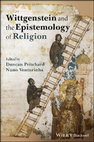
Wittgenstein and the Epistemology of Religion, First Edition, 2025
Religions, 2023
This article is a contribution to the special issue of Religions journal, titled "Religion, Science and Technology in Pantheism, Animism and Paganism", edited by Victoria Dos Santos and Gorazd Andrejc:
https://www.mdpi.com/journal/religions/special_issues/RSTinPAP
This article is an open access article distributed under the terms and conditions of the Creative Commons Attribution (CC BY).
Philosophy and the Spiritual Life, edited by V. Harrison, T. McNabb. London: Routledge. pp. 125-141. , 2023
Slavia Centralis, 2019
Abstract
Deliberation as critical, open, inclusive and argument-based discussion about matters of public interest is a crucial mechanism of a healthy democracy. According to deliberative democracy defenders, like Jürgen Habermas, deliberation contributes to achieving a better and more just society. The present essay analyses the
intertwinement between the development of this political value in the Euro-Atlantic world on the one hand, and Protestantism and its development on the other. Recent works in the history of Protestantism and the political history of democracy paint a complex, but powerful picture: despite the religious conservative tendencies in Protestantism, it seems that a notable measure of freedom of research, belief and debate could be found in the societies where Protestantism had become a dominant religious culture. While this development is partly a result of contingent historic events, it also had much to do with internal theological impulses within the Protestant thought.
Key words: deliberation, Protestantism, democracy, debate, public discussion
Povzetek
Deliberacija oziroma kritična, odprta, vključujoča in argumentirana javna razprava o stvareh javnega interesa je ključen mehanizem demokratične politične ureditve. Po prepričanju zagovornikov deliberativne demokracije, kot je Jürgen Habermas, deliberacija prispeva k doseganju boljše in pravičnejše družbe. Prispevek analizira prepletenost razvoja te politične vrednote v evro-atlantskem svetu s protestantizmom in njegovim razvojem. Novejša raziskovanja zgodovine protestantizma in politične zgodovine demokracije kažejo kompleksno, a zgovorno sliko: kljub prisotnosti religijskih konzervativnih tendenc v protestantizmu se zdi, da je za družbe, v katerih je protestantizem postal prevladujoča religijska kultura, postala značilna precejšnja mera svobode raziskovanja, verovanja in debatiranja. To dejstvo je bilo delno rezultat naključnih zgodovinskih dogodkov, delno pa notranjih teoloških impulzov v protestantski misli.
Ključne besede: deliberacija, protestantizem, demokracija, debata, javna razprava

Interpretations of Wittgenstein, Religion and Interreligious Relations
In the introductive chapter to the volume, I place the studies presented in the volume within the most relevant scholarly contexts: first and foremost, the studies in Wittgenstein interpretation, especially of Wittgenstein on ‘religion’, ‘belief’, and related concepts; and second, the recent versions of Wittgensteinian philosophy of religion and Wittgensteinian theology. I do this by offering a way to read Wittgenstein on religion through tracing four conceptions or ‘pictures’ of religion in Wittgenstein’s thought, which have a particular place in Wittgenstein’s specific understanding of philosophy as grammatical investigation. I show how the studies in the current volume relate to previous applications of Wittgenstein to the study of interreligious encounter, communication, disagreement, and related topics, and suggest how they are connected to some of the recent debates in religious studies, comparative theology, and comparative philosophy of religion more broadly.
Keywords: Wittgenstein, Religious language, Interreligious relations, Comparative theology, Interreligious dialogue.
Liberal Theology Today, 2019
A metaphor, commonly used by the critics of Liberal Theology, portrays it as a slippery slope between Christianity and unbelief. Descriptively-sociologically speaking, the picture of " sliding through liberal theology towards unbelief " includes some truth. In this paper, however, I take a closer look at the philosophical and theological meaning of the slippery slope argument and offer a response to it. Firstly, I examine and critique the underlying conception(s) of religious belief in typical contemporary anti-Liberal uses of the slippery slope argument against Liberal Theology. Secondly, I argue that the Slippery Slope metaphor can and should be taken (also) as a positive interpretation of an adequate religious belief-attitude rather than (merely as) a negative criticism.
Delivered as an academic paper at the conference Liberal Theology Today, Ludwig Maximillan University, Munich, 18-21 July 2018.
Infiltrators, Imposters, or Human Beings? The Slovenian Socio-Political Imaginary, Christianity, and the Responses to the 2015–2016 Migrant Crisis
Wittgenstein on Religion: The Four Conceptions
Wittgenstein and 'Dialogue'
Dialogue Theories 2. Frances Sleap & Omer Sener (editors), London: Dialogue Society, forthcoming.
Slovenian Military Chaplaincy and Religious Diversity
To be published in an edited volume on military chaplancies and religious diversity (edited by Torkel Brekke and Vladimir Tikhonov)
Gorazd Andrejč and George R. Wilkes
This study focuses on the the ways in which religious diversity features in and affects the activities, the structure and the attitudes of the military chaplaincy in the Slovenian Armed Forces (SAF). The chaplaincy's future is shaped by the fact that this is a post-Communist state with a historically Catholic majority affected by a vibrant conflict over secular-religious relationships, a conflict evoked in regular debate between the politically dominant parties of the Left and Right. This study illustrates how chaplaincy staff are affected by this polarization, and explores the extent to which their treatment of religious diversity supports their attempts to surmount the constraints placed on chaplaincy by the polarization they experience.
Brief Description of the Book:
Title: Military Chaplaincy in an Era of Religious Pluralism: Military–Religious Nexus in Asia, Europe, and USA. Oxford/New Delhi: Oxford University Press, 2017.
Edited by Torkel Brekke and Vladimir Tikhonov
Part of Religion and Democracy Series
Present-day militaries are often microcosms of the societies that maintain them. Unsurprising then that the armed forces have to come to terms with the question of religion, a subject that has increasingly become of importance in modern nation states.
At the very heart of these connections between the armed forces, religion, and society is the institution of military chaplaincy. Acting as spiritual guides, military chaplains contribute to war efforts by espousing the legitimacy of state violence and preserving the mental health of soldiers. Their role in performing the last rites of the fallen is also of paramount importance Through cross-cultural analysis and taking into account the diversities of military chaplaincies, this volume examines how they mirror societal attitudes towards the armed forces and also contribute in shaping them. Comparing the varied cultural and political contexts of the USA, India, Slovenia, South Korea, Japan, and many other countries, the book takes a pioneering step towards broadening the horizons of existing scholarship in this field.
About the Editors
Torkel Brekke is Deputy Director and Research Professor at the Peace Research Institute Oslo (PRIO), Norway. He is the author of several books, among them Faithonomics: Religion and the Free Market (2016) and Fundamentalism: Prophecy and Protest in an Age of Globalization (2012).
Vladimir Tikhonov is Professor at the University of Oslo. Recently, he published Modern Korea and Its Others: Perceptions of the Neighbouring Countries and Korean Modernity (2015) and co-edited (with Torkel Brekke) Buddhism and Violence: Militarism and Buddhism in Modern Asia (2012).
Table of Content:
Introduction: Military Chaplaincy in Comparative Perspective
Torkel Brekke
1. Religious Teachers in the Indian Army
Torkel Brekke
2. Religious Plurality and the Slovenian Military Chaplaincy
Gorazd Andrejč and George R. Wilkes
3. Paths Untrodden in Japanese Buddhist Chaplaincy to the Imperial Military
Micah Auerback
4. ‘Operation Dhamma’: The Sri Lankan Armed Forces as an instrument of Buddhist Nationalism
Iselin Frydenlund
5. Military Rabbis as Community Builders: The Israeli Case
Ori Goldberg
6. The Divine Is in the Details: Managing Religion in Pluralizing Militaries
Kim Philip Hansen
7. Pluralistic Permutations: The Thai Buddhist Military Chaplaincy
Michael Jerryson
8. From Confessional to Concessional: The Adaptation to Religious Pluralism by the Chaplaincy of the Norwegian Armed Forces
Bård Mæland and Nils Terje Lunde
9. Religion in the Sepoy Army of British India
Kaushik Roy
10. Twilight of the Padres: The End of British Military Chaplaincy in India
Michael Snape
11. South Korean Military Chaplaincy in the 1950–70s: Religion as Ideology?
Vladimir Tikhonov
Poligrafi, No. 71/72, 2014. (in Slovenian) pp. 95-120., Feb 2014