Book Chapters by Güray Ünver
SAPIENTIA Cumhuriyetin Yüzüncü Yılında Prof. Dr. Güngör Varınlıoğlu ve Prof. Dr. Ender Varinlioğlu Onuruna Yazılar, F. G. Özaktürk, Ü. F. Telatar, G. Ünver (eds.)
This article presents four Greek inscriptions which were unearthed during the sondage excavations... more This article presents four Greek inscriptions which were unearthed during the sondage excavations conducted by the Directorate of Milas Museum in 2021 on a private property in the city center of Ören. The three of the inscriptions on the marble architectural block are inscribed in circular areas within olive wreaths with stripes (tainia). The inscriptions, dated to the second half of the 2nd century AD (no. I, II, IV) and late 2nd century AD (no. III), mention three priests who were not documented in the earlier examples. The priests mentioned in the inscriptions are Alexandros son of Kallimas (?) and Hekatodora daughter of Stratippos (no. I), Alexandros son of Kallimas (?) (no. II), Kalligenes son of Glaukon and his wife Ulpia Hermonassa (inscription III), Publius Aelius Alkibiades and his daughter Aelia Rhetorike. Furthermore, in the priest inscription of Alexandros and Hekatodora (no. I), hierophantes, an important cult personnel associated with the the mysteries (μυστήρια) or secret rites, is attested for the first time in inscriptions from Keramos. The priests mentioned in the inscriptions should be the priests of divine Augustus (ἱερεῖς θεοῦ Σεβαστοῦ) who are known to have been established a privileged board (σύστημα) of priests at Keramos in 2nd century AD. Within this context, an extensive examination of the inscriptions which provide information about the priests of divine Augustus at Keramos, is presented at the end of the paper.
Cumhuriyet'in 100. Yılında Dünden Bugüne Muğla, 2024
Cumhuriyet'in 100. Yılında Dünden Bugüne Muğla, 2024
Antik Mobolla yerleşiminin günümüze ulaşan kalıntıları Muğla İl merkezinin kuzeyindeki korunaklı ... more Antik Mobolla yerleşiminin günümüze ulaşan kalıntıları Muğla İl merkezinin kuzeyindeki korunaklı ve düz zirveli bir yükselti olan Asar Tepe (Masadağ) üzerinde ve yakın çevresinde bulunmaktadır. Konumu dolayısıyla Atina Vergi Listeleri'inde kaydı bulunmayan yerleşimin Klasik Dönem'de ve öncesinde hangi isimle anıldığı henüz epigrafik bir belgede ya da bir antik metinde tespit edilmemiştir. Buna karşın yerleşimin eril (masculinum) ethikonu olan Μοβωλλεύς, MÖ III. yüzyılın ikinci yarısına tarihlenen 1 ve Akçaova'da bulunan bir yazıt 2 aracılığı ile bilinmektedir. Bu ethnikon MÖ 100-61 yılları arasına tarihlenen 3 ve Muğla'da bulunmuş diğer bir yazıt 4 ile tasdik edilmektedir. Μοβωλλεύς ethikonu doğrultusunda yerleşimin adı neutrum pluralis Μόβωλλ/α/ (Mobolla) olmalıdır. 5 Bu adın ne zamandan beri kullanıldığı kesin olarak bilinmemekle birlikte, MÖ III. yüzyıl ve sonrasında kenti tanımladığı bilinen Mobolla (Μόβωλλα) ismi, olasılıkla Karca kökenlidir ve kentin güvenilir belgelerle tespit edilen en erken tarihli ismidir; Kalymnos'ta bulunmuş ve MÖ III. yüzyıla tarihlenen bir
Sophron. Güler Çelgin’e Armağan Yazılar, 2023
This paper examines the scope of the medical researches at Knidos and also the lives, social stat... more This paper examines the scope of the medical researches at Knidos and also the lives, social status and medical views of Knidian physicians. Besides some assessments on the status of the god Asklepios in the
religious spectrum of Knidos are attempted in the light of epigraphical and numismatical evidence. Ancient sources that survived put forward Kos and Knidos as the prime centers of medical researches in the 5th and
the 4th centuries BC. In this period the physicians of Knidos, in a rivalry with physicians of Kos, earned great reputation and fame. At Knidos and Kos, there were Asklepiadai, the clan of physicians that claimed to be
the descendants of Asklepios over his son Podaleirios. The physicians of Knidos known through the ancient sources are Euryphon, Herodikos, Ktesias, Eudoxos, Khrysippos son of Erineos, Khrysippos son of Aristagoras and Khrysippos son of Khrysippos. Additionally the inscriptions provide information about the physicians of
Knidos who lived in the Roman Imperial Period. Despite the reputation of the physicians of Knidos and the belief that these physicians were the descendants of Asklepios, there is a lack of evidence about the religion
of Asklepios at the city. Also any definitive evidence for the existence of a temple dedicated to the god or of a priesthood in service of the god haven’t been discovered yet. Furthermore, the coins of Knidos with depictions of Asklepios are rare and the known coin types are dated to late 2nd-early 3rd century AD.
Papers by Güray Ünver
Arkhaia Anatolika 9, 2026
This article presents nine new inscriptions discovered during the first three years of the excava... more This article presents nine new inscriptions discovered during the first three years of the excavations at the sanctuary of Athena at Pedasa conducted by the excavation team directed by Prof. Dr. Adnan Diler between 2007 and 2016. The inscriptions provide evidence confirming the localisation of Pedasa at Gökçeler and also document “Pedasis”, the epithet of the goddess Athena, which was not mentioned by ancient writers. This epithet, derived from the city’s ethnikon, reveals the Pedasian identity of the goddess. Inscriptions dated to different periods between the 4th century BC and the 1st century AD offer epigraphic evidence of the operational
status of the sanctuary during the Hellenistic period and early Imperial period. According to information provided by inscriptions, Pedasa was not completely abandoned after Maussollos’ synoikismos, and the sanctuary of Athena maintained its religious function in the 4th century BC, also became the location where important decrees on stelai were erected. The dedication by the city (polis) of Halikarnassos to Athena Pedasis (no. 5) is important evidence that the sanctuary was regarded as a temple of the city by the institutions of Halikarnassos in the late 3rd century BC – 2nd century BC, since, as the Salmakis inscription also testifies, Pedasa was an important part of the territory of Halikarnassos in the mid- 2nd century BC. Another dedicatory inscription (no. 6), dated to the mid- or late 2nd century BC, provides further evidence of visitors from Halikarnassos during this century. The inscription (no. 8) carved on the arch blocks and dated to the second half of the 1st century BC – 1st century AD indicates that construction activities were carried out in the sanctuary during this period and that an andron (?) was probably built from the foundations and dedicated to Athena Pedasis. Further evidence that the temple was still
functional during the Early Imperial period is provided by an inscription on the base of a statue of Augustus erected in the sanctuary (no. 9).
Klio, 2025
The massive earthquake that struck Rhodes in the late 220s, causing the famous Colossus to collap... more The massive earthquake that struck Rhodes in the late 220s, causing the famous Colossus to collapse, also caused damage on the opposite mainland. This can be deduced from a new epidosis list for the Asklepieion in Syrna in the centre of the Carian Chersonesos. The collapsed roof appears to have damaged the cult statue, its wreath and the entrance to the temple. The altar in front of the temple certainly also suffered major damage. The small community repeatedly called for donations to rebuild the shrine. The appeal and the donors were recorded on several blocks of the temple. The block, known since the late 19th century, contains the preamble to the epidosis, which was apparently dedicated to the construction of the collapsed roof. The second block, which lists c. 70 donations on two columns, appears to be the continuation of the first block. Only a third of the heavily weathered inscription was recovered by Fraser and Bean. Some of the incomplete names preserved there can be restored on the basis of the third block, published here for the first time. The new inscription mentions subscriptions that were used for repair work on the cult statue and the altar, among other things. It also contains the names of Euagis, who was honoured in 220 for the transfer of a plot of land and some epidosis contributions for reconstruction work in the Temenos, as well as the proposer of the honour. This makes the connection with the great earthquake clear. Among the donors are Syrnians (demotikon omitted) as well as people from other communities on the peninsula (Amos, Kryassos), an island Rhodian and several metics. Arguments for the localisation of the Asklepieion at the mosque of Bayır and its connection with the water source Kızlar Çeşmesi are then presented.

LIBRI X, 2024
This article presents a new reading of a published inscription from Mylasa. The inscription is a ... more This article presents a new reading of a published inscription from Mylasa. The inscription is a dedication of an altar to an emperor and Zeus Olympios by the inhabitants of a street, for the sake of honoring Dionysides son of Demetrios, the olympic victor (olympionikes). It was engraved on a white marble round altar with profiles above and below. The inscription was published by Ph. Le Bas in 1870 and subsequently by G. Cousin in 1898, afterwards it was revised by L. Robert in 1937 and by W. Blümel in 1987. In December 2023, the altar was refound in Mylasa (modern Milas) in the garden of a private house and it was brought to Milas Museum. The new study has enabled a substantial reading of the lines 1-2 and 4-5 which were undecipherable in the earlier editions. The new reading of the lines 1-2 indicates that the altar was dedicated to Augustus and Zeus Olympios, therefore the inscription should be dated to the reign of Augustus. Besides, the lines 4-5 clarify that the dedicators of the altar were “the inhabitants of a mesoplateia” (mesoplateitai) from “the street of Labraunda” (plateia Labraundike). The street of Labraunda (plateia Labraundike) is attested for the first time in inscriptions of Mylasa. More importantly, mesoplateites (inhabitant of a mesoplateia) is a new word, which is not known from any literary or epigraphic document.
Adalya 27, 2024
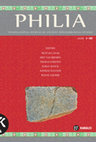
This article presents a new funerary inscription on a stele from Mylasa. The stele was found in t... more This article presents a new funerary inscription on a stele from Mylasa. The stele was found in the area to the southeast of Esentepe during the sondage excavation held under the supervision of the Milas Museum in 2021. The text is the funerary inscription of 11 members of a thiasos who claimed to be buried together at the same place when they die. According to the inscription, Ouliades son of Euthydemos was heroized with divine honors after his death, and the thiasos was established in his honor. The members of the thiasos (θιασεῖται Ἡρωϊσταί) dedicated a bomos to the heros Ouliades on the street called “the street of Skorpon.” The heros Ouliades, who became the object of a cult, was the son of Euthydemos, the well-known leader of the city in the first half of the first century BC. Therefore the inscription is dated to the late first century BC - first century AD due to letter forms and prosopography.
Philia 8, 2022
This article presents four new inscriptions from the Karian city of Idyma. The inscriptions were ... more This article presents four new inscriptions from the Karian city of Idyma. The inscriptions were found during the surveys and excavations on the site between the years 2019 and 2022. Two of the inscriptions (nos 1 and 2) are from an artificial terrace on the southern slope of Küçük Asar hill, which may have been an important part of the urban centre of Idyma in the Hellenistic period. The inscription no. 1 belongs to an altar of Arsinoe II Philadelphos. It shows that Idyma was under Ptolemaic control in the early 260s BC. The epidosis list no. 2 provides direct evidence that the city was part of the Rhodian Peraia in 175 BC. It is dated by the Rhodian eponymous priest and the board of prytaneis of Idyma. The subscription aimed to finance a palaistra. Among the fifteen subscribers whose names are preserved there are also the Rhodian governor in charge of the city (epistates) and two Rhodian military officials (hegemones). The fragmentary inscriptions nos 3 and no. 4 were excavated in the ruins of the medieval castle at İnişdibi. The inscription no. 3 is a dedication of the κοινὸν τῶν ἐρανι[σ|τῶν Δω]ριῶν? for Artemi[doros]. The association was possibly named after its founder (Doros?). The designation of this private association as κοινὸν τῶν ἐρανιστῶν indicates Rhodian influence. The last inscription is very fragmentary. It probably contains a decree of the city in honour of an unknown Rhodian.

Libri VIII, 2022
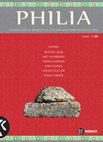
In this paper, ten funerary inscriptions from the eastern necropolis of Knidos are presented. The... more In this paper, ten funerary inscriptions from the eastern necropolis of Knidos are presented. The inscriptions were unearthed in four different tombs during the excavations and the surveys in the locality of Gıyrap in 2017 and 2021. Six of the inscriptions (no. 1-6) were found reused at the vaulted tomb labelled as “Tomb 1”. Two of the inscriptions (no. 7-8) were unearthed in the ruins of the tomb labelled the “mon-umental vaulted tomb”. The other two (no. 9-10) of the inscriptions were found in two different tombs near the “monumental vaulted tomb”. The inscription no. 1 is the Latin epitaph of Cassius Liberalius, the centurio of the VIIth Gemina Legion. The other nine inscriptions are Greek epitaphs of Tullia Antiokhis (no. 2), Publius Flavius Epitynkhanon (no. 3), Ofellius Euporistos (no. 4), Kharis (no. 5), Zosime, Athenis, Flavius Soterikhos, Aphrodisios and [n.n.] (no. 6), Gaius Iulius Harpokras (no. 7), Epagathos (no. 8), Kleuphanes (no. 9), [n.n.], Philtatos and Arkhias (no. 10). The inscriptions are dated to different periods between the Ist century B.C. and the IVth century A.D. The personal names Antiokhis, Epitynkhanon, Kharis, Athenis and Kleuphanes are here attested for the first time in inscriptions from Knidos.
Philia, 2021
In this article eleven new inscriptions from Knidos are presented. Nine of them (nos. 1–9) were f... more In this article eleven new inscriptions from Knidos are presented. Nine of them (nos. 1–9) were found in 2013 and 2014 at the eastern section of the Dionysos Terrace, to the west of the small theater, near the western analemma. The two last inscriptions (nos. 10 and 11) were detected in 2013 on the western analemma of the small theater. Most of the texts are honorary inscriptions on statue bases dated to the period from 3rd century BC to 1st century BC. An exeption is no. 9, which has a sepulchral context, while the character of the fragmentary no. 8 remains uncertain. Four of the honorary inscriptions (nos. 1, 3, 5, 6) contain artist signatures. Zenodotos of Knidos, son of Menippos mentioned in the inscription no. 3, was one of the most notable sculptors of Knidos in the 1st half and the middle of the 2nd century BC. The sculptors Hermonax mentioned in no. 1, as well as Diokles and Di[- -] mentioned in no. 6 are attested for the first time.

Arkhaia Anatolika, 2021
This paper presents a statue base with an inscription, which was found in 2019 abandoned in a par... more This paper presents a statue base with an inscription, which was found in 2019 abandoned in a park in the Muslihittin neighbourhood of Menteşe in Muğla province and it was moved to the Muğla Museum. Although the original location of the base is unknown, it is extremely likely that it belongs to the region that includes Mobolla and Pisye. The bottom edges of the round base are profiled with torus and kyma recta and the top edges are profiled with ovolo and a listel. No trace of a statue on the top plane of the base can be detected. There is a circular dowel hole in the center of the bottom of the base. On the round base which reflects a Rhodian influence in light of its stylistic features and similar examples, an eight-line Greek honorary inscription is carved. According to the inscription dated to the mid or the 1st half of the 2nd century BC (after 188 BC) due to lettering and its content, Iason of Rhodos, son of Euandros, possibly a leading member of the association, was honoured and crowned with a golden crown by the association of eranistai because of his virtue and benefaction towards them. The dedication of base to Zeus by the association of eranistai indicates the possible connection between the association at Mobolla-Pisye and the religion of Zeus. The associations of eranistai were attested at Athens and Rhodos, also at the Karian settlements Thyssanous, Loryma and Hyllarima. The attestation of the association of eranistai at the region of Mobolla–Pisye should be considered as a result of the Rhodian influence at Karian inlands after 188 BC.
bitig, 2021
The ancient city of Pedasa, situated in today's Gökçeler Mevkii of Bodrum in Muğla, is among the ... more The ancient city of Pedasa, situated in today's Gökçeler Mevkii of Bodrum in Muğla, is among the eight cities that were established in the Lelegian Peninsula by Lelegians who were seen as the ancestors of Karians in the ancient written texts. Identified in the 19th and 20th centuries by the first researchers of the peninsula, Pedasa is the first Lelegian settlement that has been investigated with scientific excavations. Since 2007, the excavations, research, site preservation and management work of the city have been conducted under the direction of Prof. Dr. Adnan Diler in the name of the Turkish Ministry of Culture and Tourism and University of Muğla Sıtkı Koçman. After the long-running excavation campaigns, now the time has come for publishing the data obtained from the research. Karians and Lelegians, albeit they have been connected with the same roots sharing the same Hittite/Luwian region, in fact, they differ in terms of their time period, settling regions, and tradition and represent different cultures. In this regard, we must note that the word "Lelegian" here is not used for an ethnical meaning but rather to describe the indigenous people of the peninsula before the Maussollos period and their architecture and remains, distinctive to the region itself. All of the Lelegian settlements were situated in the plains on the inaccessible mountains and hills, far from the cost, and suitable for protection against attacks, especially from the piracy that was common during the ancient times. The discovery of an inscription in the Athenian sanctuary at Pedasa played a significant role in the localization of the city by Paton and Myres (1896: 192-195). The cult of bitig Edebiyat Fakültesi Dergisi 2021/1
Cedrus, 2020
This paper presents two funerary inscriptions, carved on stelae, from Muğla Museum. The findspots... more This paper presents two funerary inscriptions, carved on stelae, from Muğla Museum. The findspots and origins of both stelae are unknown. The first inscription is the epitaph of Epainetos erected by his mother Zosime. The latter is the epitaph of Artemon erected by his father Hekaton and his mother Aphphion, in accordance with the permission for the burial granted by Trebius Antoninus. Both inscriptions are dated to Roman Imperial Period and possibly they were brought from Stratonikeia or vicinity. This paper also presents corrigendum to a published funerary inscription from Konya Koyunoğlu Museum. This inscription, the epitaph of Gaius and his wife Douda erected by their sons Manes and Petronius, is carved on a funerary stele found in Çavdarhisar district (Aizanoi) of Kütahya province.
Olba XXVIII, 2020
This paper presents the honorary inscription by the inhabitants of Stadia and khora for Tiberius ... more This paper presents the honorary inscription by the inhabitants of Stadia and khora for Tiberius Claudius Euaratos, the son of Tiberius Claudius Politas. The inscription, dated to the 2nd half of the 1st century AD, provides some important details of the career of Tiberius Claudius Euaratos. The inscription mentions his service as a runner in a ritual at Karneia (karneadromos) the festival held for Apollon Karneios, his holding the office of damiourgia and his carrying out an embassy to Rome as a gift. The inscription also mentions the religious offices held by the honorand; priesthood of both Poseidon Tainarios and Poseidon Asphalios for life.
The toponym Stadia, which is probably preserved in modern Datça, appears for the first time in inscriptions but is known from Pliny the Elder. The cults of Potidan (Poseidon) Tainarios and Potidan (Poseidon) Asphalios are also attested for the first time in inscriptions from Knidos. Tainarios is an epithet of Poseidon indigenous to Tainaron (Lakonia), where the god has a temple. Asphalios is an epithet of Poseidon widely referenced in inscriptions from many cities around the Mediterranean, including Sparta, where the god has a temple near the agora. Thus the inscription reflects the Doric character of Knidos in the 1st century AD, by mentioning Karneia and particularly by mentioning Potidan, the Doric form of Poseidon with the epithets Tainarios and Asphaleios.
40.Kazı Sonuçları Toplantısı, 2019
Cedrus VII , 2019
Öz: Makalede Karia kentlerinde özel şahıslarının kent imarına yönelik bağışları ele alınmaktadır.... more Öz: Makalede Karia kentlerinde özel şahıslarının kent imarına yönelik bağışları ele alınmaktadır. Bu kapsamda Hellenistik Dönem'e tarihlenen toplu bağışlar, faizsiz borçlar ve bireysel bağışlar, ayrıca Roma Dönemi'ne tarihlenen bireysel bağışlar ve vakıflar karşılaştırmalı olarak incelenmiş, MÖ III. yüzyıldan MS II. yüzyıl sonuna kadar geçen süreçte Hellenistik Dönem'deki ve Roma Dönemi'ndeki toplumsal yapı değişiminin bağışlar üzerindeki etkileri sorgulanmıştır. Bağışların nitelikleri, ilişkili oldukları yapılar ve bağışları gerçekleştiren özel şahısların motivasyonları ve kent içindeki sosyal ve politik konumları analiz edilmiştir.
Roma Dönemi’nde Karia kentlerinin toplumsal yapısı içerisinde elitlerin
prestij yarışları ve bu y... more Roma Dönemi’nde Karia kentlerinin toplumsal yapısı içerisinde elitlerin
prestij yarışları ve bu yarış içinde verilen hizmet ve armağanlar arasında dağıtımların yeri ve önemi, bu çalışmanın konusunu oluşturmaktadır. Buna bağlı olarak çalışmanın amacı; Roma Dönemi Karia kentlerinde özel şahıslar tarafından yapılan dağıtımların niteliğini ve niceliğinin tanımlanması ve belgelenmesidir. Böylece dağıtımı yapan kişi veya kişilerin kent sosyolojisi ve ekonomisi açısından konumunu belirleyebilmek, kentteki elit sınıfın bu armağan alışverişi içerisinde önceliklerini ve imtiyazlarını tanımlayabilmek amaçlanmıştır. Yapılan çalışmayla birlikte, dağıtımların en erken ve en geç örnekleri, dağıtımların en sık yapıldığı tarihler ve kentler, dağıtımların nitelik ve nicelikleri konularına ışık tutmaya çalışılmıştır. Karia kentlerinde yapılmış araştırmalarda ele geçmiş ve yayınlanmış yazıtlar taranarak veri sunan yazıtlar derlenerek bir katalog oluşturulmuştur. Bu çalışma kapsamında 46 yazıtta toplam 117 veri ele alınmıştır. Katalog kapsamını; Aphrodisias, Herakleia Salbake, Iasos, Lagina, Nysa, Panamara, Sebastopolis,
Stratonikeia ve Tralleis kentlerinden ele alınan yazıtlar oluşturmaktadır. Bu veriler ışığında belgelenen dağıtımlar; alıcı, verici, dağıtımın niteliği, niceliği, mekanı gibi kriterler altında irdelenmiş ve istatistiki sonuçlara ulaşılmıştır Elde edilen istatistiki veriler de ayrıca tablo ve grafikler aracılığıyla sunulmuştur. Para, yemeklik ve sportif amaçlı zeytinyağı, et, tahıl, şarap, sabah ve öğlen yemekleri ve kamusal ziyafet niteliğindeki dağıtımlar bu çalışma altında ele alınmıştır. Dağıtımın yapılmasına ilişkin motivasyonun ne olduğu sorusu da bu çalışmanın temel omurgasını oluşturmaktadır. Ayrıca, dağıtımın alıcısı olan zümre veya grupların imtiyazları ve dağıtıma yönelik ihtiyaç sahibi olup olmadığı da sorgulanmıştır.
This paper presents three inscriptions from the village of Ergili, near Dascyleum and in its vici... more This paper presents three inscriptions from the village of Ergili, near Dascyleum and in its vicinity, in the Bandırma district of the city Balıkesir. The origins of the inscriptions are unknown. One of the inscriptions is a dedicatory inscription to Asclepius, the second an honorary inscription for an unknown emperor and the third is possibly an epitaph. Within this paper, suggestions for the restoration of the texts and dating of the inscriptions are offered, together with suggestions as to their origins. In this paper, three inscriptions found in the vicinity of the village of Ergili, near Dascyleum, are presented.



Uploads
Book Chapters by Güray Ünver
religious spectrum of Knidos are attempted in the light of epigraphical and numismatical evidence. Ancient sources that survived put forward Kos and Knidos as the prime centers of medical researches in the 5th and
the 4th centuries BC. In this period the physicians of Knidos, in a rivalry with physicians of Kos, earned great reputation and fame. At Knidos and Kos, there were Asklepiadai, the clan of physicians that claimed to be
the descendants of Asklepios over his son Podaleirios. The physicians of Knidos known through the ancient sources are Euryphon, Herodikos, Ktesias, Eudoxos, Khrysippos son of Erineos, Khrysippos son of Aristagoras and Khrysippos son of Khrysippos. Additionally the inscriptions provide information about the physicians of
Knidos who lived in the Roman Imperial Period. Despite the reputation of the physicians of Knidos and the belief that these physicians were the descendants of Asklepios, there is a lack of evidence about the religion
of Asklepios at the city. Also any definitive evidence for the existence of a temple dedicated to the god or of a priesthood in service of the god haven’t been discovered yet. Furthermore, the coins of Knidos with depictions of Asklepios are rare and the known coin types are dated to late 2nd-early 3rd century AD.
Papers by Güray Ünver
status of the sanctuary during the Hellenistic period and early Imperial period. According to information provided by inscriptions, Pedasa was not completely abandoned after Maussollos’ synoikismos, and the sanctuary of Athena maintained its religious function in the 4th century BC, also became the location where important decrees on stelai were erected. The dedication by the city (polis) of Halikarnassos to Athena Pedasis (no. 5) is important evidence that the sanctuary was regarded as a temple of the city by the institutions of Halikarnassos in the late 3rd century BC – 2nd century BC, since, as the Salmakis inscription also testifies, Pedasa was an important part of the territory of Halikarnassos in the mid- 2nd century BC. Another dedicatory inscription (no. 6), dated to the mid- or late 2nd century BC, provides further evidence of visitors from Halikarnassos during this century. The inscription (no. 8) carved on the arch blocks and dated to the second half of the 1st century BC – 1st century AD indicates that construction activities were carried out in the sanctuary during this period and that an andron (?) was probably built from the foundations and dedicated to Athena Pedasis. Further evidence that the temple was still
functional during the Early Imperial period is provided by an inscription on the base of a statue of Augustus erected in the sanctuary (no. 9).
The toponym Stadia, which is probably preserved in modern Datça, appears for the first time in inscriptions but is known from Pliny the Elder. The cults of Potidan (Poseidon) Tainarios and Potidan (Poseidon) Asphalios are also attested for the first time in inscriptions from Knidos. Tainarios is an epithet of Poseidon indigenous to Tainaron (Lakonia), where the god has a temple. Asphalios is an epithet of Poseidon widely referenced in inscriptions from many cities around the Mediterranean, including Sparta, where the god has a temple near the agora. Thus the inscription reflects the Doric character of Knidos in the 1st century AD, by mentioning Karneia and particularly by mentioning Potidan, the Doric form of Poseidon with the epithets Tainarios and Asphaleios.
prestij yarışları ve bu yarış içinde verilen hizmet ve armağanlar arasında dağıtımların yeri ve önemi, bu çalışmanın konusunu oluşturmaktadır. Buna bağlı olarak çalışmanın amacı; Roma Dönemi Karia kentlerinde özel şahıslar tarafından yapılan dağıtımların niteliğini ve niceliğinin tanımlanması ve belgelenmesidir. Böylece dağıtımı yapan kişi veya kişilerin kent sosyolojisi ve ekonomisi açısından konumunu belirleyebilmek, kentteki elit sınıfın bu armağan alışverişi içerisinde önceliklerini ve imtiyazlarını tanımlayabilmek amaçlanmıştır. Yapılan çalışmayla birlikte, dağıtımların en erken ve en geç örnekleri, dağıtımların en sık yapıldığı tarihler ve kentler, dağıtımların nitelik ve nicelikleri konularına ışık tutmaya çalışılmıştır. Karia kentlerinde yapılmış araştırmalarda ele geçmiş ve yayınlanmış yazıtlar taranarak veri sunan yazıtlar derlenerek bir katalog oluşturulmuştur. Bu çalışma kapsamında 46 yazıtta toplam 117 veri ele alınmıştır. Katalog kapsamını; Aphrodisias, Herakleia Salbake, Iasos, Lagina, Nysa, Panamara, Sebastopolis,
Stratonikeia ve Tralleis kentlerinden ele alınan yazıtlar oluşturmaktadır. Bu veriler ışığında belgelenen dağıtımlar; alıcı, verici, dağıtımın niteliği, niceliği, mekanı gibi kriterler altında irdelenmiş ve istatistiki sonuçlara ulaşılmıştır Elde edilen istatistiki veriler de ayrıca tablo ve grafikler aracılığıyla sunulmuştur. Para, yemeklik ve sportif amaçlı zeytinyağı, et, tahıl, şarap, sabah ve öğlen yemekleri ve kamusal ziyafet niteliğindeki dağıtımlar bu çalışma altında ele alınmıştır. Dağıtımın yapılmasına ilişkin motivasyonun ne olduğu sorusu da bu çalışmanın temel omurgasını oluşturmaktadır. Ayrıca, dağıtımın alıcısı olan zümre veya grupların imtiyazları ve dağıtıma yönelik ihtiyaç sahibi olup olmadığı da sorgulanmıştır.