Books by Heather Barnett

Broad Vision: Inspired by... Images from Science
Inspired by…Images from Science documents and discusses art/science research and interdisciplinar... more Inspired by…Images from Science documents and discusses art/science research and interdisciplinary learning as seen through the eyes of a group of undergraduate students and university teachers at the University of Westminster, UK.
Part exhibition catalogue and part educational treatise, Inspired by…Images from Science defines the approaches taken to interdisciplinary learning through the 2012 Broad Vision project, shares the multiple outcomes, and reflects on the project from the diverse positions of participants and observers.
Broad Vision is an art/science research and learning programme which brings together students and academics from diverse disciplines to engage in collaborative exchange and experimentation. Through interdisciplinary exploration students become teachers, researchers and producers as they engage in questions relating to biology and psychology, technology and creativity, art and science.
Broad Vision: The Art & Science of Looking
Heather Barnett and John R.A. Smith (Editors) with contributions from student and staff researche... more Heather Barnett and John R.A. Smith (Editors) with contributions from student and staff researchers on the Broad Vision project, 2010-2011
Student and staff researchers from diverse disciplines in the arts and sciences investigated questions of mediated vision through a year long interdisciplinary research project at the University of Westminster, UK. The Broad Vision project explored the perception and interpretation of microscopic worlds, and investigated the benefits and challenges of working across disciplinary divides in a university setting. This book documents the processes of disciplinary exchange, interdisciplinary research and practice, and audience engagement – providing a valuable case study for inquiry based art/science education and offering personal insights into the learning gained for both student and staff researchers.
Papers by Heather Barnett
Polymathic pedagogies
Routledge eBooks, Nov 10, 2021
The slime mold Physarum polycephalum is a well-established model organism within fields of biolog... more The slime mold Physarum polycephalum is a well-established model organism within fields of biology, physics and computing. It is also increasingly employed within art and design disciplines, pedagogic practices and public engagement activities as a vehicle for exploring questions of intelligence, agency and emergence. This work was presented at PhysNet 2015.
The Physarum Experiments
The Physarum Experiments: various studies 2009-2018 Artist, Heather Barnett, works with the slime... more The Physarum Experiments: various studies 2009-2018 Artist, Heather Barnett, works with the slime mould, Physarum polycephalum, as material, model and metaphor, investigating the organism’s navigational abilities and seemingly intelligent behaviours. For a single-celled organism without a single neuron to its name, this yellow amoeboid blob can solve complex problems, transfer learning and anticipate events. It is also quite beautiful, the dendritic growth patterns reminiscent of forms seen at varying scales in nature, from blood vessels to tree branches, from river deltas to lightening strikes. Barnett’s films, studies, installations and participatory experiments work with the underlying mechanisms that enable this simple organism to make complex decisions. Her artworks are the product of a negotiation over creative control and authorship with one of the earliest forms of life, and invite us to question our definitions of agency and intelligence across scales. This collection of time-lapse studies reveal some of the fascinating behaviours of the slime mould as it navigates unfamiliar environments, encounters other species and fuses with another of its kind to improve its chance of survival. Resilient Topographies #1: the peninsula of Paljassaare A film by Heather Barnett (working with Physarum polycephalum) in collaboration with ecoLogicStudio. Commissioned for Anthropocene Islands, bio.Tallinn (Tallinn Architecture Biennale 2017). Duration: 2:45 The true slime mould Physarum polycephalum is a nomadic information system. As it creeps across its terrain it makes continuous micro-decisions about surrounding atmospheric conditions and resource distribution. With no brain or sensory organs, this amorphous cellular mass computes the complexities of its environment through chemical signals. It is a highly adaptive biological barometer. In Heather Barnett’s film, made as an artistic interpretation of the modelling concepts of ecoLogicStudio, the slime mould interacts with the informational landscape of the peninsula of Paljassaare, Tallinn. It is a symbolic response to a reimagined landscape, the slime mould adapting to the changing topography. Small plasmodia fuse together to form a critical mass, thereby improving its chances of survival through collective cooperation. Pulsing and flowing across the landscape, we follow the superorganism as it computes efficient routes and calculates dynamic networks. This is a tale of adaptive resilience, of biological strategising in a changing world. --- Exhibited as part of THE FACTORY OF LIFE «MUTATIONS / CREATIONS 3» Discover an archeology of life and artificial life in an exhibition that presents in a prospective way the recent works of about fifty creators as well as researches from scientific laboratories. Its material itself is evolutionary, some works being involved in a process of growth or degeneration. A hundred or so projects are on show, including several designed for the occasion Annual Laboratory of Creation and Innovation at the Center Pompidou, "Mutations / Creations"questions the links between arts, science, engineering and innovation. The cycle brings together artists, engineers, scientists and entrepreneurs, all the protagonists of the sensible and the intelligible, who inflect and transgress our present. For its third edition, the event brings together the visual and digital arts, design and speech, through a collective exhibition "The Factory of the Living", the first solo and monographic exhibition in Europe of the Brazilian artist Erika Verzutti, as well as the third edition of the Vertigo forum, led by IRCAM. Curators: MA. Brayer and O. Zeitou
The Physarum Experiments (and Being Slime Mould)
Artist Heather Barnett works with Physarum polycephalum, the ‘many headed’ slime mould, observing... more Artist Heather Barnett works with Physarum polycephalum, the ‘many headed’ slime mould, observing and manipulating the growth patterns, navigational abilities and seemingly human behaviours of this single-celled organism. Whilst it has no brain or central nervous system, the slime mould demonstrates a primitive form of intelligence and an impressive array of collective behaviours. When placed in proximity, individual cells merge to form a single supercell, working in synchronous harmony. As an artist and an educator Barnett is interested in the organism’s emergent and adaptive properties and since 2009 she has developed a range of studies, methods and practices employing the slime mould as artistic medium, educational model and participatory metaphor. The Physarum Experiments explore ideas of co-creation with living organisms, and aim to draw connections between complex systems in biological and social contexts and to develop emergent platforms for self-organisation. Some works have a firm footing within scientific research (Study No:19 The Maze, which pays homage to Nakagaki’s classic experiment https://youtu.be/SdvJ20g4Cbs), whilst other works employ exploratory studio practices (http://heatherbarnett.co.uk/Projects/the-physarum-experiments/) and participatory experimentation (The Slime Mould Collective http://slimoco.ning.com). The presentation discussed these works and ended with a live collective experiment, Being Slime Mould, an embodied experiment inviting a group of individuals to enact slime mould behaviours in order to test human capacity for navigation, communication and cooperation. The experiment set out to test human collective behaviour when following non-human rules. (http://heatherbarnett.co.uk/Projects/being-slime-mould/)
Being Slime Mould: a participatory experiment exploring bodies of intelligence
Being Slime Mould set out to test human capacity for communication and cooperation in comparison ... more Being Slime Mould set out to test human capacity for communication and cooperation in comparison with a single celled organism, the slime mould, Physarum polycephalum. Whilst it has no brain or central nervous system, the slime mould demonstrates primitive intelligence and an impressive capacity for collective action. This illustrated talk, experiment and discussion explored bodies of intelligence and model organisms - by following some simple biological rules we could observe what complex behaviours could emerge.
Nonhuman Networks
A two person exhibition at Art Laboratory Berlin featuring recent works from The Physarum Experim... more A two person exhibition at Art Laboratory Berlin featuring recent works from The Physarum Experiments, an on-going artistic research project working with slime mould. Nonhuman Networks presents an aesthetics of new forms of communication between human and nonhuman actors
River Publishers eBooks, 2019
In this essay, I critically reflect on my artistic encounters with the slime mould, Physarum poly... more In this essay, I critically reflect on my artistic encounters with the slime mould, Physarum polycephalum. Since 2008, this non-neuronally intelligent organism has provided stimulus for diverse creative enquiries and speculative actions, including time-lapse studies (testing and revealing behaviours), objects and installations (for public exhibition), and embodied encounters (inviting groups of people to enact slime mould rules). Focussing discussion on selected projects and processes developed over the past decade, connecting public audiences with slime mould behaviours, I will address the organism as a working material to be manipulated, coerced, or encouraged to 'perform' and as a conceptual model, to explore notions of embodied intelligence between human and nonhuman entities. Whilst looking directly at the collective behaviour of the organism, the narrative also addresses wider processes of human enquiry, the slime mould as a vehicle for curiosity and discovery. The concept of polycephalismmany-headedness-here relates not only to the internal cellular mechanisms of the slime mould, but to the methods developed to connect diverse ways of thinking and working in a process of co-enquiry. My artistic practice is a literal and symbolic investigation of information distribution mechanisms, diverse knowledge systems, and collective intelligence-an invitation for interdisciplinary and interspecies encounters. This essay is as much about the emergent properties of the creative process and the interactions between disciplinary approaches, as it is a study of the properties of slime mould itself.
Heather is a visual artist, researcher and educator working with biological systems and scientifi... more Heather is a visual artist, researcher and educator working with biological systems and scientific processes. With interests ranging across medicine, psychology, perception and visualisation, projects have included microbial portraiture, cellular wallpapers, performing cuttlefish and self-organising installations. She is Senior Lecturer in Photographic Arts at the University of Westminster where she leads the Broad Vision project. Broad Vision is an art/science research and learning project, which brings together undergraduate students and academic staff from diverse disciplines to engage in collaborative exchange and experimentation. Through interdisciplinary exploration students become teachers, researchers and producers as they engage with questions relating to biology and psychology, technology and creativity, art and science. Drawing on my observations as Broad Vision project lead and the experiences of collaborating students and staff, this essay will frame the project in relation to interdisciplinary learning, academic hierarchies and emergent curricula-all of which are fluid and mutable. Learning Design The Broad Vision project is an educational research project 'in action', supported by an interdisciplinary pedagogic research fund at the University of Westminster. Since 2010, it has developed learning opportunities across the arts and sciences, with students taking a central role in the design and delivery of an emergent curriculum. Its initial aims were to explore student (and staff) exchange across the disciplines,
European Journal of STEM Education, 2021
In an increasingly complex interconnected world, STEAM practices have gained attention in Higher ... more In an increasingly complex interconnected world, STEAM practices have gained attention in Higher Education (HE). The integration of Sciences, Technology, Engineering and Mathematics pedagogies with those from the Arts takes many forms with myriad intentions, processes and outcomes. Common aspirations pertain to equipping students with interdisciplinary skills required for the jobs market, increasing intellectual curiosity and collaboratively developing creative, socially equitable responses to complex global challenges. The Erasmus+ project STEAM Innovation and Curriculum involves seven European partners who have been pioneering STEAM approaches and methods. Using workshops, discussions, hacking processes and reflective practice, this collaborative work is the first comprehensive attempt to systematically analyse and showcase European approaches to STEAM in HE. Project outputs relate to the three project phases and include defining STEAM and a Handbook on STEAM approaches (Phase 1), the development of new STEAM methods (Phase 2) and developing evaluation frameworks (Phase 3). The Handbook collects and codifies HE STEAM approaches and provides a working definition highlighting key elements of STEAM projects and processes as well as guidance and inspiration for those looking to develop and introduce STEAM approaches in their institution. This paper focuses on Phase 1 outcomes and insights to help foster STEAM thinking and to tackle issues around joint STEM/Arts standards, and concerns in the HE arena such as modes of intellectual investigation, curriculum planning and the case for inter-and transdisciplinarity.
Public, 2019
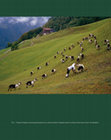
For a number of years, artist Heather Barnett has challenged groups of people to test their capac... more For a number of years, artist Heather Barnett has challenged groups of people to test their capacity for collective action against that of a single celled organism. The experiment, Being Slime Mould, invites a group of humans to operate as a superorganism, taskedwith some fundamental ontological rules of a nonhuman intelligent life form through playful participation.Being (or becoming) slime mould is of course an impossibility; we can no more become slime mould than we can become badger or bat. The point of the exercise, therefore, is in the trying: the endeavour to put aside human ego and individualism in order to shift perception towards other ways of sensing, knowing and being. Drawing on Barnett’s own artistic practice, and from the fields of ecology, philosophy and speculative design, this paper investigates the motivations and methods of humans to engage philosophically and experientially with the sensory subjectivities of ontological others.
Being Slime Mould
Being Slime Mould is an interactive installation and participatory performance exploring the desi... more Being Slime Mould is an interactive installation and participatory performance exploring the design function and cooperative behaviour of the organism, Physarum polycephalum (a true slime mould). Through the observation, simulation and enactment of slime mould behaviour, Being Slime Mould aimed to engage viewers directly with the naturally occurring phenomena of this intelligent organism, which possesses the ability to solve problems, make complex decisions and form efficient networks. Being Slime Mould was exhibited at BioDesign: on the Cross Pollination of Nature, Science and Creativity.
Proceedings of the 9th EAI International Conference on Bio-inspired Information and Communications Technologies (formerly BIONETICS), 2016
The slime mold Physarum polycephalum is a well-established model organism within fields of biolog... more The slime mold Physarum polycephalum is a well-established model organism within fields of biology, physics and computing. It is also increasingly employed within art and design disciplines, pedagogic practices and public engagement activities as a vehicle for exploring questions of intelligence, agency and emergence. This work was presented at PhysNet 2015.
Drawing the Line: Some Observations on an Art/Science Collaboration
Leonardo, 2006
Heather Barnett (artist). E-mail: <[email protected]>. Web: <www.heatherbarnett.... more Heather Barnett (artist). E-mail: <[email protected]>. Web: <www.heatherbarnett.co.uk>. Robert Whittle (geneticist, educator, researcher), School of Life Sciences, University of Sussex, Falmer, Brighton BN1 9QG, UK E-mail: ...
Published Texts by Heather Barnett

Interalia Online Magazine, 2017
In July 2017, a team of researchers and practitioners came together to embark upon a month-long... more In July 2017, a team of researchers and practitioners came together to embark upon a month-long situated research residency based at Arebyte Gallery in Hackney Wick, East London. Connecting visual, digital and performance art practices with contemporary scientific research, law and urban design, the project – Crowd Control – explored the mechanisms of collective behaviour through observation, simulation and experimentation.
Through studying group dynamics across differing scales and systems, Crowd Control aimed to observe and understand how groups move together, transfer information, make decisions, and respond to their environment. The question of ‘control’ was explored at three levels: within the body (the internal mechanisms that affect individual behaviour – such as stress response and personality); between bodies (the interactions between individuals – such as social cues, sensory communication, and unwritten patterns of behaviour); and beyond bodies (the external factors that set out to permit, persuade or prohibit behaviours – such as urban infrastructure, legal norms or technological interventions).


Uploads
Books by Heather Barnett
Part exhibition catalogue and part educational treatise, Inspired by…Images from Science defines the approaches taken to interdisciplinary learning through the 2012 Broad Vision project, shares the multiple outcomes, and reflects on the project from the diverse positions of participants and observers.
Broad Vision is an art/science research and learning programme which brings together students and academics from diverse disciplines to engage in collaborative exchange and experimentation. Through interdisciplinary exploration students become teachers, researchers and producers as they engage in questions relating to biology and psychology, technology and creativity, art and science.
Student and staff researchers from diverse disciplines in the arts and sciences investigated questions of mediated vision through a year long interdisciplinary research project at the University of Westminster, UK. The Broad Vision project explored the perception and interpretation of microscopic worlds, and investigated the benefits and challenges of working across disciplinary divides in a university setting. This book documents the processes of disciplinary exchange, interdisciplinary research and practice, and audience engagement – providing a valuable case study for inquiry based art/science education and offering personal insights into the learning gained for both student and staff researchers.
Papers by Heather Barnett
Published Texts by Heather Barnett
Through studying group dynamics across differing scales and systems, Crowd Control aimed to observe and understand how groups move together, transfer information, make decisions, and respond to their environment. The question of ‘control’ was explored at three levels: within the body (the internal mechanisms that affect individual behaviour – such as stress response and personality); between bodies (the interactions between individuals – such as social cues, sensory communication, and unwritten patterns of behaviour); and beyond bodies (the external factors that set out to permit, persuade or prohibit behaviours – such as urban infrastructure, legal norms or technological interventions).