Books by Ian Alexander Moore
Diaphanes, 2023
An extensive afterword to the volume Ways of Releasement: Writings on God, Eckhart, and Zen, by R... more An extensive afterword to the volume Ways of Releasement: Writings on God, Eckhart, and Zen, by Reiner Schürmann.
SUNY Press, 2022
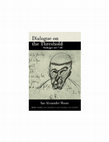
A reconstruction and critical interpretation of Heidegger's remarkable relationship to the poet G... more A reconstruction and critical interpretation of Heidegger's remarkable relationship to the poet Georg Trakl.
In the early 1950s, German philosopher Martin Heidegger proclaimed the Austrian expressionist Georg Trakl to be the poet of his generation and of the hidden Occident. Trakl, a guilt-ridden lyricist who died of a cocaine overdose in the early days of World War I, thus became for Heidegger a redemptive successor to Hölderlin. Drawing on Derrida's Geschlecht series and substantial archival research, Dialogue on the Threshold explores the productive and problematic tensions that pervade Heidegger's reading of Trakl and reflects more broadly on the thresholds that separate philosophy from poetry, gathering from dispersion, the same from the other, and the native from the foreigner. Ian Alexander Moore examines why Heidegger was reluctant to follow Trakl's invitation to cross these thresholds, even though his encounter with the poet did compel him to take up, in astounding ways, many underrepresented topics in his philosophical corpus such as sexual difference, pain, animality, and Christianity. A contribution not just to Heidegger and Trakl studies but also, more modestly, to the old quarrel between philosophy and poetry, Dialogue on the Threshold concludes with new translations of eighteen poems by Trakl.
"This is an extremely impressive book. Full of original insights and meticulous scholarship, as well as new primary source material that is not available elsewhere, Dialogue on the Threshold establishes Moore among the leading Heidegger scholars of his generation." — Robert Bernasconi, Pennsylvania State University
https://sunypress.edu/Books/D/Dialogue-on-the-Threshold
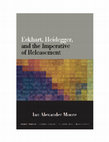
In the late Middle Ages the philosopher and mystic Meister Eckhart preached that to know the trut... more In the late Middle Ages the philosopher and mystic Meister Eckhart preached that to know the truth you must be the truth. But how to be the truth? Eckhart’s answer comes in the form of an imperative: release yourself, let be. Only then will you be able to understand that the deepest meaning of being is releasement. Only then will you become who you truly are. This book interprets Eckhart’s Latin and Middle High German writings under the banner of an imperative of releasement, and then shows how the twentieth-century thinker Martin Heidegger creatively appropriates this idea at several stages of his career. Regardless of whether Heidegger is promoting the will or, like Eckhart, letting-be, the mood of Heidegger’s discourse, from beginning to end, is imperative. Experience is all.
Eckhart, Heidegger, and the Imperative of Releasement does not just offer a novel way to read Eckhart and Heidegger, though. It also carefully examines Heidegger’s lifelong fascination with “the old master of letters and life,” as Heidegger liked to refer to his German predecessor. Drawing on archival material and Heidegger’s marginalia in his personal copies of Eckhart’s writings, this book argues that Eckhart was one of the most important figures in Heidegger’s philosophy. The book also contains previously unpublished documents by Heidegger on Eckhart, as well as the first English translation of Nishitani Keiji’s seminal essay “Nietzsche’s Zarathustra and Meister Eckhart,” which he initially gave as a presentation in one of Heidegger’s classes in 1938.
It has long been known that Heidegger was, and indeed saw himself as, a successor to Meister Eckh... more It has long been known that Heidegger was, and indeed saw himself as, a successor to Meister Eckhart. Hannah Arendt, for example, believed Heidegger's later thought to be "entirely influenced by him," whereas Hans-Georg Gadamer took Eckhart to be a crucial source for the early development of Heidegger's questions about being. Otto Pöggeler, in contrast, has contended that it was in between these two periods, when Heidegger was trying to liberate himself from the hegemony of Western metaphysics, that he depended on Eckhart. Judging from a remark Heidegger made at age fifty-nine, however, all three commentators seem to be right. For, as he said then, "Since 1910, the master of letters and life, Eckehardt, has accompanied me" (MH/KJ, 181-82/172; trans. mod.). Thus, we would not be overstating matters if we were to claim, with Jacques Derrida and Werner Beierwaltes, that Heidegger is hardly legible without an appreciation of his Eckhartian heritage. 1 Not surprisingly, therefore, many parallels have been drawn between Eckhart's thought and Heidegger's: from the sameness of their vocabulary (abgrunt/Abgrund, gelâzenheit/Gelassenheit, abegescheidenheit/Abgeschiedenheit, wesüng/Wesung), to the similarity of their core relata (the spark of the soul and Dasein, the Godhead and Sein); from their linguistic creativity to their philosophical concerns (the verbal character of being, life without why, truth as deeper than correspondence); from their critiques to their contributions. While some of these connections surely have merit, and indeed will receive corroboration over the course of this study, in this chapter I am less interested in speculating about possible lines of influence than in examining when and where Heidegger himself cites or refers to Eckhart. This preliminary philological work on the Heidegger/Eckhart connection is especially necessary today, since only recently have many of Heidegger's references to Eckhart become available to researchers. There is also crucial archival material that must be discussed if we are to have a more complete 3
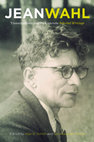
Jean Wahl (1888-1974), once considered by the likes of Bataille, Deleuze, Levinas, and Marcel to ... more Jean Wahl (1888-1974), once considered by the likes of Bataille, Deleuze, Levinas, and Marcel to be among the greatest philosophers in France, has today nearly been forgotten outside France. Yet his influence on French philosophical thought can hardly be overestimated. About him, Emmanuel Levinas wrote that "during over a half century of teaching and research, [Jean Wahl] was the life force of the academic, extra-academic, and even, to a degree anti-academic philosophy necessary to a great culture." And Gilles Deleuze, for his part, commented that "Apart from Sartre, who remained caught none the less in the trap of the verb to be, the most important philosopher in France was Jean Wahl." As professor at the Sorbonne for over three decades, president of the Société Française de Philosophie (1960-74), editor of the Revue de métaphysique et de morale (1950-74), and founder and director of the Collège Philosophique, Wahl was in dialogue with some of the most prominent and well-known French philosophers and intellectuals of the twentieth century, including Georges Bataille, Henri Bergson, Simone de Beauvoir, Michel Butor, Gilles Deleuze, Jacques Derrida, Michel Foucault, Claude Lévi-Strauss, Gabriel Marcel, Jacques Lacan, Emmanuel Levinas, Jacques Maritain, Jean-Paul Sartre, and Simone Weil, impacting several of them greatly. Wahl also played a significant role, in some cases almost singlehandedly, in introducing French philosophy to movements like phenomenology, existentialism, American pragmatism and literature, and British empiricism. And Wahl was an original philosopher and poet in his own right. The goal of this volume of selections from Jean Wahl's philosophical writings is to reintroduce Wahl to the English-speaking philosophical community, and to show the enormous influence he had through introducing the work of Hegel, Kierkegaard, Nietzsche, Heidegger, and Jaspers to several generations of French philosophers.
There should be no permanent split between academic philosophy and existentialism. Such a split, ... more There should be no permanent split between academic philosophy and existentialism. Such a split, if it were possible, would leave existentialism without a content and academic philosophy without real life.
Diaphanes Verlag
In this volume, Reiner Schürmann develops the idea that, in between the spiritual Carolingian Ren... more In this volume, Reiner Schürmann develops the idea that, in between the spiritual Carolingian Renaissance and the secular Humanist Renaissance, there was a distinctive Medieval Renaissance connected with the rediscovery of Aristotle. Focusing on Thomas Aquinas’s ontology and epistemology, William of Ockham’s conceptualism, and Meister Eckhart’s speculative mysticism, Schürmann shows how thought began to break free from religion and the hierarchies of the feudal, neo-Platonic order and devote its attention to otherness and singularity. A crucial supplement to Schürmann’s magnum opus Broken Hegemonies, Neo-Aristotelianism will be essential reading for anyone interested in the rise and fall of Western principles, and thus in how to think and act today
Papers by Ian Alexander Moore
![Research paper thumbnail of Desfigurando el desasimiento—Celan «traduce» a Eckhart [Disfiguring Detachment: Celan "Translates" Eckhart]](https://a.academia-assets.com/images/blank-paper.jpg)
Eidos, 2025
Hacia fines de 1967, poco después de salir de un hospital psiquiátrico, el poeta Paul Celan se ... more Hacia fines de 1967, poco después de salir de un hospital psiquiátrico, el poeta Paul Celan se interesó por los escritos en alto alemán medio del filósofo, teólogo y místico Meister Eckhart. El compromiso de Celan con Eckhart dio lugar a los tres poemas que concluyen el último volumen de poesía que Celan pudo presentar para su publicación antes de suicidarse en 1970. Así pues, podría decirse que estos tres poemas marcan una cierta culminación de la obra del propio Celan. Esta idea, empero, puede parecer extraña. ¿Cómo se relacionan un dominico alemán de finales de la Edad Media con un poeta judío posholocausto? Celan, que tiende puentes y desafía numerosas tradiciones y lenguas en su actividad poética, se habría sentido atraído por la obra mediadora del corpus eckhartiano. Eckhart es el único teólogo importante de la Edad Media, cuya obra sobrevive sustancialmente tanto en latín como en lengua vernácula, a la vez que combina y transforma movimientos de diversa índole con consumada creatividad y facilidad lingüística: escolástica y misticismo, aristotelismo y neoplatonismo, exégesis maimonídea y metafórica beguina, por nombrar algunos. Sin embargo, a Celan también le perturbaba el concepto central de Eckhart de abegescheidenheit (Abgeschiedenheit, en alemán moderno) o «desasimiento», especialmente en la estela de la Shoah. El objetivo de este artículo es proponer una tentativa acerca de la apropiación creativa de Eckhart por parte de Celan ofreciendo comentarios sobre sus tres poemas eckhartianos. Me centro en los temas de la memoria y el desasimiento, y en cómo Celan se ve compelido a traducir poéticamente, a transmitir, palabras clave o contracifras de una tradición o lengua (en este caso, el misticismo eckhartiano en alto alemán medio) de un modo tal que adquieran sentidos nuevos, radicalmente distintos. Celan desfigura el concepto clave de Eckhart del desasimiento para subrayar la necesidad del encuentro con el Otro.
In late 1967, shortly after having been released from a psychiatric hospital, the poet Paul Celan turned his attention to the Middle High German writings of the philosopher, theologian, and mystic Meister Eckhart. Celan’s engagement with Eckhart resulted in the final three poems of the final volume of poetry that Celan was able to submit for publication before committing suicide in 1970. These three poems could thus be said to mark the culmination of Celan’s own work. Yet, this idea might seem strange. What does a late-medieval Dominican have to do with a post-Holocaust Jewish poet? Celan, who bridges and challenges numerous traditions and languages in his poetic activity, would have been drawn to the mediating work of Eckhart’s corpus. Eckhart is the only major theologian of the Middle Ages whose oeuvre survives substantially in both Latin and the vernacular, and Eckhart combines and transforms various movements with consummate linguistic creativity and ease: scholasticism and mysticism, Aristotelianism and Neoplatonism, Maimonidean exegesis and Beguine metaphorics, to name a few. However, Celan was also disturbed by Eckhart’s central concept of abegescheidenheit (Modern German Abgeschiedenheit) or «detachment» especially in the wake of the Shoah. In this paper, I survey Celan’s creative appropriation of Eckhart by offering commentaries on his three Eckhart-poems. I focus on the themes of memory and detachment, as well as on how Celan finds himself compelled to poetically translate, to carry across, keywords in one tradition or language (in this case Eckhartian mysticism in Middle High German) in such a way that they take on new, radically different senses. Ultimately, Celan disfigures Eckhart’s key concept of detachment to stress the need for encounter with the Other.
Studia Philosophica Kantiana, 2025
Kant had little to say about tragedy, whether as a literary genre or as a description of the huma... more Kant had little to say about tragedy, whether as a literary genre or as a description of the human condition. Yet, it was thanks to his insights into the sublime and the antinomy of freedom and nature that the young Schelling was able to place tragedy at the center of the philosophical enterprise. In this paper, I contend that the post-Kantian philosophy of tragedy begins with Schelling's conception of the tragic as a model for reconciliation and ends with Heidegger's and especially Reiner Schürmann's conception of the tragic as an irreconcilable feature of being.
Gatherings: The Heidegger Circle Annual, 2024
Medieval Mystical Theology, 2024
This essay begins by examining Martin Heidegger’s and Gustav Landauer’s influential interpretatio... more This essay begins by examining Martin Heidegger’s and Gustav Landauer’s influential interpretations of Eckhart as a Lebemeister, a ‘master or teacher of living’. The essay then turns to the source on which they both rely, a source that may be the earliest attestation of the use of the word Lebemeister. This source, which is little known in its complete form, is all more noteworthy as it contrasts the figure of the Lebemeister with that of the Lesemeister, the ‘master or teacher of reading’. (Lese refers literally to ‘reading’; we might also say ‘letters’, in the sense of a ‘person of letters’ who possesses extensive book learning.) Commenting on this source, the essay interrogates to what extent Heidegger and Landauer do justice to it. It concludes with a reflection on how best to label Eckhart, above all in view of the ultimate master: Jesus Christ.
AUSTRALASIAN PHILOSOPHICAL REVIEW, 2022
The aim of Dimitris Vardoulakis’s paper, ‘Toward a Critique of the Ineffectual: Heidegger’s Readi... more The aim of Dimitris Vardoulakis’s paper, ‘Toward a Critique of the Ineffectual: Heidegger’s Reading of Aristotle and the Construction of an Action without Ends’, is to provide the foundation for a critique of aimless action by tracing its genesis to Heidegger’s putative misinterpretation of Aristotelian phronēsis (practical wisdom) in the 1920s. Inasmuch as ‘the ineffectual’—the name Vardoulakis gives to action devoid of ends—plays a crucial role in post-Heideggerian continental philosophy, he thereby seeks to diagnose and to provide an aetiology of an illness afflicting contemporary thought.1 In my response, I will first argue that, while Vardoulakis is right to identify an emphasis on the ineffectual in Heidegger, he is mistaken about its origin. Heidegger does not strip phronēsis of instrumentality, nor does he mistranslate Nichomachean Ethics 1139a31–32. Second, I trace an alternative source for the ineffectual, which is not simply a negative alternative to technological machination but stems from a positive experience of what Meister Eckhart, and Heidegger in his wake, called life without why. Finally, I look at a couple of texts, including one discussed by Vardoulakis, in which even the later Heidegger is not entirely dismissive of calculative instrumentality but instead assigns the latter to a secondary, restricted site of competence.
HYBRIS REVISTA DE FILOSOFÍA, 2024
Spanish translation of Heidegger und Trakl auf der Bühlerhöhe.
In October 1952, Martin Heidegge... more Spanish translation of Heidegger und Trakl auf der Bühlerhöhe.
In October 1952, Martin Heidegger gave a lecture on the poet Georg Trakl at Bühlerhöhe, a legendary spa hotel in the northern Black Forest. The timing and the audience were highly symbolic: the elite of the Federal Republic of Germany, who had been mentally scarred by the war and their own complicity in it, were supposed to gain new orientation through literature and poetry. To this end, Heidegger undertook a speculative interpretation of Trakl’s work. Trakl’s “song” would give Western culture a new direction. In Heidegger’s view, Trakl represents neither a promise of progress nor a link to tradition, but a thinking of “apartness,” a slow farewell to the losses and hopes of the past. Derrida has debunked the “national humanism” in Heidegger’s lecture: the idea that the German people has a special “spiritual” mission.
Im Oktober 1952 hielt Martin Heidegger auf der legendären Bühlerhöhe, einem Kurhaus im Nordschwarzwald, einen Vortrag über Georg Trakl. Zeitpunkt und Publikum waren hochsymbolisch: Die durch den Krieg und die eigene Mittäterschaft nach eigener Einschätzung geistig versehrte Elite der Bundesrepublik, die sich dort zusammenfand, sollte durch Literatur und Dichtung neue Orientierung gewinnen. Heidegger unternahm dazu eine spekulative Deutung von Werk Trakls. Sein »Gesang« würde der abendländischen Kultur wieder Richtung geben. Trakl stehe weder für ein Fortschrittsversprechen noch für ein Anknüpfen an die Tradition, sondern für ein Denken der »Abgeschiedenheit«, einem langsamen Abschiednehmen von den Verlusten wie von den Hoffnungen der Vergangenheit. Derrida hat diesen »National-Humanismus« Heideggers entlarvt: die Vorstellung, das deutsche Volk habe einen besonderen »geistigen« Auftrag.
Derrida Today, 2024
In his recently published Donner le temps II, Derrida raises the possibility that Heidegger's not... more In his recently published Donner le temps II, Derrida raises the possibility that Heidegger's notion of Gelassenheit ('releasement', 'letting-be') might escape the economic confines of exchange, debt, and repayment and therefore qualify as a pure gift. In this paper, I explore this possibility, explaining that Gelassenheit would have to be understood, first, not primarily as a human comportment but at the level of being itself, second, beyond appropriation, and third, as 'without why'. If Heidegger's focus on appropriation in 'Time and Being' remains entangled in the economy of exchange (as Derrida insinuates in the final session of Donner le temps II), Heidegger's anarchic treatment of 'letting' (laisser, Lassen) in the final session of his 1969 seminar in Le Thor opens instead onto a 'pure giving' (pur donner, reines Geben).
Kabiri: The Official Journal of the North American Schelling Society, 2024
In this article, I bring bring Hans Jonas’s speculative theology into dialogue with Schelling’s t... more In this article, I bring bring Hans Jonas’s speculative theology into dialogue with Schelling’s theodicy as outlined in the latter’s 1809 Freedom Essay. For Jonas, if human freedom is really to be free—indeed so free that it does not implicate God in the Holocaust—the traditional attributes of the Judeo-Christian God must be rethought. These questions lead Jonas to espouse, admittedly with some hesitation, the following three theses: (1) divine omnipotence must be relinquished, (2) God must be “passible,” i.e., able to suffer at the hands of humans, and (3) eschatology must allow for different ends. I discuss these theses in Jonas and compare them with Schelling’s philosophy in the Freedom Essay. Although Jonas is indebted to Schelling in his attempt to reconcile freedom with divine intelligibility and in his recognition of the necessity of narrative, Jonas finds it necessary to push Schellingian positions in the Freedom Essay to their limits or even to their breaking points. That is, he finds it necessary to view God as weak or lacking power altogether, as suffering in his being, and as uncertain about the end times.
Gatherings: The Heidegger Circle Annual, 2023
This article first retraces the history of Heidegger's "The Argument against Need" and situates i... more This article first retraces the history of Heidegger's "The Argument against Need" and situates it in the context of extant notes from his never-completed introduction to the Gesamtausgabe titled "The Legacy of the Question of Being." It then argues that, for the later Heidegger, Brauch ("need," "use") becomes another name—indeed one of the most important, albeit neglected, names—for being in its deepest sense. To appreciate Heidegger's legacy and that of the question of being, it is crucial that we (1) critically assess the argument against Brauch qua "need"—i.e., the argument according to which the being of certain entities, such as those that predate Homo sapiens, does not depend on the human—and (2) understand the ontological sense of Brauch qua "use." We must not only recognize that Dasein is needed for the safeguarding of truth, but also move beyond this and see being in its independent use.
the boundary 2 online review
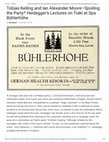
Bühlerhöhe was a former luxury hotel and sanatorium in the Black Forest that served as the settin... more Bühlerhöhe was a former luxury hotel and sanatorium in the Black Forest that served as the setting for one of the most controversial philosophical lectures of the 20th century. The story begins with Gerhard Stroomann, head physician at Bühlerhöhe, who wanted his birthday party to commemorate the work of Austrian poet Georg Trakl. To celebrate, Stroomann invited not only Trakl’s editor and friend Ludwig von Ficker but also the philosopher Martin Heidegger, who was to give a keynote lecture on the importance of Trakl’s work. The lecture to the elite circle of the Bühlerhöhe guests was one of Heidegger’s first public appearances after having been banned from teaching following his engagement for the Nazi party. Heidegger praised Trakl’s poetry, but the way he did so remains controversial to this day. Jacques Derrida, for one, recognized it as the eminent example of Heidegger’s “National-Humanism”. Following in the footsteps of Hölderlin, Trakl’s “poeticizing”, his “song”, was to guide towards a better future. But a better future for whom? Western humanity, as one might be led to think from a superficial reading of the lecture? Or rather those who remained true to myths of the “secret Germany” and the “hidden Reich”—the Nazi defeat and revelations about the Holocaust notwithstanding? In his account of the events at Bühlerhöhe, Jürgen Habermas, for his part, saw Heidegger as sharing out his philosophy to a managerial class. Derrida strikes a different tone: the ambiguity of Geschlecht (sex, generation, people), the term that Heidegger takes from Trakl to denote the addressees of Trakl’s “song”, covers over the fact that Heidegger was reiterating a much older and more problematic narrative: the German people is in need of a Führer, and the poet is the one to lead them.
https://www.boundary2.org/2023/12/tobias-keiling-and-ian-alexander-moore-spoiling-the-party-heideggers-lectures-on-trakl-at-spa-buhlerhohe/



Uploads
Books by Ian Alexander Moore
In the early 1950s, German philosopher Martin Heidegger proclaimed the Austrian expressionist Georg Trakl to be the poet of his generation and of the hidden Occident. Trakl, a guilt-ridden lyricist who died of a cocaine overdose in the early days of World War I, thus became for Heidegger a redemptive successor to Hölderlin. Drawing on Derrida's Geschlecht series and substantial archival research, Dialogue on the Threshold explores the productive and problematic tensions that pervade Heidegger's reading of Trakl and reflects more broadly on the thresholds that separate philosophy from poetry, gathering from dispersion, the same from the other, and the native from the foreigner. Ian Alexander Moore examines why Heidegger was reluctant to follow Trakl's invitation to cross these thresholds, even though his encounter with the poet did compel him to take up, in astounding ways, many underrepresented topics in his philosophical corpus such as sexual difference, pain, animality, and Christianity. A contribution not just to Heidegger and Trakl studies but also, more modestly, to the old quarrel between philosophy and poetry, Dialogue on the Threshold concludes with new translations of eighteen poems by Trakl.
"This is an extremely impressive book. Full of original insights and meticulous scholarship, as well as new primary source material that is not available elsewhere, Dialogue on the Threshold establishes Moore among the leading Heidegger scholars of his generation." — Robert Bernasconi, Pennsylvania State University
https://sunypress.edu/Books/D/Dialogue-on-the-Threshold
Eckhart, Heidegger, and the Imperative of Releasement does not just offer a novel way to read Eckhart and Heidegger, though. It also carefully examines Heidegger’s lifelong fascination with “the old master of letters and life,” as Heidegger liked to refer to his German predecessor. Drawing on archival material and Heidegger’s marginalia in his personal copies of Eckhart’s writings, this book argues that Eckhart was one of the most important figures in Heidegger’s philosophy. The book also contains previously unpublished documents by Heidegger on Eckhart, as well as the first English translation of Nishitani Keiji’s seminal essay “Nietzsche’s Zarathustra and Meister Eckhart,” which he initially gave as a presentation in one of Heidegger’s classes in 1938.
Papers by Ian Alexander Moore
In late 1967, shortly after having been released from a psychiatric hospital, the poet Paul Celan turned his attention to the Middle High German writings of the philosopher, theologian, and mystic Meister Eckhart. Celan’s engagement with Eckhart resulted in the final three poems of the final volume of poetry that Celan was able to submit for publication before committing suicide in 1970. These three poems could thus be said to mark the culmination of Celan’s own work. Yet, this idea might seem strange. What does a late-medieval Dominican have to do with a post-Holocaust Jewish poet? Celan, who bridges and challenges numerous traditions and languages in his poetic activity, would have been drawn to the mediating work of Eckhart’s corpus. Eckhart is the only major theologian of the Middle Ages whose oeuvre survives substantially in both Latin and the vernacular, and Eckhart combines and transforms various movements with consummate linguistic creativity and ease: scholasticism and mysticism, Aristotelianism and Neoplatonism, Maimonidean exegesis and Beguine metaphorics, to name a few. However, Celan was also disturbed by Eckhart’s central concept of abegescheidenheit (Modern German Abgeschiedenheit) or «detachment» especially in the wake of the Shoah. In this paper, I survey Celan’s creative appropriation of Eckhart by offering commentaries on his three Eckhart-poems. I focus on the themes of memory and detachment, as well as on how Celan finds himself compelled to poetically translate, to carry across, keywords in one tradition or language (in this case Eckhartian mysticism in Middle High German) in such a way that they take on new, radically different senses. Ultimately, Celan disfigures Eckhart’s key concept of detachment to stress the need for encounter with the Other.
In October 1952, Martin Heidegger gave a lecture on the poet Georg Trakl at Bühlerhöhe, a legendary spa hotel in the northern Black Forest. The timing and the audience were highly symbolic: the elite of the Federal Republic of Germany, who had been mentally scarred by the war and their own complicity in it, were supposed to gain new orientation through literature and poetry. To this end, Heidegger undertook a speculative interpretation of Trakl’s work. Trakl’s “song” would give Western culture a new direction. In Heidegger’s view, Trakl represents neither a promise of progress nor a link to tradition, but a thinking of “apartness,” a slow farewell to the losses and hopes of the past. Derrida has debunked the “national humanism” in Heidegger’s lecture: the idea that the German people has a special “spiritual” mission.
Im Oktober 1952 hielt Martin Heidegger auf der legendären Bühlerhöhe, einem Kurhaus im Nordschwarzwald, einen Vortrag über Georg Trakl. Zeitpunkt und Publikum waren hochsymbolisch: Die durch den Krieg und die eigene Mittäterschaft nach eigener Einschätzung geistig versehrte Elite der Bundesrepublik, die sich dort zusammenfand, sollte durch Literatur und Dichtung neue Orientierung gewinnen. Heidegger unternahm dazu eine spekulative Deutung von Werk Trakls. Sein »Gesang« würde der abendländischen Kultur wieder Richtung geben. Trakl stehe weder für ein Fortschrittsversprechen noch für ein Anknüpfen an die Tradition, sondern für ein Denken der »Abgeschiedenheit«, einem langsamen Abschiednehmen von den Verlusten wie von den Hoffnungen der Vergangenheit. Derrida hat diesen »National-Humanismus« Heideggers entlarvt: die Vorstellung, das deutsche Volk habe einen besonderen »geistigen« Auftrag.
https://www.boundary2.org/2023/12/tobias-keiling-and-ian-alexander-moore-spoiling-the-party-heideggers-lectures-on-trakl-at-spa-buhlerhohe/