Books by Inder S Marwah
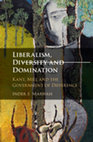
Cambridge University Press, 2019
This study addresses the complex and often fractious relationship between liberal political theor... more This study addresses the complex and often fractious relationship between liberal political theory and difference by examining how distinctive liberalisms respond to human diversity. Drawing on published and unpublished writings, private correspondence and lecture notes, the study offers comprehensive reconstructions of Immanuel Kant's and John Stuart Mill's treatment of racial, cultural, gender-based and class-based difference to understand how two leading figures reacted to pluralism, and what contemporary readers might draw from them. The book mounts a qualified defence of Millian liberalism against Kantianism's predominance in contemporary liberal political philosophy, and resists liberalism's implicit association with imperialist domination by showing different liberalisms' divergent responses to diversity. Here are two distinctive liberal visions of moral and political life.
Interview on Liberalism, Diversity and Domination
The Political Theory Review
A link to an interview with Jeff Church, on The Political Theory Review podcast, on Liberalism, D... more A link to an interview with Jeff Church, on The Political Theory Review podcast, on Liberalism, Diversity and Domination.
Articles and Chapters by Inder S Marwah
Modern Intellectual History, 2025
W. E. B. Du Bois is credited with debunking the social Darwinism pervasive in turn-of-the-century... more W. E. B. Du Bois is credited with debunking the social Darwinism pervasive in turn-of-the-century social and political theory, exposing the environmental causes of black disadvantage and undercutting claims regarding “inborn” racial deficits. This, however, misses the constructive role that Darwinism played in his account of racial advancement. This article shows how Darwinism, eugenics, and race science shaped Du Bois’s conceptualizations of race and of racial uplift. Darwinism, I argue, informed his analysis of the harms that slavery and segregation visited on black Americans. It also influenced his defense of democratic equality: setting aside its other virtues, democracy would remove “artificial” constraints on the competitive struggle, enabling the best of white and black races to succeed. It was, then, eugenically advantageous. Against the common view that Du Bois rejected social Darwinism and eugenics, I demonstrate that their relationship was far more ambivalent and that his racial politics appealed to them.
American Political Science Review, 2023
Darwinism and evolutionary theory have a bad track record in political theory, given their entang... more Darwinism and evolutionary theory have a bad track record in political theory, given their entanglements with fin-de-siècle militarist imperialisms, racialized hierarchies, and eugenic reformism. In colonial contexts, however, Darwinism had an entirely different afterlife as anticolonialists marshaled evolutionist frameworks to contest the parameters of colonial rule. This article exhumes just such an evolutionary anticolonialism in the political thought of Aurobindo Ghose, radical firebrand of the early Indian independence movement. I argue that Ghose drew on a nuanced reform Darwinism to criticize British imperialism and advance an alternative grounded in the Indian polity's mutualism. Evolutionism formed a conceptual ecosystem framing his understanding of progressnational, civilizational, and spiritual-and reformulating the temporal and conceptual coordinates of the liberal empire he resisted. The article thus exposes the constructiveness of anticolonial politics, the hybridity of South Asian intellectual history, and the surprising critical potential of Darwinism in colonial settings.
Rethinking Political Thinkers, eds. Manjeet Ramgotra and Simon Choat, 2023
Introduction to Mill's political thought focusing on the relationship between his liberalism and ... more Introduction to Mill's political thought focusing on the relationship between his liberalism and his writings on race, gender and empire.
Perspectives on Politics, 2023
This article examines how Indian anticolonialists drew on Darwinism and evolutionary theory to re... more This article examines how Indian anticolonialists drew on Darwinism and evolutionary theory to resist British imperialism at the turn of the twentieth century. Drawing on archival material from The Bengalee (and beyond), I show how Indian nationalists marshaled evolutionist schemas to contest stage-based accounts of social advancement rationalizing despotic rule in India. I argue that Darwinian evolutionism enabled anticolonialists to respond to a particular decolonial dilemma-that of developmentalism, the unilinear notion of historical time justifying India's political subjection. While Darwinism's social application is commonly understood to sustain imperialism, I demonstrate that it served, in the colonial context, to deconstruct historicist tropes portraying India as politically immature. Drawing on evolutionism, nationalists contested the presumptions of imperialist discourse and reconceptualized progress in novel, anticolonial terms. Darwin's travel to India thus exposes a distinctive decolonial quandary, the syncretic Indian anticolonial response to it, and the intractability of the contradictions facing decolonizing movements globally.
Kantian Review, 2022
This article examines how Kant's conceptualizations of natural history and teleological judgement... more This article examines how Kant's conceptualizations of natural history and teleological judgement shape his understanding of human difference and race. I argue that the teleological framework encasing Kant's racial theory implies constraints on the capacity of nonwhites to make moral progress. While commentators tend to approach Kant's racial theory in relation to his political theory, his late-life cosmopolitanism, and his treatments (or nontreatments) of colonialism, empire and slavery, the problem I focus on here is that race is itself only intelligible in relation to a teleological natural history limiting certain races' capacities to engage in humanity's moral vocation.
The Oxford Companion of Classics in Contemporary Political Theory, 2022
In Jacob Levy (ed) The Oxford Companion to Classics in Contemporary Political Theory.
A Cultural History of Democracy in the Age of Enlightement, 2021
Chapter in Anna Plassart and Michael Mosher, eds, A Cultural History of Democracy in the Age of E... more Chapter in Anna Plassart and Michael Mosher, eds, A Cultural History of Democracy in the Age of Enlightenment (Bloomsbury, 2021).
Contemporary Political Theory, 2020
Critical exchange on empire and political theory with Jennifer Pitts, Timothy Bowers Vasko, Onur ... more Critical exchange on empire and political theory with Jennifer Pitts, Timothy Bowers Vasko, Onur Ulas Ince and Robert Nichols.
Polity, 2019
As critics have recently demonstrated, developmentalist thinking sustains modern Euro-pean imperi... more As critics have recently demonstrated, developmentalist thinking sustains modern Euro-pean imperialism by portraying non-Europeans as further back on a fixed scale of civilizations. The problem persists in the developmental logics underlying contemporary Marxist and liberal political theory, suggesting that developmentalism is implicitly bound to domination and imperialism. This article complicates this connection by drawing out anti-imperial developmentalist arguments articulated from the other side of the colonial divide. I elaborate three distinctive developmental logics in anti-imperialisms advanced by Surendranath Banerjea, Aurobindo Ghose, and Shyamji Krishnavarma, leading figures in India's independence movement, to show the particularity of the form of developmentalism so intimately bound to domination. This exposition aims to provincialize it by uncovering alternative developmentalist schemas offering distinctive conceptual resources for understanding progress in relation to anti-imperialism. By reaching beyond the Western lens framing the problem of developmentalism, I show its instabilities and consider its utility in resisting imperialism .
Colonial Exchanges: Political Theory and the Agency of the Colonized, Manchester UP, 2017
Constellations, 2017
In recent years, political theorists such as William Connolly, Jane Bennett, Stephen White, and R... more In recent years, political theorists such as William Connolly, Jane Bennett, Stephen White, and Romand Coles have sought to reinvigorate democratic theory by challenging the boundaries of the political delimited by neo-Kantian and Anglo-analytic thought. 1 Broadly speaking, theorists of ethos share two related ambitions. First, they aim to radically expand the ambit of democratic politics. Rather than constraining politics to the forms of public reason and rational argumentation that make up the terrain of much democratic theory (and in particular, of deliberative democratic theory), they advocate a public sphere that is responsive to and incorporates the political dimensions of affect, persuasion, rhetoric, and religious argument. Second, they endorse the cultivation of an ethos of critical responsiveness and presumptive generosity in citizens facing the profound social, cultural, and religious diversity of late modern life. This aims to respond to deep pluralization in democratically productive ways, rather than through the more reactionary impulses towards which a post-9/11 U.S.A. has tilted.
European Journal of Political Theory, 2016
‘‘Developmentalism’’ is often regarded as the bete noire haunting liberal political theory, justi... more ‘‘Developmentalism’’ is often regarded as the bete noire haunting liberal political theory, justifying modern civilizational hierarchies and liberal imperialism. But are all developmentalisms equally tied to Eurocentric, imperialist philosophies? I consider this question through a close reading of two of the most prominent, influential, and divisive modern accounts of historical development: those of Kant and J. S. Mill. I argue that Kant’s philosophy of history is embedded in an Enlightenment idealism treating non-Europeans as bound to either adopt Western norms or fade into obscurity. Conversely, the influences of Romanticism and sociology led Mill to recognize cultural differences as indelibly affecting any society’s development. Given this, I argue, against much of the current literature, (1) that Mill provides us with a significantly more capacious liberalism than Kant’s; (2) that his developmentalism holds the conceptual resources to understand progress as a pluralistic and culturally differentiated process; and so, more broadly, (3) that not all liberal developmentalisms are equally bound to imperialist politics.
The Encyclopedia of Political Thought, Michael T. Gibbons (Editor in Chief), Diana Coole, Elisabeth Ellis, Kennan Ferguson (Associate Editors), Wiley- Blackwell, 2014
Kantian Review, 2013
Kant's ethics has long been bedevilled by a peculiar tension. While his practical philosophy desc... more Kant's ethics has long been bedevilled by a peculiar tension. While his practical philosophy describes the moral obligations incumbent on all free, rational beings, Kant also understands moral anthropology as addressing 'helps and hindrances' to our moral advancement. How are we to reconcile Kant's Critical account of a transcendentally free human will with his developmental view of anthropology, history and education as assisting in our collective progress towards moral ends? I argue that Kant in fact distinguishes between the objective determination of moral principles and subjective processes of moral acculturation developing human beings' receptivity to the moral law. By differentiating subjective and objective dimensions of moral agency, I argue (1) that we better interpret the relationship between Kant's transcendental and anthropological accounts as a division of labour between principles of obligation and principles of volition, and so, as complementary rather than contradictory; and (2) that this counters the view of Kant's ethics as overly formalistic by recognizing his 'empirical ethics' as attending to the unsystematizable facets of a properly human moral life.
Hypatia, 2013
Women's exclusion from political enfranchisement in Kant's political writings has frequently been... more Women's exclusion from political enfranchisement in Kant's political writings has frequently been noted in the literature, and yet has not been closely scrutinized. More often than not, commentators suggest that this reflects little more than Kant's sharing in the prejudices of his era. This paper argues that, for Kant, women's civil incapacities stem from defects relating to their capacities as moral agents, and more specifically, to his teleological account of the conditions within which we, as imperfect beings, develop our moral capacities. Women are not incidentally or tangentially excluded from the boundaries of political and moral agency, but rather must adopt an explicitly nonmoral character if we are to understand humanity as moving toward its naturally given, moral ends. I argue (1) that Kant's teleological view of human development requires women to develop an explicitly nonmoral character; (2) that this teleology is inextricable from his view of the moral agency that human-and not merely rational-beings are capable of; and (3) that taken together, these suggest that women's subordinate status is internally connected to Kant's view of moral personhood.
Conservatism in Canada, eds. James Farney and David Rayside, University of Toronto Press, 2013
Social Theory and Practice, 2012
History of Political Thought, 2011
Recent critics have declaimed against John Stuart Mill's liberalism, arguing that his conception ... more Recent critics have declaimed against John Stuart Mill's liberalism, arguing that his conception of civilization is inexorably bound to a hierarchal conception of social progress justifying Europeans' moral right to 'civilize' barbarian peoples. Without exonerating him from his undoubtedly problematic views regarding non-European cultures, I would like to argue that Mill in fact has a much subtler view of historical development and of civilization than such critics attribute to him. Central to these critics' charges is an 'aggregative' view of Mill's conceptualization of historical development -suggesting that Mill understood societies to move through discrete stages of social development, characterized by internally-correlated stages of economic, political, cultural and moral development -which fails to be borne out under close examination. I argue that Mill's view of historical development and his liberalism more generally are in fact significantly more capacious than is often recognized and are not inextricably bound to the project of imperialism.



Uploads
Books by Inder S Marwah
Articles and Chapters by Inder S Marwah