Greek Paleography by Inmaculada Pérez Martín
R. Fernández Muñoz et al. edd., De Bizancio a Córdoba. Los libros griegos del s. XVI en las bibliotecas cordobesas, Córdoba, pp. 141-170., 2023
The Diocesan Library of Córdoba holds a copy of the Aldine edition of Oppian (1517, BDC 16-71), h... more The Diocesan Library of Córdoba holds a copy of the Aldine edition of Oppian (1517, BDC 16-71), heavily annotated in the sixteenth century. In Spain, not only are at least six copies of this edition preserved, but the presence of copies in Salamanca is also documented—and, unsurprisingly given the original language of the text, particularly within the milieu of the University of Salamanca and the teaching of Hernán Núñez de Guzmán, known as El Pinciano. That this Salamanca professor owned a printed copy of the Halieutica is confirmed by a note added in the margin of fol. 48v of the manuscript Salamanca, Biblioteca Histórica de la Universidad, ms. 31 (Diktyon 56451). There, El Pinciano remarks on the absence of Hal. 3.463–497 in the manuscript: Desunt hic versus sex et triginta quos lege in codice impresso.This printed copy of the Halieutica, in all likelihood an Aldine exemplar—or indeed the Aldine copy brought from Venice by Juan Agustín and “kept” by El Pinciano—can be identified with the one now preserved in Córdoba.
The Escorial manuscript Ω-II-13, which contains the Ethica of John Chrysostom's Homilies on the E... more The Escorial manuscript Ω-II-13, which contains the Ethica of John Chrysostom's Homilies on the Epistles of Paul and the Acts of the Apostles, was signed on f. 61v by a scribe named Anna. The manuscript has been wrongly dated to the 13th century and, although it is known to be one of the few Greek codices signed by a woman, no one has yet made an exhaustive study of its writing and execution. We propose here a dating in the years 1120-1140 based on the handwriting not of Anna but of scribe 2 of the text, who collaborates with her. The date supports the identification of the scribe Anna with the princess Anna Komnene, despite the grammatical problems in one of the poems of f. 61v.
Segno e Testo, 2023
We offer a codicological and paleographical analysis of
Salm. 232 (one of the main testimonies of... more We offer a codicological and paleographical analysis of
Salm. 232 (one of the main testimonies of Themistius’ speeches) that
allows us to explain how the current codex was created. The oldest part is
dated by watermarks to the years 1310-30 and its copy is probably located
in Thessalonica; it consists of three codicological units on which four co-
pyists worked partly autonomously and - at least copp. 2, 3 and 4-, partly
on the basis of what was already copied by the others. The duplicate con-
tents of Synesius and Libanius show that the codicological units that now
make up the volume were copied independently and were put together
circumstantially perhaps by their possessor, cop. 3. At the end of the 14th
or beginning of the 15th century Ioannes Chortasmenos read its copy of
Synesius and reorganized the quires of the UC2. In the mid-15th century
Ioannes Sophianos restored the Paleologan volume, perhaps commissioned by the Bologna professor of Greek, Lianoro Lianori, who was its owner and whose coat of arms was included in the band of f. 1r. Like other Lianori’s codices, Salm. 232 was annotated by El Pinciano and preserved at the University of Salamanca.
Porphyra, 2023
I identify the name of the scribe of MS Escorial Φ-II-20, misread by previous scholars, in the no... more I identify the name of the scribe of MS Escorial Φ-II-20, misread by previous scholars, in the note added by Andreas Darmarios: Χεὶρ Κωνσταντίνου Σκορδιλίου τοῦ Κρητός. Skordyles/Skordylios is the name of a well-known Cretan family.
En su catálogo de 1970 Paul Canart daba a conocer la existencia del Vat. gr. 1910, un códice misc... more En su catálogo de 1970 Paul Canart daba a conocer la existencia del Vat. gr. 1910, un códice misceláneo cuya parte más antigua, que contiene las Parekbolai o «notas explicativas» de Eustaquio de Tesalónica a la Periegesis de Dionisio de Alejandría, fechaba en el siglo XIII. Puesto que en aquella primera etapa de su labor como estudioso de los manuscritos griegos Canart todavía no había llevado a cabo las investigaciones sobre la escritura griega que nos legó más adelante y, por ello, se enfrentaba a las dataciones de los códices que describía con los instrumentos disponibles en los años 60 del siglo pasado, nos ha parecido un justo homenaje a su inmensa contribución a los estudios de Paleografía griega retomar el análisis del Vat. gr. 1910 a la luz de lo que sabemos ahora, casi cincuenta años más tarde, de las escrituras griegas de época bizantina, en buena parte gracias a él.
Thirty-nine years ago, Professor Costas N. Constantinides wrote the most accurate and enlightenin... more Thirty-nine years ago, Professor Costas N. Constantinides wrote the most accurate and enlightening analysis of the ὕπατος τῶν φιλοσόφων, the only precise title held by an imperial professor in the Palaiologan period. 1 In the present paper written to honour Constantinides' professional career as a specialist in Palaiologan scholarship, libraries, schools and books, as well as in many other aspects of the Byzantine civilisation, I would like to return to a Byzantine teacher, John Pothos Pediasimos, whose career was outlined by our honorand and whose handwriting I myself identified. A recent contribution that questions my identification of the hand of Pediasimos has encouraged me to take up the subject again, which in 1982 raised some issues as well. In order to approach these without repeating the entire corpus of evidence on the hypatos gathered by Prof. Constantinides, the reader is referred to his book. I will add here a few new pieces of information and some considerations about the role of the Church and the court in Constantinopolitan higher education. In the second part of the paper, I will tackle once more the information we have of John Pothos Pediasimos in order to append some new pieces of evidence, especially the attribution to his hand of some notes in Par. gr. 2403.

This contribution offers a number of observa- tions on the reasons that lead a Byzantine copyist ... more This contribution offers a number of observa- tions on the reasons that lead a Byzantine copyist to modulate his writing and, in particular, on the influence that the writing of a teacher can have on that of his disciples. In the case of the scholar and professor Maximos Planoudes (ca. 1255-1305), we analyze his influence on the graphic manifestations of a collaborator of his, whom we call cop. Ed because of his presence in the Edimb. Adv. 18.7.15, and we reconfigure the role of both in Laur. Plut. 32.16. Likewise, we establish the features that define and distinguish the writing of a disciple of Planoudes, the cop. Ps, from that of his teacher, which resolves the paradox of the attribution to Planoudes of manuscripts copied on a paper whose date is later than that of Planoudes’ death (Marc. gr. XI.6, Par. gr. 2722, Ambros. A 119 sup.). Finally, it is also proposed to attribute to the cop. Ps codices traditionally attributed to the hand of Planoudes such as Vat. Urb. gr. 125 and Vat. gr. 1340, as well as some annotations in Monac. gr. 430.
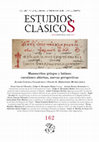
This article is intended as an update on the codices in which the hand of George/Gregory of Cypru... more This article is intended as an update on the codices in which the hand of George/Gregory of Cyprus (1241–1290) has been identified. The review of these identifications confirms that most paleographers have accepted the interpretation of the evolution of the Cypriot’s handwriting that the author proposed in her 1996 book. Despite the absence of dated copies, but with the help of an overall study of the Cypriot’s codices, the 1996 paleographic analysis made it possible to distinguish a formative period in which George of Cyprus copied with other colleagues or alone works of oratory and philosophy in order, in many cases, to have a copy in his possession; in a second stage—but without an abrupt cut and without losing the distinctive features—, the copying of works is more selective and the handwriting of the Cypriot evolves towards faster and less emphatic forms. After drawing up the list of manuscripts copied by Gregory, the writings of two copyists are examined: the «Anon. Salm.» (one of the scribes of the Themistius MS. Salm. 232) and the «Anon. Chis.» (one of the scribes of the MS. Vat. Chis. gr. 12), which allow us to reflect on the influence of the Cyprian’s writing on a later generation.
Modalidad de contrato: Funcionario/a Régimen de dedicación: Tiempo completo Cargos y actividades ... more Modalidad de contrato: Funcionario/a Régimen de dedicación: Tiempo completo Cargos y actividades desempeñados con anterioridad Entidad empleadora Categoría profesional Fecha de inicio

Estudios bizantinos, 2020
The codicological and palaeographic study of MS Laur. Plut. 59.35, the most important manuscript ... more The codicological and palaeographic study of MS Laur. Plut. 59.35, the most important manuscript of the epistolary of Theodoros II Laskaris, determines that it is made up of three codicological units and that, despite the dauntingly changing aspect of the handwriting, only four hands transcribed texts and one out of them (scribe 1) copied the primary texts of the codex (the epistolaries of Theodoros II Laskaris and Synesius and a homily by Maximos Planudes). Initially the codex was possessed by Manuel Angelos, whose death around 1303 provides a terminus ante quem for its copy. For his part, scribe 4 has to be iden- tified with a subsequent owner of the manuscript, since he included in it private notes, dated between 1324 and 1325. Those reminders present him as an aristocrat who belonged to imperial and ecclesiastical circles and a man of letters with economic interests in the Sporades Islands. The current book was there- fore produced from before 1303 to before 1324-1325 in a stable copying environment, whether a private library or a public bureau. The last addition to the book were five letters composed probably by Manuel Angelos, that we publish here for the first time.
Jahrbuch der Österreichischen Byzantinistik, 2018
EVWUDFW 7KH DUWLFOH SUHVHQWV WKH HGLWLRQ DQG D GHWDLOHG GLVFXVVLRQ RI DQ DQRQ\PRXV WUHDWLVH RI HO... more EVWUDFW 7KH DUWLFOH SUHVHQWV WKH HGLWLRQ DQG D GHWDLOHG GLVFXVVLRQ RI DQ DQRQ\PRXV WUHDWLVH RI HOHPHQWDU\ DULWKPHWLF WKDW VHUYHG DV WKH VRXUFH RI WKH VRFDOOHG Letter to Khatzykes DXWKRUHG E\ WKH %\]DQWLQH VFKRODU 1LFKRODV $UWDEDVGRV 5KDEGDV $Q XSGDWHG VXUYH\ RI WKH H[WDQW HYLGHQFH DERXW WKH ORJLVWLF WUHDWLVHV FRPSRVHG LQ WKH 1LFDHDQ SHULRG DQG LQ WKH HDUO\ 3DODLRORJDQ HUD DQG D GLVFXVVLRQ RI WKH prima facie VXUSULVLQJO\ ZLGHVSUHDG SKHQRPHQRQ RI DSSURSULDWLRQ RI VFLHQWLILF WUHDWLVHV ZULWWHQ E\ RWKHU FRQ WHPSRUDULHV LQ ODWH %\]DQWLQH WLPHV ZLOO DOVR EH SURYLGHG +LV SURGXFWLRQ KRZHYHU ZDV DVVHVVHG LQ D ZD\ WKDW LV SDUDGLJPDWLF RI D JHQHUDOL]HG GLVPLVVLYH DWWLWXGH WR %\]DQWLQH VFLHQFH 3 7ൺඇඇൾඋඒ 0DQXHO 0RVFKRSRXORV HW 1LFRODV 5KDEGDV Bulletin des Sciences mathématiques e VpULH ± UHSU ,ൽ 0pPRLUHV 6FLHQWLILTXHV ,9 7RXORXVH±3DULV ± LQ IDFW SDVVHG WKH IROORZLQJ MXGJPHQW RQ 5KDEGDV ¶ ZULWLQJV ZKRVH HGLWLRQ KH QHYHUWKHOHVV SXEOLVKHG WZR \HDUV ODWHU ³/ ¶LQWpUrW GH VHV pFULWV HVW VXUWRXW GH PRQWUHU MXVTX ¶R pWDLHQW WRPEpV OHV KpULWLHUV GpJpQpUpV GX QRP KHOOqQH FHX[Oj PrPH TXL DYDLHQW DORUV 'LRSKDQWH HQWUH OHXUV PDLQV´ $FFRUGLQJ WR WKH WKFHQWXU\ 1HRSODWRQLF FRPPHQWDWRU (XWRFLXV GLYLGLQJ WKH XQLW GRHV QRW SHUWDLQ WR DULWKPHWLF EXW WR ORJLV WLF -/ +ൾංൻൾඋ HG $UFKLPHGLV RSHUD RPQLD FXP FRPPHQWDULLV (XWRFLL ,±,,, /LSVLDH ± ,,, ± ੮ıIJ ¶ ਥʌ ¶ ਥțİȓȞȦȞ >scil VXSHUSDUWLFXODU DQG VXSHUSDUWLHQW UDWLRV@ įȚĮȚȡİIJȑȠȞ IJȞ ȝȠȞȐįĮ İੁ țĮ ȝ țĮIJ IJઁ ʌȡȠıોțȠȞ IJૌ ਕȡȚșȝȘIJȚțૌ ਕȜȜ IJૌ ȜȠȖȚıIJȚțૌ IJȣȖȤȐȞİȚ ³VR WKDW IRU WKHP RQH KDV WR GLYLGH WKH XQLW HYHQ LI WKLV GRHV QRW KDSSHQ WR ILW WR DULWKPHWLF EXW WR ORJLVWLF´ $Q HDUOLHU GHILQLWLRQ RI ORJLVWLF²ZKLFK FDQ DOPRVW FHUWDLQO\ EH DVFULEHG WR *HPLQXV D VWFHQWXU\ %&( PDWKHPDWLFDOO\PLQGHG SKLORVRSKHU PD\EH D SXSLO RI 3RVLGRQLXV²GRHV QRW DOORZ GLYLGLQJ WKH XQLW 7KLV GHILQLWLRQ FDQ EH IRXQG LQ SVHXGR+HUR Def ± -/ +ൾංൻൾඋ ± / 1ංඑ ± : 6ർආංൽඍ ± + 6ർදඇൾ HGV +HURQLV $OH[DQGULQL RSHUD TXDH VXSHUVXQW RPQLD ,±9 /LSVLDH ± ,9 ± DQG LV DOVR SUHVHUYHG WKURXJK D GLIIHUHQW OLQH RI WUDGLWLRQ DV D VFKROLXP WR 3ODWR Chrm ൾ 6FKROLXP LQ ' &ඎൿൺඅඈ 6FKROLD *UDHFD LQ 3ODWRQHP , 6FKROLD DG GLD ORJRV WHWUDORJLDUXP ,±9,, FRQWLQHQV >Pleiadi @ 5RPD ,W LV SRVVLEOH WKDW WKH GRPDLQ RI ORJLVWLF ZDV H[SDQGHG WR LQFOXGH IUDFWLRQDO SDUWV DV D FRQVHTXHQFH RI WKH DGRSWLRQ RI WKH VH[DJHVLPDO V\VWHP LQ *UHHN PDWKHPDWLFDO DVWURQRP\ ,Q IDFW ORJLVWLF GHYHORSHG JUHDWO\ LQ /DWH $QWLTXLW\ DV D VXSSRUW WR PDWKHPDWLFDO DVWURQRP\ DQG DOVR SOD\HG WKLV VDPH UROH LQ WKH %\]DQWLQH SHULRG 7KH ILUVW NQRZQ WUHDWLVH RI WKLV NLQG LV LQFOXGHG LQ WKH Prolegomena to the Almagest DQG DPRXQWV WR WKH QRQUHGDFWHG OHFWXUH QRWHV RI D FRXUVH KHOG LQ WKH FLUFOH RI WKH 1HRSODWRQLF SKLORVRSKHU $PPRQLRV 7KLV WUHDWLVH LV D FRPSXWDWLRQDO SULPHU WR WKH Almagest D WLJKWO\ RUJDQL]HG ³KDQGERRN RI ORJLVWLF´ IHDWXULQJ DV LWV PDLQ WKHPHV DQ LQWURGXF WLRQ WR WKH VH[DJHVLPDO V\VWHP D GHVFULSWLRQ RI FRPSXWDWLRQDO DOJRULWKPV IRU PXOWLSOLFDWLRQ GLYLVLRQ DQG H[WUDFWLRQ RI DQ DSSUR[LPDWH VTXDUH URRW D SUHVHQWDWLRQ RI LQWHUSRODWLRQ WHFKQLTXHV DQG DQ H[SRVLWLRQ DERXW FRPSRXQGHG UDWLRV DQG UHPRYDO RI D UDWLR IURP D UDWLR $FFRUGLQJ WR WKH DQRQ\PRXV DXWKRU QR FRPSUHKHQVLYH SUHYLRXV H[SRVLWLRQ RI WKLV NLQG H[LVWHG² DQG LQ IDFW QR VXFK RQH KDV EHHQ WUDQVPLWWHG WR XV 6HH DOVR QRWH EHORZ 7KH EHVW LQWURGXFWLRQ WR *UHHN ORJLVWLF LV VWLOO . 9ඈൾඅ %HLWUlJH ]XU JULHFKLVFKHQ /RJLVWLN (UVWHU 7HLO Sitzungsberichte der Bayerischen Akademie der Wissenschaften, Mathematisch-naturwissenschaftliche Abteilung 0XQLFK ± &I WKH H[SOLFLW VWDWHPHQW RSHQLQJ Anonymus $ $අඅൺඋൽ /H SUHPLHU WUDLWp E\]DQWLQ GH FDOFXO LQGLHQ FODVVHPHQW GHV PDQXVFULWV HW pGLWLRQ FULWLTXH GX WH[WH Revue d'Histoire des Textes ± ± DQG LQ D VPRRWKHU IRUPXODWLRQ 3ODQXGHV ¶ Great Calculation $ $අඅൺඋൽ HG 0D[LPH 3ODQXGH /H JUDQG FDOFXO VHORQ OHV ,QGLHQV /RXYDLQOD1HXYH ± 'HVSLWH LWV WLWOH DQG WKH DXWKRU ¶V VWDWHPHQW VLPLODU WR WKDW RI 3ODQXGHV 3 &ൺඋൾඅඈඌ >HG@ ǺĮȡȜĮȝ IJȠ૨ ȀĮȜĮȕȡȠ૨ ȁȠȖȚıIJȚț %DUODDP YRQ 6HPLQDUD /RJLVWLNp >Corpus philosophorum Medii AEvi. Philosophi byzantini @ $WKHQV±3DULV± %UXVVHOV ± %DUODDP ¶ Logistic LV QRW D ZULWLQJ RI ORJLVWLF EXW D IXOO\IOHGJHG WUHDWLVH RI WKHRUHWLFDO DULWKPHWLF IRUPXODWHG LQ DQ LPSHFFDEOH GHPRQVWUDWLYH VW\OH %DUODDP PLP QR XQGLVSXWDEO\ WKH %\]DQWLQH VFKRODU EHVW YHUVHG LQ PDWKHPDWLFDO PDWWHUV DQG D PDMRU DFWRU LQ WKH KHV\FKDVWLF FRQWURYHUV\ GLHG LQ 6HH PLP QR 7KH XQSXEOLVKHG JUDPPDWLFDO V\QRSVLV DGGUHVVHG WR 3DXO LV SUHVHUYHG LQ WKH PLVFHOODQHRXV PV 3DULV %LEOLRWKqTXH QDWLRQDOH GH )UDQFH JU Diktyon II U±Y 7KH FRS\LQJ LV GDWHG 'HFHPEHU DP > @ I Y FHUWDLQO\ UHIHUULQJ WR II U±Y DQG SRVVLEO\ DOVR WR II U±Y DQG Y±Y SHQQHG E\ WKH VDPH KDQG +RZHYHU WKH VFULSW RI 5KDEGDV ¶ V\QRSVLV ORFDWHG LQ TXLUH QR Țș D WHUQLRQ FORVHG E\ WKH EODQN II U±U VHHPV HDUOLHU SHUKDSV GDWLQJ EDFN WR WKH PLGGOH ± WKLUG TXDUWHU RI WKH WK FHQWXU\ 7KH V\QRSVLV LV SUHVHQWHG DV D JUDPPDWLFDO FRP SHQGLXP ZKRVH DLP LV H[SRXQGLQJ WKH DSSURSULDWH XVH RI ZRUGV LQ RUGHU WR DYRLG EDUEDULVPV DQG VROHFLVPV 7KH H[SRVLWLRQ LV EDVHG RQ DQDO\WLFDO GLYLVLRQV RI WKH PDLQ JUDPPDWLFDO LVVXHV WUHDWHG E\ PHDQV RI ȝȚțȡȠȪȢ IJȚȞĮȢ ਫ਼ʌȠȝȞȘȝĮIJȚıȝȠȪȢ ³VRPH VKRUW QRWHV´ ,W VWDUWV IURP OHWWHUV ȖȡȐȝȝĮIJĮ DQG ıIJȠȚȤİĮ DQG JRHV RQ GHDOLQJ ZLWK V\OODEOHV DQG ZRUGV LQVRIDU DV WKH\ DUH
Euphrosyne, 2018
This contribution intends to elucidate the copying work of a Greek scribe, Antonios Kalosynas, bo... more This contribution intends to elucidate the copying work of a Greek scribe, Antonios Kalosynas, born in Crete, in the workshop of Andreas Darmarios in Venice and Trent during the years 1560-1563. Even if some manuscripts sold later to Spanish bishops attending the Council of Trent had been previously written in Venice, Kalosynas himself was transferred to Trent in order to copy texts industriously for Martín Pérez de Ayala, then bishop of Segovia. After an early probationary period in which he copied small parts of texts under the supervision of the workshop manager, Kalosynas started taking responsibility for copying whole texts. Contemporarily, he also began to use a different, more regular, upright and round script, at first to include titles and exlibris and then to write texts, in an attempt to improve his usual handwriting. We have described both handwritings and indicated their presence in the manuscripts copied in that period.
Scriptorium, 2017
Aucun témoin du texte de Strabon daté d’entre la seconde moitié du Xe siècle et le milieu du XIII... more Aucun témoin du texte de Strabon daté d’entre la seconde moitié du Xe siècle et le milieu du XIIIe siècle ne nous est parvenu. Face à cette lacune remarquable, le premier siècle paléologue marque à nos yeux un renouveau d’intérêt porté par les Byzantins pour le texte de la Géographi : Grégoire de Chypre et Maxime Planude en font tous deux usage, le premier en en recueillant des extraits , le second en annotant quelque peu l’exemplaire complet de Paris, Bibliothèque Nationale de France (BnF), gr. 1393, utilisé pour composer sa fameuse Synagogè. C’est aussi à Constantinople, dans les dernières années du XIIIe siècle, que fut restauré le témoin le plus important du premier tome, le Paris, BnF, gr. 1397 (Xe s.) . Une génération plus tard, c’est à Nicéphore Grégoras et à ses collaborateurs que l’on doit trois travaux de natures différentes sur le texte de la Géographie : la restauration effectuée sur le Par. gr. 1393, la compilation d’excerpta dans le ms. de Heidelberg, Universitätsbibliothek (UB), Palatinus gr. 129, et la copie d’un épitomé célèbre, le Vatican, Biblioteca Apostolica Vaticana (BAV), gr. 482 (sigle E pour les éditeurs de Strabon), sur lequel on reviendra . Au début des années 1320 en particulier, le mouvement semble s’accélérer, dans une coïncidence de dates singulière : en 1321-22, Jean Catrarès copie à Thessalonique les Tables faciles de Ptolémée conservées dans le Vatican, BAV, Vat. gr. 175 , et l’on suppose d’ordinaire que la série d’excerpta de Strabon intitulée Σύνοψις τῶν κόλπων τῆς καθ’ ἡμᾶς οἰκουμένης aux f. 1v-8v du même manuscrit a été copiée à une date non éloignée de celle-ci ; précédant de peu la copie de Catrarès, le ms. Venise, Biblioteca Nazionale Marciana (BNM), gr. XI.6 (coll. 1142) a été réalisé en 1321 dans un milieu post-planudéen.
Notre contribution a pour but de placer dans son contexte historique et philologique ce manuscrit, le Marc. gr. XI.6 (sigle D) , copie des livres X-XVII de Strabon faite à une date connue, en mai 1321, mais dans un lieu inconnu. L’étude codicologique, paléographique et textuelle que nous offrons ici, accompagnée de l’édition des scholies et de textes inédits du Marcianus, établit que le modèle de ce deuxième tome de Strabon, appelé δ dans le stemma de François Lasserre, était ou a vraisemblablement été dépecé au moment de la copie pour permettre d’effectuer rapidement le manuscrit. Nous mettons également en évidence le fait que le copiste principal, qui a organisé la transcription et annoté le texte dont il fut sans doute le possesseur, a probablement eu accès à un autre manuscrit de Strabon aujourd’hui perdu, ωʹ, copié au plus tard dans la deuxième moitié du XIIe siècle, puisqu’il a servi pour ses commentaires à Eustathe de Thessalonique, à qui il appartenait sans doute et qui semble l’avoir annoté . Nous essayerons de lier les renseignements textuels avec les données historiques sur le manuscrit pour comprendre cette partie de l’histoire du texte de Strabon, connaître les intérêts de ses copistes et de ses lecteurs, et proposer d’identifier son « maître de copie » à un élève de Planude, Georges Lakapènos.
Estudios bizantinos, 2017
The paleographical and codicological analysis of a valuable Greek manuscript, Vindob. phil. gr. 3... more The paleographical and codicological analysis of a valuable Greek manuscript, Vindob. phil. gr. 31, with Euclid's Elementa, Optica and Phaenomena, establishes that seven scribes collaborated in its copy at the end of the eleventh or beginning of the twelfth century and that their work is linked to the different models of Euclid they used both for the text and for the commentary. Several later hands added notes to the text, noticeably Maximos Planudes, whose handwriting we identify in the autographic addition on the upper margin of f. 144v (sch. Elem. X.223).
L. Del Corso, F. De Vivo, A. Stramaglia (eds.), Nel segno del testo. Edizioni, materiali e studi per Oronzo Pecere, 2015
Estudios bizantinos, 2015
Matrit. 4641, a manuscript belonging to Konstantinos Laskaris in the 15th century, is the most im... more Matrit. 4641, a manuscript belonging to Konstantinos Laskaris in the 15th century, is the most important copy of the corpus of rhetorical works by Choricius of Gaza. We offer its codicological and paleographical analysis, precising the dating of its first stage of composition at the end of the 13th century or the beginning of the 14th century and a second stage (perhaps from the 1320's) when Gabriel, known as monk of St George of Mangana in Constantinople, and an anonymous assistant completed the copy adding several discourses, hypotheseis (long titles or introductory texts) and protheoriai (explanatory comments), the index of contents, and a forged letter by Pho-tius which is simply the codex 160 of his Bibliotheca.

Bremen, Staats- und Universitätsbibliothek, b.23 is a miscellaneous codex from the first half of ... more Bremen, Staats- und Universitätsbibliothek, b.23 is a miscellaneous codex from the first half of the 14th century gathering different literary and astronomical school texts written by a student whose name, Isidoros, appears in f. 206v (only ff. 4-95v are by a second hand). The texts were copied by Isidoros in different periods and finally bound together as well as with independent leaves. One of them (f. 2r-v) is apparently the draft of a letter of Michael Gabras written and corrected by the author. Nevertheless, since the composition is full of syntactic mistakes and its copyist is Isidoros, it can not be an autograph but somehow be based on Gabras’ composition. Some mistakes suggest that the text was dictated and that Isidoros could act as Gabras’ secretary, while the presence of a small sentence from Cyropaedia I 4, 12 (one of the texts preserved by the Bremen codex) allows us to consider that Isidoros was also involved in the re-writing of the letter, a failed exercise that must be understood as aimed to the acquisition of composition skills.
Scriptorium, Jan 1, 2010
El trabajo precisa la actividad del "hypatos ton philosophon" Ioannes Pediasimos en Constantinopl... more El trabajo precisa la actividad del "hypatos ton philosophon" Ioannes Pediasimos en Constantinopla (1296-1303) e identifica su escritura en un manuscrito de los Elementa de Euclides, el Laur. Plut. 28.2. Pediasimos es identificado con el “Anon. R” que organizó la copia del Vat. gr. 191 y cuya mano aparece en otros manuscritos científicos y filosóficos.
in S. Lucà ed., Libri Palinsesti Greci: Conservazione, Restauro Digitale, Studio. Atti del Convegno Internazionale, Villa Mondragone (Monte Porzio Catone). Università degli Studi di Roma tor Vergata, (Roma, 2008), 2008
Se estudia un códice griego de la Biblioteca de S. Lorenzo de El Escorial (Escorialensis X.IV.6),... more Se estudia un códice griego de la Biblioteca de S. Lorenzo de El Escorial (Escorialensis X.IV.6), en parte copiado en el Salento en el s. XII/XIII reutilizando pergaminos anteriores de diversas procedencias, todos ellos escritos en griego, en mayúscula o minúscula, con textos teológicos y homiléticos. El Escorialensis X.IV.6 es un códice misceláneo, adquirido en Italia por Antonio Agustín y formado con fragmentos de otros códices localizables en el sur de Italia. Se trata de textos de uso eclesiástico, con la excepción de un iatrosophion (conjunto de compuestos curativos y su administración) para cuya transcripción se reutilizó el pergamino y que interesaba a Constantino Láscaris, profesor mesinés a cuyo círculo hay que vincular el códice misceláneo actual.


Uploads
Greek Paleography by Inmaculada Pérez Martín
Salm. 232 (one of the main testimonies of Themistius’ speeches) that
allows us to explain how the current codex was created. The oldest part is
dated by watermarks to the years 1310-30 and its copy is probably located
in Thessalonica; it consists of three codicological units on which four co-
pyists worked partly autonomously and - at least copp. 2, 3 and 4-, partly
on the basis of what was already copied by the others. The duplicate con-
tents of Synesius and Libanius show that the codicological units that now
make up the volume were copied independently and were put together
circumstantially perhaps by their possessor, cop. 3. At the end of the 14th
or beginning of the 15th century Ioannes Chortasmenos read its copy of
Synesius and reorganized the quires of the UC2. In the mid-15th century
Ioannes Sophianos restored the Paleologan volume, perhaps commissioned by the Bologna professor of Greek, Lianoro Lianori, who was its owner and whose coat of arms was included in the band of f. 1r. Like other Lianori’s codices, Salm. 232 was annotated by El Pinciano and preserved at the University of Salamanca.
Notre contribution a pour but de placer dans son contexte historique et philologique ce manuscrit, le Marc. gr. XI.6 (sigle D) , copie des livres X-XVII de Strabon faite à une date connue, en mai 1321, mais dans un lieu inconnu. L’étude codicologique, paléographique et textuelle que nous offrons ici, accompagnée de l’édition des scholies et de textes inédits du Marcianus, établit que le modèle de ce deuxième tome de Strabon, appelé δ dans le stemma de François Lasserre, était ou a vraisemblablement été dépecé au moment de la copie pour permettre d’effectuer rapidement le manuscrit. Nous mettons également en évidence le fait que le copiste principal, qui a organisé la transcription et annoté le texte dont il fut sans doute le possesseur, a probablement eu accès à un autre manuscrit de Strabon aujourd’hui perdu, ωʹ, copié au plus tard dans la deuxième moitié du XIIe siècle, puisqu’il a servi pour ses commentaires à Eustathe de Thessalonique, à qui il appartenait sans doute et qui semble l’avoir annoté . Nous essayerons de lier les renseignements textuels avec les données historiques sur le manuscrit pour comprendre cette partie de l’histoire du texte de Strabon, connaître les intérêts de ses copistes et de ses lecteurs, et proposer d’identifier son « maître de copie » à un élève de Planude, Georges Lakapènos.