Papers by Irmi Wachendorff
The Bloomsbury Handbook of Global Typography, 2026
This chapter analysis visible texts in urban spaces, integrating sociolinguistic and graphic desi... more This chapter analysis visible texts in urban spaces, integrating sociolinguistic and graphic design perspectives. The four case studies presented provide insight into the exploration of typography as a social activity, each combining different sample sizes, artefacts, theoretical underpinnings, and methods. The chapter concludes with a call for collaboration between disciplines, and an overview of possible future areas of research.
Journal of Visual Political Communication, 2024
This article explores the typographic articulation of stickers in urban spaces of the Ruhr Area, ... more This article explores the typographic articulation of stickers in urban spaces of the Ruhr Area, Germany. Drawing on a data set of 5156 geo-referenced self-authorized stickers, it investigates their occurrence, languages and geographic locations, as well as their graphic means and typographic particularities. The study employs a multi-method approach, combining quantitative and qualitative analysis of image data with interviews. It examines how stickers differ from other signs in urban space and analyses the themes negotiated on stickers, focusing on politics, football and identity of place. The article demonstrates how typography and graphic design are used to communicate visually and support linguistic messages effectively. It highlights the role of typefaces in conveying ideology, the use of graphic citations for intertextual meaningmaking, and visual strategies for the creation of place identity. The findings show that stickers are a unique medium in linguistic landscapes, reflecting social structures, political tensions, territorial marking and local self-representation through (typo)graphic elements.
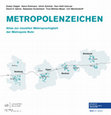
Dieser Atlas zur visuellen Mehrsprachigkeit der Metropole Ruhr präsentiert die Ergebnisse eines F... more Dieser Atlas zur visuellen Mehrsprachigkeit der Metropole Ruhr präsentiert die Ergebnisse eines Forschungsprojekts, das von Sprachwissenschaftlerinnen und Sprachwissenschaftlern, Integrationsforschern und Stadtsoziologen der Universität Duisburg-Essen und der Ruhr-Universität Bochum durchgeführt wurde. Anhand von ca. 700 Abbildungen (Karten, Fotos und Grafiken) wird gezeigt, mit welchen sichtbaren Zeichen der Mehrsprachigkeit der öffentliche Raum der Metropole Ruhr ausgestattet ist. Angesichts der internationalen Herkunft der Bevölkerung interessiert insbesondere, inwieweit sich die Vielfalt der Bevölkerung in der Vielfalt der Sprachen widerspiegelt, wo und warum welche Sprachen (z. B. Deutsch, Englisch, Polnisch und Türkisch) verwendet werden und wie die Sichtbarkeit der Sprachen von der Bevölkerung bewertet wird. Grundlage ist eine Querschnittsstudie für die Städte Duisburg, Essen, Bochum und Dortmund.
Proceedings of Grapholinguistics in the 21st Century, 2020
The present study is a contribution to research on typographetic meaningmaking and the social dim... more The present study is a contribution to research on typographetic meaningmaking and the social dimensions of typographic acts in multilingual and multiscriptural urban spaces. Writing in cityscapes materialises various types of texts and forms of discourse. The central assumption is that the form and materiality of these written texts contribute to their communicative signif icance. This paper is concerned with the way in which typographic resources are used to indicate discourses, index genres and become socially relevant. The re search is linked to the joint project Signs of the Metropolis at the University of DuisburgEssen and the Ruhr University Bochum in Germany and is based on a database of 25,523 tagged and georeferenced images. A multimethod approach has been applied between typography and soci olinguistics that introduces an analytical framework of parameters for studying the graphetics of lettering in urban space. The results from the application of the framework are presented in a foundational analysis of different discourse types (regulatory, infrastructural, commercial, transgressive, and commemora tive), including a comparison of different city districts in the Ruhr Metropolis. Furthermore, it provides an analysis on decorative typefaces in Turkish language texts in shop signs in DuisburgMarxloh; and presents results from a case study on genres, analysing the (typo)graphetic characteristics of signs in different shop types.
Searching for Heterotopia – Andere Räume gestalten, 2019
Cultural Stereotypes in Letter Forms in Public Space, 2018
This paper is concerned with the question of how cultural stereotypes are represented in typograp... more This paper is concerned with the question of how cultural stereotypes are represented in typographic letter forms.
After introducing the research context of the Signs of the Metropolises research project, essential theoretical conceptions are presented. The term culture is discussed in regard to its two dimensions, its historic development, the conception of trans-culturalism and the aesthetic representation of cultures. Following, the term stereotype as a concept in social sciences, its reason, functioning and its relation to typography are reviewed.
Subsequently five different strategies of cultural stereotype creation in typographic letter shapes are defined and the images from the Signs of the Metropolises data base are analyzed in regard to these strategies. Adjacently the following research questions are developed: Do the fonts designed by the described strategies work in referencing regional affiliation? Do perceivers of these fonts decide on the ethnic reference through the shapes of the letters or through the word content? Are they a visual short cut? Are perceivers faster to determine an ethnic reference if ethnic stereotypical fonts are applied?
The research methodology applied is a Stroop-test adapted to typography where participants are given conflicting and non-conflicting information and the reaction times are measured. The underlying presumption is that if content and form are conflicting in the viewer’s perception, reaction times and error numbers increase, which provides information about the viewers preconceptions and biases. In the conducted experiment participants were filmed, sorting 48 cards with regionally affiliated restaurant names and dishes in different culture-referencing sound and unsound typefaces (as well as one neutral typeface).
The time tracking showed that it took participants significantly longer to sort cards with conflicting information (3.59 sec) where the word content did not fit the connoted ethnic reference in the letter shapes than it took them to sort culturally stereotypical but non-confliction typefaces (2.83 sec) and neutral typefaces (2.75 sec).
The typographic Stroop-test hence shows that typographic forms make a measurable difference in the perception of the recipients. The shorter reaction time in matching culturally stereotypical fonts as opposed to conflicting ones indicates that they do work and are indeed visual short cuts. The observation that six out of ten participants sorted cards according to a matching stereotypical font (and not by word content as instructed) supports this understanding.
These measurable differences in the perception of culturally stereotypical fonts do also indicate the functioning of typographical means as a tool for social positioning and make letter shapes in public space an important stakeholder in the construction of social space.
"Universities have departments, the real world has problems" (Bozeman/Crow 1990:29)
Was kann ges... more "Universities have departments, the real world has problems" (Bozeman/Crow 1990:29)
Was kann gestalterische Lehre und Forschung an einer Kunsthochschule als Antwort auf das Zitat von Bozemann und Crow leisten? Welche Rolle muss sie spielen, um Gestalterpersönlichkeiten zu bilden, die kompetent, selbstbewusst und konstruktiv den Problemen der Welt mit ihrer gestalterischen Arbeit entgegentreten? Diese Fragen waren unter anderem die Beweggründe für diese Publikation des Fachbereichs Gestaltung der Folkwang Universität der Künste.
Graffitiscape als Forschungsgegenstand " Graffitiscape " ist eine Adhoc-Analogiebildung zu " Land... more Graffitiscape als Forschungsgegenstand " Graffitiscape " ist eine Adhoc-Analogiebildung zu " Landscape " , die dazu dienen soll, den Raumbezug, insbesondere das lokale Vorkommen, die Verteilung und die konkrete Ausgestaltung von Graffitis im städtischen Raum zu betonen. Graffitis sind, wie häufig hervorgehoben wird, vor allen Dingen ein urbanes Phänomen (Baudrillard 1978) und insofern auch ein Gegenstand, den die Linguistic-Landscape-Forschung berücksichtigt.
Die Graphostilistik als Teilgebiet der linguistischen Stilistik hat es
sich zur Aufgabe gemacht, die „stilistischen Funktionen spezifischer
graphischer Elemente“ systematisch zu beschreiben (vgl. Spitzmüller
2012: 220). Stil wird dabei als „sinnhafte Gestalt“ (Sandig 2006: 55)
und als „bewusste Wahl spezifischer semiotischer Ressourcen“
(Spitzmüller 2012: 234) verstanden.
This paper will provide a glimpse into my on-going doctoral research on the contribution of multi... more This paper will provide a glimpse into my on-going doctoral research on the contribution of multilingual and multi-scriptural typography in urban spaces to identity creation and social recognition in the era of globalisation. A particular focus at this state of the research is the co-application of Latin and Arabic scripts. The research is part of the interdisciplinary research project “Signs of the Metropolises –
Visual Multilingualism in the Ruhr Area” at the University of Duisburg-Essen and Ruhr-University Bochum in Germany and draws from the fields of linguistics, sociology and typography.
Charles Sanders Peirce's Zeichentheorie, Jean Baudrillards „Kool Killer“ und die transgressiven Z... more Charles Sanders Peirce's Zeichentheorie, Jean Baudrillards „Kool Killer“ und die transgressiven Zeichen in Dortmund Nordmarkt
Books by Irmi Wachendorff
DuEPublico, 2025
https://duepublico2.uni-due.de/receive/duepublico_mods_00084168



Uploads
Papers by Irmi Wachendorff
After introducing the research context of the Signs of the Metropolises research project, essential theoretical conceptions are presented. The term culture is discussed in regard to its two dimensions, its historic development, the conception of trans-culturalism and the aesthetic representation of cultures. Following, the term stereotype as a concept in social sciences, its reason, functioning and its relation to typography are reviewed.
Subsequently five different strategies of cultural stereotype creation in typographic letter shapes are defined and the images from the Signs of the Metropolises data base are analyzed in regard to these strategies. Adjacently the following research questions are developed: Do the fonts designed by the described strategies work in referencing regional affiliation? Do perceivers of these fonts decide on the ethnic reference through the shapes of the letters or through the word content? Are they a visual short cut? Are perceivers faster to determine an ethnic reference if ethnic stereotypical fonts are applied?
The research methodology applied is a Stroop-test adapted to typography where participants are given conflicting and non-conflicting information and the reaction times are measured. The underlying presumption is that if content and form are conflicting in the viewer’s perception, reaction times and error numbers increase, which provides information about the viewers preconceptions and biases. In the conducted experiment participants were filmed, sorting 48 cards with regionally affiliated restaurant names and dishes in different culture-referencing sound and unsound typefaces (as well as one neutral typeface).
The time tracking showed that it took participants significantly longer to sort cards with conflicting information (3.59 sec) where the word content did not fit the connoted ethnic reference in the letter shapes than it took them to sort culturally stereotypical but non-confliction typefaces (2.83 sec) and neutral typefaces (2.75 sec).
The typographic Stroop-test hence shows that typographic forms make a measurable difference in the perception of the recipients. The shorter reaction time in matching culturally stereotypical fonts as opposed to conflicting ones indicates that they do work and are indeed visual short cuts. The observation that six out of ten participants sorted cards according to a matching stereotypical font (and not by word content as instructed) supports this understanding.
These measurable differences in the perception of culturally stereotypical fonts do also indicate the functioning of typographical means as a tool for social positioning and make letter shapes in public space an important stakeholder in the construction of social space.
Was kann gestalterische Lehre und Forschung an einer Kunsthochschule als Antwort auf das Zitat von Bozemann und Crow leisten? Welche Rolle muss sie spielen, um Gestalterpersönlichkeiten zu bilden, die kompetent, selbstbewusst und konstruktiv den Problemen der Welt mit ihrer gestalterischen Arbeit entgegentreten? Diese Fragen waren unter anderem die Beweggründe für diese Publikation des Fachbereichs Gestaltung der Folkwang Universität der Künste.
Die Graphostilistik als Teilgebiet der linguistischen Stilistik hat es
sich zur Aufgabe gemacht, die „stilistischen Funktionen spezifischer
graphischer Elemente“ systematisch zu beschreiben (vgl. Spitzmüller
2012: 220). Stil wird dabei als „sinnhafte Gestalt“ (Sandig 2006: 55)
und als „bewusste Wahl spezifischer semiotischer Ressourcen“
(Spitzmüller 2012: 234) verstanden.
Visual Multilingualism in the Ruhr Area” at the University of Duisburg-Essen and Ruhr-University Bochum in Germany and draws from the fields of linguistics, sociology and typography.
Books by Irmi Wachendorff