Books by J. Brent Crosson
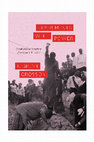
Research paper thumbnail of Experiments with Power: Obeah and the Remaking of Religion in Trinidad

University of Chicago Press, 2020

In 2011, Trinidad declared a state of emergency. This massive state intervention lasted for 106 d... more In 2011, Trinidad declared a state of emergency. This massive state intervention lasted for 106 days and led to the rounding up of over 7,000 people in areas the state deemed “crime hot spots.” The government justified this action and subsequent police violence on the grounds that these measures were restoring “the rule of law.” In this milieu of expanded policing powers, protests occasioned by police violence against lower class black people have often garnered little sympathy. But in an improbable turn of events six officers involved in the shooting of three young people were charged with murder at the height of the state of emergency. To explain this, the host of Crime Watch, the nation’s most popular television show, alleged that there must be a special power at work: obeah.

From eighteenth-century slave rebellions to contemporary responses to police brutality, Caribbean methods of problem-solving “spiritual work” have been criminalized under the label of “obeah.” Connected to justice-making force, obeah remains a crime in many parts of the anglophone Caribbean. In Experiments with Power, J. Brent Crosson addresses the complex question of what obeah is. Redescribing obeah as “science” and “experiments,” Caribbean spiritual workers unsettle the moral and racial foundations of Western categories of religion. Based on more than a decade of conversations with spiritual workers during and after the state of emergency, this book shows how the reframing of religious practice as an experiment with power transforms conceptions of religion and law in modern nation-states.

https://www.press.uchicago.edu/ucp/books/book/chicago/E/bo50271449.html

Special Issues Edited by J. Brent Crosson

Research paper thumbnail of Special Issue:  What Possessed You? Spirits, Property, and Political Sovereignty at the Limits of 'Possession'

Ethnos, 2019

This special issue brings together two seemingly opposed concepts—spirit possession and sovereig... more This special issue brings together two seemingly opposed concepts—spirit possession and sovereignty--to ask how possessing spirits, selves, and lands can alter political practice in contemporary worlds. The introduction focuses on the problems of agency raised by the anthropological category of spirit possession and its dynamic of possessor and possessed, arguing that such a dynamic risks misrepresenting the mundane ways that persons live with other-than-human powers that inhabit selves and places. Focusing on sustained practices of living with other than human powers rather than ritual episodes of “spirit possession” yields a more unsettled form of sovereignty than either Western political theory or "spirit possession" has often depicted. By looking at this unsettled sovereignty of possession, the contributors to this volume examine the problems with territorial dominion and self-government in contexts ranging from Tibetan Buddhist “self-possession” and Indo-Surinamese Hindu national belonging to the territorial sovereignty of Andean mountain-beings and the possessing forces of the Internet in Trinidad.

Papers by J. Brent Crosson

Research paper thumbnail of "Toward a Caribbean Genealogy of Energy:  Cosmologies of Energy in Modernity’s First World"

Religions (for the Special Issue “Religion in Extractive Zones,” Terra S. Rowe, Lisa Sideris, and Christiana Zenner, eds.). , 2025
The story of the rise of "energy" usually centers on the Industrial Revolution and the coal-power... more The story of the rise of "energy" usually centers on the Industrial Revolution and the coal-powered steam engine in nineteenth-century Western Europe. Although it often escapes notice, the Caribbean was actually the site of the first known use of a steam engine to power industrial manufacturing (on a sugar plantation) and the world's first commercial oil well (drilled by a US company in southern Trinidad). These "firsts" point toward energy's roots in colonial and imperial projects of extraction in the Caribbean, revealing the centrality of race and the plantation in understanding energy capitalism and the current climate crisis. This article traces a Caribbean-attuned genealogy of "energy". Today, energy is taken for granted as an abstract universal, but the concept was bound to specific forms of racial governance during the transition from sugar to fossil fuels as apex capitalist commodities. In tracing this genealogy, I rewrite the first two "laws of energy" as ethico-political statements on racial governance rather than descriptions of a pre-existing natural order. Adding to scholarship that has laid bare the relationship between biological sciences and race, I argue that energy sciences have also been central to sustaining (while occluding) racialized hierarchy. I then look at conceptions of energy in perhaps the world's oldest petro-state (Trinidad, with brief comparisons to neighboring Venezuela) to elaborate Caribbean-attuned, speculative alternatives to the "laws of energy".

Research paper thumbnail of The Subterranean Unsettling of Science, Race, and Religion: Obeah, Petroleum Geology, and Risk in Trinidad

Comparative studies in society and history, Mar 27, 2024

When scholars have compared "African traditional religion" and "Western science," they have often... more When scholars have compared "African traditional religion" and "Western science," they have often treated the terms of this comparison as racialized unitary entities, which are either radically different or somewhat similar (even as Western categories of rationality or nature remain the basis for these comparisons). This essay unsettles these assumptions by focusing on practices that are called "science" in the fields of both petroleum geology and Afro-Caribbean religion. Based on long-term ethnographic research in Trinidad, arguably the world's oldest site of commercial oil extraction, I show how internal differences between those involved in "petroleum science" and "African religion" reveal a spectrum of meanings for the word "science" centered on relations to risk. At one end of this spectrum, science conveyed ideals of stable tradition that de-risked claims to knowledge for energy sector specialists intent on securing foreign investment or for "Yorubacentric" lineages of African religion centering initiation-based authority. At this spectrum's other end, "science" foregrounded the risks of accessing hard-to-perceive forces in petroleum exploration or "spiritual work." By focusing on heterogeneous practices rather than cultural essences or ideals of rationality, I show how the ethical implications of "science" depend on differing experiences of the risks of working with subterranean powers. While petroleum surveys at my field site in Trinidad required embodied risks by laborers, geologists backgrounded these contexts of power, representing the risks of their work as a problem of scientific accuracy. Afro-Trinidadian spiritual workers, in contrast, foregrounded the embodied risks of science as the ground of ethical practice.

Between Possessor and Possessed: Warping Spacetime and Agency through Co-Presence

Bloomsbury Academic eBooks, 2022

15 Obeah Simplified? Scientism, Magic, and the Problem of Universals

Columbia University Press eBooks, Dec 31, 2023

Research paper thumbnail of Breaking the Heart's Borders: From “Dark Anthropology” to Dark Humor in the Telling of Migration

Breaking the Heart's Borders: From “Dark Anthropology” to Dark Humor in the Telling of Migration

Sociology Lens

This piece is a collaboration between J. Brent Crosson and Venezuelan writer María Teresa Canelon... more This piece is a collaboration between J. Brent Crosson and Venezuelan writer María Teresa Canelones. Crosson introduces selections from Canelones' narrative of migration from Venezuela to neighboring South American countries during the current crisis. Crosson reflects on working with Canelones and how her insistence on the dignity of Venezuelan migrants questions the "suffering slot" of "dark anthropology" through dark humor. Crosson's translation of Canelones' narrative follows. The article is available via open access at this link: https://onlinelibrary.wiley.com/doi/epdf/10.1111/johs.12402. The creative short film produced as a collaboration between Crosson and Canelones can be found here: https://www.youtube.com/watch?v=NXw2Gy8jUqo

Research paper thumbnail of Catching power: Race, altered solidarities, and science in Trinidad
Catching power: Race, altered solidarities, and science in Trinidad

In Trinidad, "catching power" indexes the embodiment of other-than-human force, a culti... more In Trinidad, "catching power" indexes the embodiment of other-than-human force, a cultivated practice that anthropologists have typically referred to as "spirit possession." This dissertation examines how "catching power" recursively transforms social scientific theories of power, and how practices codified as illicit superstition, but called science by practitioners, alter the limits of the authoritative categories of modern rationalization. For more than two centuries, colonial and postcolonial laws have made the "assumption of supernatural power" a criminal offense in the anglophone Caribbean, defining these practices as "obeah." While labeled obeah practitioners by their neighbors, many of the healers I knew preferred to speak about their practices in terms of science or law. I argue that these uses of scientific and legal discourses were more than moves to cloak these practices in the authoritative clothing of Western rationality. Through the recursive transformations enacted by spiritual workers, science and law became what they always were: prescribed and prescriptive material practices that aim to investigate, re-present, and catch the power of hard-to-perceive forces, whether these forces were the powers of the state justice system or the spirits of the unjustly dead. This practice of catching power incorporates and transforms the terms of Western rationalization--law, race, and science--by working these categories' constitutive oppositions. The seminal binaries of religion and magic, science and tradition, or law and superstition become the very materials of invention and intervention in this approach to power. Through the ethnography of a protest movement against police brutality in Trinidad, I examine the ways that obeah inverts the evidence of the law's violence to turn this harm against the representatives of the law of the state. By detailing the response to a series of "mass demonic possessions" at my field site, I show how Caribbean science uses dichotomies between rationality and tradition to speak between the lines of modern categories of religion. Finally, through an examination of what I call "altered solidarities," relations of healing and harming between Afro- and Indo-Trinidadians re-articulate the colonial inheritance of divisive racial categories as a basis for interracial solidarity

Research paper thumbnail of The Subterranean Unsettling of Science, Race, and Religion: Obeah, Petroleum Geology, and Risk in Trinidad

Comparative Studies in Society and History, 2024

When scholars have compared "African traditional religion" and "Western science," they have often... more When scholars have compared "African traditional religion" and "Western science," they have often treated the terms of this comparison as racialized unitary entities, which are either radically different or somewhat similar (even as Western categories of rationality or nature remain the basis for these comparisons). This essay unsettles these assumptions by focusing on practices that are called "science" in the fields of both petroleum geology and Afro-Caribbean religion. Based on long-term ethnographic research in Trinidad, arguably the world's oldest site of commercial oil extraction, I show how internal differences between those involved in "petroleum science" and "African religion" reveal a spectrum of meanings for the word "science" centered on relations to risk. At one end of this spectrum, science conveyed ideals of stable tradition that de-risked claims to knowledge for energy sector specialists intent on securing foreign investment or for "Yorubacentric" lineages of African religion centering initiation-based authority. At this spectrum's other end, "science" foregrounded the risks of accessing hard-to-perceive forces in petroleum exploration or "spiritual work." By focusing on heterogeneous practices rather than cultural essences or ideals of rationality, I show how the ethical implications of "science" depend on differing experiences of the risks of working with subterranean powers. While petroleum surveys at my field site in Trinidad required embodied risks by laborers, geologists backgrounded these contexts of power, representing the risks of their work as a problem of scientific accuracy. Afro-Trinidadian spiritual workers, in contrast, foregrounded the embodied risks of science as the ground of ethical practice.

Breaking the Heart's Borders: From Dark Anthropology to Dark Humor in the Telling of Migration

Sociology Lens 36(1), 2023

This piece is a collaboration between J. Brent Crosson and Venezuelan writer María Teresa Canelon... more This piece is a collaboration between J. Brent Crosson and Venezuelan writer María Teresa Canelones.  Crosson introduces selections from Canelones' narrative of migration from Venezuela to neighboring South American countries during the current crisis.  Crosson reflects on working with Canelones and how her insistence on the dignity of Venezuelan migrants questions the "suffering slot" of "dark anthropology" through dark humor.  Crosson's translation of Canelones' narrative follows. 

The article is available via open access at this link:  https://onlinelibrary.wiley.com/doi/epdf/10.1111/johs.12402

The creative short film produced as a collaboration between Crosson and Canelones can be found here: https://www.youtube.com/watch?v=NXw2Gy8jUqo

Research paper thumbnail of Immigration Policing as Hol(e)y War: Rings of Connection, Deadly Gaps, and State Loopholes in the Struggle for Asylum

Immigration Policing as Hol(e)y War: Rings of Connection, Deadly Gaps, and State Loopholes in the Struggle for Asylum

Sociology Lens 36(1), 2023

This article uses the concept of holes rather than borders to articulate the space that US immigr... more This article uses the concept of holes rather than borders to articulate the space that US immigration policing engenders.  In contradistinction to borders—lines or zones that can be mapped, walled, or policed to delimit sovereign bodies—holes are strategic exceptions to mappable sovereignties.  Rather than fixed, mappable boundaries, holes are mutable and in flux, thriving on the shifting potential to appear or disappear and to make people disappear as legal subjects.  If US immigration policing operates, to a large extent, through holes distributed across borders and long-distance spaces, then any mapping of this power that centers national borders or bounded nation-states alone is insufficient.  I show how the policing of Venezuelan migration centers the distribution of holes from South and Central America to spaces within the US that are far from “the border.”  Against a discursive focus on “the border” and the border wall in US rhetoric on immigration, I argue that the actual practices of impeding flows of immigration or channeling them through spaces of death have increasingly operated through holey space.  If holy space has been defined in studies of religion as a sacred space set apart from mundane rules, then the hol(e)y spaces of immigration are set apart from fixed conceptions of “the rule of law.”  A focus on holes shows how the legal order of immigration depends more on exceptions, personalized or arbitrary power, and the instability of interim extra-legal executive orders than a dichotomy of legal/illegal.  Despite their necropolitical power, holes do not create an entirely striated, hierarchical space.  Holes are also rings of connection and passageways, highlighting the creativity and agency of asylum seekers in forging dignity under extremely difficult conditions.

The article is available via open access here:  https://onlinelibrary.wiley.com/doi/epdf/10.1111/johs.12406

Banning Black Gods: Law and Religions of the African Diaspora

Ethnic and Racial Studies

Climate Politics and the Power of Religion (Indiana Univ. Press), 2022

Between Possessor and Possessed: Warping Spacetime and Agency through Co-Presence

The Dynamic Cosmos, 2022
Research paper thumbnail of Race, Nation, and Diaspora in the Southern Caribbean: Unsettling the Ethnic Conflict Model

The Journal of Latin American and Caribbean Anthropology, 2022

In much of the southern Caribbean (i.e., Trinidad and Tobago and Guyana), ethno-political tension... more In much of the southern Caribbean (i.e., Trinidad and Tobago and Guyana), ethno-political tensions between numerically commensurable populations of South Asian and African diasporic populations have structured narratives of postcolonial conflict between an “African” and an “Indian” political party, setting the limits of national narratives. This article challenges this narrative on a number of points, drawing on oral histories and ethnographic research. I look at how the assumption of homogenous African and Indian groupings ignores important differences of class and political ideology that disrupt racial essentialism and create what I have called “altered solidarities.” I argue that dominant postcolonial frameworks of creole nationalism, state multiculturalism, and securitization in the Anglophone Caribbean have been unable to recognize these alternate solidarities in the region. [race, nationalism, diaspora, Caribbean, ethnic conflict]

Anthropology and Humanism, 2021

American Religion, 2020

An essay on using poetry in academic writing, followed by an ethnographic poem about a nation-mak... more An essay on using poetry in academic writing, followed by an ethnographic poem about a nation-making ritual of African religion between Trinidad and Venezuela.

Mediality on Trial: Testing and Contesting Trance and Other Media Techniques, 2020

This article performs a strange comparison to question the very applicability of the “burden of p... more This article performs a strange comparison to question the very applicability of the “burden of proof” to both subaltern mediums and scientists. I look at the problem of proof not only in the field of subaltern spiritual work, but also in the practice of petroleum geology and the history and philosophy of science. By tacking back and forth between “science” and “obeah” in the Caribbean, I hope to problematize the burden of proof that the trials of mediality have often sought to produce – from the experiments with witchcraft in early modern courtrooms to the Victorian trials of psychical research. Might there be other ways of understanding what is at stake in mediumship than the burden of proof?

The Oxford Handbook of Humanism , 2021

Humanism and Enlightenment are words associated with the birth of rights-bearing Man. Yet this bi... more Humanism and Enlightenment are words associated with the birth of rights-bearing Man. Yet this birth was accompanied by the rise of another Enlightenment concept: race. This chapter theorizes the effects of the twinned, contradictory birth of pseudo-biological human difference and "universal" Man. Starting in the Renaissance and concluding in the "posthuman" present, the chapter shows how conceptions of the human emerged from interactions between Africa, the Americas, Asia, and Europe. From the Enlightenment onward, theories of religion, politics, and culture have centered on contestations over the limits of this human. Rather than telling a linear narrative of Man-human-posthuman, such contests present an unfinished project that continues to this day.