Synopsis
Dim Sum is the essence of Cantonese culinary culture, originating from Qing Dynasty teahouses in Guangzhou. Featuring shrimp dumplings, siu mai, BBQ pork buns, and egg tarts. The tradition of "morning tea" is a unique Cantonese lifestyle.
Overview
Dim Sum (Chinese: 点心, literally "touch the heart") is a unique culinary tradition from Guangdong (Canton) Province, China. The term "dim sum" dates back to the Eastern Jin Dynasty, originally meaning "a little something from the heart" — referring to small, delicately crafted food items. Cantonese dim sum originated in the teahouses of Guangzhou during the Qing Dynasty and, after centuries of development, has become one of the most internationally influential Chinese cuisines.
"Yum Cha" (饮早茶, literally "drink morning tea," or "tan cha" 叹茶, "enjoy tea") is a distinctive Cantonese way of life. In the early morning or late morning, families or groups of friends gather at a teahouse for a pot of fine tea accompanied by baskets of exquisite dim sum — eating, chatting, and leisurely spending time together. This tea culture is not merely a dietary habit but an important means of social interaction and family bonding for Cantonese people.
History
The history of Cantonese dim sum is inseparable from Guangzhou's teahouse culture. In the mid-Qing Dynasty, the earliest teahouses appeared in Guangzhou, providing places for people to rest, drink tea, and enjoy snacks. According to legend, the "Yi Li Guan" (一厘馆, "One Cent Shop") was the earliest form of teahouse, named because a pot of tea cost just one cent (li).
Over time, teahouses evolved from simple tea-drinking establishments into restaurants offering a wide variety of exquisite dim sum. By the early 20th century, Guangzhou's teahouse industry entered its golden age, giving rise to century-old brands such as Tao Tao Ju, Lin Heung Tea House, and Panxi Restaurant.
The shrimp dumpling (har gow), ranked first among the "Four Heavenly Kings" of dim sum, was first created in the early 20th century at a small family teahouse in Wufeng Village, on the outskirts of Guangzhou. Legend has it that it was invented by dim sum master Wu Shunde at the "Cheng Zhu Lou" teahouse — using wheat starch dough to wrap fresh shrimp, pork, and bamboo shoots, shaped like a half-moon with twelve pleats, becoming the signature Cantonese dim sum.
Classic Dim Sum Varieties
Cantonese dim sum comes in an extensive variety, traditionally categorized by the "Four Heavenly Kings":
| Dim Sum | Description | Characteristics |
|---|---|---|
| Shrimp Dumpling (Har Gow) | Wheat starch skin filled with shrimp, pork, bamboo shoots | Translucent, half-moon shape, 12 pleats — the #1 dim sum |
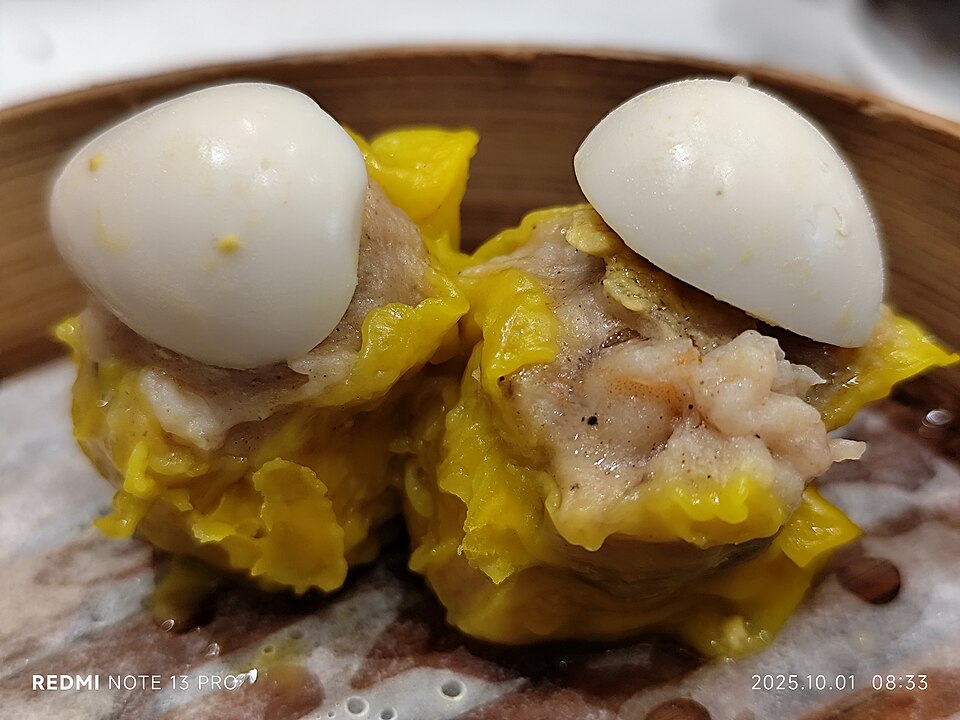
| Siu Mai | Wonton skin wrapped around pork and shrimp | Open-topped, showing the filling, bouncy texture |
| BBQ Pork Bun (Char Siu Bao) | Leavened dough filled with honey-glazed BBQ pork | Soft, splits open at the top, sweet and savory |
| Egg Tart | Flaky or butter pastry with egg custard filling | Crispy outside, smooth inside, sweet but not cloying |
Other classic varieties include:
- Rice Noodle Roll (Cheung Fun): Thin rice flour sheets rolled around shrimp, beef, or BBQ pork, served with soy sauce
- Chicken Feet (Feng Zhao): Black bean sauce steamed chicken feet, soft and flavorful
- Sticky Rice in Lotus Leaf (Lo Mai Gai): Glutinous rice with chicken and mushrooms, wrapped in lotus leaf and steamed
- Custard Bun (Lai Wong Bao): Steamed buns with molten custard filling that flows when broken
- Spring Rolls: Thin pastry filled with vegetables and shrimp, deep-fried until crispy
- Turnip Cake (Lo Bak Gou): Shredded white radish and rice flour, steamed then pan-fried until golden
- Ma Lai Gou: Cantonese steamed sponge cake, soft and sweet
Tea-Drinking Etiquette
Cantonese morning tea has unique customs and etiquette:
- Finger Tapping: When someone pours tea for you, lightly tap your fingers on the table as a gesture of thanks
- Lid Positioning: Place the teapot lid ajar on the spout to signal the waiter to refill with hot water
- Tea First, Dim Sum Second: Taste the tea first, then slowly enjoy the dim sum
- Cart Service: Traditional teahouses push carts through the dining room for guests to select from (modern establishments often use ordering menus)
Global Spread
Following the footsteps of Cantonese emigrants, dim sum has spread worldwide:
- Hong Kong: As an important inheritor of dim sum culture, Hong Kong's dim sum scene is highly developed
- Southeast Asia: Malaysia, Singapore, and Thailand all have numerous Cantonese teahouses
- North America: Chinatowns in San Francisco, New York, Vancouver, and Toronto almost all have dim sum restaurants
- Europe: Dim sum in London, Paris, and other European cities is increasingly popular
The term "Dim Sum" has been widely adopted in the English-speaking world, becoming one of the few Chinese culinary terms to enter the English lexicon directly. Today, from traditional handcrafted teahouses to modern dim sum chain brands, Cantonese dim sum culture continues to innovate and develop, captivating taste buds around the world.
References
- Baidu Baike: https://baike.baidu.com/item/虾饺/2829637
- Zhihu: https://zhuanlan.zhihu.com/p/619534923
- Sohu: https://www.sohu.com/a/869888524_122010439
Stills & Gallery
Comments (0)