Synopsis
Jiaozi are China's most iconic traditional food, dating back over 1,800 years to the Eastern Han Dynasty. Eaten during Spring Festival to symbolize reunion and prosperity.
Overview
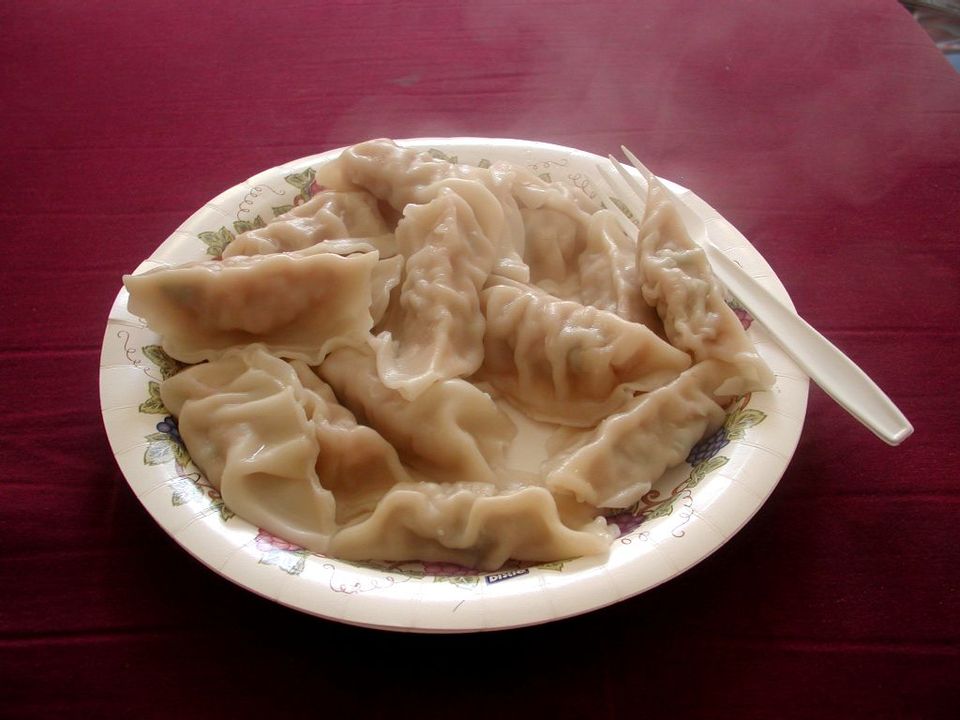
Jiaozi (饺子), commonly known as Chinese dumplings, are one of the most iconic traditional foods in China, with a history spanning over 1,800 years dating back to the Eastern Han Dynasty. Jiaozi consist of a thin dough wrapper filled with various ingredients, and can be prepared by boiling (shuijiao), steaming (zhengjiao), or pan-frying (jianjiao/guotie).
In China, particularly in the northern regions, jiaozi are essential food during Spring Festival and other important celebrations, carrying profound cultural significance. The dish is so emblematic of Chinese culture that it has been included on UNESCO's tentative list of Intangible Cultural Heritage, reflecting its deep connection to Chinese identity and daily life.
Origins and History
The most popular origin story of jiaozi is linked to Zhang Zhongjing (c. 150-219 AD), a renowned physician of the Eastern Han Dynasty. According to legend, during a harsh winter, Zhang returned to his hometown and found poor villagers suffering from frostbitten ears. Moved with compassion, he wrapped mutton and warming medicinal herbs in dough, shaped them like ears, boiled them, and distributed them to the villagers — curing their frostbite. These "delicate ears" (娇耳, Jiao'er) are considered the earliest form of jiaozi.
Archaeological evidence suggests the history of jiaozi may be even older. In 1978, pottery vessels containing dumplings were unearthed at the Xue State ruins in Tengzhou, Shandong, dating to the Spring and Autumn period — pushing the history of jiaozi back over 2,700 years. By the Tang Dynasty (618-907 AD), jiaozi had become a common food; actual preserved dumplings were discovered in Tang Dynasty tombs in Turpan, Xinjiang.
Types of Jiaozi
China's vast geography means that jiaozi vary greatly by region in flavor, shape, and preparation:
| Type | Region | Characteristics |
|---|---|---|
| Cabbage & Pork Dumplings | North (Beijing, Northeast) | Classic filling, most common in northern China |
| Sauerkraut & Pork Dumplings | Northeast China | Regional specialty, tangy and appetizing |
| Mackerel Dumplings | Shandong | Seafood flavor, Jiaodong specialty |
| Three Delicacies Dumplings | Beijing | Pork, shrimp, and chive mixture |
| Shrimp Dumplings (Har Gow) | Guangdong | Translucent wrapper, Cantonese dim sum |
| Sour Soup Dumplings | Shaanxi | Served in spicy-sour broth |
| Zhong Dumplings | Sichuan | Served with chili oil sauce |
| Oat Noodle Dumplings | Shanxi | Made with oat flour wrappers |
How to Make Jiaozi
The basic steps to making jiaozi at home:
- Prepare the dough: Mix flour with water, knead into a smooth dough, and rest for about 30 minutes
- Make the filling: Finely mince pork or beef, add chopped vegetables (cabbage, chives, etc.) and seasonings, mix well
- Roll the wrappers: Divide the dough into small pieces and roll each into a thin, round wrapper that is thicker in the center and thinner at the edges
- Wrap: Place filling in the center of the wrapper, fold in half, and pinch the edges to create a half-moon shape
- Cook: Boil for 8-10 minutes until they float, steam for 15-20 minutes, or pan-fry until the bottom is golden and crispy
Cultural Significance
In Chinese culture, jiaozi carry deep symbolic meaning:
- Reunion: During Spring Festival, families gather to make jiaozi together, symbolizing family unity and togetherness
- Wealth: The shape of jiaozi resembles ancient Chinese gold ingots (yuanbao), symbolizing prosperity and wealth
- Good Fortune: In northern China, it is customary to hide a coin inside one of the dumplings — whoever finds it will have good luck in the coming year
- Transition: Eating jiaozi on New Year's Eve represents "geng sui jiao zi" (更岁交子) — the transition from the old year to the new
Different fillings also carry symbolic meanings: celery filling represents "diligence and progress," while chive filling symbolizes "everlasting" longevity. In southern China, egg dumplings are also considered auspicious because of their resemblance to gold ingots.
Today, jiaozi are not only beloved across China but have also become one of the most popular Chinese dishes worldwide, serving as the most successful "culinary ambassador" of Chinese food culture.
Stills & Gallery
Comments (0)