Books by James Leo Cahill
Jean Painlevé: Feet in the Water (Paris: Jeu de Paume / Lienart Éditions, 2022), 154-167. , 2022
English version of catalogue essay for the exhibition "Jean Painlevé: Les pieds dans l'eau" at th... more English version of catalogue essay for the exhibition "Jean Painlevé: Les pieds dans l'eau" at the Jeu de Paume, Paris, Summer 2022. Also published in French as «
Les mondes étranges de Jean Painlevé ».
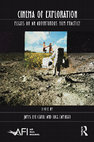
Cinema of Exploration: Essays on an Adventurous Film Practice, 2020
Drawing together 18 contributions from leading international scholars, this book conceptualizes t... more Drawing together 18 contributions from leading international scholars, this book conceptualizes the history and theory of cinema’s century-long relationship to modes of exploration in its many forms, from colonialist expeditions to decolonial radical cinemas to the perceptual voyage of the senses made possible by the cinematic apparatus.
This is the first anthology dedicated to analysing cinema’s relationship to exploration from a global, decolonial, and ecological perspective. Featuring leading scholars working with pathbreaking interdisciplinary methodologies (drawing on insights from science and technology studies, postcolonial theory, indigenous ways of knowing, and film theory and history), it theorizes not only cinema’s implication in imperial conquest but also its cutting-edge role in empirical expansion and experiments in sensual and critical perception. The collected essays consider filmmaking in cross-cultural contexts and films made in or about peoples in South America, Asia, Africa, Indigenous North America, as well as polar, outer space, and underwater exploration, with famous figures such as Jacques Yves Cousteau alongside amateur and scientific filmmakers.
The essays in this collection are ideal for a broad range of scholars, graduate students, and advanced undergraduate students in cinema and media studies, cultural studies, and cognate fields.
Through an expansive optic and re-imagining of film’s deep imbrication with exploration, this rich collection views cinema and exploration as mutually informing and vital allies in understanding twentieth century human history and our current crisis in the age of the Anthropocene. The authors productively take up the charge of discerning cinema in diverse contexts of exploration and critically engage with how adventure itself has long been a driving force and useful metaphor for cinema and/as epistemological practice.
Alison Griffiths, Distinguised Professor, The City University of New York
A remarkable transdisciplinary anthology exploring cinematic image-work in relation to issues of exploration, travel, colonial visual culture, experimental ethnographic film, and more broadly in relation to human encounters with intensive natural phenomena that confounds those who observe and participate in them. This collection will inspire and be useful to scholars in the human sciences, particularly media and visual anthropologists, who are willing to experiment with the new capacities of the cinematic.
Tarek Elhaik, Associate Professor of Anthropology, University of California, Davis and author of The Incurable-Image: Curating Post-Mexican Film and Media Arts.
In this intellectually rich set of essays, cinematic practices and ideologies of exploration are brought into illuminating contact. The authors in this collection read the spectacles of the spectacular that lie at the heart of 'cinemas of exploration' through the material circumstances and exploitations of their production. In so doing, the politics of 'exploration' are laid bare and placed in productive tension with the promises of enlightenment or adventure that such films tend to offer.
Lisa Messeri, Assistant Professor of Anthropology, Yale University
Exploration is cinema’s greatest, its most singular and enduring attribute, and so there is no overstating the importance of this stunning anthology. It takes a Fantastic Voyage through astonishing episodes that illuminate cinema’s ‘Copernican vocation’ to displace humans by exploring the befuddling world in which we co-exist. Cahill and Caminati lay out a shrewd itinerary leading into the ‘body’ of the book where, chapter after chapter, we discover how cinema has evolved to bring within its purview unimaginable inner and outer worlds. As the probing coda proclaims, cinema is still mid-journey. Explore this book and you will explore a medium and an art that is as alive today as it was for Lumière and Mélies.
Dudley Andrew, author of What Cinema Is!
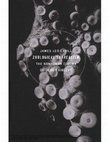
Before Jacques-Yves Cousteau, there was Jean Painlevé, a pioneering French scientific and natur... more Before Jacques-Yves Cousteau, there was Jean Painlevé, a pioneering French scientific and nature filmmaker with a Surrealist’s eye. Creator of more than two hundred films, his studies of strange animal worlds doubled as critical reimaginations of humanity. With an unerring eye for the uncanny and unexpected, Painlevé and his assistant Geneviève Hamon captured oneiric octopuses, metamorphic crustaceans, erotic seahorses, mythic vampire bats, and insatiable predatory insects.
Zoological Surrealism draws from Painlevé’s early oeuvre to rethink the entangled histories of cinema, Surrealism, and scientific research in interwar France. Delving deeply into Painlevé’s archive, James Leo Cahill develops an account of “cinema’s Copernican vocation”—how it was used to forge new scientific discoveries while also displacing and critiquing anthropocentric viewpoints.
From Painlevé’s engagements with Sergei Eisenstein, Georges Franju, and competing Surrealists to the historiographical dimensions of Jean Vigo’s concept of social cinema, Zoological Surrealism taps never-before-examined sources to offer a completely original perspective on a cutting-edge filmmaker. The first extensive English-language study of Painlevé’s early films and their contexts, it adds important new insight to our understanding of film while also contributing to contemporary investigations of the increasingly surreal landscapes of climate change and ecological emergency.
Reading Jean Painlevé’s archive, James Leo Cahill excavates an urgent nonhuman ethics made possible through film. Each chapter of this lively, meticulously researched, and beautifully written book reveals a complex vision of animals-for-themselves and animals as figures for a fraught political culture. The ‘cinematic nature’ of Painlevé’s world, as theorized by Cahill, unsettles any presumed separateness of human- and animal-being, even as it offers a vision of animal existence that is beyond human existence altogether.
—Jennifer Fay, author of Inhospitable World: Cinema in the Time of the Anthropocene
A remarkable study of Jean Painlevé’s cinematic attention to the marvels of animal life, James Leo Cahill’s study elegantly resolves the contradictions between intellectual biography and non-anthropocentric modes of inquiry. At once a focused critical biography and a wide-ranging study of organic systems thinking, Zoological Surrealism is alive with the intellectual ferment of the French 1930s. It is an essential text for any reader invested in the development of systems thinking, as well as in the history of experimental film, art, science, and thought.
—Jonathan P. Eburne, author of Outsider Theory: Intellectual Histories of Unorthodox Ideas
Articles by James Leo Cahill
The Cinephiliacs #123
Cinephiliacs Interview, 2020
"Cannibals of Harvard Square"
Docalogue, 2019
A short essay on the Sensory Ethnography Lab film Caniba (2017): https://docalogue.com/march-caniba/
Journal of Cinema and Media Studies , 2019
On the value of recycling old film theory and films for thinking a longue durée conceptualization... more On the value of recycling old film theory and films for thinking a longue durée conceptualization of the anthropocene. Considers "natural history" as a genre of the anthropocene (in which genre is understood as a mode of historical interpretation and perception), and then reflects on the historiographical implications of Siegfried Kracauer's 1927 essay on photography as exemplary of this approach, developing a natural-historical media theory through ghosts, garbage, and uncanny creatures.
A book review of The Shape of Spectatorship by Scott Curtis for Critical Inquiry.
The introduction to a special issue of Discourse on Derrida and Cinema.
An essay on Eisenstein's graphomania and zoophilia in his drawings and writing on drawing and ani... more An essay on Eisenstein's graphomania and zoophilia in his drawings and writing on drawing and animation.
This translation and presentation of Émile Vuillermoz's review of Alain Jef's 1929 Festival of Sh... more This translation and presentation of Émile Vuillermoz's review of Alain Jef's 1929 Festival of Short Films provides scholars with an overlooked document relating to the history of the short film (court-métrage) in France. Vuillermoz argues for the virtues of concision as a matter of taste, but also raises questions regarding the aesthetics of material and temporal economy. This text invites consideration on the differences and links between inter-war film practice and culture and the post-war institutionalization of the short film, as well as the importance of concision and compression (as a matter of the storage and communication of information and as an aesthetic value) historically and in the contemporary media context of YouTube, Dailymotion, Vine and other online video aggregators.
Journal of Visual Culture , 2012
An essay on Jean Painlevé's films as a cinematic gay science. The book Zoological Surrealism has ... more An essay on Jean Painlevé's films as a cinematic gay science. The book Zoological Surrealism has a totally different takes on the films discussed in this piece.
An essay on British avant-garde filmmaker Peter Whitehead's first "professional" film, the short ... more An essay on British avant-garde filmmaker Peter Whitehead's first "professional" film, the short educational science documentary The Perception of Life (1964), produced by the Nuffield Foundation's film unit.
Parallel to work in media archaeology, this essay explores the question of accidents as a technic... more Parallel to work in media archaeology, this essay explores the question of accidents as a technical and textual phenomenon.
You learn about life by the accidents you have, over and over again. . . . Writing, most of the t... more You learn about life by the accidents you have, over and over again. . . . Writing, most of the time, for most people, is an accident.
Conceptualizing the nonlogocentric language of Peter Tscherkassky's cinema. Accidents, spectres, ... more Conceptualizing the nonlogocentric language of Peter Tscherkassky's cinema. Accidents, spectres, found footage.
On Martin Arnold's Deanimated film loop and the phantoms of cinema in digital work.
A 2005 interview with Fred Moten, the poet and author of In the Break: The Black Radical Aesthetic.
Book Chapters by James Leo Cahill
Ends of Cinema, eds. Richard Grusin and Jocelyn Szczepaniak-Gillece (University of Minnesota Press), 2020
Reflections on two of the ends of cinema—garbage and ghosts—with help from Georges Bataille's and... more Reflections on two of the ends of cinema—garbage and ghosts—with help from Georges Bataille's and Sigfried Kracauer's writing on media-historiography.
A Companion to Documentary Film History, 2021
What can disputes over footage of the separation of conjoined twins and marching penguins teach u... more What can disputes over footage of the separation of conjoined twins and marching penguins teach us about documentary, authorship, and whose images, voices, and lives count—and get counted—in the cacophonous audio-visual public sphere of global media? Read to find out!
in Abjection Incorporated: Mediating the Politics of Pleasure and Violence, eds. Maggie Hennefeld and Nicholas Sammond (Durham: Duke University Press, 2020), 185-207., 2020
writing in homage of his friend and former collaborator Georges Bataille, referred to his texts p... more writing in homage of his friend and former collaborator Georges Bataille, referred to his texts published in the dissident surrealist journal Documents (1929-30) as sketching "a sort of natu ral history (and consequently dialectical). These are considerations that Bataille, to my knowledge, never subsequently developed, though one finds distant echoes of them in his book on Lascaux." 1 Queneau's description of Bataille's early work as a dialectical natu ral history has the ring of a dare or surrealist prank to it, suggesting an extension of his "exercises in style" to both his friend's work and a mode of reading it. 2 What uses may come from understanding a strand of Bataille's thought as sketching out a form of natu ral history, and a dialectical one at that? It does not seem that Queneau had in mind the idea of natu ral history developed by Frankfurt school thinkers such as Theodor Adorno, who



Uploads
Books by James Leo Cahill
Les mondes étranges de Jean Painlevé ».
This is the first anthology dedicated to analysing cinema’s relationship to exploration from a global, decolonial, and ecological perspective. Featuring leading scholars working with pathbreaking interdisciplinary methodologies (drawing on insights from science and technology studies, postcolonial theory, indigenous ways of knowing, and film theory and history), it theorizes not only cinema’s implication in imperial conquest but also its cutting-edge role in empirical expansion and experiments in sensual and critical perception. The collected essays consider filmmaking in cross-cultural contexts and films made in or about peoples in South America, Asia, Africa, Indigenous North America, as well as polar, outer space, and underwater exploration, with famous figures such as Jacques Yves Cousteau alongside amateur and scientific filmmakers.
The essays in this collection are ideal for a broad range of scholars, graduate students, and advanced undergraduate students in cinema and media studies, cultural studies, and cognate fields.
Through an expansive optic and re-imagining of film’s deep imbrication with exploration, this rich collection views cinema and exploration as mutually informing and vital allies in understanding twentieth century human history and our current crisis in the age of the Anthropocene. The authors productively take up the charge of discerning cinema in diverse contexts of exploration and critically engage with how adventure itself has long been a driving force and useful metaphor for cinema and/as epistemological practice.
Alison Griffiths, Distinguised Professor, The City University of New York
A remarkable transdisciplinary anthology exploring cinematic image-work in relation to issues of exploration, travel, colonial visual culture, experimental ethnographic film, and more broadly in relation to human encounters with intensive natural phenomena that confounds those who observe and participate in them. This collection will inspire and be useful to scholars in the human sciences, particularly media and visual anthropologists, who are willing to experiment with the new capacities of the cinematic.
Tarek Elhaik, Associate Professor of Anthropology, University of California, Davis and author of The Incurable-Image: Curating Post-Mexican Film and Media Arts.
In this intellectually rich set of essays, cinematic practices and ideologies of exploration are brought into illuminating contact. The authors in this collection read the spectacles of the spectacular that lie at the heart of 'cinemas of exploration' through the material circumstances and exploitations of their production. In so doing, the politics of 'exploration' are laid bare and placed in productive tension with the promises of enlightenment or adventure that such films tend to offer.
Lisa Messeri, Assistant Professor of Anthropology, Yale University
Exploration is cinema’s greatest, its most singular and enduring attribute, and so there is no overstating the importance of this stunning anthology. It takes a Fantastic Voyage through astonishing episodes that illuminate cinema’s ‘Copernican vocation’ to displace humans by exploring the befuddling world in which we co-exist. Cahill and Caminati lay out a shrewd itinerary leading into the ‘body’ of the book where, chapter after chapter, we discover how cinema has evolved to bring within its purview unimaginable inner and outer worlds. As the probing coda proclaims, cinema is still mid-journey. Explore this book and you will explore a medium and an art that is as alive today as it was for Lumière and Mélies.
Dudley Andrew, author of What Cinema Is!
Zoological Surrealism draws from Painlevé’s early oeuvre to rethink the entangled histories of cinema, Surrealism, and scientific research in interwar France. Delving deeply into Painlevé’s archive, James Leo Cahill develops an account of “cinema’s Copernican vocation”—how it was used to forge new scientific discoveries while also displacing and critiquing anthropocentric viewpoints.
From Painlevé’s engagements with Sergei Eisenstein, Georges Franju, and competing Surrealists to the historiographical dimensions of Jean Vigo’s concept of social cinema, Zoological Surrealism taps never-before-examined sources to offer a completely original perspective on a cutting-edge filmmaker. The first extensive English-language study of Painlevé’s early films and their contexts, it adds important new insight to our understanding of film while also contributing to contemporary investigations of the increasingly surreal landscapes of climate change and ecological emergency.
Reading Jean Painlevé’s archive, James Leo Cahill excavates an urgent nonhuman ethics made possible through film. Each chapter of this lively, meticulously researched, and beautifully written book reveals a complex vision of animals-for-themselves and animals as figures for a fraught political culture. The ‘cinematic nature’ of Painlevé’s world, as theorized by Cahill, unsettles any presumed separateness of human- and animal-being, even as it offers a vision of animal existence that is beyond human existence altogether.
—Jennifer Fay, author of Inhospitable World: Cinema in the Time of the Anthropocene
A remarkable study of Jean Painlevé’s cinematic attention to the marvels of animal life, James Leo Cahill’s study elegantly resolves the contradictions between intellectual biography and non-anthropocentric modes of inquiry. At once a focused critical biography and a wide-ranging study of organic systems thinking, Zoological Surrealism is alive with the intellectual ferment of the French 1930s. It is an essential text for any reader invested in the development of systems thinking, as well as in the history of experimental film, art, science, and thought.
—Jonathan P. Eburne, author of Outsider Theory: Intellectual Histories of Unorthodox Ideas
Articles by James Leo Cahill
Book Chapters by James Leo Cahill