Papers by Jan S. Østergaard
Annarena Ambrogi: Labra di età romana in marmi bianchi e colorati
Gnomon (München), 2009
Periskop – Forum for kunsthistorisk debat, Aug 14, 2017
Magasin fra Det kongelige Bibliotek, Dec 1, 2017
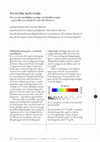
bølgelaengder, der ligger lige under det synlige spektrum, kaldes ultraviolet lys (UV), mens strå... more bølgelaengder, der ligger lige under det synlige spektrum, kaldes ultraviolet lys (UV), mens stråling med bølgelaengder lige over spektret kaldes infrarødt lys (IR). Multispektralt daekker altså flere spektre end det synlige lys: det daekker også over UV og IR. Alt lys er altså bølger, men bølger er også energi. Som det ses på nedenstående illustration har de forskellige farver forskellig energi. Vores grundfarver blå, grøn og rød er de energimaessigt kraftigste i normalt dagslys. Når det kommer til UV og IR, er energien derimod meget lille, og det var derfor, vi stod meget laenge i mørke i Statens Museum for Kunsts studie. Vi ville nemlig kun fotografere med UV og IR. For ca. 6 år siden blev jeg for første gang gjort bekendt med multispektralt fotografi. Det skete ved en éndags forevisning på Statens Museum for Kunst. En langhåret ingeniør fra San Diego, Californien, havde opsat et Storm P.-lignende udstyr i museets store studie. Ingeniøren indledte med en lang forklaring om det usynlige lys, og som gammel fotograf undrede jeg mig over, hvad man uden dét kunne se. Kort efter slukkede han al lyset i studiet og taendte nogle maerkelige lamper med 'usynligt' lys. Vi stod i adskillige minutter i totalt mørke, mens eksponeringen foregik af et 1700-tals maleri. Kun en lille rød lysdiode på kameraet fortalte, at der blev eksponeret -og hvilken magi fremkom! Men først lidt om teknikken og betydningen, for hvad betyder multispektralt? Ja, multi betyder flere, men flere hvad? Lys består af bølger, og hver farve har sin egen specifikke bølgehastighed. Det synlige lys, 'regnbuens farver' , har en bølgefrekvens, der spaender fra ca. 380 nm (nanometer) til 750 nm, dvs. fra dybeste violet over blå, gul og grøn til rød. Stråling med Om at se det umiddelbart usynlige ved teknikkens hjaelp -og om ikke at se nok på det, man allerede kan se
Techné, Dec 31, 2019
La science au service de l'histoire de l'art et de la préservation des biens culturels Les couleu... more La science au service de l'histoire de l'art et de la préservation des biens culturels Les couleurs de l'Antique "Reconstruction" of the polychromy of ancient sculpture: a necessary evil? La « restitution » de la polychromie des sculptures antiques, un mal nécessaire ?
Colour shifts
Aarhus University Press eBooks, May 4, 2017
The polychromy of ancient sculpture: experimental reconstructions in permanent museum displays
Virtual Retrospect 2017, Nov 29, 2017
Remains of polychromy on ancient greek and roman sculpture
The International Institute for Conservation of Historic and Artistic Works, 2006
Investigating of the Polychromy of Greek and Roman Stone Sculpture -: The Copenhagen Polychromy Network Projects in the Ny Carlsberg Glyptotek, Copenhagen
Proceedings of the Danish Institute at Athens, Aug 12, 2017
El "Calígula" de la Gliptoteca Ny Carlsberg de Copnenhague. La reconstrucción de las áreas policromadas de un retrato romano
El Color De Los Dioses El Colorido De La Estatuaria Antigua Museo Arqueologico Regional Alcala De Henares Madrid 18 De Diciembre De 2009 Al 18 De Abril De 2010 2009 Isbn 978 84 451 3269 2 Pags 187 193, 2009
Reconstructing the Polychromy of a Roman Portrait: Caligula in the Ny Carlsberg Glyptotek, Copenhagen
Proceedings of the Xvith Intrnational Congress of Classical Arachaeology Common Ground Archaeology Art Science and Humanities 2006 Isbn 1842171836 Pags 512 516, 2006
La coloración del retrato de Calígula
El color de los …, 2009
Localización: El color de los Dioses: el colorido de la estatuaria antigua: Museo Arqueológico Re... more Localización: El color de los Dioses: el colorido de la estatuaria antigua: Museo Arqueológico Regional: Alcalá de Henares, Madrid, 18 de diciembre de 2009-al 18 de abril de 2010, 2009, ISBN 978-84-451-3269-2, págs. 199-206
indicate the complex character of the change which the polychromy of ancient sculpture has underg... more indicate the complex character of the change which the polychromy of ancient sculpture has undergone. But, at the same time, the word also becomes a verb with the meaning 'to change position' , re ecting the fact that the re-emergence of colour must fundamentally shi our approach to classical sculpture. at kind of shi is not the subject of this contribution; it deals rather with the means by which the shi may be brought about. Interdisciplinary collaboration lies at the root of the present phase of research on polychromy, one which has been characterized as a "break-through phase". Disciplines within the humanities, objects conservation, conservation science and the natural sciences have joined forces to become a sine qua non for future discoveries. Writing about methodology with the ambition of reaching readers from the several disciplines involved is correspondingly challenging. It is a particularly daunting task to write about the decisive contribution made by conservation science and the natural sciences in a way which is accessible to scholars from the humanities. Similarly-but requiring perhaps relatively less of an e ort of 'trans-lation'-the methodologies employed by the humanities must be described with due consideration of readers from the sciences. Promoting mutual understanding is perhaps the most important aim of this contribution. is article o ers a partial overview of methodologies of research on the polychromy of Greek and Roman sculpture. e character of the evidence requires an interdisciplinary approach. is evidence is brie y presented, a er which aspects of the actual investigation are considered, the section on analytical methods dealing only cursorily with in-vasive techniques. A ention is drawn to the importance of research-based experimental reconstruction of polychrome sculptures. Finally, some interdisciplinary research scenarios are described. e article is based on work done within the amework of the 'Tracking Colour' project of the Ny Carls-berg Glyptotek and the Copenhagen Polychromy Network,-, with the support of the Carlsberg Foundation.
Tracking colour. The polychromy of Greek and Roman sculpture in the Ny Carlsberg Glyptotek. Preliminary reports.
Posters by Jan S. Østergaard
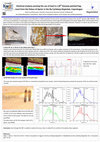
W.M.F. Petrie’s excavations at the north end of Memphis unearthed in 1909 remains of the royal pa... more W.M.F. Petrie’s excavations at the north end of Memphis unearthed in 1909 remains of the royal palace of Apries, 26th Dynasty, 589–568 BCE. That same year the Glyptotek in Copenhagen received a number of painted limestone relief fragments belonging to the palace (ref 1). Unfortunately Petrie gave no details as to where in the palace the fragments were found and the original setting remains today unknown. However, it is safe to say that they are pieces of a monumental wall decoration that could have adorned the great gate of the palace.
Several fragments have been analysed by non-destructive micro-XRF spectroscopy using an ARTAX-800 from Bruker with a spatial resolution of 70 micrometres. Seen from an archaeometric point of view the data obtained for the yellow colour is interesting. Here the K-alpha line of As overlaps with the L-alpha line of Pb. This would usually be resolved looking at the M-alpha line for Pb, but in this case the instrument was equipped with a Mo X-ray tube causing a further overlap, this time with the Mo K-alpha line and the Pb M-alpha line. The issue was resolved using LA-ICP-MS, which showed beyond any doubt that there was used a Pb-containing pigment.
The conservation-scientific and archaeological aspect of this use of a lead-containing pigment will be dealt with in a forthcoming publication from the ‘Transmission & Transformation’ project conducted at Ny Carlsberg Glyptotek in collaboration with the British Museum.



Uploads
Papers by Jan S. Østergaard
Posters by Jan S. Østergaard
Several fragments have been analysed by non-destructive micro-XRF spectroscopy using an ARTAX-800 from Bruker with a spatial resolution of 70 micrometres. Seen from an archaeometric point of view the data obtained for the yellow colour is interesting. Here the K-alpha line of As overlaps with the L-alpha line of Pb. This would usually be resolved looking at the M-alpha line for Pb, but in this case the instrument was equipped with a Mo X-ray tube causing a further overlap, this time with the Mo K-alpha line and the Pb M-alpha line. The issue was resolved using LA-ICP-MS, which showed beyond any doubt that there was used a Pb-containing pigment.
The conservation-scientific and archaeological aspect of this use of a lead-containing pigment will be dealt with in a forthcoming publication from the ‘Transmission & Transformation’ project conducted at Ny Carlsberg Glyptotek in collaboration with the British Museum.