Doctoral Dissertation by Jari Laru

Acta Universitatis Ouluensis. Series E, Scientiae rerum socialium 125, Oct 2, 2012
The use of mobile devices, including mobile phones and tablets, is a growing trend in education. ... more The use of mobile devices, including mobile phones and tablets, is a growing trend in education. The practice has been widely technology driven and often justified simply by the importance of using new technology in a classroom and by claiming such devices to be important in reaching something referred to, although not that well defined, as 21st century skills. This thesis is one answer to the challenge represented by this development. It brings together theoretical ideas of scaffolding learning with collaborative scripts and the use of mobile devices as cognitive tools in a real life educational settings.
This thesis has constructivist grounds and aims at exploring how to support collaborative learning when students have ill-structured problems and their activities are supported with mobile technologies. The study consists of three case studies, which together form an example of how important it is to design, develop and deliver lightweight digital tools and activities for learners to construct knowledge.
Overall, the results of three case studies in this thesis confirms that it is a dubious assumption that learners will automatically take appropriate and measured advantage of the affordances of mobile devices and other emergent technologies involved in cognitive activities: rather, these cognitive tools require deliberate attention and effort from learners to make use of the affordances of the tools. Furthermore, results from the case studies reveal that personal factors such as students’ prior knowledge and their metacognitive and collaborative skills, as well as contextual cues such as cultural compatibility and instructional methods, influence student engagement.
Journal Articles by Jari Laru
In this single-case study, small groups of learners were supported by use of multiple social soft... more In this single-case study, small groups of learners were supported by use of multiple social software tools and face-to-face activities in the context of higher education. The aim of the study was to explore how designed learning activities contribute to students’ learning outcomes by studying probabilistic dependencies between the variables. Explorative Bayesian classification analysis revealed that the best predictors of good learning outcomes were wiki-related activities. According to the Bayesian dependency model, students who were active in conceptualizing issues by taking photos were also active blog reflectors and collaborative knowledge builders in their group. In general, the results indicated that interaction between individual and collective actions likely increased individual knowledge acquisition during the course.

Interactive Learning …, Jan 1, 2010
This study explores how collaborative inquiry learning can be supported with multiple scaffolding... more This study explores how collaborative inquiry learning can be supported with multiple scaffolding agents in a real-life field trip context. In practice, a mobile peer-to-peer messaging tool provided meta-cognitive and procedural support, while tutors and a nature guide provided more dynamic scaffolding in order to support argumentative discussions between groups of students during the co-creation of knowledge claims. The aim of the analysis was to identify and compare top- and low-performing dyads/triads in order to reveal the differences regarding their co-construction of arguments while creating knowledge claims. Although the results revealed several shortcomings in the types of argumentation, it could be established that differences between the top performers and low performers were statistically significant in terms of social modes of argumentation, the use of warrants in the mobile tool and in overall participation. In general, the use of the mobile tool likely promoted important interaction during inquiry learning, but led to superficial epistemological quality in the knowledge claim messages.

Educational Media International, Jan 1, 2008
The aim of this study was to identify social patterns in mobile technology mediated collaboration... more The aim of this study was to identify social patterns in mobile technology mediated collaboration among distributed members of the professional distance education community. Ten participants worked for twelve weeks designing a master’s programme in Information Sciences. The participants’ mobile technology usage activity and interview data were first analyzed to get an overview of the density and distribution of collaboration at individual and community levels. Secondly, the results of the social network analyses were interpreted to explore how different social network patterns of relationships affect online and offline interactions. Thirdly, qualitative descriptions of participant teamwork were analyzed to provide practical examples and explanations. Overall, the analyses revealed nonparticipative behaviour within the online community. The social network analysis revealed structural holes and sparse collaboration among participants in the offline community. It was found that due to their separated practices in the offline community, they did not have a need for mobile collaboration tools in their practices.
Structuring and Regulating Collaborative Learning In Higher Education With Wireless Networks and Mobile Tools
Subscription Prices and …, Jan 1, 2007
A brief narrative description of the journal article, document, or resource. In our recent resear... more A brief narrative description of the journal article, document, or resource. In our recent research we have explored possibilities to scaffold collaborative learning in higher education with wireless networks and mobile tools. The pedagogical ideas are grounded on concepts of collaborative learning, including the socially shared origin of cognition, as well as self-regulated learning theory. This paper presents our three design experiments on mobile, handheld supported collaborative learning. All experiments are aimed at investigating novel ways to structure and regulate individual and collaborative learning with smartphones. In the first study a Mobile Lecture Interaction tool (M.L.I.) was used to facilitate higher education students' self-regulated learning in university lectures. In the second study smartphones were used as regulation tools to scaffold collaboration by supporting externalization of knowledge representations in individual and collaborative levels. The third study demonstrates how face to face and social software integrated collaborative learning supported with smartphones can be used for facilitating socially shared collaboration and community building. In conclusion, it is stressed that there is a need to place students in various situations in which they can engage in effortful interactions in order to build a shared understanding. Wireless networks and mobile tools will provide multiple opportunities for bridging different contents and contexts as well as virtual and face to face learning interactions in higher education. (Contains 1 figure and 3 tables.)
Conference Presentations by Jari Laru
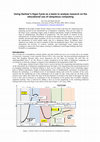
In this paper, Gartner Group’s Hype Cycle is used as the basis for categorizing and analyzing res... more In this paper, Gartner Group’s Hype Cycle is used as the basis for categorizing and analyzing research on the educational use of ubiquitous computing. There are five stages of the Hype Cycle: technology trigger, peak of inflated expectations, trough of disillusionment, slope of enlightenment, and plateau of productivity. The first decade of research on the educational use of mobile technology is divided in this paper into four stages: (i) a period of mobility and personal digital assistants; (ii) the era of wireless Internet learning devices; (iii) the introduction of social mobile media; and (iv) a ubiquitous future. In addition, three
empirical case studies are used as examples of the developmental stages. These case studies demonstrate the diversity of contexts, methods, and technologies used, ranging from workplace to nature trail, from inquiry learning to collaborative knowledge building, and from PocketPCs to smartphones.

… of the 9th international conference on …, Jan 1, 2009
In this study the dependencies between higher education students' profiles, activities, and learn... more In this study the dependencies between higher education students' profiles, activities, and learning outcomes in collaborative learning --as mediated by social software -were examined. Although the sample size in this study was small (n=22), Bayesian Dependency Modeling method provided statistically viable insight. The results show that learners who were active reflectors in their blogs, but who were also interested in what others achieved, obtained the best results in knowledge tests. Based on the analysis, two distinct learner profiles that reflect differences in the students' dependencies can be distinguished: monitor and reflector. Furthermore, an indirect dependencies found in the analysis suggests that both reflectors and monitors are also active wiki editors and participants in face-to-face discussions. Further qualitative analyses are needed in order to get an in-depth view of the complex interactions and dependencies within and between the face-to-face and virtual, but also individual and social, planes of collaboration.

Muutamasta pioneerista huolimatta mobiilioppimisen tutkimus
oli vielä vuosituhannen alussa vähäis... more Muutamasta pioneerista huolimatta mobiilioppimisen tutkimus
oli vielä vuosituhannen alussa vähäistä, luonteeltaan
spekulatiivista ja siitä oli niukasti saatavilla painettua aineistoa
(Goman & Laru, 2003; Tirri, 2002). Tuolloin kuluttajien
käytettävissä olevat mobiiliteknologia ja sovellukset eivät olleet
vielä Weiserin visioiden tasolla. Kehitys on kuitenkin ollut
vauhdikasta, ja nykyään perinteisten matkapuhelimien, mutta
myös kameroiden, mp3-soittimien, paikantimien ja tietokoneiden
toimintoja on löydettävissä yhä useammasta nykyaikaisesta
älypuhelimesta. Hyödynnämmekin yhä useammin älypuhelimia
keskinäisen vuorovaikutuksemme, ajattelumme, ongelmien
ratkaisun ja itse oppimisen tukena, josta voidaan
juontaa perustavanlaatuinen kysymys: mitä on oppiminen
2000-luvulla? (Fischer & Konomi, 2007).
Vaikka kansainvälinen tiedeyhteisö uskoo nykyaikaisten
matkaviestinten mahdollistavan uudenlaisia tapoja opettaa ja
opiskella (Lai, Yang, Chen, Ho & Chan, 2007; Roschelle & Pea,
2002) melkoinen osa tutkimuksesta on keskittynyt päätelaitteiden
Developing new mobile services for the Universities-University students' conceptions of their needs for mobile tools for scaffolding learning activities
Proceedings of the World Conference …, Jan 1, 2005
Using web2. 0 software and mobile devices for creating shared understanding among virtual learning communities
… in Education, 2008. WMUTE 2008. Fifth …, Jan 1, 2008
In our recent research we have explored possibilities to scaffold collaborative learning in highe... more In our recent research we have explored possibilities to scaffold collaborative learning in higher education with wireless networks and mobile tools. The pedagogical ideas are grounded on concepts of collaborative learning, including the socially shared origin of cognition, as well as self-regulated learning theory. This poster will demonstrate how social software and mobile devices can be used for facilitating socially shared collaboration and community building.
Collaborative-inquiry learning in the environment. Design experiment with distributed face-to-face and mobile scaffolds
Fifth IEEE International Conference on Wireless, …, Jan 1, 2008
In this study, learning with mobile technologies is grounded in theories of cognitive tools and d... more In this study, learning with mobile technologies is grounded in theories of cognitive tools and distributed scaffolding, which were applied to scaffold collaborative-inquiry learning on a nature trail. The general aim of this study was to design, implement and evaluate the case for collaborative inquiry into learning in the environment. The group (n=22) of primary school pupils worked for two hours, in six triads and two dyads, observing traces of animate and inanimate objects in the wild. The results showed considerable differences in the nature of the discourse and inquiry learning. It can be concluded that minimally guided instruction where scaffolds are distributed among pupils is not enough to advance a collaborative inquiry learning.
Verkko-oppimisympäristöjä on käytetty jo yli vuosikymmenen ajan yhteisöllisen oppimisen tukemisek... more Verkko-oppimisympäristöjä on käytetty jo yli vuosikymmenen ajan yhteisöllisen oppimisen tukemiseksi. Viimeaikaisessa tutki muksessa samaan on pyritty mobiililaitteiden ja-sovellusten se kä sosiaalisten ohjelmien (web 2.0) avulla. Samalla yhteisöllistä työskentelyä ohjattaessa, tuettaessa ja jäsennettäessä on alet tu hyödyntää niin sanottuja yhteisöllisiä skriptejä, joita voidaan liittää erilaisiin oppimisympäristöihin ja-ohjelmiin.
Abstract. The aim of the study is to apply the theoretical framework of collaborative learning an... more Abstract. The aim of the study is to apply the theoretical framework of collaborative learning and distributed cognition for developing mobile tools which scaffolds people's everyday learning and information searching and processing needs. This study includes experimental case studies conducted in natural settings with randomly sampled or conveniently selected subjects. Contexts of the case studies varies from the urban pedestrian street to the main library of the university.
Workshops by Jari Laru
How people collaborate to learn in different contexts scaffolded by the mobile tools
Proceedings of beyond mobile learning …, Jan 1, 2007
Successful collaboration and creation of opportunities for multiple social interactions are criti... more Successful collaboration and creation of opportunities for multiple social interactions are critically important to the future of teaching and learning. People need to learn more in formal educational settings and in informal and to collaborate more often in order to solve problems and construct, share, and create new information. Because individual cognition, motivation and interactions cannot be isolated from the social and cultural contexts in which they occur (Pintrich, 2000), we as educational researchers and designers need to know more about those processes when people collaborate to learn in a variety of contexts. Individual and socially shared self-regulation plays a role in the effectiveness, efficiency, and even in enjoyment of collaboration. In our previous research we have analyzed collaborative interactions as a means of gaining insight into the processes of collaborative learning and attempt to clarify what constitutes productive collaborative activity (Järvelä & Häkkinen, 2004). In this research, it has also become evident that successful collaboration is not a spontaneous phenomenon, but structuring and regulating socially shared learning process is needed (Järvelä, Järvenoja & Volet, 2006). The objective of our research has been to contribute to knowledge of effective learning processes by exploring how ambient, particularly context-aware technologies for mobile use could support collaborative learning by offering new opportunities for social interaction and creating scenarios for their design, development and implementation (e.g. Roschelle, Rosas & Nussbaum, 2006). The work is grounded in recent theoretical and conceptual understanding of collaborative learning as cognitive, social, and motivated activity (Boekaert, Pintrich & Zeitner, 2000). In this position paper our two design experiments on mobile, handheld supported collaborative learning are presented to demonstrate our research. Both experiments are aimed at investigating novel uses to support collaborative learning with smartphones. In the first study (Laru & Järvelä, 2006) smartphones with self-organizing bluetooth networking were used as a collaborative tool in dyads of students (n=22) to scaffold inquiry learning in nature park. The results indicate that peer-to-peer enabled smartphones can act as one scaffold of distributed scaffolds to support collaborative inquiry learning. Students' use of smartphones resulted sharing and storing their arguments of nature inquiry for immediate and latter use. In the second (Näykki & Järvelä, 2006) study smartphones without networking were used as regulation tools to externalize knowledge representations in an individual and collaborative levels. University students (n=13) used smartphones in groups of 2-4 students to collect pictures and make annotations about a given topic. The content collected with mobile phones was then developed further by constructing a mind map of collected pictures and text by using desktop computers.
Papers by Jari Laru
This manifesto advocates for the thoughtful integration of AI in education, emphasising a human-c... more This manifesto advocates for the thoughtful integration of AI in education, emphasising a human-centred approach amid the rapid evolution of artificial intelligence (AI). The chapter explores the transformative potential of large language models (LLM) and generative AI (GenAI) in education, addressing both opportunities and concerns. While AI accelerates change in education, adapting to students' M. Romero (B) • T. Frosig • A.
Are We Currently Moving from the Age of Mobilism to Age of Artificial Intelligence, Learning Analytics and Robotics? How to Couple Emergent Technology with Learning and Teaching?
INTED proceedings, Mar 1, 2019
CSCL 2013 presentation (powerpoint)
Sosiaalisen median opetuskäyttö



Uploads
Doctoral Dissertation by Jari Laru
This thesis has constructivist grounds and aims at exploring how to support collaborative learning when students have ill-structured problems and their activities are supported with mobile technologies. The study consists of three case studies, which together form an example of how important it is to design, develop and deliver lightweight digital tools and activities for learners to construct knowledge.
Overall, the results of three case studies in this thesis confirms that it is a dubious assumption that learners will automatically take appropriate and measured advantage of the affordances of mobile devices and other emergent technologies involved in cognitive activities: rather, these cognitive tools require deliberate attention and effort from learners to make use of the affordances of the tools. Furthermore, results from the case studies reveal that personal factors such as students’ prior knowledge and their metacognitive and collaborative skills, as well as contextual cues such as cultural compatibility and instructional methods, influence student engagement.
Journal Articles by Jari Laru
Conference Presentations by Jari Laru
empirical case studies are used as examples of the developmental stages. These case studies demonstrate the diversity of contexts, methods, and technologies used, ranging from workplace to nature trail, from inquiry learning to collaborative knowledge building, and from PocketPCs to smartphones.
oli vielä vuosituhannen alussa vähäistä, luonteeltaan
spekulatiivista ja siitä oli niukasti saatavilla painettua aineistoa
(Goman & Laru, 2003; Tirri, 2002). Tuolloin kuluttajien
käytettävissä olevat mobiiliteknologia ja sovellukset eivät olleet
vielä Weiserin visioiden tasolla. Kehitys on kuitenkin ollut
vauhdikasta, ja nykyään perinteisten matkapuhelimien, mutta
myös kameroiden, mp3-soittimien, paikantimien ja tietokoneiden
toimintoja on löydettävissä yhä useammasta nykyaikaisesta
älypuhelimesta. Hyödynnämmekin yhä useammin älypuhelimia
keskinäisen vuorovaikutuksemme, ajattelumme, ongelmien
ratkaisun ja itse oppimisen tukena, josta voidaan
juontaa perustavanlaatuinen kysymys: mitä on oppiminen
2000-luvulla? (Fischer & Konomi, 2007).
Vaikka kansainvälinen tiedeyhteisö uskoo nykyaikaisten
matkaviestinten mahdollistavan uudenlaisia tapoja opettaa ja
opiskella (Lai, Yang, Chen, Ho & Chan, 2007; Roschelle & Pea,
2002) melkoinen osa tutkimuksesta on keskittynyt päätelaitteiden
Workshops by Jari Laru
Papers by Jari Laru