Books by Jennifer Malvezzi
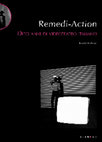
All'alba degli anni Ottanta, in un contesto caratterizzato da radicali cambiamenti nel sistema de... more All'alba degli anni Ottanta, in un contesto caratterizzato da radicali cambiamenti nel sistema dei media, un nutrito gruppo di giovani sperimentatori italiani inizia a produrre performance tecnologiche e spettacoli teatrali che utilizzano il video e le sue specificità linguistiche, da un lato adoperandolo sulla scena teatrale come strumento drammaturgico, dall'altro sintetizzando le performance in chiave elettronica fino a creare delle opere autonome dall'originario referente scenico. Pur trattandosi di un caso pressoché unico a livello mondiale, gli studi che in ambito teatrale mettono a confronto le teorie del postmoderno in materia di traduzione e competizione tra linguaggi con il videoteatro sono praticamente assenti. Questo libro tenta di colmare alcune lacune di storicizzazione proponendo una lettura mediologica del fenomeno videoteatrale negli anni del suo massimo splendore (1978-1988), quando non si era ancora sclerotizzato in forme manieristiche, bensì si poneva come momento di rottura sia rispetto alla tradizione teatrale che alle ricerche di marca poverista. Remedi-Action è corredato da interviste e schede che, unitamente a un'estensiva videografia, propongono una mappatura della produzione videoteatrale attraverso le opere di Giorgio Barberio Corsetti e Studio Azzurro, Dal Bosco e Varesco, Krypton, Magazzini Criminali, Mario Martone con Falso Movimento, Orient Express, Michele Sambin e Tam Teatromusica, Antonio Syxty con Studio Metamorphosi e Alessandro Mendini, Compagnia Solari-Vanzi, Taroni e Cividin.
Papers and Essays by Jennifer Malvezzi
Immagine , 2019
The essay aims to retrace the complex exhibition history of two multimedia devices designed by Et... more The essay aims to retrace the complex exhibition history of two multimedia devices designed by Ettore Sottsass and Umberto Bignardi in the late Sixties for Olivetti. A reconstruction that was made difficult not only by the almost complete destruction of the materials these gigantic apparatuses were built of, but by their very modular nature, which enabled them to operate differently depending on the setting of choice. In the Seventies, once their more commercial function ended, the modes of operation of the two machines would allow their re-use in the artistic field. By focusing on the "hardware" and on the way in which they were continuously recalibrated to the different social and national contexts (including the audiovisual "software"), thematic and methodological continuities between the corporate and artistic non-theatrical fruitive modes are highlighted.
Cinergie 15 , 2019
The Disintegration of the City. Correspondences between a letter from the Archigram Group and the... more The Disintegration of the City. Correspondences between a letter from the Archigram Group and the audiovisual project of Ugo La Pietra
The essay examines a programmatic letter written by the English neo-futurist group Archigram to the magazine "IN. Arguments of images and design" in 1972. Informed by the theories of Marshall McLuhan and the coeval practices of Guerrilla Television, the letter was decisive for the project of La cellula abitativa, an experimental audiovisual communication system designed by Ugo La Pietra that forecast the characteristics of web and social networks. The prototype of the device, that was technically practicable, was presented the same year in the pivotal exhibition Italy the New Domestic Landscape at the MoMA of New York.
Cinergie issue 15 – special peer-reviewed edited by Michele Guerra and Sara Martin
M. Guerra, S. Martin (eds.) Atti critici in luoghi pubblici. Scrivere di cinema, tv e media dal dopoguerra al web, Diabasis, Parma, 2019
Nel dopoguerra, le principali riviste d'arte italiane («AZ arte d'oggi», «SeleArte», «Arti Visive... more Nel dopoguerra, le principali riviste d'arte italiane («AZ arte d'oggi», «SeleArte», «Arti Visive» e «Ferrania») si fanno portavoce di un rinnovato dibattito sul futuro del cinema che non trova posto nelle coeve riviste di settore. Un manipolo di critici sui quali domina la «presenza anomala» 2 di Luigi Veronesi si situa lontano, talvolta in aperta opposizione, dalla cogente poetica del neorealismo. Il discorso cinematografico sviluppato all'interno delle riviste d'arte si propone infatti come una vera e propria fuga dalla narrazione dei «realismi» che prende le mosse innanzitutto dal recupero e dalla divulgazione delle sperimentazioni delle Avanguardie degli anni Venti. In particolare il cinema puro di Viking Eggeling e di Hans Ritcher, il cui percorso era stato precocemente interrotto dalla guerra e che si articola attorno alla ricerca di un possibile film assoluto inteso però prevalentemente nella forma del film astratto.
D. Cavallotti, S. Dotto, L. Quaresima (eds.), A History of Cinema Without Names/3: New Theoretical Paths and Methodological Glosses, Mimesis, Milano-Udine, 2018
A. Amendola, V. Del Gaudio (eds.) Teatro e immaginari digitali. Saggi di sociologia dello spettacolo multimediale , 2018
Fata Morgana, n. 31, 2017
The paper proposes an analysis of the multimedia operations called I Palinsesti (1972-1978), in w... more The paper proposes an analysis of the multimedia operations called I Palinsesti (1972-1978), in which the artist Cioni Carpi tries to visually recreate the cognitive processes of the human mind through image sequences in which the single photograph or the single frame is configured as a "visual-mental event” that blurs the previous image, just how in our consciousness the visual perception of an event is changed, augmented or deleted by a subsequent event.
L. Cardone, G. Maina, S. Rimini, C. Tognolotti (eds.), Vaghe stelle. Attrici del /nel cinema italiano, in "Arabeschi. Rivista di studi su letteratura e visualità", n. 10, 2017
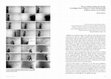
C.Casero, E. Di Raddo, G. Gallo (eds.) Arte fuori dall'arte. Incontri e scambi fra arti visive e società negli anni Settanta, Postmedia books, Milano, 2017
Direi che non sono dei "tentativi di discorso politico". Sono piuttosto film politici nella misur... more Direi che non sono dei "tentativi di discorso politico". Sono piuttosto film politici nella misura in cui hanno come oggetto il condizionamento dell'uomo, non generico, ma l'uomo storico. Naturalmente non penso che questi film possano contribuire oggi alla lotta di classe; essi sono tuttavia testimonianza di uno stato di allarme permanente, al quale è improntato da anni il mio lavoro Valentina Berardinone, Milano, 1973 Sfogliando con lo sguardo di oggi le riviste italiane di cinema degli anni Settanta si può notare come dal vivace, talvolta incendiario, dibattito sulle possibili forme di 'cinema politico', dalle più militanti alle più commerciali, risulti sistematicamente escluso il cinema d'artista. Questo rifiuto era logicamente motivato dalla differente circolazione del 'prodotto' filmico d'artista che in quanto tale era spesso un pezzo unico destinato a un 'consumo' elitario nelle gallerie, modalità che di fatto ne segnava l'unico reale distinguo dalle coeve esperienze underground che, al contrario, erano comunemente riconosciute dalla critica cinematografica innanzitutto come vero e proprio cinema e in secondo luogo come politicamente impegnate proprio in virtù della loro fruizione 'indipendente' da qualsivoglia commercio mercantile.
Casero C., Di Raddo E. (eds.), La parola agli artisti. Arte e impegno a Milano negli anni Settanta, Postmedia Books, 2016
Rivista internazionale di studi su letteratura e visualità
Ricerche di S/Confine, 2015
The essay examines the the first european exhibition on the relationship between sound and enviro... more The essay examines the the first european exhibition on the relationship between sound and environment, Sonorità Prospettiche, first held in Rimini in 1982 and then re-equipped in different versions in Lugano, Ferrara, Bologna and Ivrea. The peculiarity of this initiative lies in the curatorial choice - taking part in the international debate on a possible definition of Sound Art - that reflects, beyond disciplinary boundaries, on circumstantial relationship between “sound” and “environment” through the exposure of unrealized (or impossible) projects and the staging of some performances.
Conference Presentations by Jennifer Malvezzi
Il progetto Art & Experimental Film di Home Movies intende recuperare e valorizzare il cinema spe... more Il progetto Art & Experimental Film di Home Movies intende recuperare e valorizzare il cinema sperimentale e d'artista, una produzione ancora oggi spesso sconosciuta ai più, ma che ha rivoluzionato a più livelli la cultura visiva, puntando a trasformare lo spettatore in un attore partecipante e cosciente, chiamando in causa i suoi sensi e al contempo la sua capacità di analisi dell'immagine.
Marinella Pirelli e Valentina Berardinone sono tra le protagoniste di questa rivoluzione, due artiste, due donne, il cui patrimonio filmico sta iniziando solo ora a essere adeguatamente valorizzato. Pur contraddistinte da due poetiche molto diverse, negli anni '60 e'70 entrambe non solo riprendono, ma si auto-riprendono. Con la loro cinepresa fanno sì arte, ma al contempo raccontano sia l'universo famigliare che il proprio mondo interiore.
Proiezione digitale
DOPPIO AUTORITRATTO (1973-1974,16MM, 139 DI MARINELLA PIRELLI
Proiezione pellicola
IMAGO (1975, 16MM DA SUPER8) DI VALENTINA BERARDINONE
All'incontro sarà presente l'artista Pietro Pirelli e verranno proiettati alcuni home movies realizzati da Marinella Pirelli. Introduce la curatrice del programrna: Jennifer Malvezzi.
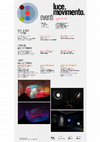
Il cinema di Valentina Berardinone. Proiezione e conversazione tra l’artista e Jennifer Malvezzi ... more Il cinema di Valentina Berardinone. Proiezione e conversazione tra l’artista e Jennifer Malvezzi (curatrice del fondo Art & Experimental Film, Archivio Home Movies)
Strettamente legati alla coeva ricerca plastica e grafica dell’artista, i primi film di Valentina Berardinone vertono sull’immagine della scala intesa come “dispositivo” del potere e metafora di un sistema socio-politico inesorabile che esclude ogni via di fuga. Su di essa colano inquietanti sostanze brune, vischiose, che travolgono incessantemente i gradini come in Silent Invasion, il primo film-manifesto dell’artista. Nel successivo Letture n.3 la scala diviene una vera e propria prigione, che intrappola l’individuo, mentre in Urbana si fa meccanica, vomitando uomini-fantasmi, schiacciati dalla routine cittadina. Chiude la serata il film più esplicitamente politico del ciclo, Eventi, girato sulle scalinate del palazzo di Giustizia di Milano.
Film in programma: Silent Invasion (1971, 14’); Letture n. 3 (1972-1973, 12’); Urbana (1973, 14’) Eventi (4’) copie provenienti dall’archivio Home Movies
Evento realizzato in collaborazione con l’Archivio Home Movies, Bologna
ARCHIVIO APERTO 2018
ALMOST 68 / QUASI UN 68
Art and Experimental Film (Italy, 1966-1976)
A new... more ARCHIVIO APERTO 2018
ALMOST 68 / QUASI UN 68
Art and Experimental Film (Italy, 1966-1976)
A new section, developed in 4 days, will close Archivio Aperto 2018.
A program of strictly analog film screenings (in re-editions curated by Home Movies or in archive copies), installations and talks to re-see (or to see for the first time), the production of artists and filmmakers marking the golden age of super8 (and other small-gauge formats) and culminating in the year evoked by the title of which, not without ritualisms we would like to detach ourselves from, we celebrate the 50th anniversary.
From the mid-60s to the half of the following decade an increasing amount of artists approached cinema moved by the need of both “breaking the frame” and using a medium able to communicate more powerfully than traditional arts. At the same time, young filmmakers coming from the amateur world carried out experimentations more and more radical as part of a proud independency from the film industry. Two parallel tracks which occasionally met (and bumped into) each other but which both contributed, in the long term, to influence mainstream cinema, visual communication and media system. Yet, it’s a production still mostly unknown which, although it was born in a climate of a general protest where the so called militant cinema had also developed, became part of a wider visual culture perspective, which aimed at changing spectators in participating and conscious actors, by involving their senses and, at the same time, their ability of analyzing the image.
The performative nature of screening, strongly connected to the film materiality and the presence / involvement of authors and curators, will be at the center of the exhibition which will showcase, as a unique case in the national contemporary scene, works and film materials for long time not only sporadically seen, but also often screened in a digital version which, at best, is able to return their aesthetic qualities in a very limited extent, weakening, moreover, their perception and fruition. Home Movies’ cultural proposal, by addressing to the public and the cultural institutions, characterizes itself by the study, the historic and philological preservation of filmic materials, accompanied by the re-edition and the re-enactment of works and experiences which constitute a heritage whose rediscovery can give a significant contribute to contemporary reflection.
A quick glance at this program and its underlying strands. The first strand evidently emerging is the influence and exchange with American visual culture. From Quasi una tangente (1966), a mythical groundbreaking film shot by a very young and rebel Massimo Bacigalupo, which makes the “lesson” of American underground cinema as disruptive as it is, to the film materials gathered at Berkeley by Arnaldo Pomodoro (1968-1970) together with his film Shaping Nagation (1970, created with Francesco Leonetti and Ugo Mulas), up to the syncopated and visionary rhythm of La nott’e’l giorno (1976) by Gianni Castagnoli. These latter sequences recall Jonas Mekas and Stan Brakhage, by exploring borders of the visible, suspended between surprising beauty of daily life, the power of the light and the call of the night with its shadows: a jewel which after more than 40 years, shows itself as an unavoidable artistic, human and historic evidence of an era of utopias and destructions. There’s an emancipation of the gaze in the conceptual and expanded work by Valentina Berardinone, an artist which will be read in the frame of her contemporary film production of women behind the camera. We can’t talk of visual revolution, image and (technological) unconscious without Franco Vaccari, of which we’ll showcase – finally in integral version – Nei sotterranei (1966-67), a topical and chthonian film, illuminating and precursor. With Fernando De Filippi and Andrea Granchi’s cinema, on the other hand, will plumb the forms of performances, for which the presence of the author within the film or during the screening is essential. By Tonino De Bernardi, key figure and the most irreducible exponent of Italian underground cinema, we will showcase in an installation form Quadrato (1972), radical film for its ability of questioning the concept of time and inquiring the space, but also genial for how it appears simple, intimate and familiar. As a Heraclitus’ fragment, we never plunge ourselves into the same river of images…
Almost 68 days will conclude with focuses on the new keys of study and reading of these materials with a closing talk on the state of art on artists and filmmakers’ film archives, starting from Home Movies’ proposal.
We have long been wondering what approach we wanted for Almost 68 and which films and authors we would have showcased in this program. Far from seeking of being exhaustive and from thinking of representing an era, we approached these recovered films with the awareness of their historic value and with the need of handling and examining them with a particular cure and method. This survey marks the first step of Art and Experimental Film project. Born by common study interests and life paths, and as a result of a long experience on field, this project represents the attempt of extending Home Movie’s 15-year-long archival and curatorship work, addressed, since the beginning, to expand the borders of the visible of the last century, through private, amateur and unseen cinema, with its numberless forms, practices and bottom-produced expressions.
Jennifer Malvezzi, Mirco Santi, Paolo Simoni
An event centered on a reenactment of various works created in 1972 by the artist Ugo Locatelli: ... more An event centered on a reenactment of various works created in 1972 by the artist Ugo Locatelli: three Super8 and 8mm films (Noi sappiamo, Tempo di lettura, Meta), and an installation of eleven photographic images (Aree e Tracce - Portable Exhibition) here shown for the first time after forty years. The talk will be introduced by Jennifer Malvezzi.
The three films created in 1972 by the artist Ugo Locatelli (Noi sappiamo, Tempo di lettura, Meta... more The three films created in 1972 by the artist Ugo Locatelli (Noi sappiamo, Tempo di lettura, Meta) are presented here for the first time in a new 16mm version restored and reprint by Home Movies Italian Amateur Film Archive. The talk will be introduced by Jennifer Malvezzi (Università di Parma), Ugo Locatelli, Mirco Santi and Paolo Simoni (Home Movies).
Book Reviews by Jennifer Malvezzi
La sfida è fare nuova luce su una forma ʻacquisitaʼ di spettacolarità, molto discussa ma solo in ... more La sfida è fare nuova luce su una forma ʻacquisitaʼ di spettacolarità, molto discussa ma solo in parte storicizzata, ancora non riconosciuta adeguatamente nella sua reale portata pionieristica. Muovendo da tale sfida, il testo di Jennifer Malvezzi Remedi-Action. Dieci anni di videoteatro italiano (Milano, Posmedia Books, 2015) va nella direzione di un'utile riscoperta di quelle esperienze sceniche liminali che, mescolando efficacemente linguaggi diversi, diedero vita al singolare fenomeno del videoteatro italiano all'altezza degli anni Settanta e Ottanta del secolo scorso.


Uploads
Books by Jennifer Malvezzi
Papers and Essays by Jennifer Malvezzi
The essay examines a programmatic letter written by the English neo-futurist group Archigram to the magazine "IN. Arguments of images and design" in 1972. Informed by the theories of Marshall McLuhan and the coeval practices of Guerrilla Television, the letter was decisive for the project of La cellula abitativa, an experimental audiovisual communication system designed by Ugo La Pietra that forecast the characteristics of web and social networks. The prototype of the device, that was technically practicable, was presented the same year in the pivotal exhibition Italy the New Domestic Landscape at the MoMA of New York.
Cinergie issue 15 – special peer-reviewed edited by Michele Guerra and Sara Martin
Conference Presentations by Jennifer Malvezzi
Marinella Pirelli e Valentina Berardinone sono tra le protagoniste di questa rivoluzione, due artiste, due donne, il cui patrimonio filmico sta iniziando solo ora a essere adeguatamente valorizzato. Pur contraddistinte da due poetiche molto diverse, negli anni '60 e'70 entrambe non solo riprendono, ma si auto-riprendono. Con la loro cinepresa fanno sì arte, ma al contempo raccontano sia l'universo famigliare che il proprio mondo interiore.
Proiezione digitale
DOPPIO AUTORITRATTO (1973-1974,16MM, 139 DI MARINELLA PIRELLI
Proiezione pellicola
IMAGO (1975, 16MM DA SUPER8) DI VALENTINA BERARDINONE
All'incontro sarà presente l'artista Pietro Pirelli e verranno proiettati alcuni home movies realizzati da Marinella Pirelli. Introduce la curatrice del programrna: Jennifer Malvezzi.
Strettamente legati alla coeva ricerca plastica e grafica dell’artista, i primi film di Valentina Berardinone vertono sull’immagine della scala intesa come “dispositivo” del potere e metafora di un sistema socio-politico inesorabile che esclude ogni via di fuga. Su di essa colano inquietanti sostanze brune, vischiose, che travolgono incessantemente i gradini come in Silent Invasion, il primo film-manifesto dell’artista. Nel successivo Letture n.3 la scala diviene una vera e propria prigione, che intrappola l’individuo, mentre in Urbana si fa meccanica, vomitando uomini-fantasmi, schiacciati dalla routine cittadina. Chiude la serata il film più esplicitamente politico del ciclo, Eventi, girato sulle scalinate del palazzo di Giustizia di Milano.
Film in programma: Silent Invasion (1971, 14’); Letture n. 3 (1972-1973, 12’); Urbana (1973, 14’) Eventi (4’) copie provenienti dall’archivio Home Movies
Evento realizzato in collaborazione con l’Archivio Home Movies, Bologna
ALMOST 68 / QUASI UN 68
Art and Experimental Film (Italy, 1966-1976)
A new section, developed in 4 days, will close Archivio Aperto 2018.
A program of strictly analog film screenings (in re-editions curated by Home Movies or in archive copies), installations and talks to re-see (or to see for the first time), the production of artists and filmmakers marking the golden age of super8 (and other small-gauge formats) and culminating in the year evoked by the title of which, not without ritualisms we would like to detach ourselves from, we celebrate the 50th anniversary.
From the mid-60s to the half of the following decade an increasing amount of artists approached cinema moved by the need of both “breaking the frame” and using a medium able to communicate more powerfully than traditional arts. At the same time, young filmmakers coming from the amateur world carried out experimentations more and more radical as part of a proud independency from the film industry. Two parallel tracks which occasionally met (and bumped into) each other but which both contributed, in the long term, to influence mainstream cinema, visual communication and media system. Yet, it’s a production still mostly unknown which, although it was born in a climate of a general protest where the so called militant cinema had also developed, became part of a wider visual culture perspective, which aimed at changing spectators in participating and conscious actors, by involving their senses and, at the same time, their ability of analyzing the image.
The performative nature of screening, strongly connected to the film materiality and the presence / involvement of authors and curators, will be at the center of the exhibition which will showcase, as a unique case in the national contemporary scene, works and film materials for long time not only sporadically seen, but also often screened in a digital version which, at best, is able to return their aesthetic qualities in a very limited extent, weakening, moreover, their perception and fruition. Home Movies’ cultural proposal, by addressing to the public and the cultural institutions, characterizes itself by the study, the historic and philological preservation of filmic materials, accompanied by the re-edition and the re-enactment of works and experiences which constitute a heritage whose rediscovery can give a significant contribute to contemporary reflection.
A quick glance at this program and its underlying strands. The first strand evidently emerging is the influence and exchange with American visual culture. From Quasi una tangente (1966), a mythical groundbreaking film shot by a very young and rebel Massimo Bacigalupo, which makes the “lesson” of American underground cinema as disruptive as it is, to the film materials gathered at Berkeley by Arnaldo Pomodoro (1968-1970) together with his film Shaping Nagation (1970, created with Francesco Leonetti and Ugo Mulas), up to the syncopated and visionary rhythm of La nott’e’l giorno (1976) by Gianni Castagnoli. These latter sequences recall Jonas Mekas and Stan Brakhage, by exploring borders of the visible, suspended between surprising beauty of daily life, the power of the light and the call of the night with its shadows: a jewel which after more than 40 years, shows itself as an unavoidable artistic, human and historic evidence of an era of utopias and destructions. There’s an emancipation of the gaze in the conceptual and expanded work by Valentina Berardinone, an artist which will be read in the frame of her contemporary film production of women behind the camera. We can’t talk of visual revolution, image and (technological) unconscious without Franco Vaccari, of which we’ll showcase – finally in integral version – Nei sotterranei (1966-67), a topical and chthonian film, illuminating and precursor. With Fernando De Filippi and Andrea Granchi’s cinema, on the other hand, will plumb the forms of performances, for which the presence of the author within the film or during the screening is essential. By Tonino De Bernardi, key figure and the most irreducible exponent of Italian underground cinema, we will showcase in an installation form Quadrato (1972), radical film for its ability of questioning the concept of time and inquiring the space, but also genial for how it appears simple, intimate and familiar. As a Heraclitus’ fragment, we never plunge ourselves into the same river of images…
Almost 68 days will conclude with focuses on the new keys of study and reading of these materials with a closing talk on the state of art on artists and filmmakers’ film archives, starting from Home Movies’ proposal.
We have long been wondering what approach we wanted for Almost 68 and which films and authors we would have showcased in this program. Far from seeking of being exhaustive and from thinking of representing an era, we approached these recovered films with the awareness of their historic value and with the need of handling and examining them with a particular cure and method. This survey marks the first step of Art and Experimental Film project. Born by common study interests and life paths, and as a result of a long experience on field, this project represents the attempt of extending Home Movie’s 15-year-long archival and curatorship work, addressed, since the beginning, to expand the borders of the visible of the last century, through private, amateur and unseen cinema, with its numberless forms, practices and bottom-produced expressions.
Jennifer Malvezzi, Mirco Santi, Paolo Simoni
Book Reviews by Jennifer Malvezzi