Books by Jonas Tinius
Over the last decade, the role of diversity, migration, and representation in the German cultural... more Over the last decade, the role of diversity, migration, and representation in the German cultural sector has drastically changed. The PostHeimat network — a three-year experiment in networked solidarity between major German public theatres, migrant actors, directors, and researchers — grappled with how to think about home after migration. The contributions to this book document the problems and potentials of reflexive and research-based migrant theatre initiatives. Emerging from research encounters and performances across Germany, this study incorporates the critical perspectives of activists, artists, practitioners, scholars, and cultural mediators from these initiatives and does not shy away from an open reflection on the failures and pitfalls of well-intended cultural policies.
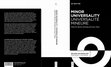
Minor Universality. Rethinking Humanity After Western Universalism / Universalité mineure. Penser l'humanité après l'universalisme occidental, 2023
The circulation and entanglements of human beings, data, and goods have not necessarily and by th... more The circulation and entanglements of human beings, data, and goods have not necessarily and by themselves generated a universalising consciousness. The "global" and the "universal", in other words, are not the same. The idea of a world-society remains highly contested. Our times are marked by the fragmentation of a double relativistic character: the inevitable critique of Western universalism on the one hand, and resurgent identitarian and neo-nationalistic claims to identity on the other. Sources of an argumentation for a strong universalism brought forward by Western traditions such as Christianity, Marxism, and Liberalism have largely lost their legitimation. All the while, manifold and situated narratives of a common world that re-address the universal are under way of being produced and gain significance. This volume tracks the development and relevance of such cultural and social practices that posit forms of what we call minor universality. It asks: Where and how do contemporary practices open up concrete settings so as to create experiences, reflections and agencies of a shared humanity?
With contributions by Isaac Bazié, Anil Bhatti, Jean-Luc Chappey, Elsie Cohen, Leyla Dakhli, Souleymane Bachir Diagne, Nicole Fischer, Albert Gouaffo, Stefan Helgesson, Fatma Hotait, Christopher M. Hutton, Ananya Jahanara Kabir, Mario Laarmann, Markus Messling & Jonas Tinius, Rukmini Bhaya Nair, Olivier Remaud, Gisèle Sapiro, Bénédicte Savoy, Maria-Anna Schiffers, Laurens Schlicht, Sergio Ugalde Quintana, Hélène Thierard, Khadija von Zinnenburg Carroll.

This book confronts the history and legitimacy of Western Universalism. In the form of conversati... more This book confronts the history and legitimacy of Western Universalism. In the form of conversations, it documents thinking-in-process about how new forms of universality after hegemonic universalism can be thought and practised. Bringing into play their practices and theories, the interlocutors of Universalism(e) & … lay their own traces of a minor universality, situated in the troubling present of our times.
Ce livre s’attaque à l'histoire et à la légitimité de l’universalisme occidental. Sous la forme de conversations, il documente la réflexion en cours sur les façons de penser et de pratiquer de nouvelles formes d’universalité après l’universalisme hégémonique. À partir de leurs pratiques et de leurs théories, les interlocuteurs d’Universalism(e) & ... font apparaître leur propre cheminement autour de cette universalité mineure située dans le présent troublant de notre époque.
Universalism(e) & … révolution, histoires concrètes, préhistoire, multiláteralisme, savoir(s), the partisan position, narration, reparation
Entretiens avec / Conversations with: Arjun Appadurai, Leyla Dakhli, Souleymane Bachir Diagne, Giovanni Levi, Gisèle Sapiro, David Scott, Adania Shibli, Maria Stavrinaki
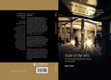
Cambridge University Press, 2023
This is a bold and wide-ranging account of the unique German public theatre system through the pr... more This is a bold and wide-ranging account of the unique German public theatre system through the prism of a migrant artistic institution in the western post-industrial Ruhr region. State of the Arts analyses how artistic traditions have responded to social change, racism, and cosmopolitan anxieties and recounts how critical contemporary cultural production positions itself in relation to the tumultuous history of German state patronage, difficult heritage, and self-cultivation through the arts. Jonas Tinius' fieldwork with professional actors, directors, cultural policy makers, and activists unravels how they constitute theatre as a site for extra-ordinary ethical conduct and how they grapple with the pervasive German cultural tradition of Bildung, or self-cultivation through the arts. Tinius shows how anthropological methods provide a way to understand the entanglement of cultural policy, institution-building, and subject-formation. An ambitious and interdisciplinary study, the work demonstrates the crucial role of artistic intellectuals in society.
de Gruyter, 2023
How can universality be addressed after the necessary epistemic and ethical critique of Western u... more How can universality be addressed after the necessary epistemic and ethical critique of Western universalism? Building on such concepts as materiality and reparation, narration and translation, the series Beyond Universalism seeks to understand how contemporary cultural and social practices are producing a new consciousness of universality-experiences, refl ections, and agencies of a shared humanity. | Comment aborder l'universel après la nécessaire critique épistémique et éthique de l'universalisme occidental ? En s'appuyant sur des concepts tels que la matérialité et la réparation, la narration et la traduction, la collection Partager l'universel cherche à comprendre comment les pratiques culturelles et sociales contemporaines produisent des expériences, réfl exions et agentivités qui contribuent à faire émerger une humanité partagée.
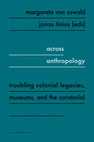
How can we rethink anthropology beyond itself? In this book, twenty-one artists, anthropologists,... more How can we rethink anthropology beyond itself? In this book, twenty-one artists, anthropologists, and curators grapple with how anthropology has been formulated, thought, and practised ‘elsewhere’ and ‘otherwise’. They do so by unfolding ethnographic case studies from Belgium, France, Germany, Italy, the Netherlands, and Poland – and through conversations that expand these geographies and genealogies of contemporary exhibition-making. This collection considers where and how anthropology is troubled, mobilised, and rendered meaningful.
Across Anthropology charts new ground by analysing the convergences of museums, curatorial practice, and Europe’s reckoning with its colonial legacies. Situated amid resurgent debates on nationalism and identity politics, this book addresses scholars and practitioners in fields spanning the arts, social sciences, humanities, and curatorial studies.
Preface by Arjun Appadurai. Afterword by Roger Sansi
Contributors: Arjun Appadurai (New York University), Annette Bhagwati (Museum Rietberg, Zurich), Clémentine Deliss (Berlin), Sarah Demart (Saint-Louis University, Brussels), Natasha Ginwala (Gropius Bau, Berlin), Emmanuel Grimaud (CNRS, Paris), Aliocha Imhoff and Kantuta Quirós (Paris), Erica Lehrer (Concordia University, Montreal), Toma Muteba Luntumbue (Ecole de Recherche Graphique, Brussels), Sharon Macdonald (Humboldt-Universität zu Berlin), Wayne Modest (Research Center for Material Culture, Leiden), Bonaventure Soh Bejeng Ndikung (SAVVY Contemporary, Berlin), Margareta von Oswald (Humboldt-Universität zu Berlin), Roger Sansi (Barcelona University), Alexander Schellow (Ecole de Recherche Graphique, Brussels), Arnd Schneider (University of Oslo), Anna Seiderer (University Paris 8), Nanette Snoep (Rautenstrauch-Joest-Museum, Cologne), Nora Sternfeld (Kunsthochschule Kassel), Anne-Christine Taylor (Paris), Jonas Tinius (Humboldt-Universität zu Berlin)
The book is funded by Sharon Macdonald's Alexander Von Humboldt-Stiftung Professorship, the Humboldt-Universität zu Berlin, and the Leuven University Open Access Fund.
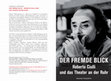
Berlin: Alexander Verlag, 2020
»Das Theater an der Ruhr war wie eine Explosion für mich. Vieles von dem, was ich heute als meins... more »Das Theater an der Ruhr war wie eine Explosion für mich. Vieles von dem, was ich heute als meins ausgebe, kommt daher.« Navid Kermani
1980 gründet Roberto Ciulli in Mülheim an der Ruhr gemeinsam mit dem Dramaturgen Helmut Schäfer und dem Bühnenbildner Gralf-Edzard Habben das Theater an der Ruhr – ein freies, aber staatlich subventioniertes Ensembletheater, bei dem das Reisen und der Kulturaustausch zum Programm gehören. In über 35 Jahren besucht das Theater über 40 Länder und holt zugleich die Welt ins Ruhrgebiet, indem es Künstler aus u.a. Chile, Polen, Russland, Ex-Jugoslawien, Ägypten, Türkei, Iran und Irak nach Mülheim einlädt.
Die Monographie versammelt erstmals auf rund 1000 Seiten Material zu Roberto Ciullis Werdegang und Werk:
I. Von seinem Studium der Philosophie und seinem Mailänder Zelttheater Il Globo am Stadtrand, seiner Ankunft in Deutschland Mitte der 1960er-Jahre, seinen Weg vom Deutschen Theater Göttingen bei Hilpert und Fleckenstein über Köln in den 1970er-Jahren mit Hansgünther Heyme bis zu der Theatergründung in Mülheim an der Ruhr.
II. Gespräche zwischen Roberto Ciulli und dem Anthropologen Jonas Tinius: Sie sprechen über Theater als Mittel, um die Welt zu verändern, über Migration, Anthropologie und die Provinz, über eine universelle Sprache und das Clowneske, über eine selbstbestimmte Haltung zur Welt und einen fremden Blick auf sie.
III. Material (Texte, Gespräche, Dokumente) aus rund 40 Jahren internationaler Theaterarbeit im und mit dem Theater an der Ruhr.
Daneben gibt es Texte von Navid Kermani, Helmut Schäfer, Heinz-Norbert Jocks u.v.a., zahlreiche Kritiken, Reisefotos und einen Bildessay von Knut W. Maron.
https://www.alexander-verlag.com/programm/titel/430-der-fremde-blick-roberto-ciulli-und-das-theater-an-der-ruhr.html?fbclid=IwAR3UXVg6CmUuRQZQOUKKLjvWntizCsrzFkT99L-N1nhyEC04pm2ghPOvPQs
Der fremde Blick – Roberto Ciulli und das Theater an der Ruhr
Gespräche, Texte, Fotos, Material
Tinius, Jonas (Hrsg.)
Wewerka, Alexander (Hrsg.)
ersch. Mai 2020 / 1296 Seiten. 400 Abb.. 15,0 x 23,0 cm. Banderole. Fadenheftung. Hardcover. 2 Bände Mit zahlr. Abbildungen und einem Bildessay von Knut W. Maron
ISBN 978-3-89581-491-4
25,– €
Berlin: Centre for Anthropological Research on Museums and Heritage (CARMAH), Jun 7, 2018
The essays collected together here each explore a concept that o ers the potential to think and d... more The essays collected together here each explore a concept that o ers the potential to think and do museum and heritage practice otherwise – that is, to think and do museums and heritage differently from the ways in which they have more recently or more usually been done. This ‘otherwising’ is thoroughly anthropological. It draws from a disciplinary approach that seeks to explore diverse ways of doing and thinking – to
learn from other ways of being wise – in order to rethink, re-do, and transform, what might otherwise be taken for granted or unexamined.
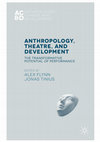
From Pussy Riot and the Arab Spring to Italian mafia dance, this collection provides an interdisc... more From Pussy Riot and the Arab Spring to Italian mafia dance, this collection provides an interdisciplinary analysis of relational reflexivity in political performance. By putting anthropological theory into dialogue with international development scholarship and artistic and activist practices, this book highlights how aesthetics and politics interrelate in precarious spheres of social life. The contributors of this innovative interdisciplinary volume raise questions about the transformative potential of participating in and reflecting upon political performances both as individual and as collectives. They also argue that such processes provide a rich field and new pathways for anthropological explorations of peoples' own reflections on humanity, sociality, change, and aspiration. Reflecting on political transformations through performance puts centre stage the ethical dimensions of cultural politics and how we enact political subjectivity.
Book Reviews by Jonas Tinius
As editors, they attempt to bridge their anthropological insights, understandings and methodologi... more As editors, they attempt to bridge their anthropological insights, understandings and methodologies, with a broad invitation to the contributors carefully assembled in this collection: to think about political performance, applied theatre and other politically engaged performative practices, about ‘developmental’ policies and challenges, about methodologies of enquiring and researching in these fields. Each of the authors adds their own rather specific voice, experience and perspective to this thought-provoking edition that should be thoroughly considered not only by theorists of applied theatre, but also theatre and performance scholars, anthropologists, sociologists, and, more broadly speaking, anyone remotely interested in the manifold situational dynamics that are at play when theatre and politics, when theatre and an aspiration for change, meet.
In their introduction to Anthropology, Theatre and Development: The Transformative Potential of P... more In their introduction to Anthropology, Theatre and Development: The Transformative Potential of Performance, Alex Flynn and Jonas Tinius do an admirable job of lending conceptual coherence to the fourteen essays comprising their edited collection. Rather than treat the variety of analytic approaches, subject matters, and social and cultural contexts thereby assembled as just part of the nature of such collections – as all-too-often seems to be the case these days – the authors take up the challenge of articulating common themes and explicating differences with gusto. Equally commendable is the way its contributions take up such common themes and, through elaborating them with regard to their respective objects and realms of inquiry, reveal their potential for ethnographic development and contextual transformation. To list only those contributions not mentioned elsewhere in this review, such objects include: reflexive alternatives to Theatre for Development in Sub-Saharan Africa (Plastow, Chapter 4); the performative dimensions of and responses to the post-genocidal gacaca courts in Rwanda (Breed, Chapter 5); the political implications of street artists moving their work off the street and into liminal realms of ‘performative invisibility’ (Schacter, Chapter 8); the politics of artistic process in contemporary Arabic theatre (Hemke, Chapter 10); or the political theatricality of the Pussy Riot trials in Putin’s Russia (Rau and Schuler, Chapters 11 and 12).
CaMP Anthropology Blog, 2024
CaMP Anthropology blog features posts, discussions, and links at the intersections of communicati... more CaMP Anthropology blog features posts, discussions, and links at the intersections of communication, media, and performance. Based in Rice University’s Anthropology Department. 2016– Editor, Dr. Ilana Gershon, [email protected]
Ad Marginem. Mitteilungen des Instituts für Europäische Musikethnologie an der Universität zu Köln, 2023
Ad Marginem. Mitteilungen des Instituts für Europäische Musikethnologie an der Universität zu Köl... more Ad Marginem. Mitteilungen des Instituts für Europäische Musikethnologie an der Universität zu Köln. Review by Rose Campion for Nr. 95 (2023)
Book Chapters by Jonas Tinius
The Cambridge Guide to Mixed Methods Research for Theatre and Performance Studies (edited by Tracy C. Davis and Paul Rae, Cambridge University Press), 2024
This contribution addresses fieldwork as an anthropological method. It discusses the surprising l... more This contribution addresses fieldwork as an anthropological method. It discusses the surprising lack of a systematic conversation between anthropology and performance as well as theatre research since the ‘performative turn’. Seeking to clarify terminological distinctions between ethnography, fieldwork, and method, Jonas Tinius draws upon his fieldwork with a theatre in the western German Ruhr region to discusses how a complex understanding of the field and the commitments we make to fieldwork may offer possibilities for working across anthropology, performance, and theatre. It concludes with a sketch of three practical ways to think about the mixing of anthropological methods in performance research.
The Anthropologist as Curator, 2020
This chapter starts from the observation that merely pointing out the broadening scope and preval... more This chapter starts from the observation that merely pointing out the broadening scope and prevalence of curating as a practice, the curator as a professional role and ‘the curatorial’ as a theoretical discourse, overlooks some of the nuanced differences and shifts that occur in different exhibition constellations and curatorial fields, and fails to address reasons for the contemporary allure of the curatorial. In fact, the pervasive notion of the curator as a networking broker, who no longer requires connoisseurial competence and skills in handling objects, refers to a particular form of curating that has emerged from a relational and participatory shift in the arts, globalization and deinstitutionalization of the contemporary arts field from the 1990s onwards. It refers to an ‘independent curator’ no longer based in museums, but instead an initiator of project-based representations and thematic group shows, both gatekeeper of artistic visibility and translator of different epistemological realms no longer confined to one discipline. It also refers to a particular understanding of curatorial practice, less as an object-based and visual form of showing than as a reflection on curating itself as well as on its infrastructures, epistemologies and power relations. Focussing only on this form of curatorship, however, ignores less glamorous kinds of curating. Yet even object- based and more strongly museum-based and non-arts curating can be implicated in new assemblies of objects, relations, ideas and people (see Basu and Macdonald 2007).
Here, we look at the two central conceptual phenomena indicated in the title of this contribution: recursivity and the curatorial, before analysing the ways in which these theoretical distinctions play out and can be made sense of with respect to our own ethnographic field-sites in Berlin. These sites are themselves overlapping and expanded fields of curatorial practice, crossing the sometimes precarious membranes of museums, heritage and contemporary art. As such, they serve not as an illustration of our preceding conceptual analysis, but as themselves ways of thinking of the recursivity of the curatorial. Following from this, we interrogate not just the recursivity of the curatorial, but also its consequences for anthropological practice and theorizing.
Minor Universality. Rethinking Humanity After Western Universalism, 2023
Our contribution seeks to render intelligible minor forms of a world-consciousness generated thro... more Our contribution seeks to render intelligible minor forms of a world-consciousness generated through social and cultural practices. Departing from Zineb Sedira's installation "Dreams Have No Titles" for the French Pavilion of the 2022 Venice Biennale and concluding with our project's research exhibition "The Pregnant Oyster: Doubts on Universalism" at Berlin's Haus der Kulturen der Welt, we discuss how narrative forms (beyond the book) produce experiences of a shared world. Shifting from an understanding of universality as effect of the universal in particular worlds, we return to the epistemological proposal of the microstoria (Ginzburg, Levi, Revel) to inverse this relation. In doing so, we suggest the concept of a minor universality, by which we describe the genesis of a universal consciousness from concrete contexts. Our notion mobilises Deleuze and Guattari's concept of the minor through their engagement with Franz Kafka. We draw on it to address the Algerian anti-colonial struggle and the practice of sonic radio resistance described in Frantz Fanon's "This is the Voice of Free Algeria". Not captured through the binary of power/resistance, minority/majority, ours/yours, the minor produces instead a potentiality for change, for the not-yet, which foreshadows and intuits a new humanity.
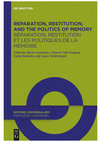
Reparation, Restitution, and the Politics of Memory Réparation, restitution et les politiques de la mémoire Perspectives from Literary, Historical, and Cultural Studies Perspectives littéraires, historiques et culturelles, 2023
This chapter is based on a workshop we conducted with PhD candidates attending the Summer School ... more This chapter is based on a workshop we conducted with PhD candidates attending the Summer School Restitution, Reparations, Reparation – Toward a New Global Society? held at Villa Vigoni, Italy. It offers reflections on the situated and embodied experience of talking, thinking, and conceptualising repair and heritage. Starting from the work of the French-Algerian artist Kader Attia, we en- visaged the possibility of a “Museum of Disrepair” and invited PhD students to analyse the impacts of such a potential site. Attia’s idea of “irreparability” was at the centre of our investigation, and we thought about the notion of “repair” in relation to the racialised body, wounded by histories of colonialism and white- ness. As the analysis shows, repairing damages does not mean to erase the physi- cal evidence of the injury, hoping for the disappearance of the violence. Rather, it is essential to acknowledge pain and damage, and to link the injury with its visi- ble scarification. Restitution, as we argue, is only an element of a wider discourse on reconciliation, decolonisation, and infrastructural changes to Europe’s narrative of world.
*Note, the entire book is open-access and the chapter is included.
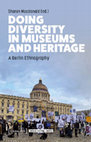
Doing Diversity in Museums and Heritage. A Berlin Ethnography, 2022
Curatorial practices that address Europe’s colonial legacies through contemporary art frequently ... more Curatorial practices that address Europe’s colonial legacies through contemporary art frequently engage with constructions of alterity, difference, and otherness. Many target the ways in which institutions of artistic and cultural production reproduce ethnic and geographic forms of othering. The practices on which I focus in this chapter build on a range of critiques articulated in anti-racist, feminist, and intersectional approaches to curating and artistic production (Bayer, Kazeem-Kaminski and Sternfeld 2017, Oswald and Tinius 2020). At the heart of those practices is a ‘double presence of difference’, that is to say, difference as both a subject of positive identity-formation and an object of critique, an obstacle to social justice and a political strategy for its attainment (Ndikung and Römhild 2013). Markers of identity such as race, gender, class, and regional and cultural belonging can indicate symptoms of structural discrimination and exclusion, yet they also allow for the formulation of subject positions that can challenge hegemonic, normative, and canonical structures.



Uploads
Books by Jonas Tinius
With contributions by Isaac Bazié, Anil Bhatti, Jean-Luc Chappey, Elsie Cohen, Leyla Dakhli, Souleymane Bachir Diagne, Nicole Fischer, Albert Gouaffo, Stefan Helgesson, Fatma Hotait, Christopher M. Hutton, Ananya Jahanara Kabir, Mario Laarmann, Markus Messling & Jonas Tinius, Rukmini Bhaya Nair, Olivier Remaud, Gisèle Sapiro, Bénédicte Savoy, Maria-Anna Schiffers, Laurens Schlicht, Sergio Ugalde Quintana, Hélène Thierard, Khadija von Zinnenburg Carroll.
Ce livre s’attaque à l'histoire et à la légitimité de l’universalisme occidental. Sous la forme de conversations, il documente la réflexion en cours sur les façons de penser et de pratiquer de nouvelles formes d’universalité après l’universalisme hégémonique. À partir de leurs pratiques et de leurs théories, les interlocuteurs d’Universalism(e) & ... font apparaître leur propre cheminement autour de cette universalité mineure située dans le présent troublant de notre époque.
Universalism(e) & … révolution, histoires concrètes, préhistoire, multiláteralisme, savoir(s), the partisan position, narration, reparation
Entretiens avec / Conversations with: Arjun Appadurai, Leyla Dakhli, Souleymane Bachir Diagne, Giovanni Levi, Gisèle Sapiro, David Scott, Adania Shibli, Maria Stavrinaki
Across Anthropology charts new ground by analysing the convergences of museums, curatorial practice, and Europe’s reckoning with its colonial legacies. Situated amid resurgent debates on nationalism and identity politics, this book addresses scholars and practitioners in fields spanning the arts, social sciences, humanities, and curatorial studies.
Preface by Arjun Appadurai. Afterword by Roger Sansi
Contributors: Arjun Appadurai (New York University), Annette Bhagwati (Museum Rietberg, Zurich), Clémentine Deliss (Berlin), Sarah Demart (Saint-Louis University, Brussels), Natasha Ginwala (Gropius Bau, Berlin), Emmanuel Grimaud (CNRS, Paris), Aliocha Imhoff and Kantuta Quirós (Paris), Erica Lehrer (Concordia University, Montreal), Toma Muteba Luntumbue (Ecole de Recherche Graphique, Brussels), Sharon Macdonald (Humboldt-Universität zu Berlin), Wayne Modest (Research Center for Material Culture, Leiden), Bonaventure Soh Bejeng Ndikung (SAVVY Contemporary, Berlin), Margareta von Oswald (Humboldt-Universität zu Berlin), Roger Sansi (Barcelona University), Alexander Schellow (Ecole de Recherche Graphique, Brussels), Arnd Schneider (University of Oslo), Anna Seiderer (University Paris 8), Nanette Snoep (Rautenstrauch-Joest-Museum, Cologne), Nora Sternfeld (Kunsthochschule Kassel), Anne-Christine Taylor (Paris), Jonas Tinius (Humboldt-Universität zu Berlin)
The book is funded by Sharon Macdonald's Alexander Von Humboldt-Stiftung Professorship, the Humboldt-Universität zu Berlin, and the Leuven University Open Access Fund.
1980 gründet Roberto Ciulli in Mülheim an der Ruhr gemeinsam mit dem Dramaturgen Helmut Schäfer und dem Bühnenbildner Gralf-Edzard Habben das Theater an der Ruhr – ein freies, aber staatlich subventioniertes Ensembletheater, bei dem das Reisen und der Kulturaustausch zum Programm gehören. In über 35 Jahren besucht das Theater über 40 Länder und holt zugleich die Welt ins Ruhrgebiet, indem es Künstler aus u.a. Chile, Polen, Russland, Ex-Jugoslawien, Ägypten, Türkei, Iran und Irak nach Mülheim einlädt.
Die Monographie versammelt erstmals auf rund 1000 Seiten Material zu Roberto Ciullis Werdegang und Werk:
I. Von seinem Studium der Philosophie und seinem Mailänder Zelttheater Il Globo am Stadtrand, seiner Ankunft in Deutschland Mitte der 1960er-Jahre, seinen Weg vom Deutschen Theater Göttingen bei Hilpert und Fleckenstein über Köln in den 1970er-Jahren mit Hansgünther Heyme bis zu der Theatergründung in Mülheim an der Ruhr.
II. Gespräche zwischen Roberto Ciulli und dem Anthropologen Jonas Tinius: Sie sprechen über Theater als Mittel, um die Welt zu verändern, über Migration, Anthropologie und die Provinz, über eine universelle Sprache und das Clowneske, über eine selbstbestimmte Haltung zur Welt und einen fremden Blick auf sie.
III. Material (Texte, Gespräche, Dokumente) aus rund 40 Jahren internationaler Theaterarbeit im und mit dem Theater an der Ruhr.
Daneben gibt es Texte von Navid Kermani, Helmut Schäfer, Heinz-Norbert Jocks u.v.a., zahlreiche Kritiken, Reisefotos und einen Bildessay von Knut W. Maron.
https://www.alexander-verlag.com/programm/titel/430-der-fremde-blick-roberto-ciulli-und-das-theater-an-der-ruhr.html?fbclid=IwAR3UXVg6CmUuRQZQOUKKLjvWntizCsrzFkT99L-N1nhyEC04pm2ghPOvPQs
Der fremde Blick – Roberto Ciulli und das Theater an der Ruhr
Gespräche, Texte, Fotos, Material
Tinius, Jonas (Hrsg.)
Wewerka, Alexander (Hrsg.)
ersch. Mai 2020 / 1296 Seiten. 400 Abb.. 15,0 x 23,0 cm. Banderole. Fadenheftung. Hardcover. 2 Bände Mit zahlr. Abbildungen und einem Bildessay von Knut W. Maron
ISBN 978-3-89581-491-4
25,– €
learn from other ways of being wise – in order to rethink, re-do, and transform, what might otherwise be taken for granted or unexamined.
Book Reviews by Jonas Tinius
Book Chapters by Jonas Tinius
Here, we look at the two central conceptual phenomena indicated in the title of this contribution: recursivity and the curatorial, before analysing the ways in which these theoretical distinctions play out and can be made sense of with respect to our own ethnographic field-sites in Berlin. These sites are themselves overlapping and expanded fields of curatorial practice, crossing the sometimes precarious membranes of museums, heritage and contemporary art. As such, they serve not as an illustration of our preceding conceptual analysis, but as themselves ways of thinking of the recursivity of the curatorial. Following from this, we interrogate not just the recursivity of the curatorial, but also its consequences for anthropological practice and theorizing.
*Note, the entire book is open-access and the chapter is included.